


Welding heat doesn’t forgive sloppy PPE. A pair of stick welding gloves has to do four things at once: block radiant heat, shrug off sparks, take the abuse of a stinger, and still let you feel the rod. The wrong pair cooks your knuckles by the second pass; the right pair feels like part of the rig. This list breaks down nine gloves that cover the common ground between hobby garage work and shop-floor duty, so you spend less time second-guessing your gear and more time laying clean beads.
A Fast Comparison Of The Options

Blue Demon MIG Welding Gloves for Small Hands

WZQH Leather Work Gloves for Men or Women
Lincoln Electric Traditional MIG/Stick Welding Gloves K2979-ALL

OZERO 932°F Heat Resistant Welding Gloves 14-Inch
Lincoln Electric Leather Welding Gloves KH641

TOOLIOM Goatskin TIG Welding Gloves Medium
TOOLIOM Goatskin TIG Welding Gloves Large
TOOLIOM 932°F Heat-Resistant Leather Welding Gloves
WZQH 16-Inch 932°F Welding and Fireplace Gloves
The Picks, Examined More Closely
Most stick welding gloves assume a full-size adult hand, and smaller welders often end up swimming inside oversize leather. Blue Demon’s small-hand sizing is built for juniors, students, or anyone with slimmer fingers who still wants real heat protection on a MIG or stick rig.
It pairs with the rest of the Blue Demon PPE ecosystem, so a growing welder can move from a hood to gloves to a jacket without juggling brands. For instructors running a class, one consistent supplier also makes sizing and replacement simpler.
Well-Handled Touches
- Sizing tailored to smaller hands avoids the bunched-finger fatigue that wrecks technique on long beads.
- Brand consistency with Blue Demon hoods and jackets for a coordinated PPE setup.
- Listed as suitable for both MIG and stick, so a learner can use one pair across processes.
- Leather shell gives a familiar feel that mimics what pros wear, easing the jump to bigger gloves later.
Points To Keep In Mind
- Not the right call for heavy plate work, where the heat load outpaces junior-grade leather.
- Larger adults will find the fit restrictive in the wrong way, especially across the palm and fingertips.
- Leather breaks in with use, so expect the fit to loosen a touch after the first few sessions.
Who It Suits Best
Students in a first welding class, instructors buying in bulk, and smaller-statured welders who need real heat protection without adult-sized bulk.
Look Elsewhere When
Shop welders running full-size plate all day will be better served by the Lincoln Electric Traditional MIG/Stick Welding Gloves K2979-ALL for its thicker lined build.
WZQH’s coffee-grey work gloves split the difference between garden chore and shop session. Made from split cowhide with a soft cotton lining, they take a beating from wheelbarrow handles and welding spatter in roughly equal measure.
Unlike the heavy, glove-shaped gauntlets in the rest of this list, this one leans more toward a general-purpose work glove. For someone who only fires up the welder a few weekends a month, that’s a feature, not a flaw.
What It Does Well
- Split cowhide shell balances abrasion resistance with enough flexibility to grip tools comfortably.
- Cotton lining reduces the clammy-hand feeling common in all-leather builds during warm weather.
- Adjustable wrist helps keep sparks and dirt from sliding into the cuff.
- Doubles as a garden or yard-work glove when the welder is off.
Worth Noting
- Not a true stick-welding gauntlet, so heavy slag and overhead passes will test its limits.
- Sizing runs closer to a casual work glove than a fitted welding glove; expect a slightly roomier feel.
- Cotton lining absorbs sweat, so plan to air them out between uses to keep odor down.
Made For
Homeowners and hobby welders who want one glove that handles both shop time and Saturday yard work without swapping gear.
Consider Something Else When
Dedicated stick welders running high amps will get more protection from the TOOLIOM 932°F Heat-Resistant Leather Welding Gloves with their layered heat barrier.
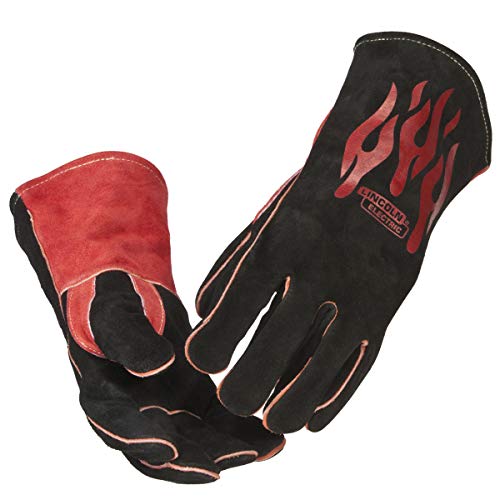
Lincoln Electric’s K2979-ALL is the kind of glove a fab shop keeps stacked by the door. The 14-inch lined leather shell, finished with Kevlar thread, targets the welder who runs a real mix of MIG and stick throughout the day.
Compared to the smaller-handed Blue Demon pair, this is firmly an adult shop glove with a longer cuff to shield the forearm during out-of-position work. The Kevlar stitching is the quiet upgrade, since thread tends to burn through long before the leather does.
Strengths Worth Knowing
- 14-inch length protects the wrist and lower forearm from spatter and UV bounce.
- Kevlar stitching resists burn-through at the seams, where most gloves fail first.
- Works across MIG and stick, so one pair handles most of a fab shop’s day.
Trade Offs
- Heavier lining trades fingertip feel for heat protection, so fine TIG work feels clumsy.
- Bulk may catch on fixtures when working in tight fixture or jig setups.
- Leather stiffens in cold shops until broken in.
Key Advantages
Right Fit For
Shop welders and serious hobbyists who spend full days switching between MIG and stick on heavier material.
Swap It Out When
Anyone focused on precise TIG work will want the dexterity of the TOOLIOM Goatskin TIG Welding Gloves Medium instead.
The OZERO 14-inch glove earns its heat-resistant label the hard way: split cowhide outside, an air-isolated aluminum foil layer, and a Kevlar-stitched palm. That three-layer sandwich is the difference between “warm” and “burned” on long stick passes at high amperage.
It’s a step up in heat defense from the WZQH general-purpose glove earlier in this list, while still being lighter than the Lincoln Electric gauntlet. OZERO pitches it for BBQ, fireplace, and welding, so it pulls double duty in a home shop.
What Stands Out
- Aluminum foil mid-layer reflects radiant heat back instead of passing it through to skin.
- Kevlar stitching holds the seams together when the heat load peaks.
- 14-inch cuff shields the forearm during out-of-position stick work.
- Doubles for grilling and fireplace work, so it earns its keep off the welder too.
Room For Improvement
- Added heat layers make the glove noticeably stiffer than lighter leather options.
- Foil-backed lining can feel clammy in humid shop conditions until the glove breaks in.
- Brown leather shows burn marks and discoloration sooner than darker options.
Who Should Grab It
Stick welders running higher amps on plate, plus anyone who wants one glove for the welder, the grill, and the fire pit.
A Better Fit Elsewhere
Welders chasing maximum dexterity should look at the TOOLIOM Goatskin TIG Welding Gloves Large for a softer goatskin feel.
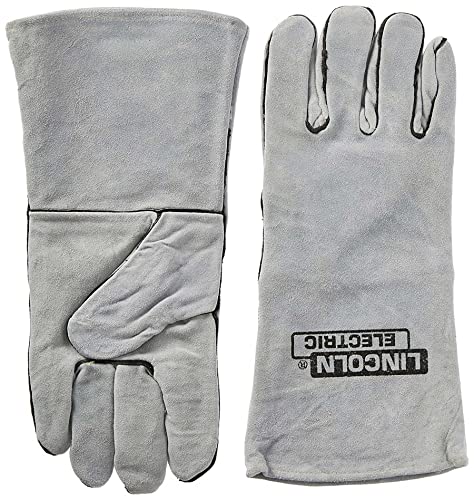
The Lincoln Electric KH641 sits one tier above the K2979-ALL, marketed for commercial-grade use. A cotton lining, gauntlet cuff, and premium heat protection build aim straight at the welder burning rod eight hours a day.
Where the K2979-ALL feels like a capable shop glove, the KH641 leans heavier and longer. It’s the glove you reach for on a structural job or a long fab run, not the one you grab for a quick tack.
Notable Gains
- Gauntlet cuff extends well past the wrist, guarding the lower arm on overhead and out-of-position passes.
- Cotton lining softens long shifts by wicking sweat away from the skin.
- Commercial heat protection handles repeated high-amp stick cycles without cooking through.
Points To Note
- Premium protection adds weight, so expect some hand fatigue during marathon sessions.
- Gauntlet cuff can feel floppy when doing fine bench work at a table.
- Costs more than entry-level gloves, so light hobby use may not justify the spend.
Feature Snapshot
Built With In Mind
Production welders, fab-shop hands, and serious hobbyists putting in long hours on thick stock.
Reach For A Different Pick When
Quick weekend tacks and lighter repair work call for the lower-bulk Lincoln Electric Traditional MIG/Stick Welding Gloves K2979-ALL.
TOOLIOM’s goatskin pair flips the usual welding-glove trade-off. Top-grade goatskin plus a flexible wing thumb gives the fingertip feel that TIG work demands, while a cowhide gauntlet keeps the forearm covered.
Stick welders tend to grab the heavier Lincoln Electric or OZERO pairs, but anyone dropping down to a 1/16-inch rod or laying cosmetic beads will appreciate what goatskin does for rod control. The medium fit here suits standard adult hands.
The Practical Payoff
- Wing thumb construction reduces fatigue during long rod work and improves grip on the stinger.
- Seamless index finger adds fingertip sensitivity for fine placement.
- Goatskin shell is naturally supple, so the glove feels broken-in from the first weld.
- Cowhide gauntlet covers the forearm against spatter and UV.
Honest Caveats
- Not designed for heavy stick at high amps, so a long day on 3/8-inch plate will push its limits.
- Goatskin scuffs and stains more visibly than thicker cowhide.
Who Will Love This
TIG welders, fabricators doing detailed work, and stick operators who prioritize feel over maximum heat bulk.
Where Another Pick Suits Better
Heavy structural stick work calls for the longer heat defense of the WZQH 16-Inch 932°F Welding and Fireplace Gloves.
Everything that makes the medium TOOLIOM goatskin glove appealing shows up here in a large fit. Larger-handed welders often settle for medium gloves and lose dexterity, so the large version is a real option rather than an afterthought.
It’s the same goatskin-and-cowhide sandwich as the medium, with a wing thumb for ergonomic rod control. For shop welders who burn rod all day and don’t want cramped fingers, the roomier cut pays off quickly.
Bright Spots
- Large sizing keeps fingertip reach comfortable for bigger hands.
- Wing thumb pattern stays consistent with the medium, so the feel is familiar.
- Goatskin shell is supple from the first weld, no lengthy break-in period.
- Cowhide gauntlet section adds forearm coverage without weighing the hand down.
Things To Consider
- Lighter goatskin shell sacrifices some heat headroom for dexterity.
- Larger fit can feel slightly loose in the fingertips on smaller hands.
Best Suited To
Larger-handed welders doing TIG, light stick, or detail fabrication where fingertip control matters more than maximum heat bulk.
Skip It When
Daily high-amp stick on thick plate calls for the heavier OZERO 932°F Heat Resistant Welding Gloves 14-Inch.
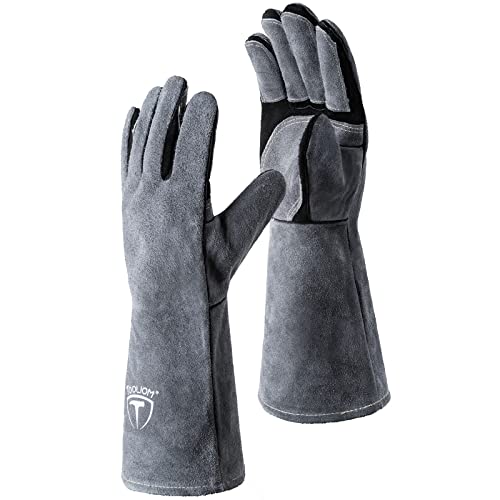
TOOLIOM’s 932°F heat-resistant glove mirrors the OZERO design language in a slightly different package, aimed squarely at MIG and stick. The layered build targets the radiantly hot plate and grinding sparks that punish lighter gloves over time.
Compared to the goatskin TOOLIOM pairs, this one trades fingertip feel for raw heat endurance. Think of it as the brand’s answer for welders who run hotter cycles and don’t want to switch gloves mid-project.
Advantages To Know
- Layered heat-resistant construction handles sustained stick cycles on hot plate.
- Leather shell holds up to spatter and grinding debris that would eat lighter gloves.
- Covers both MIG and stick, so a switch between processes doesn’t require a glove change.
Small Caveats
- Thicker shell makes precise rod placement harder than on the goatskin options.
- Bulk can be tiring for small-handed welders over long shifts.
Product Snapshot
Whose Shelf It Belongs On
Stick and MIG welders who regularly work hot plate and want a single glove that takes the punishment without falling apart mid-job.
Not Your Match When
TIG welders chasing arc control should pick the TOOLIOM Goatskin TIG Welding Gloves Medium for fingertip sensitivity.
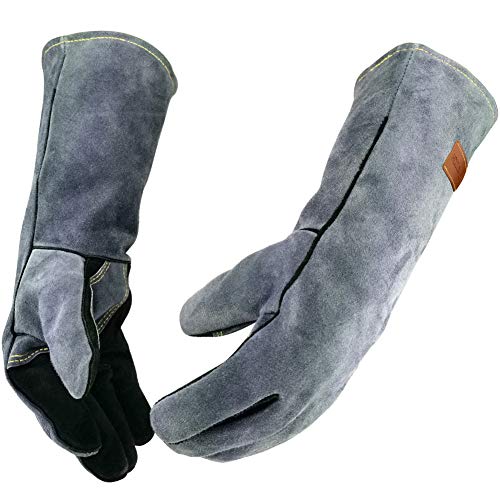
The WZQH 16-inch glove pushes the cuff past the elbow, and the layered build targets welders dealing with falling slag, overhead passes, or forge-style work where ordinary 14-inch gauntlets leave a gap. Genuine cowhide split leather outside, aluminum foil mid-layer, and a soft cotton inner liner stack heat defense into a single shell.
It also covers fireplace and grill work, which is why some owners keep a pair by the back door as well as on the bench. The longer cut makes it the most protective option here for the right kind of job.
The Helpful Details
- 16-inch length covers well past the wrist for overhead and vertical stick work.
- Three-layer construction handles sustained heat and stray sparks.
- Flame-retardant stitching keeps seams from failing mid-job.
- Useful around grills, fireplaces, and outdoor wood-fired setups too.
Some Limits To Know
- Long cuff can catch on fixtures and is overkill for benchwork.
- Heavier build takes a few sessions to break in.
- Lining absorbs sweat, so plan to air them out after heavy use.
Perfect Match For
Welders running overhead stick, vertical-up passes, or anyone who wants one glove that bridges shop and outdoor fire work.
Where A Sibling Pick Shines
Quick bench welds and lighter repair work are easier in the shorter Lincoln Electric Traditional MIG/Stick Welding Gloves K2979-ALL.
Choosing The Right Stick Welding Gloves For The Job
Stick welding throws a unique mix of heat, UV, and spatter at your hands. A glove that handles MIG cleanly can still feel underbuilt once you start whipping 3/32-inch rod at 150 amps. Picking the right pair means matching the glove to the amperage, the position, and the kind of work you’ll actually do most.
Material And Heat Defense
Split cowhide is the workhorse of stick welding gloves. It’s thick enough to absorb radiant heat, holds up against spatter, and gets more comfortable as it breaks in. Goatskin shows up on lighter TIG-leaning gloves because it’s softer and gives better fingertip feel, but it sacrifices some heat headroom. Some gloves add a foil mid-layer to reflect heat back, which helps during long high-amp passes on hot plate.
Length, Cuff, And Fit
Gauntlet cuffs cover the wrist and lower forearm, and longer 16-inch cuffs protect past the elbow for overhead and vertical work. A glove that fits too tight cuts off circulation and makes your hands colder; too loose and the rod slips in your grip. Most welders find a snug fit through the palm with a little room at the fingertips is the right starting point.
Stitching And Build Quality
The first thing to fail on a cheap glove is usually the thread, not the leather. Kevlar stitching resists burn-through at the seams, which matters when the cuff gets hit by a stray arc. Reinforced palms add life to the spots that wear through fastest, especially for welders who drag their hands across hot plate.
Dexterity Versus Protection
Stick welding leans toward protection because the heat load is real, but there is still a balance. Heavier gloves handle 200-amp passes cleanly but feel clumsy when you drop down to a 1/16-inch rod for fine work. Lighter goatskin pairs give you rod control but can run hot on heavy plate. The honest answer is that most welders end up with two pairs: one for hot heavy work, one for detailed runs.
What Smart Shoppers Overlook
Hidden Buying Traps
The biggest mistake is buying by length alone. A 16-inch cuff sounds protective, but if the palm is thin cowhide, the heat gets through long before the slag does. The next trap is trusting a “one-size-fits-most” tag when most welding gloves run closer to a work-glove fit than a tailored one. Always check the source for actual sizing guidance and consider your hand measurements, especially if you’re between standard sizes.
Why The Premium Tier Exists
Stepping up to a premium pair, like the Lincoln Electric KH641 or the WZQH 16-inch, usually buys three things: thicker or layered heat defense, longer cuffs, and better stitching. For occasional hobby work, the mid-tier options are plenty. For daily production welding or heavy fab work, the upgrade pays for itself in fewer burned-through seams and longer glove life.
Frequently Asked Questions
How Long Should Stick Welding Gloves Last?
It depends on amperage, position, and how often you weld. Hobbyists commonly get a year or more out of a mid-tier pair, while daily production welders may wear through a glove in a few months.
Are MIG And Stick Welding Gloves Interchangeable?
Many gloves cover both, but stick gloves tend to run thicker because stick welding throws more radiant heat. Using a MIG-only glove for heavy stick can shorten its life and risk heat exposure.
What Length Cuff Do I Need?
Standard 14-inch gauntlets cover the wrist and forearm, which is enough for most bench work. Overhead and vertical-up passes benefit from a 16-inch cuff that protects past the elbow.
Can I Use The Same Gloves For TIG?
You can, but goatskin pairs like the TOOLIOM TIG gloves give better fingertip control. Heavy stick gloves tend to feel clumsy for fine rod placement and foot-pedal work.
How Do I Care For Leather Welding Gloves?
Keep them dry, brush off spatter after they cool, and store them flat in a ventilated spot. A light leather conditioner now and then keeps the hide from stiffening and cracking over time.




