


A solid structural screw pulls double duty, holding deck frames tight through wet winters, keeping pergola beams true through summer heat, and quietly bearing the kind of loads that cheaper fasteners simply cannot manage. The wrong screw, meanwhile, snaps mid-drive or rusts out in two seasons, and you end up redoing the work. This list covers nine structural screws worth your time, spanning heavy timber lags, deck-ready exterior screws, and corrosion-resistant stainless options suited to coastal and pressure-treated builds.
A Snapshot Of The Selections

YOKUSO Timber Screws #14 x 10 Inch (40-Pack)
Simpson Strong-Tie SDWS22312DBB-R50 Outdoor Accents Structural Screw

nailnest 3/8″ x 6″ Hex Head Lag Screws with Washers

Wensilon #10 x 3″ Deck Screws (137-Piece)

Wensilon #10 x 3″ Black Deck Screws (137-Piece)
YOKUSO Timber Screws #14 x 8 Inch (40-Pack)

YOKUSO Timber Screws #14 x 6 Inch (40-Pack)
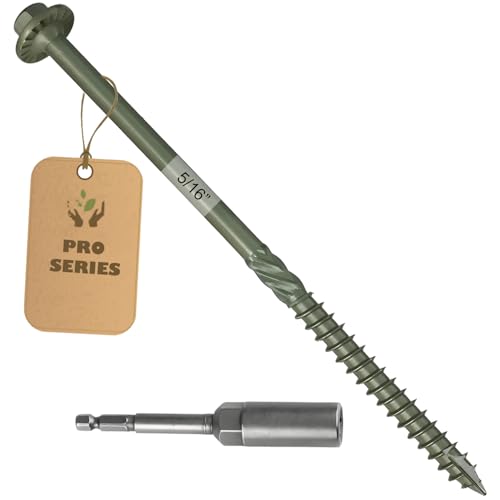
YOKUSO Timber Screws 5/16 x 12 Inch (40-Pack)
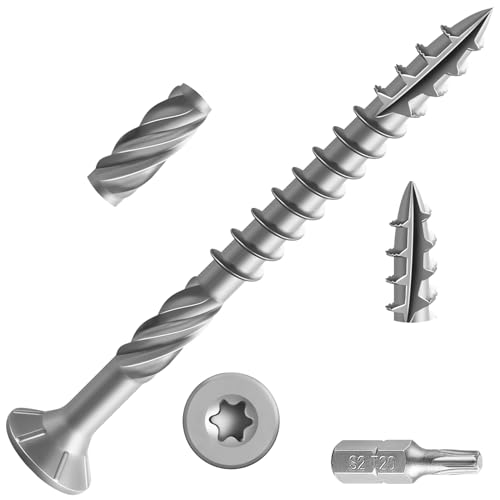
Wensilon #10 x 3″ 304 Stainless Deck Screws (58-Piece)
The Details Behind The Selections
Long structural screws earn their keep when the joint has to carry serious load, and YOKUSO’s 10-inch timber screw lands in that sweet spot for deep framing, beam-to-post connections, and thick landscape timbers. The #14 shank gives the body enough meat to resist shear, while the green epoxy coating is built to handle direct contact with pressure-treated lumber. A hex socket sits in the head for high-torque driving with an impact driver or nut driver.
Builders reaching for a lag-style screw without the hassle of pilot holes will find the self-drilling tip helpful, though dense hardwoods may still want a small starter hole. The 1500-hour salt spray rating suggests the coating holds up well in coastal air and wet climates, and depending on your soil, that extra corrosion margin can be the difference between a joint that lasts a decade and one that stains early.
Everyday Advantages
- 10-inch length drives deep into stacked beams, eliminating the need for separate through-bolts in many framing situations.
- Self-drilling tip cuts install time on repetitive runs of ledger boards or landscape tie walls.
- Green epoxy coating is rated for direct contact with pressure-treated lumber, an important consideration for ground-contact deck posts.
- Hex socket head pairs cleanly with standard nut drivers for high-torque seating.
Things To Consider
- Long screws require more battery per drive, so an 18V platform is a practical minimum for productive work.
- Hard maple, oak, or dense tropical hardwoods can still demand a pilot hole to avoid splitting or cam-out.
Key Specs
Best Suited To
You are framing a deck ledger, fastening landscape timbers, or assembling a pole barn and want lag strength without the lag install time.
Look Elsewhere When
You are working in a true coastal splash zone and need full stainless steel; the nailnest 3/8″ hex lag is the better fit there.
Simpson Strong-Tie is a name most builders recognize, and the Outdoor Accents line blends engineered hardware with a decorative matte black finish. At 3-1/2 inches with a .220-inch shank, the SDWS22312DBB is shorter than the YOKUSO lags but punches well above its size in pull-out strength. The DB coating handles exterior exposure, and the SawTooth point bites cleanly into softwoods without a pilot hole.
The black finish shows up clean against stained cedar and dark-toned lumber, which makes this screw popular on pergolas, pavilion rafter ties, and exposed timber-frame touches where you do not want a shiny silver head drawing the eye. You may find the under-head nibs especially helpful when seating the head flush without spinning out the bit, a common frustration with flatter-finish structural screws.
A Few Highlights
- Patented SawTooth point starts fast and skips pre-drilling on most softwood and mid-density framing lumber.
- Matte black DB coating blends into stained and dark-toned projects where bright zinc would look out of place.
- Under-head nibs grip the surface during final seating, reducing spin-out at the last quarter turn.
- Pairs with the Outdoor Accents washer for a matched decorative hardware look on visible joints.
Points To Keep In Mind
- The 3-1/2-inch length suits 2x-to-2x and light timber work, but falls short of the reach you need for stacked beam fastening.
- Premium engineering and finish cost more per screw than a bulk deck screw, so using it for hidden structural nailing is overkill.
Feature Snapshot
Made For
You are building a decorative pergola, pavilion, or timber-frame accent and want hardware that disappears visually while carrying real load.
Skip It When
You are fastening a deck ledger or deeper framing and need the long reach of a 10-inch timber screw; the YOKUSO #14 x 10″ pick fits that job better.
Where epoxy-coated screws are good, 304 stainless is better, and the nailnest 3/8″ x 6″ hex lag leans fully into that advantage. The 18-8 (304) stainless construction shrugs off salt air, pool chemicals, and constant wet conditions that would chew through a coated carbon-steel screw in a few seasons. Eight sets ship per box, each pairing the lag with a flat washer so the bearing surface stays clean under torque.
A traditional hex head gives you solid wrench engagement for high-torque installs, and the 6-inch length reaches comfortably through a 4×4 post into a 2x ledger or rim joist. If your project lives near a saltwater coast, beside a chlorinated pool, or anywhere routine wetting is the norm, this is the kind of fastener that pays back its higher cost by simply staying in service for decades.
Positive Takeaways
- 304 stainless steel offers a major corrosion upgrade over epoxy-coated carbon steel in coastal and poolside environments.
- Included flat washers spread load under the head, protecting softer woods from crushing during tightening.
- Hex head drives cleanly with standard ratchet or wrench hardware, no specialty bits required.
- 6-inch length is a versatile middle ground for post-to-beam, ledger-to-rim, and similar structural ties.
Honest Caveats
- Stainless costs more per piece than coated alternatives, so using it on hidden substructure is an expensive habit.
- Stainless is softer than hardened carbon steel and can gall if driven at high speed without steady pressure.
- A pilot hole is essentially required at this diameter, so plan on a drill bit and extra setup time per fastener.
Feature Card
Right Fit For
You live on the coast, manage a pool deck, or are fastening into ACQ-treated lumber and want the corrosion margin only stainless provides.
A Better Fit Elsewhere
You are framing a large deck and need hundreds of screws at a lower cost; the Wensilon bronze-coated #10 x 3″ pack delivers better value at scale.
Wensilon’s bronze-coated #10 x 3″ deck screw is the kind of box you open when a project has a long, predictable screw count. At 137 pieces per 2-pound pack, it lands roughly in the middle of a typical small deck or fence rebuild without forcing a second trip. The four-layer epoxy coating and heat-treated steel body aim at the corrosion problems that kill ordinary zinc screws inside pressure-treated lumber.
The T25 star drive and serrated threads under the head work together to reduce the kind of cam-out and over-spin that wastes time during repetitive installs. For DIYers handling a deck refresh or fence rebuild, the bronze tone sits naturally against cedar and pressure-treated boards, so the finished surface looks intentional rather than dotted with bright silver spots.
What Stands Out
- 137-piece count suits a complete deck face or fence run without leaving a half-empty box on the shelf.
- Four-layer epoxy coating is built to hold up inside pressure-treated lumber, where zinc-plated screws tend to streak.
- T25 star drive resists cam-out far better than Phillips, especially under high-torque impact driving.
- Serrated threads under the head bite into the top board, helping prevent the slight plate separation that creates squeaky decks.
Worth Noting
- A #10 shank is plenty for deck boards but light for primary structural framing; the heavier YOKUSO lags handle the load-bearing side.
- Coated carbon steel still trails full stainless in salt-air settings, so coastal builds may need a different fastener.
Whose Shelf It Belongs On
You are replacing deck boards, building a privacy fence, or tackling any project where a steady, predictable volume of exterior screws is the main need.
Another Choice May Suit
You are fastening into ACQ-treated framing and want stronger corrosion resistance; the Wensilon 304 stainless pack is the safer call.
Same body, different finish. The Wensilon #10 x 3″ black deck screw shares the 137-piece count and T25 star drive of its bronze sibling, but the dark head is the whole point. On composite decking, dark hardwoods, and stained pine, the black tone sinks into the board rather than flashing back at you, which is exactly the look most modern deck installations aim for.
The trade-off is the same as the bronze version, since the underlying steel and coating system are built for the same pressure-treated lumber environment. You may find that the black screw head stays consistent with a wide range of outdoor furniture, railing hardware, and lighting fixtures, so the whole project reads as a unified design instead of a fastener lottery.
What Works In Its Favor
- Black head blends into composite decking, dark stains, and modern railing systems for a cleaner overall look.
- T25 star drive reduces bit slippage during long deck board runs.
- 137-piece count matches the needs of a typical small-to-mid deck without leftover waste.
Trade Offs
- Dark coating can show scratches from driver contact on visible trim, so a clean bit and steady pressure matter.
- Carbon steel core, so the corrosion story is the same as the bronze version rather than the stainless Wensilon pack.
Who Should Grab It
You are installing composite decking or a dark-stained deck and want the fastener itself to disappear into the board.
Swap It Out When
You want a more decorative exposed-head look on a timber-frame accent; the Simpson Strong-Tie Outdoor Accents screw fills that role.
Step down 2 inches from the 10-inch YOKUSO pick and you land here, with the same green epoxy coating and self-drilling tip in a more workable length. The 8-inch #14 screw is a strong generalist for landscape walls, pole barn girts, and mid-depth beam ties where 10 inches is more than you need but 6 inches falls short. The 1500-hour salt spray rating holds the corrosion story together.
For weekend projects where you are sinking screws into 4×4 posts, 6×6 timbers, or stacked 2x framing, the 8-inch length keeps the run clean without forcing you to stop halfway through a deep joint. The hex socket accepts a standard nut driver, and the self-drilling tip means you spend less time swapping between drill bit and driver on a long run of fasteners.
Reasons It Performs
- 8-inch length hits a versatile middle ground for 4x posts, stacked 2x framing, and landscape wall caps.
- Self-drilling tip removes the pilot hole step on most softwood and mid-density applications.
- Green epoxy coating handles pressure-treated lumber contact without bleeding stain onto surrounding wood.
- Hex socket drives with a standard nut driver, so no specialty bits to track down.
Possible Compromises
- Hardwoods can still fight the self-drilling tip, so an extra drill step may be needed for clean seating.
- 40-piece count is modest for very large framing projects, often requiring a second box.
Perfect Match For
You are building a landscape wall, pole barn girts, or mid-depth beam ties and want a single screw length that handles most connections.
Where A Sibling Pick Shines
You are fastening thick stacked beams that demand more reach; the 10-inch YOKUSO timber screw is the better match for that scale.
The 6-inch YOKUSO is the shortest of the three timber screws in this list, and that is exactly the point. It targets the everyday framing situations, deck ledger into rim joist, joist to beam, header to king stud, where you want lag strength in a body that handles cleanly without over-penetration. The #14 shank and green epoxy coating carry the same corrosion story as the longer siblings.
If you find yourself constantly grabbing a 6-inch structural screw for general framing tasks, this pack covers the most common ground without forcing a choice between too long and too short. The self-drilling tip is a real time-saver on repetitive deck framing, and depending on your battery platform, the shorter run per screw keeps your drill working through more fasteners per charge.
Well-Handled Touches
- 6-inch length suits the most common deck and framing connections without the bulk of longer lags.
- Self-drilling tip keeps the workflow moving on long runs of joist hangers and ledger fastening.
- Hex socket drive resists cam-out better than slotted or Phillips heads under impact driving.
Factors To Consider
- Reaches may fall short for stacked beam or post-base connections where 8 or 10 inches is required.
- 40-piece count is fine for small projects, but a full deck frame will burn through multiple boxes.
Who Will Love This
You are framing a deck substructure, building shed walls, or tackling any project where a 6-inch structural screw covers the majority of connections.
Consider Something Else When
You need extra reach for a long beam run; the YOKUSO 8-inch pack handles that depth without changing your workflow.
When the project calls for deep penetration, the 12-inch YOKUSO in 5/16 diameter answers with a slender shank that still pulls serious bite. The thinner profile makes a 12-inch run easier on your drill than a full #14, while the 1500-hour salt spray epoxy coating keeps the corrosion story consistent with the rest of the YOKUSO line. It is a useful middle choice for long landscape anchors and through-post connections.
The 5/16 shank trades a little shear capacity compared to a #14, so this is a smarter pick for tension and pull-out applications than for sheer side loads. You may find it ideal for fastening tall pergola posts into ground anchors, attaching beams across a wide span, or running structural ties on a long landscape wall where extra depth prevents the joint from racking.
Notable Gains
- 12-inch length reaches through stacked posts and thick beam assemblies without separate hardware.
- 5/16 shank drills more easily than a full #14, which is a real comfort on long repetitive runs.
- Green epoxy coating is rated for direct contact with pressure-treated lumber and humid outdoor conditions.
- Hex socket accepts standard nut drivers for high-torque seating.
Small Limitations
- The thinner shank carries less side-load capacity than the #14 YOKUSO screws, so it is better suited to tension loads.
- Long screws demand a steady hand and pre-planning to keep the joint aligned before driving.
Built With In Mind
You are fastening tall pergola posts, deep landscape walls, or any assembly where reach matters more than raw shank thickness.
Where Another Pick Suits Better
You need maximum shear strength on a heavy beam-to-post tie; the YOKUSO #14 x 10″ screw brings a thicker shank to the same kind of work.
The 304 stainless version of the Wensilon deck screw is the right answer when coated carbon steel is one tier short of what you need. The 58-piece pack is smaller than the bronze alternative, but the 304 stainless body handles pressure-treated lumber, chlorinated pool decks, and salt air without the eventual bleed-through that ruins ordinary coated screws. The bronze-toned epoxy topcoat adds a second layer of protection while blending into cedar and dark wood.
A T20 star drive is the one trade-off, since most of the Wensilon line ships with T25. T20 still drives cleanly and resists cam-out, and depending on your existing bit collection, it may already match the bits from your impact driver. For projects where every screw matters and you want them to last as long as the deck itself, this is the more reliable box to reach for.
What It Does Well
- 304 stainless steel core delivers real corrosion resistance in pool, coastal, and ACQ-treated applications.
- Bronze epoxy topcoat adds a second barrier and gives the head a clean, wood-toned look.
- Serrated threads bite into the top board and reduce the plate separation that leads to squeaky deck surfaces.
- Heat-treated stainless maintains drive strength without the softness that plagues some stainless screws.
Worth Bearing In Mind
- T20 star drive differs from the T25 used on the bronze and black Wensilon packs, so the bit may need a separate purchase.
- Smaller 58-piece count is more expensive per screw than bulk coated alternatives, so budget for the upgrade.
Feature Rundown
Who Should Grab It
You are building or replacing a deck in a harsh environment and want fasteners that will outlast the boards themselves.
Not Your Match When
You are working on a large deck face where the 137-piece bronze Wensilon pack covers the volume at a more comfortable cost.
What Matters Most Before Choosing Structural Screws
Length And Shank Diameter
The first decision is how deep the screw needs to reach and how much shank cross-section the joint demands. A 6-inch #14 screw is a strong generalist for deck framing, while a 10-inch or 12-inch screw handles stacked beam and post work. A #14 shank carries more shear strength than a #10 or 5/16, but that extra steel also means more battery per drive and more split risk in dense wood. Match the screw profile to the joint rather than picking the biggest box on the shelf.
Corrosion Resistance And Coating
Outdoor fasteners live in a tough environment, and the coating determines how long the joint looks and behaves. Epoxy-coated carbon steel handles most pressure-treated lumber situations for a decade or more. Full 304 stainless is the safer call in coastal air, pool surrounds, and ACQ-treated framing where the chemistry is more aggressive. Salt spray ratings give a useful comparison point, but the real test is the wood treatment and the climate the screw lives in.
Drive Type And Installation Speed
Star drives (T20 or T25) have largely replaced Phillips on quality structural screws, since the multi-point contact resists cam-out far better under high-torque impact driving. Hex socket heads bring the most torque capacity for heavy lag work, and they accept standard nut drivers. Self-drilling tips save a step on repetitive framing runs, though hardwoods still benefit from a pilot hole regardless of tip design.
Where Shoppers Go Wrong And When The Upgrade Pays Off
Mistakes Worth Dodging
A common slip is matching a small deck screw to a primary structural joint because the box is on hand. A #10 deck screw handles deck boards, but a ledger into rim joist or a beam to post tie needs a thicker, longer structural screw or lag. Another trap is buying zinc-plated screws for pressure-treated lumber, where the modern ACQ treatment attacks ordinary zinc within a few seasons. Always match the fastener material to the lumber treatment and the local climate.
The Upgrade Payoff
Spending more on stainless steel or a thicker structural screw usually buys three things: longer service life, fewer call-backs, and the ability to use the same fastener in visible locations without bleeding stain onto the wood. On small projects, the upgrade rarely pays back. On a long-life deck, a pergola, or any coastal build, the extra cost per screw is small insurance against redoing a job five years too soon.
Frequently Asked Questions
What Is The Difference Between A Structural Screw And A Lag Bolt?
A structural screw is a high-strength wood screw with a hardened shank and a self-drilling tip that drives without a pilot hole in most applications. A lag bolt is a traditional large-diameter fastener that nearly always requires a pre-drilled hole. Structural screws install faster and resist split better, while lag bolts still win on shear in some heavy framing situations.
How Long Should A Structural Screw Be For Deck Framing?
For a typical 2x ledger into a 2x rim joist, a 6-inch structural screw is the standard choice. For a 4x post to a 2x beam, an 8-inch screw reaches properly. Stacked beam work often calls for 10-inch or longer screws, depending on the wood depth involved.
Can I Use Deck Screws For Structural Framing?
Standard deck screws are sized for surface boards, not primary load-bearing joints. Framing connections should use structural screws or lag bolts with the appropriate length and shank. The cost difference is small compared to the risk of using the wrong fastener in a critical joint.
Do Structural Screws Need Pilot Holes?
Most self-drilling structural screws eliminate the pilot hole step in softwood and mid-density lumber. Hardwoods, dense tropical species, and large-diameter lag bolts still benefit from a pilot hole to avoid splitting and to keep drive torque reasonable. When in doubt, drilling a small starter hole is cheap insurance.
How Do I Prevent Rust On Exterior Structural Screws?
Match the fastener to the environment. Epoxy-coated carbon steel handles most exterior and pressure-treated applications, while 304 stainless is the safer pick near salt water, pools, or ACQ-treated framing. Avoid mixing fastener materials on the same joint, since galvanic reactions can accelerate corrosion at the contact point.




