


Hanging anything on a stucco exterior wall stops being a quick project the moment a regular stud finder hits that rough surface. The density, wire lathe (a metal mesh embedded behind the plaster), and uneven texture push standard drywall scanners to their limits, and most false-trigger before they find a framing member. This roundup focuses on tools that handle thicker, denser assemblies, with a few accessories and magnetic options that complement electronic detection. You will find gear for exterior mounts, masonry projects, and interior rooms with stucco-style finishes.
A Side-By-Side Look
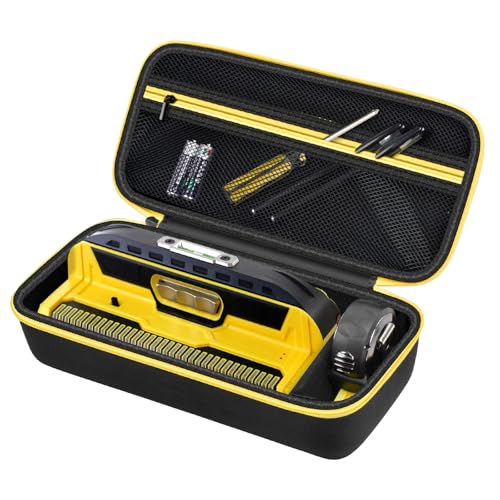
Casmilee Hard Stud Finder Case for ProSensor MAX and M210

CH Hanson Magnetic Stud Finder with Built-In Level

CH Hanson 03040 Magnetic Stud Finder 2-Pack

SNUNGPHIR CH Hanson 03040 Magnetic Stud Finder 1 Pack

Magnetic Stud Finder and Leveler, Pocket Size
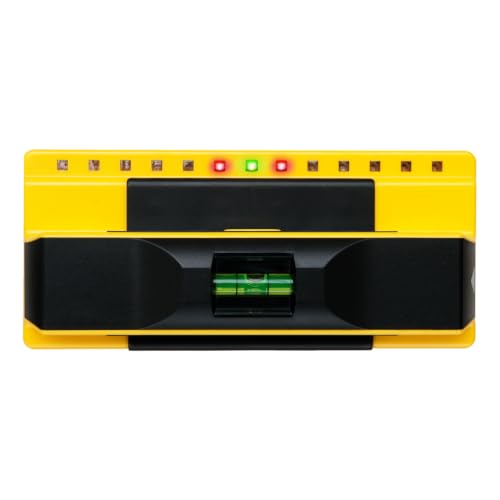
Franklin Sensors ProSensor 710+ 13-Sensor Wall Scanner

Franklin Sensors ProSensor M210 with Live Wire Detection

Franklin Sensors ProSensor T11/X1100 11-Sensor Scanner
Inside Each Recommended Option
Stucco work tends to scatter gear across driveways and ladders, which is exactly where sensors get scratched or dropped. The Casmilee hard case is shaped to fit a Franklin ProSensor MAX or M210, with an internal pocket around 11.81 by 5.11 by 2.61 inches, so the body, plus any small accessories, slide in without rattling. A smooth zipper seals the shell, and a small handle makes it easy to carry from truck to site.
For shop owners or DIYers who already own the sensor, the case extends gear life and cuts setup time. Anyone buying a scanner separately should know this is a protection accessory, not a stud finder itself.
What Pays Off
- Custom-cut interior cradles the ProSensor MAX, M210, and several older Franklin models without shifting around.
- Hard shell guards against drops, dust, and loose tool-bag debris on stucco job sites.
- Top carry handle makes the kit feel like a small toolbox, easy to grab with gloves on.
- Interior layout keeps charging cables and marking pencils in one spot, which speeds up repeat visits.
Points To Note
- The fit is tailored to specific Franklin models, so the case is not useful for other stud finder brands.
- Storing the sensor inside does add bulk for users who prefer to toss tools loose in a pouch.
Whose Shelf It Belongs On
Owners of a compatible Franklin sensor who shuttle gear between workshop and exterior stucco projects.
Where Another Pick Suits Better
The Franklin Sensors ProSensor M210 is a stronger fit for shoppers who need the actual detection tool first, rather than a protective shell for one they already own.
Magnetic stud finders earn a quiet fan base for good reason: zero batteries, no calibration, and no false readings from rogue wall moisture. The CH Hanson 0404 uses a rare earth magnet (a high-pull-strength neodymium magnet) to feel for the screws and nails holding drywall to the stud. The body also carries a built-in level, so you can mark the stud, then verify your mounting line in one motion.
On traditional drywall and plaster interiors, the magnet snaps to fasteners cleanly. True exterior stucco is a tougher ask because the embedded wire mesh attracts the magnet too, which can muddle readings near fastener points. For interior rooms with stucco-style textures, the tool holds up nicely.
Why It Works Well
- Strong rare earth magnet locates metal fasteners without any power source.
- Built-in level trims a step out of marking your TV or shelf mount.
- Pocket-friendly body stores easily in a tool belt or kitchen drawer.
- No calibration means beginners get accurate-feeling results right away.
Honest Caveats
- Exterior stucco with wire lathe can confuse the magnet because the mesh itself attracts.
- It finds fasteners rather than the full stud edge, so larger framing members need two passes to map out.
Key Product Details
Best Suited To
First-time DIYers mounting a TV, shelf, or mirror on drywall or plaster who want a tool they can toss in a drawer and forget about until needed.
Swap It Out When
The Franklin Sensors ProSensor T11/X1100 is a stronger fit for stucco exteriors where the magnet’s metal-lathe interference becomes a real problem.
Contractors and serious DIYers know that magnetic stud finders walk off job sites, end up in basements, and vanish into couch cushions. The 2-Pack version of the CH Hanson 03040 is a simple, low-cost insurance policy: keep one in the work truck, the other in the house. Each unit is a pocket-sized soft-grip locator that snaps to nails and screws behind drywall, with a two-way level for marking.
The soft-grip body is comfortable to slide across textured walls, and the rare earth magnet holds the tool in place once it finds a fastener, freeing your hand to mark the spot. You can hand a finder to a helper without slowing the project down.
Notable Upsides
- Two units per pack lower the cost-per-tool and keep one in rotation as a backup.
- Soft-grip exterior keeps the tool from scratching finished walls during long sweeps.
- Compact body fits in a back pocket, a tool belt, or the included space in a shop drawer.
- Magnetic hold lets you mark and measure with both hands once a fastener is located.
Trade-Offs
- Same wire lathe interference issue applies to exterior stucco, so a multi-sensor scanner is the better outside tool.
- Two-way level is basic and not a substitute for a full torpedo level on longer runs.
Right Fit For
Pro contractors, handymen, and homeowners with multiple renovation rooms who want a spare stud finder always within reach.
Another Choice May Suit
The Franklin Sensors ProSensor 710+ is a stronger fit for users who need electronic sensing for the wider 1 3/5 inch detection range rather than a magnetic-only locator.
For most homeowners, a single magnetic stud finder is plenty, and the SNUNGPHIR 1-pack version of the 03040 keeps the cost minimal. The design language is identical to the original CH Hanson unit: rare earth magnet, soft-grip body, and a two-way level built into the chassis. The compact form slips into a back pocket, a kitchen junk drawer, or a glove box.
It does the same work as the 2-pack on a per-tool basis, just without the spare. If you tend to lose small tools, the multi-pack makes more sense. If your tools stay put, this single unit covers casual weekend projects for years.
Points In Its Favor
- Single-unit format fits shoppers who only need one locator and prefer not to stockpile extras.
- Rare earth magnet does the work without any battery maintenance.
- Soft grip body is comfortable during longer marking sessions.
- Hands-free magnetic hold once the fastener is found.
Small Caveats
- No replacement unit if this one is lost or loaned out indefinitely.
- Exterior stucco wire mesh will still cause false-positive magnet pull in many areas.
Who Should Grab It
Casual homeowners, apartment dwellers, and garage-shop tinkerers who only mount the occasional shelf, hook, or bracket.
Where A Sibling Pick Shines
The CH Hanson 03040 2-Pack is a smarter match for households or small contractor crews that run more than one project at once.
The Kilimanjaro Magnetic Stud Finder trades the soft-grip handle for a slimmer, more bar-shaped body that doubles as a measuring and leveling tool. The two-way bubble level sits in the center of the housing, which means you can use the magnet to find a stud, then pivot the tool horizontally to confirm your mounting line. It’s the kind of dual-purpose design that earns a permanent spot in a small toolbox.
The pocket-size format makes it easy to keep in a tool apron, a kitchen drawer, or even a car glove box. For everyday indoor projects, the unit covers the basics without adding gadgets you’ll never use.
Practical Pluses
- Integrated level on the same body, so two tools fit in one pocket.
- No batteries, no calibration, no false-readings from humidity.
- Magnetic hold keeps the device in place on the wall for hands-free marking.
- Pocket-friendly bar shape slides into tight apron slots and shallow drawers.
Where It Is Less Suited
- Wire lathe inside true stucco walls can pull the magnet away from the actual fastener.
- Bar shape is less ergonomic for some users compared to a contoured grip during long sweeps.
Spec Overview
Who It Suits Best
DIYers and handymen who mount or hang things regularly and want a single tool that locates studs and checks level at the same time.
Where A Sibling Pick Shines
The Franklin Sensors ProSensor M210 is a better match for renovations involving stucco where electronic multi-sensor detection and live wire alerts become valuable.
The 710+ is the workhorse of the Franklin ProSensor line. Thirteen sensors sit across the base, and the wide LED display lights up the moment any of them passes over a stud. Because the array is so wide, you get the center and both edges of the framing member at the same time, which removes the guesswork of marking an exact location.
You press one button, sweep once, and read the lights. No calibration, no sliding side-to-side to “find the edge.” For most interior drywall and paneling, the 1 3/5 inch depth range is generous. The tool auto-adjusts for thickness in the background, so beginners get the same results as seasoned pros.
What Makes Sense
- 13 sensors mean fewer passes, less drift, and fewer misreadings on uneven surfaces.
- Wide LED bar shows stud center and edges simultaneously for confident drilling.
- One-button operation removes the calibration step that trips up cheaper units.
- Auto-depth adjustment handles 1 layer of sheetrock without manual input.
Points To Note
- Manufacturer guidance is clear that the 710+ is not recommended for thick plaster, tile, exterior stucco, or double-layer drywall, so it works best indoors.
- Battery-powered, so you will want to keep a spare set on hand for long sessions.
Who It Suits Best
Serious DIYers and remodelers working on drywall, paneling, and standard interior walls who want a fast, scan-once result without calibration fuss.
Skip It When
The CH Hanson magnetic 2-Pack is a better fit for exterior stucco where electronic multi-sensor units struggle and a magnetic-only approach handles the embedded lathe differently.
The M210 takes the multi-sensor Franklin concept and adds live wire detection, a feature that turns a renovation from “where is the stud” into “where is the stud, and is there a hot wire nearby.” The 13-sensor array still maps center and edges in one pass, and the same one-button operation eliminates the calibration step that drives people back to magnetic finders out of frustration.
On interior walls with wiring in the stud cavities, the live wire alert gives you a second reason to reposition a drill before you commit. For most stucco exteriors the unit still faces the same limits as the 710+, but for kitchen and bath remodels behind interior finishes, the live-wire addition earns its place.
Well-Handled Touches
- Live wire detection adds a safety layer to drilling into walls that hide cable runs.
- 13-sensor wide array covers a full stud in one sweep, which speeds up long rooms.
- No calibration, so you can hand it to a helper and trust the readings.
- LED bar shows both edges and center, reducing mis-marks on the first try.
Honest Caveats
- Exterior stucco, plaster, tile, and double-layer sheetrock are outside the comfort zone of this scanner.
- Live wire detection is helpful but does not replace a dedicated non-contact voltage tester for detailed electrical work.
Feature Snapshot
Who Should Grab It
Remodelers, electricians, and homeowners planning kitchen, bath, or media-wall projects where wiring runs through the stud bays.
Where Another Pick Suits Better
The Franklin Sensors ProSensor T11/X1100 is a more approachable match for users who don’t need live wire detection and want a slightly simpler, lower-tier unit.
The T11/X1100 sits one step below the M210 in the Franklin line, dropping the live wire detection in exchange for a friendlier price. It still uses 11 sensors across the base, which is far more than a typical 1- or 2-sensor electronic finder, and the same one-mode operation means you press, sweep, and read the LED bar.
The detection depth of 1 3/5 inches covers standard drywall and most interior paneling. For stucco exteriors, the same caveats apply as the larger Franklin models, so plan on using a magnetic companion or a more specialized tool for those surfaces. Inside the home, this unit covers a long list of project types without much fuss.
What Stands Out
- 11 sensors give you more accuracy than older 1- or 2-sensor electronic finders.
- One-mode operation removes mode-switching confusion on the job.
- LED bar shows center and edges in a single sweep for confident marking.
- Auto-calibration in the background means no setup ritual before each scan.
Potential Compromises
- Exterior stucco, tile, thick plaster, and double-layer drywall are not the intended use case.
- No live wire detection, so users drilling near cables will want a separate voltage tester.
Feature Card
Right Fit For
Everyday DIYers hanging cabinets, mirrors, and TVs on standard interior walls who want a step up from magnetic-only tools without paying for live wire detection.
Not Your Match When
The Franklin Sensors ProSensor M210 is a stronger fit for projects where live wire detection is the priority feature, such as kitchen and bath remodels.
What To Weigh Before Choosing Stud Finders For Stucco Walls
Wall Construction Comes First
Stucco rarely means a single uniform material. Most exterior assemblies are a base layer, a wire mesh, a scratch coat (the first rough plaster layer), and a finish coat. The total thickness often runs well past the 1 3/5 inch detection depth that defines most electronic stud finders. Knowing your wall composition sets the floor for which tool category makes sense, and that decision is more important than the brand on the box.
Magnetic vs. Electronic Detection
Magnetic finders hunt for metal fasteners, while electronic finders sense density shifts across the wall. On wire-lathe stucco, magnets can stick to the mesh itself and give false positives, while electronic units often bounce off the layered density and refuse to settle. For interior plaster and standard drywall, either approach works. For true exterior stucco, the honest answer is that no consumer-grade stud finder handles every project perfectly, and a magnetic companion is often the safer bet.
Sensor Count and Detection Array
More sensors across the base means the tool reads a wider strip of wall at once. A 13-sensor Franklin unit lights up a full stud in one pass, while a single-sensor unit requires slow side-to-side sweeping to triangulate the edge. The wider array is friendlier to beginners and faster on big projects. The trade-off is cost and size, since wider units cost more and take up more drawer space.
Power, Calibration, and Reliability
Battery-powered electronic units need a fresh set of batteries when you finally pick the project back up. Magnetic units skip that worry entirely. Calibration is another quiet factor. Tools that auto-adjust in the background save time and reduce user error, which matters when you are up on a ladder or working in awkward corners.
Key Considerations Across These Picks
Common Shopping Slip Ups
The single biggest mistake is trusting a basic electronic stud finder to map an exterior stucco wall on the first pass. The layered mesh and density will throw off most single-sensor and dual-sensor units. Another frequent error is choosing a finder without thinking about wall thickness. A unit rated for standard drywall will read past the depth it can actually sense, and you’ll chase ghosts on the wall. Look for honest depth ratings, sensor counts, and clear wall-compatibility language before committing.
Where The Extra Money Goes
The price jump from magnetic to multi-sensor electronic isn’t about hype. More sensors mean fewer sweeps, fewer misreads, and faster mapping. The very top of the line adds live wire detection, which is a real safety feature on remodels where you can’t see what’s behind the drywall. For most interior DIY work, a mid-tier multi-sensor unit hits the sweet spot, but for exterior stucco the conversation shifts back to magnets, patience, and confirming with a small test hole.
Frequently Asked Questions
Do stud finders work through stucco?
Most consumer-grade electronic stud finders struggle with exterior stucco because the layered mesh and density exceed their detection range. Magnetic finders are the more reliable option on true stucco exteriors, and a small test hole or pilot drill is the surest way to confirm any reading.
What is the best type of stud finder for thick walls?
A multi-sensor electronic unit with the deepest detection rating your budget allows handles thicker interior walls best. For very thick or layered exterior stucco, switch to a rare earth magnetic finder to avoid the false positives that plague electronic units on wire lathe.
Are magnetic stud finders accurate enough for heavy mounts?
Magnetic finders accurately locate the fasteners in a stud, which is exactly the structural point you want to drill into. For heavy TV mounts or shelving, combine the magnetic reading with a test hole to confirm you hit the stud’s center before committing to the final screw.
Can a stud finder detect live wires?
Only certain models include live wire detection as a dedicated feature, such as the Franklin ProSensor M210. Basic magnetic and single-mode electronic finders will not alert you to live wires, so plan to use a separate non-contact voltage tester on any project that crosses a wall with potential electrical lines.
How deep can a stud finder sense?
Most consumer electronic units are rated for 1 3/5 inches of drywall. Anything beyond that, including most exterior stucco assemblies, falls outside the standard rating. Always check the manufacturer’s depth specification before relying on a unit in a thick wall.




