


Whether you’re reclaiming a yard full of old oak stumps or running a small tree-care operation, the right grinding setup saves hours of back-breaking work. PTO-driven attachments make sense for acreage owners with a compact tractor, while handheld sharpeners keep your teeth cutting fast between jobs. This roundup covers a heavy-duty 3-point grinder and the field-friendly sharpening tools that keep carbide teeth and chipper blades in working shape.
A Fast Comparison Of The Options

ARBOREDGE Small-Diameter Tooth Sharpening Tool

MechMaxx SG24 PTO Stump Grinder Attachment

ARBOREDGE Top Face Mower Blade Sharpener

ARBOREDGE Back Face Disc Chipper Sharpener
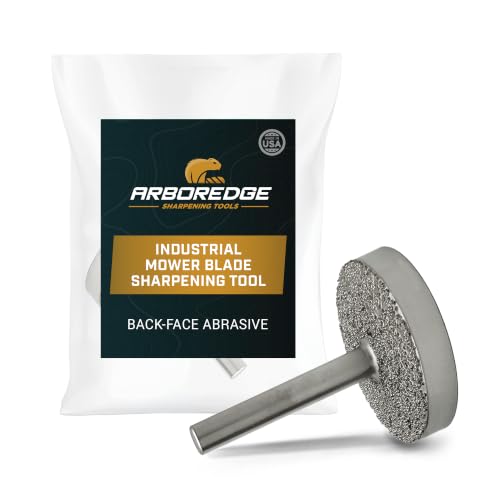
ARBOREDGE Back Face Mower Blade Sharpener
More Details On Our Top Picks
When carbide-tipped stump grinder teeth go dull, pulling them off the machine to bench-grind each one eats up a whole afternoon. The ARBOREDGE Small-Diameter Stump Grinder Tooth Sharpening Tool is built for the opposite approach: a diamond-coated abrasive that touches up cutting edges right on the wheel, no disassembly required.
For crews running multiple grinder jobs per week, that kind of in-place maintenance can mean the difference between finishing a route and sending a truck home early. The small-diameter profile suits the tighter tooth geometry found on many compact and mid-size stump grinders, so you get a precise contact patch without over-grinding the carbide tip.
Good Reasons To Consider
- Sharpen teeth without removing them from the flywheel
- Diamond-coated surface designed for carbide cutting edges
- Compact size fits the tight spaces around small-diameter teeth
- Cuts downtime between grinding jobs on busy service days
Things To Consider
- Best suited to small-diameter teeth, so larger industrial wheels may need a different tool
- Routine use still requires periodic professional sharpening for heavily worn teeth
Who It Suits Best
Tree service crews and property managers running small to mid-size stump grinders who want fast field touch-ups without pulling teeth.
Look Elsewhere When
Operators running large-diameter industrial flywheels should consider the MechMaxx SG24 PTO Stump Grinder Attachment, which is sized for heavy acreage work.
For landowners with a 15 to 45 horsepower compact tractor already in the shed, a 3-point stump grinder turns existing iron into a stump-removal rig. The MechMaxx SG24 bolts to a Category 1 hitch and runs off the tractor’s PTO (power take-off), the spinning driveshaft at the back of the machine that delivers engine power to attachments.
The 24-inch flywheel carries 34 tungsten carbide teeth, a hard-metal cutting tip that holds an edge far longer than plain steel. A 6-inch cutting depth per pass handles most residential and light commercial stumps, and 540 RPM PTO input at 1200 N·m of torque gives the wheel the bite needed for root systems. Compared to the handheld sharpener above, this is the tool that actually does the grinding.
Benefits That Matter
- 34 tungsten carbide teeth handle dense hardwood root balls
- 3-point hitch design fits standard Category 1 compact tractors
- 540 RPM PTO compatibility matches common compact tractor outputs
- 6-inch cutting depth per pass reduces the number of repositioning steps
Worth Noting
- Requires a compatible tractor in the 15-45 HP range, so it’s not a standalone tool
- Carbide teeth still need periodic sharpening, which is where the ARBOREDGE Small-Diameter Sharpening Tool comes in
- Operating a 3-point grinder safely takes practice and protective gear
Quick Facts
Made For
Compact tractor owners clearing multiple stumps on rural property or small farms who already have the horsepower to run a Category 1 attachment.
Consider Something Else When
Homeowners with only one or two stumps and no tractor should look at the ARBOREDGE sharpening tools paired with a rental grinder instead of buying this attachment.
Dull mower blades don’t just give a ragged cut. They tear grass instead of slicing it, leaving brown tips that stress the lawn and invite disease. The ARBOREDGE Industrial Mower Blade Sharpener (Top Face Abrasive) is a field tool designed to freshen the top cutting edge on industrial mower blades without unbolting them from the deck.
For landscaping crews mowing dozens of properties a week, a quick mid-day touch-up can replace a full blade swap. The top-face abrasive design suits the angle most commercial mower manufacturers use on the primary cutting edge, so you get a clean hone rather than a rough grind.
A Few Highlights
- Refines the top face of mower blades without removal from the deck
- Helps maintain cut quality between full sharpenings
- Compact enough to keep in a service truck or trailer
Points To Keep In Mind
- Works on the top face only, so severely nicked blades still need a full resharpening
- Industrial-grade use means home gardeners with a single push mower rarely need this much tool
Right Fit For
Commercial mowing crews running industrial walk-behinds or zero-turns who want a fast way to keep blades cutting cleanly across long workdays.
Not Your Match When
Homeowners with a single residential lawn mower should look at the ARBOREDGE Back Face Mower Blade Sharpener for occasional touch-ups instead.
Disc-style wood chippers use a heavy spinning plate with hardened steel blades along its edge. CBN (Cubic Boron Nitride) is a super-hard abrasive second only to diamond, and it handles the heat-treated steel those chipper blades are made from without dulling quickly. The ARBOREDGE Back Face tool targets the rear of the blade edge, where most of the wear shows up on disc chippers that chew through brush day after day.
Because the abrasive removes only a small amount of material per pass, you can refresh an edge several times before sending blades out for a full professional grind. That adds up to real savings for tree services running chippers hard through storm season.
Useful Touches
- CBN abrasive handles hardened steel blade edges
- Light material removal extends time between full sharpenings
- Designed for routine in-shop or trailer-side maintenance
Honest Caveats
- Built for disc chippers specifically, not drum-style chipper designs
- Deeply nicked or chipped blades still require professional regrinding
Feature Card
Best Suited To
Tree service and land-clearing operators running disc chippers who want to handle routine edge maintenance in-house.
Where A Sibling Pick Shines
For stump grinding teeth rather than chipper blades, the ARBOREDGE Small-Diameter Tooth Sharpening Tool is the better-targeted option.
The companion piece to the top-face sharpener, the ARBOREDGE Back Face Abrasive version works the opposite edge of industrial mower blades. Running both tools as a pair lets a maintenance routine cover the full bevel, which is what most commercial mower manufacturers recommend for clean cuts.
For shops managing a fleet of mowers, the back-face pass is often the one that gets skipped because it requires flipping the blade. This tool keeps the job quick enough to actually do on a service schedule rather than putting off until blades are visibly dull.
A Favorable Mix
- Targets the back face of mower blades, completing the edge profile
- Pairs naturally with the top-face sharpener for full-bevel maintenance
- Helps fleet managers stretch time between blade replacements
Small Caveats
- Most effective as part of a two-tool routine, so buying it alone limits the benefit
- Industrial-grade design is more than a casual home gardener typically needs
Whose Shelf It Belongs On
Equipment fleet managers and professional mowing operations maintaining multiple industrial mowers who want a complete sharpening routine.
Skip It When
Homeowners with a single residential mower should choose the MechMaxx SG24 PTO Stump Grinder Attachment paired with a rental blade sharpener for occasional use.
Picking The Right Setup For Your Stump Grinding Work
Match the tool to the tractor and the workload
A 3-point PTO grinder like the MechMaxx SG24 only makes sense if you already own (or plan to own) a compatible compact tractor in the 15 to 45 HP range. For one-off backyard stumps, renting a self-contained grinder often beats the cost of buying an attachment plus a tractor to run it. Acreage owners with a long list of stumps across a property, however, recover the cost fast.
Think about the teeth, not just the machine
Carbide-tipped teeth cut faster and last longer than plain steel, but they require diamond or CBN abrasives to sharpen properly. Pulling teeth off the flywheel to grind each one is a slow, painful process, and field-friendly sharpeners from ARBOREDGE exist specifically to skip that step. Budget for a sharpening tool alongside the grinder itself, or you’ll send blades out for service more often than you’d like.
Consider your blade inventory beyond stumps
Many landscaping and tree-care pros also run industrial mowers and chippers. The same maintenance philosophy applies across the fleet, so picking a sharpening system that covers teeth, chipper blades, and mower blades under one brand simplifies training and storage. Mixing and match across brands is fine, but a consistent abrasive type reduces the learning curve.
Define maintenance space before you buy
On-machine sharpeners work great in the field, but heavily worn edges still need bench work. Make sure you have a vise, a stable work surface, and good lighting where you’ll do the heavier grinding. Most crews end up dedicating a corner of the shop or trailer to this kind of work.
Key Considerations Across These Picks
Common Shopping Slip Ups
A frequent misstep is buying a 3-point grinder without confirming the tractor’s PTO horsepower and hitch category. Category 1 is the standard on most compact tractors, but a few models use quick-hitch systems that need an adapter. Check your tractor’s manual before committing to an attachment.
Another trap is underestimating how often carbide teeth need touch-ups. Run a grinder hard for a week and the cutting edges dull fast, so skimping on a sharpener usually costs more in lost productivity than the tool itself.
Where The Extra Money Goes
Premium PTO grinders like the MechMaxx SG24 cost more because of the flywheel mass, tooth count, and torque handling. More teeth mean a smoother cut and longer intervals between tooth replacements. Higher torque ratings also let the wheel keep spinning through dense root systems instead of bogging down.
Sharpening tools at the higher end use diamond or CBN abrasives, both of which stay sharp far longer than conventional aluminum oxide. For crews grinding daily, that durability adds up to fewer abrasive replacements and more consistent results across the fleet.
Frequently Asked Questions
How often should stump grinder teeth be sharpened?
Touch up the cutting edges every few working hours under normal use, and schedule a full professional sharpening once you notice a clear drop in cutting speed. Car owners commonly report that waiting too long shortens tooth life.
Can a compact tractor safely run a 3-point stump grinder?
Yes, provided the tractor falls within the grinder’s horsepower range and you follow the manufacturer’s hitch and PTO safety steps. Wear proper protective gear, including eye and hearing protection, and clear the work area before each pass.
What’s the difference between diamond and CBN abrasives?
Diamond abrasives suit carbide-tipped tools like stump grinder teeth, while CBN (Cubic Boron Nitride) handles hardened steel like chipper blades. Using the wrong abrasive shortens its life and can damage the blade edge.
How deep can a 3-point stump grinder cut per pass?
The MechMaxx SG24 reaches about 6 inches per pass, which is typical for compact-tractor-mounted grinders. Deeper cuts require multiple passes and repositioning the grinder around the stump.
Do these sharpening tools work on all stump grinder brands?
The ARBOREDGE sharpeners target tooth geometry common across many compact and mid-size grinders, but always compare the tool’s profile to your specific teeth. Larger industrial flywheels may need a different sharpener sized for the tooth pattern.




