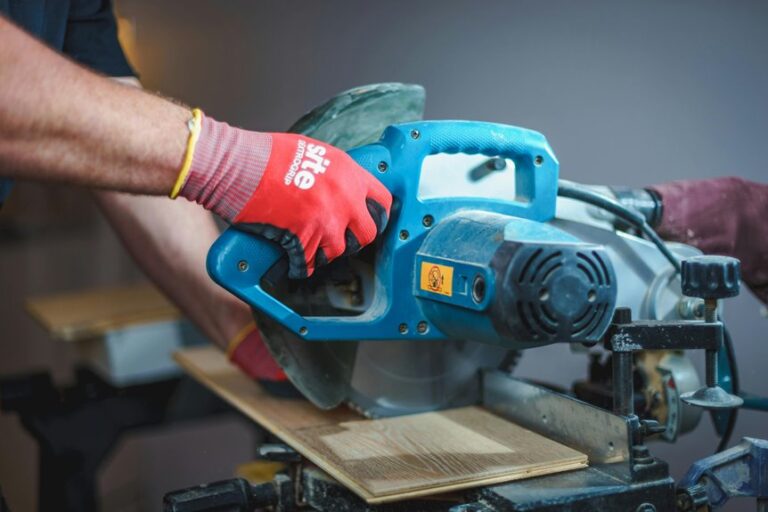
A cabinet saw gives you precision, but it doesn’t fit in a one-car garage or roll out to a client’s basement. Furniture makers who build at home or on small job sites need a portable table saw that can still crosscut hardwood cleanly, hold a fence true, and handle sheet goods without a fight. The nine picks below span corded jobsite workhorses, a cordless option, and a shop-bound cabinet saw for the dedicated maker. Each one earned its spot for a specific reason: rip capacity, dust control, fence accuracy, or pure cut quality.
A Quick View Of The Lineup

DEWALT Portable Table Saw 8-1/4 inch with Stand (DWE7485WS)

DEWALT 15 Amp 8-1/4 in. Compact Portable Jobsite Table Saw (DWE7485)
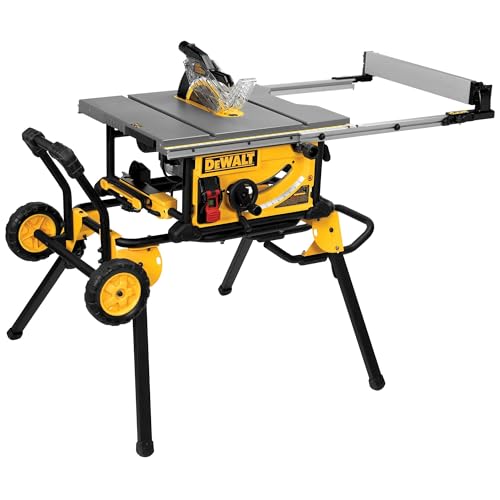
DEWALT 10 Inch Table Saw with Rolling Stand (DWE7491RS)
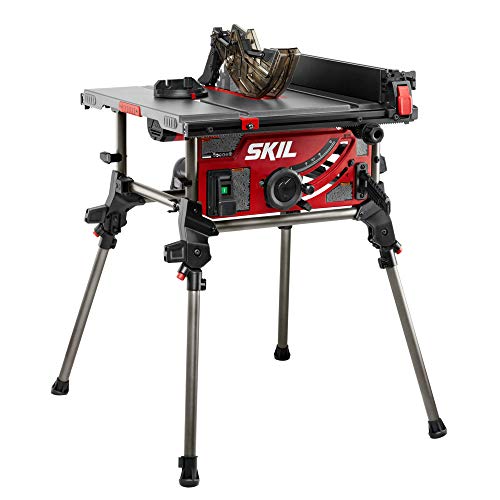
SKIL 15 Amp 10-Inch Jobsite Table Saw with Folding Stand (TS6307-00)

BOSCH GTS18V-08N PROFACTOR 18V 8-1/4 In. Portable Table Saw (Bare Tool)
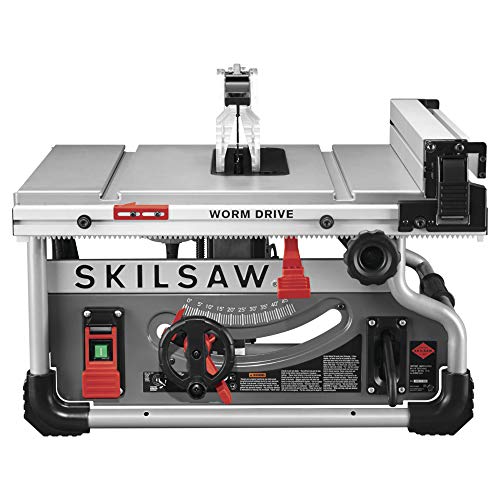
SKIL 8-1/4 in. Portable Worm Drive Table Saw (SPT99T-01)

SKIL 15 Amp 8-1/4 in. Compact Portable Jobsite Table Saw (TS6308-00)

Evolution R10TS 10 in. Jobsite Table Saw with Dado Plate

Laguna F2 Fusion Tablesaw
More Details On Our Top Picks
Furniture makers who cut in a driveway or a small basement shop need a saw that sets up fast and stays accurate. The DEWALT DWE7485WS pairs an 8-1/4 inch blade with a 15 amp motor that holds 5800 RPM under load, which is plenty of headroom for ripping oak and maple sheet goods. You get 24.5 inches of rip capacity to the right of the blade, which is enough to break down a 4×8 plywood panel in two passes without flipping it.
The rolling stand folds down for transport, and on-board storage holds the miter gauge, push stick, and wrenches so nothing goes missing between sessions. For most home furniture makers, this is the saw that lives in the garage and earns its keep on every project.
Good Reasons To Consider
- 24.5 in. rip capacity handles full sheet goods with a single flip of the workpiece.
- Rack and pinion fence stays parallel to the blade for repeatable, square cuts.
- Power-loss reset prevents a surprise restart after a tripped breaker.
- On-board storage keeps the miter gauge, wrenches, and push stick close at hand.
- Up to 48-degree bevel capacity covers compound cuts for tapered legs.
- Rolling stand design trims setup time at the start of a session.
Trade Offs To Consider
- 8-1/4 in. blade limits maximum depth of cut compared to 10 in. saws like the SKIL TS6307-00.
- Stock blade is fine for framing but worth upgrading for furniture-grade finish cuts.
Quick Facts
Who Will Love This
Intermediate furniture makers who build at home and want a reliable, no-drama jobsite saw that also works as a primary shop tool.
Consider Something Else When
Shop owners needing a wider rip and full 10-inch capacity should step up to the DEWALT DWE7491RS instead.
The DWE7485 is the same saw as pick number one minus the rolling stand, and for many furniture makers working in a tight shop that’s actually a better deal. The compact footprint slides under a workbench between sessions, and the 15 amp motor delivers the same 5800 RPM rip performance you get on the wheeled version. The 24.5 inch rip capacity is unusually generous for an 8-1/4 inch saw in this weight class.
You trade the stand for portability, but the rack and pinion fence and on-board storage all stay. For a garage shop where the saw lives on a shelf when not in use, this is the cleaner choice.
Practical Advantages
- Compact body fits on a shelf or against a wall when not cutting.
- Identical 15 amp motor and 24.5 in. rip capacity as the wheeled sibling.
- Rack and pinion fence locks parallel for clean, square rip cuts on plywood.
Points To Note
- No stand means you’ll want a sturdy workbench or shop-made outfeed table.
- Carrying it across a job site gets old without the rolling stand of the DWE7485WS.
Made For
Garage and basement furniture makers who already have a bench and want the cutting power without the extra footprint of a stand.
Look Elsewhere When
Anyone hauling a saw between multiple job sites will appreciate the rolling stand on the DEWALT DWE7485WS more than the savings here.
When the project calls for thick hardwood, large panels, or repeated dado cuts, an 8-1/4 inch saw starts to feel small. The DEWALT DWE7491RS steps up to a 10 inch blade, a 15 amp motor spinning at 4800 RPM, and a 32-1/2 inch rip capacity that handles full 4×8 sheet goods with room to spare. Compared to the DWE7485 above, this saw cuts deeper and rips wider in a single pass.
The rolling stand locks solidly under load, and tool-free guard adjustments speed up blade swaps. For a furniture maker who builds dining tables, dressers, or bookcases out of thick stock, this is the workhorse pick.
Standout Benefits
- 32-1/2 in. rip capacity rips a 4×8 sheet cleanly without flipping the panel.
- 10 in. blade adds depth for thick hardwood, dados, and rabbets.
- Rolling stand folds for transport and locks for stable cuts.
- Tool-free guard adjustments speed up blade swaps between rip and crosscut setups.
Worth Bearing In Mind
- Heavier and bulkier than 8-1/4 in. options, so plan for shop space.
- Lower 4800 RPM blade speed can leave a slightly rougher edge on hardwood compared to the smaller DEWALT saws.
Feature Snapshot
Best Suited To
Full-time furniture makers building large pieces who need the extra rip width and blade depth that 8-1/4 inch saws can’t match.
Reach For A Different Pick When
If your shop is small and most of your work is small joinery, the compact SKIL TS6308-00 is easier to live with day to day.
The SKIL TS6307-00 brings 10 inch capacity to a price point that doesn’t punish first-time furniture builders. A 15 amp motor drives the blade, and the rack and pinion fence rails adjust smoothly and hold alignment during long rip cuts. The 25-1/2 inch rip capacity is enough to handle most cabinet panels and small plywood sheets without frustration.
You get an integrated folding stand, a dust port elbow for shop-vac hookup, and a 0 to 45 degree bevel range for angled cuts. For someone setting up a first shop on a tight budget, this saw covers the core needs without cutting corners where it counts.
What Earns Its Place
- 10 in. blade gives real depth-of-cut headroom at a friendlier price than premium 10 in. options.
- Folding stand sets up and breaks down without tools.
- Dust port elbow connects to a shop vac for cleaner cuts in a small shop.
- 0-45 degree bevel handles common furniture angles like tapered legs.
Some Limits To Know
- 25-1/2 in. rip capacity requires flipping 4×8 plywood in two cuts.
- Owners commonly report the stock blade works for framing but benefits from a swap for fine furniture cuts.
Perfect Match For
Beginner to intermediate furniture makers who want a 10 inch saw without paying for a premium brand badge.
Swap It Out When
Anyone needing a wider rip for sheet goods will get more from the DEWALT DWE7491RS at the cost of some extra weight.
Most cordless tools give up a little muscle for the freedom, but Bosch built the GTS18V-08N around a brushless motor and BITURBO technology that claims corded-class performance on a CORE18V battery. For a furniture maker building at a client’s home, on a deck, or anywhere without a clean power drop, that freedom is real. The 8-1/4 inch blade keeps the weight manageable, and the saw stays accurate enough for finish cuts on hardwood.
This is a bare tool, so you bring your own battery and charger. If you’re already in the Bosch PROFACTOR ecosystem, that keeps the cost down. If you’re not, the cordless premium is real, but the trade is genuine portability.
Strong Points
- Brushless motor and BITURBO tech deliver corded-class cuts on a battery platform.
- True portability for sites without a clean power drop or extension cord.
- Pairs with existing Bosch CORE18V batteries and chargers for current users.
Honest Caveats
- Bare tool pricing doesn’t include battery or charger, which adds real cost.
- Rip capacity is smaller than the corded DEWALT and SKIL options on this list.
Whose Shelf It Belongs On
Makers already invested in Bosch PROFACTOR batteries who build on location and need to ditch the extension cord for good.
Where A Sibling Pick Shines
If you cut mostly in a shop with a 15 amp circuit, the corded SKIL TS6307-00 delivers more rip width per dollar.
Worm drive saws built their reputation cutting tough framing lumber all day, and the SKIL SPT99T-01 brings that torque to furniture-sized work. The 8-1/4 inch blade pairs with a 2-5/8 inch depth of cut, which is more than enough for typical furniture stock. The 25 inch rip capacity handles plywood casework, and all-metal construction stands up to a lifetime of rolling in and out of the van.
Compared to the DEWALT DWE7485, the SPT99T-01 trades a slightly smaller rip capacity for the worm drive’s relentless torque in dense hardwood. The rack and pinion fence adjusts quickly, and the build feels closer to a contractor saw than a typical jobsite model.
What Works In Its Favor
- Worm drive power trains maintain torque through dense hardwood without bogging down.
- All-metal construction holds up to jobsite abuse over years of use.
- 2-5/8 in. depth of cut handles most furniture-grade stock.
- 25 in. rip capacity manages full sheets with a single flip.
What To Weigh
- Heavier than direct-drive 8-1/4 in. saws, so consider transport logistics.
- Higher price than the SKIL TS6307-00 and the DEWALT DWE7485.
Spec Overview
Right Fit For
Experienced furniture makers who regularly cut dense hardwood like white oak, hard maple, or walnut and want a saw that won’t slow down.
A Better Fit Elsewhere
Casual builders who don’t push the saw hard day to day will do fine with the lighter DEWALT DWE7485 for less money.
The SKIL TS6308-00 strips the saw down to what mobile furniture makers actually need: a compact body, a 15 amp motor, and a rack and pinion fence that stays parallel cut after cut. There’s no stand in the box, which is a feature if you already have a bench or build your own outfeed. The 8-1/4 inch blade handles deck boards, sheet goods, and crosscuts with the right blade installed.
The optional SFS0001 stand sells separately, and you should plan for that if you want the same setup-and-roll convenience the wheeled DEWALT and SKIL models offer. For someone carrying the saw up stairs or into a client’s home, the lighter weight is worth the trade.
Where It Helps
- Lightweight body is easier to carry into apartments, basements, and second-story shops.
- Rack and pinion fence rails keep the fence parallel to the blade through long cuts.
- Compatible with the optional SKIL SFS0001 stand for rolling-shop setups.
Possible Compromises
- Stand sells separately, which raises the real cost of a full setup.
- 8-1/4 in. blade limits depth compared to the SKIL TS6307-00 with a 10 in. blade.
Who Should Grab It
Mobile furniture makers and finish carpenters who carry their tools up stairs or into tight workspaces and want a light, accurate saw.
Not Your Match When
Shop-based builders wanting a single bundled package should look at the SKIL TS6307-00 with its included stand.
The Evolution R10TS stands out for two reasons furniture makers care about: a zero-clearance throat plate for cleaner cuts and a dado plate included in the box. The 15 amp motor delivers a 3-3/8 inch depth of cut and a 26 inch rip capacity, which covers typical cabinet and casework builds. A 0 to 45 degree bevel handles angled joinery.
The included cross-cut sled and rack and pinion fence system help you hit repeatable, square cuts without buying extras. For makers focused on joinery, dados, and rabbets, this saw arrives ready to do that work on day one.
Features That Help
- Zero-clearance throat plate reduces tear-out on finished cuts.
- Included dado plate supports joinery cuts without a separate purchase.
- 26 in. rip capacity and 3-3/8 in. depth of cut cover most furniture stock.
- Cross-cut sled included for repeatable, square cuts out of the box.
Things To Consider
- Zero-clearance inserts need to be re-cut if you change blade size.
- 26 in. rip is narrower than the DEWALT DWE7491RS for full sheet work.
Key Product Details
Built With In Mind
Furniture makers focused on joinery, dados, and rabbets who want those features included rather than added later.
Skip It When
Shops that prioritize maximum rip width for sheet goods will find more reach in the DEWALT DWE7491RS.
The Laguna F2 Fusion is a different animal from the portable saws above. This is a stationary shop saw, freight-shipped, that brings cabinet-saw precision to a serious furniture workshop. If you build at home, sell pieces, or run a one-person shop, the F2 is the kind of tool you grow into rather than out of.
The trade is real: this saw is heavy, needs a dedicated spot, and ships via LTL freight with a phone-call delivery appointment. For a hobbyist, that’s overkill. For a maker producing casework day after day, the F2 pays for itself in cut quality, dust collection, and a fence that holds tight across thousands of cuts.
The Practical Payoff
- Cabinet-saw class precision for fine furniture and casework.
- Heavy-duty build absorbs vibration for clean cuts in figured hardwood.
- Shop-grade dust collection keeps the air clearer during long sessions.
Where It Is Less Suited
- Freight shipping and a required delivery phone call add setup steps.
- Stationary design means it stays put, unlike every other saw on this list.
- Overkill for hobby builders who don’t need daily cabinet-saw accuracy.
Who It Suits Best
Full-time furniture makers and serious hobbyists with a dedicated shop space who want stationary precision over portability.
Where Another Pick Suits Better
Anyone working out of a garage or a job site will find the DEWALT DWE7491RS far more practical for daily use.
What To Look For Before Choosing A Furniture Saw
Blade Size And Cut Depth
An 8-1/4 inch blade cuts roughly 2-1/2 inches deep, which covers most furniture stock. A 10 inch blade adds depth for thick hardwood, large joinery, and standard 2x construction lumber. The trade is weight and size: 10 inch saws weigh more and demand more floor space, but they open up cuts the smaller saws can’t reach. Pick the blade that matches your typical stock, not the biggest number on the box.
Rip Capacity And Fence Accuracy
Rip capacity is the distance from the blade to the inside edge of the fence, and it determines whether you can break down a 4×8 sheet in one or two passes. Anything below 25 inches forces a flip. The fence also matters: a rack and pinion fence stays parallel during adjustment, while a slide-rail fence can drift on cheaper saws. For furniture work, fence accuracy is the difference between square joinery and gaps that fill with putty.
Power Source And Portability
Corded 15 amp saws deliver consistent power and are usually cheaper per feature. Cordless saws like the Bosch GTS18V-08N trade some cost for genuine mobility, which matters on remodel jobs or in buildings without clean power. Consider where you’ll actually cut most often, and pick the saw that fits the work, not the workshop.
Build, Dust Control, And Long-Term Use
All-metal tables and stands hold accuracy longer than stamped steel. A dust port that actually connects to a shop vac keeps your lungs clearer and your measurements truer. In most small shops, dust control is the upgrade that pays for itself fastest.
What Shoppers Often Get Wrong
Misjudging Rip Capacity
A saw that can’t rip a full sheet in two passes costs you time on every cabinet and casework project. Measure your largest panel before you buy, and buy more rip than you need today.
Skipping The Stand Question
Some 8-1/4 inch saws ship without a stand, which sounds fine until you’re bending over a saw on the floor. Plan for a bench, a rolling cart, or the optional stand that pairs with the saw.
Overpaying For Power You Won’t Use
A 15 amp motor on a stationary cabinet saw is great, but a 15 amp motor in a 60 pound jobsite saw is the wrong tool for fine furniture if you never leave the shop. Match the saw to the work, not the spec sheet.
Common Shopping Slip Ups
A lot of first-time furniture saws get bought on blade size alone, then disappoint when the fence drifts or the rip capacity falls short. The honest path is to list the three cuts you make most often, match the saw to those cuts, and skip the rest. For a small home shop, that usually means an 8-1/4 inch saw with a good fence. For a working maker, that often means stepping up to a 10 inch saw with a rolling stand.
Where The Extra Money Goes
Stepping from a budget 10 inch saw to a cabinet saw brings vibration damping, heavier cast components, a better fence, and integrated dust collection. None of those upgrades show up in a single cut, but they show up over a year of work in cleaner edges, fewer measurement slips, and a shop that stays dust-free enough to actually see the workpiece. For a serious maker, that upgrade pays for itself. For a weekend builder, a portable saw still gets the job done.
Frequently Asked Questions
What size table saw is best for a small furniture shop?
A portable 8-1/4 inch saw with a rack and pinion fence handles most furniture work, especially if your projects stay under 24 inches wide. The DEWALT DWE7485 or the SKIL TS6308-00 are both solid fits for a one-car garage or basement shop.
Do I need a 10 inch table saw for furniture making?
You need a 10 inch saw only if you cut thick hardwood, work with standard 2x material, or want a wider rip capacity for full sheet goods. For cabinet sides, drawer parts, and small tables, an 8-1/4 inch saw is plenty.
Can a jobsite table saw replace a cabinet saw?
A jobsite saw handles most home-shop furniture work, especially with a quality blade and a stable stand. A cabinet saw delivers better dust collection, lower vibration, and finer finishes for production work, but it’s not required for the hobby builder.
Is a worm drive table saw worth the extra cost?
A worm drive saw maintains torque under load better than a direct-drive saw, which matters in dense hardwood like white oak or hard maple. If you cut those woods often, the SKIL SPT99T-01 earns its premium. If you cut softwood and plywood mostly, a direct-drive saw is more efficient for the money.
How important is rip capacity for furniture making?
Rip capacity decides whether you can break down a full plywood sheet in one or two passes. Anything below 25 inches forces a flip and slows every cabinet build. For most furniture work, 24 to 32 inches of rip capacity is the sweet spot.