A cramped garage or one-car workspace can feel like a deal-breaker the moment you start hunting for a real table saw. Big cabinet saws want a permanent footprint, and most “portable” models still need room to rip a full sheet. What follows is a focused shortlist of compact saws and small-shop companions (including a couple of precision mini machines for craft work) that respect tight floor plans, light circuits, and short storage walls, so you can spend less time rearranging your shop and more time cutting.
Your Options, Compared
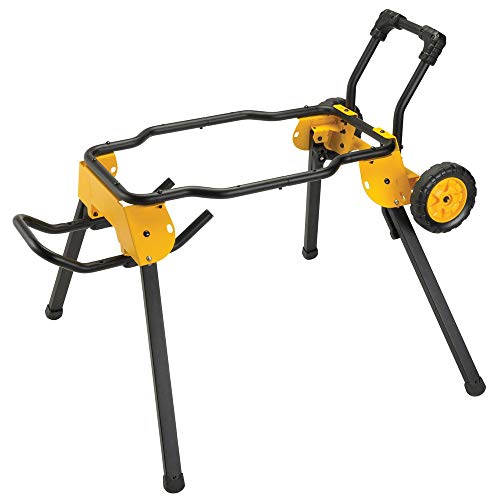
DEWALT DWE74911 Rolling Table Saw Stand

DEWALT DWE7485WS Portable Table Saw with Stand

DEWALT DWE7485 Compact Jobsite Table Saw

Zericuf Super Mini Table Saw for Crafts & Hobbyists

Zericuf Mini Table Saw with Dual 795 Motors

Zericuf Mini Table Saw with Dual Switches

AcmeFlare 4-Axis All-Metal Micro Lathe

AcmeFlare All-Metal Mini Lathe Machine

AcmeFlare Mini Milling Machine 3-Axis
The Strengths Of Each Pick
Even a great compact saw gets awkward the moment you start breaking down plywood on the floor. The DWE74911 stand is built to fix that specific pain, giving a portable jobsite saw a real work surface and a way to roll it out of the way when the car needs to come in. Its steel frame is light enough to lift but stays planted while a sheet slides across it, and the wide stance handles outfeed pressure without bouncing.
For a small shop, the appeal is the way it folds flat. In our view, anyone running a DWE7490X, DWE7480, DW745, or similar 10-inch-class saw will appreciate the fast setup, the rolling wheels, and how easy it is to load into a truck bed. It is more accessory than standalone tool, but pairing it with a portable saw turns a tight garage into a workable shop.
Useful Touches
- Durable steel construction holds steady under outfeed pressure
- Quick setup and break down for daily shop use
- Wide base supports 4-foot sheet goods without tipping
- Rolling design makes it easy to move around a one-car garage
Things To Consider
- Doesn’t include a saw, so it pairs with a separate purchase
- Lightweight steel can flex slightly under very heavy rip cuts
Key Specs
Right Fit For
Garage woodworkers who already own a compatible portable saw and need outfeed support that disappears when the car comes in.
Where Another Pick Suits Better
The DEWALT DWE7485WS is a better all-in-one choice for shops that do not already have a saw and want rip capacity built in.
Where the rolling stand above only supports a saw, the DWE7485WS ships as a complete setup: saw, stand, and fence. The headline number is 24.5 inches of rip capacity, which is genuinely useful in a small shop because it means a 4-foot sheet of plywood or OSB can slide through without an awkward flip. The 8-1/4 inch blade trims cut depth slightly compared to a 10-inch saw, but for most trim and sheet work the trade is invisible.
Angle cuts up to 48 degrees open up bevel work that smaller hobby saws skip. The rack and pinion telescoping fence is the kind of detail that matters in a real shop, since it makes quick, smooth adjustments feel precise instead of fussy. Pairing the saw with its stand also keeps the footprint manageable when the job is done.
A Favorable Mix
- 24.5-inch rip capacity handles 4×8 plywood and OSB
- Compact build suits small shop transportation and storage
- Rack and pinion fence adjusts quickly and stays square
- 48-degree bevel range covers most angled cuts
- Power-loss reset protects against accidental restarts
Worth Noting
- 8-1/4 inch blade trims capacity versus a full 10-inch saw
- Stand adds weight, so the package is less grab-and-go than the DWE7485
Whose Shelf It Belongs On
Small-shop woodworkers who break down full sheets regularly and want a complete, fold-up package instead of a rolling stand and a separate saw.
Not Your Match When
The DEWALT DWE74911 Rolling Table Saw Stand alone makes more sense for anyone who already owns a compatible saw and just needs outfeed support.
The DWE7485 is the trimmer sibling of the DWE7485WS reviewed above, and that is exactly the point. You lose the rolling stand but keep the same 15 amp motor, the same 8-1/4 inch blade geometry, and the same rack and pinion fence. For solo operators running from a sedan or a small hatchback, the lighter carry weight and the smaller cartoned footprint matter more than the bundled stand.
Inside a one-car shop, this saw behaves like a daily driver. It stows against a wall, sets up on a workbench, and still leaves room to walk around it. Onboard storage for the miter gauge, push stick, and wrenches keeps the workspace clean, which is half the battle in a tight floor plan.
Notable Gains
- Compact 8-1/4 inch body fits small shops and tight transport
- 15 amp motor handles most home-shop cuts
- Rack and pinion fence holds accuracy at full rip
- Onboard storage keeps accessories from cluttering the bench
Points To Note
- No stand included, so outfeed support needs to be planned
- 8-1/4 inch blade limits very thick stock compared to a 10-inch saw
- Power-loss reset is a useful safety net, but it can be surprising the first time the saw refuses to restart after a trip
Key Attributes
Who Should Grab It
One-person shops that need a portable saw to share between a garage, a job site, and a borrowed truck without wrestling a heavy stand.
Consider Something Else When
The DEWALT DWE7485WS is a better match when the stand matters more than portability, since it ships ready to roll.
The category shifts gear here. Instead of a portable jobsite saw, the Zericuf Super Mini is a benchtop craft saw aimed at model makers, hobbyists, and small-batch creators. Seven speed settings and a 200W maximum output cover cutting, engraving, polishing, and light drilling, so a busy hobby desk can replace several single-purpose tools with one compact unit.
For a small shop with a craft bench rather than a lumber rack, that is a real space win. The 122-plus accessory count is more than most users will touch in the first year, but it does mean you can keep working when a project needs a different bit or polishing head. Just keep expectations realistic: this is a hobby-class machine, not a lumber saw.
Useful Strengths
- Multi-function design cuts, engraves, polishes, and drills
- Seven speed settings help match the tool to soft and harder materials
- 122+ accessories cover a wide range of craft tasks
- Compact form fits a small workbench or craft room
Soft Spots
- 200W ceiling is far below jobsite saws, so don’t expect 2×4 ripping
- Accessory clutter requires a small organizer to keep the bench tidy
Made For
Model makers and small-shop creators who want one compact machine for cutting, engraving, and polishing rather than a wall of single-purpose tools.
Look Elsewhere When
The DEWALT DWE7485 makes more sense for anyone who needs to break down real lumber instead of craft materials.
Where the Super Mini leans into versatility, the standard Zericuf Mini leans into depth. A 26mm adjustable cutting height opens the door to thicker wood slices, denser balsa, and layered craft stock that a shallow benchtop saw usually struggles with. Dual 795 motors keep the spindle steady at speed, which is the kind of detail that shows up the first time you try a long, slow cut through hardwood ply.
In a small shop, this saw behaves like a quiet companion on the side bench. It does not need a 15-amp circuit, does not make the kind of noise that wakes the house, and tucks away when the dining room doubles as a craft space. The honest read is that it is built for the gift-making and hobbyist crowd first, and it shows in the way the controls and accessories are organized.
The Practical Payoff
- 26mm adjustable cut height handles thicker craft materials
- Dual 795 motors keep speed consistent under load
- Compact frame fits a hobby workbench
- Quieter operation than full-size shop saws
Honest Caveats
- Not a substitute for a real jobsite saw on lumber
- Dust collection is minimal, so plan a small shop vac nearby
Best Suited To
Hobbyists building handmade gifts who want more cut depth than a typical mini craft saw and value a quieter bench tool.
A Better Fit Elsewhere
The Zericuf Super Mini Table Saw suits makers who want speed versatility and multi-function tools over maximum cut depth.
Safety is the lead story on this Zericuf. The dual-switch setup means cutting and polishing functions run on independent controls, so both cannot fire at once. For a first-time saw shopper or anyone setting up a shared craft bench, that kind of guardrail removes a lot of beginner anxiety before the bit ever spins.
Performance matches the rest of the Zericuf mini line: 200W ceiling, dual 795 motors, 26mm adjustable height, and a deep accessory bundle. The dual-switch design is the real differentiator when you stack it against the standard mini and the Super Mini reviewed earlier, so consider this the safer choice for households where a teen or new hobbyist is also at the bench.
Advantages To Know
- Dual-switch control separates cutting and polishing functions
- Beginner-friendly operation lowers the learning curve
- 200W power with 12,000RPM output for typical craft cuts
- 26mm adjustable height supports thicker material
Where It May Fall Short
- Same 200W power ceiling as the other Zericuf minis
- Dual-switch system takes a bit of getting used to if you’re used to single-knob tools
Feature Snapshot
Who It Suits Best
First-time craft saw shoppers and shared workshops where beginner safety matters as much as cut quality.
Skip It When
The DEWALT DWE7485 is the more capable choice for anyone whose project list includes ripping lumber, not just crafting.
Stepping away from the table saw world for a moment, the AcmeFlare 4-Axis Micro Lathe earns its place on a small-shop list because precision work rarely fits in a garage full of lumber. The 60W motor handles soft metals like gold, silver, aluminum, and copper, plus wood and plastic, while the A-axis adds ±90° rotation with 2.5° indexing for multi-face machining in a single setup.
Handwheel scales across all four axes land at 0.02mm accuracy, which is the kind of fine adjustment that makes a small benchtop lathe feel like a real instrument. The integrated safety guard is welcome in a small shop where the same room might host a router and a coffee maker. Anyone making jewelry, model parts, or detailed replacement components will find the four-axis geometry genuinely useful.
What It Does Well
- Four-axis geometry supports multi-face work without re-fixturing
- 0.02mm handwheel scales across all axes
- 60W motor handles gold, silver, aluminum, copper, wood, and plastic
- All-metal body resists flex during detail cuts
Smaller Limitations
- 60W motor is not built for heavy steel or large-diameter stock
- Precision scales mean you’ll want a stable bench to keep alignment true
Perfect Match For
Detail-oriented hobbyists who make small metal parts, jewelry, or precision models and want a bench-friendly lathe that does not need a dedicated corner of the shop.
Reach For A Different Pick When
The AcmeFlare All-Metal Mini Lathe Machine fits better for educational and student use where simplicity matters more than a fourth axis.
The standard AcmeFlare mini lathe trades the four-axis geometry of its sibling for a simpler 36W, 20,000RPM platform. That is not a step down so much as a redirection. For education, classroom demonstrations, and first-time turners, fewer axes means a shorter learning curve, which is exactly the right shape for a workshop full of students or curious kids.
The 0.02mm molded scale is the headline detail. Real dimensional feedback on a benchtop lathe under $200-class pricing is rare, and it makes the difference between eyeballing a cut and actually measuring it. Wood, copper, and aluminum round out the realistic material list, which mirrors the kind of small parts a beginner actually wants to make.
Features That Help
- All-metal frame keeps vibration low during cuts
- 20,000RPM top speed handles wood, copper, and aluminum
- 0.02mm molded scale for accurate measurement
- Compact footprint fits classroom and home studios
Less Ideal Details
- 36W motor limits aggressive cuts in harder metals
- No fourth axis, so multi-face work needs re-fixturing
- All-metal body is heavier than plastic-bodied mini lathes, so plan a stable surface
Core Details
Built With In Mind
Classrooms, home educators, and student workshops that need a stable, accurate lathe without the cost or complexity of a four-axis platform.
Where A Sibling Pick Shines
The AcmeFlare 4-Axis All-Metal Micro Lathe is the better pick for experienced hobbyists who want multi-face machining in a single setup.
Rounding out the list, the AcmeFlare Mini Milling Machine is a vertical mill, not a saw, but it earns a spot because small shops often need light milling alongside a saw. The 36W motor and 20,000RPM top speed handle wood, plastic, and soft metals, while the 0.02mm precision handwheels on the X, Y, and Z axes keep contour work, slot cuts, and small holes honest.
The electroplated all-metal body is the standout detail here. It shrugs off the rust and humidity that eventually wreck painted steel bodies, which matters if the mill lives in an unheated garage. For hobby machinists who already have a table saw and want to add drilling, slotting, and small pocketing to the workflow, this fills a real gap without demanding a 240V outlet.
Strengths Worth Knowing
- Three-axis precision with 0.02mm handwheel scales
- Electroplated all-metal body resists rust in damp shops
- 20,000RPM top speed suits soft metals and plastics
- Compact vertical footprint fits a small bench
Practical Considerations
- 36W motor is not intended for steel or large workpieces
- Electroplated finish needs a dry cloth wipe-down to stay clean
Quick Facts
Who Will Love This
Hobby machinists and small-shop fabricators who want light milling on a standard 15-amp circuit without dedicating a corner of the shop to a full-size mill.
Swap It Out When
The AcmeFlare All-Metal Mini Lathe Machine is a smarter pick for anyone whose priority is turning round parts rather than milling flat or contoured features.
What Matters Most Before Choosing Table Saws For Small Shop
Rip Capacity and Sheet Handling
The single biggest spec in a tight shop is rip capacity, the maximum distance from the blade to the fence. Anything under about 20 inches will force you to flip a 4-foot sheet of plywood to make a full-width cut, which is the kind of awkward dance that wastes material. The DEWALT DWE7485WS at 24.5 inches handles a full sheet cleanly, while the DWE7485 trades rip room for portability. For most weekend projects in a one-car garage, more rip is almost always worth the bulk.
Footprint, Weight, and Storage
A “small shop” is really a storage problem in disguise. Consider the folded footprint and the weight class together: rolling stands like the DWE74911 add mobility but eat floor space when set up, while compact benchtop units like the DWE7485 or any of the Zericuf minis lean toward stow-against-a-wall living. If the saw has to share a room with a parked car, a washer-dryer, or a workbench that doubles as a desk, the lighter option usually wins in the long run.
Power, Circuit, and Dust
Jobsite saws pull 15 amps, which is fine on most household circuits but trips breakers when a shop vac runs on the same outlet. Compact mini saws run on far less current, which means fewer breaker surprises. Dust handling is the other quiet factor. None of these saws includes real dust collection, so plan a small shop vac or a wall-mounted collector from day one. Clean air and a clear sightline to the cut are what separate a workable shop from a frustrating one.
Key Considerations Across These Picks
Where Shoppers Go Wrong
The most common mistake in a small shop is buying for the biggest project first. A 10-inch cabinet saw sounds appealing, but in a 10×10 garage it dominates the floor and rarely gets used. Buyers more often regret too much saw rather than too little, so match the saw to the most common cut: sheet goods, trim, or hobby craft. Another trap is forgetting the outfeed plan. Even a great portable saw feels unstable when a 4-foot sheet slides off the back, so a stand, an outfeed table, or a roller stand belongs in the cart from the start.
Where The Extra Money Goes
Higher-tier table saws and mini machines earn their cost in three places: fence accuracy, vibration control, and accessory ecosystem. A rack and pinion fence like the one on the DWE7485 family adjusts faster and holds square longer than a slide-rail design, which is why pro shops pay more for it. All-metal mini lathe and mill bodies like the AcmeFlare line cost more up front, but they hold tolerance and resist rust in ways plastic-bodied units simply cannot. The upgrade payoff shows up years later, when the cheaper tool is wobbling and the sturdier one is still cutting true.
Frequently Asked Questions
What size table saw works best in a small shop?
A compact 8-1/4 inch portable saw like the DEWALT DWE7485 family tends to be the sweet spot for most small shops, since it balances rip capacity with a manageable footprint. The right answer depends on whether you break down full sheets or mostly cut trim and smaller stock.
Do I really need a stand for a portable table saw?
A rolling stand like the DEWALT DWE74911 adds real outfeed support, makes storage easier, and helps the saw survive moves between shop and job site. You can work without one, but you will spend more time clamping temporary supports and chasing the cut.
Are mini table saws strong enough for real woodworking?
Mini table saws like the Zericuf line are designed for craft and hobby work in wood, plastic, and soft materials, not for ripping construction lumber. For trim, model making, and small projects they perform well, but they do not replace a jobsite saw for structural work.
How important is rip capacity in a tight shop?
Rip capacity directly controls how easily you can break down sheet goods, so it is one of the most important specs for a small shop. Look for at least 20 inches if you ever handle plywood, and 24 inches or more if you regularly cut full 4×8 sheets.
Can a mini lathe or mill replace a full-size machine?
A mini lathe or mill handles detail work, model making, and small soft-metal projects that a full-size machine is overkill for, but it does not match the capacity or rigidity of a real shop tool. Small shops gain real capability by pairing a compact saw with a precision mini machine rather than chasing full-size tools they cannot fit.