


Setting up a two-tool cutting station used to mean buying a miter saw stand, a separate jobsite table saw, and a tangle of dust hose between them. The picks below bundle the core of that setup into nine focused options: five full-size or compact table saws that pair naturally with a miter saw on the same bench, plus three dust collection switches that solve the one thing both saws share, which is relentless chips and fine dust. The list covers a few recognizable SKUs alongside accessories that round out a real shop.
The Essentials At A Glance

DEWALT Portable Table Saw with Stand 8-1/4 inch (DWE7485WS)

DEWALT 15 Amp 8-1/4 in. Compact Jobsite Table Saw (DWE7485)
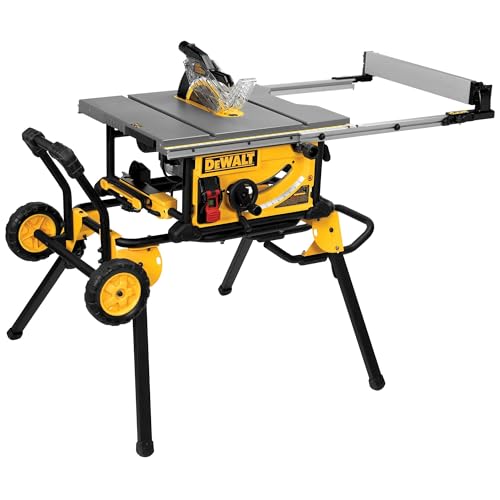
DEWALT 10 Inch Table Saw with Foldable Rolling Stand (DWE7491RS)

SKIL 15 Amp 10-Inch Jobsite Table Saw with Folding Stand (TS6307-00)

O’Skool Automatic Vacuum Switch for Table and Miter Saws (15A)
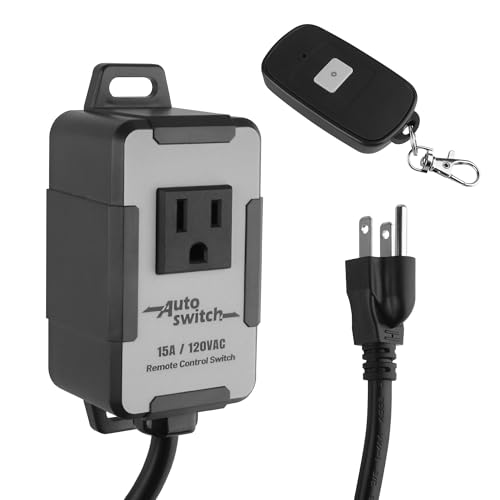
O’SKOOL 120V Remote Dust Collector Outlet Switch
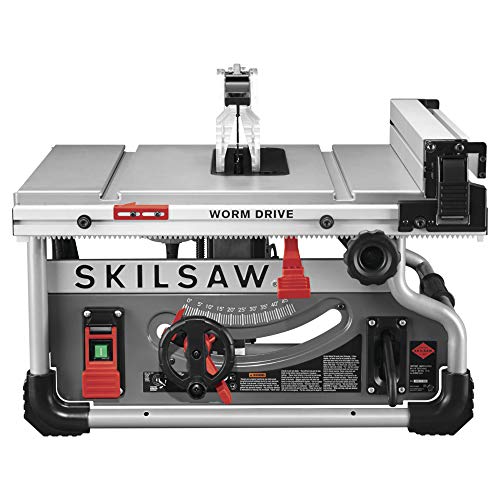
SKIL 8-1/4 inch Portable Worm Drive Table Saw (SPT99T-01)
O’SKOOL 220V Wireless Remote Dust Collector Switch (Battery Included)
What Each Pick Brings To The Table
Trim carpenters hauling tools up stairs or across remodel sites tend to want a saw that earns its space, and the DWE7485WS lands as a small-format table saw paired with a rolling stand for a single-piece wheel-around setup. The 8-1/4 inch blade and modest footprint make it easy to slide into a van and set up in tight basements or finished hallways.
It looks like a smaller sibling of the heavier DEWALT jobsite saws further down this list, which means the trade-off shows up mostly in capacity rather than build quality. For crew work that centers on molding, baseboards, and ripping down sheet goods in 4×8 sheet stock, this is the everyday carry.
What Makes Sense
- 24.5 inch rip capacity, enough to rip 4×8 plywood or OSB sheets without reorienting
- Rack and pinion telescoping fence rails for smooth, repeatable adjustments
- Compact size that helps when storage in a small shop is the limiting factor
- Power-loss reset prevents accidental restarts after a breaker trip, useful on crowded job panels
- On-board storage keeps the push stick and miter gauge from disappearing in transit
Things To Consider
- Smaller blade limits deep crosscuts compared to the 10 inch saws covered later
- Rolling stand takes a minute to set up and stow when you move between rooms
Who It Suits Best
Trim carpenters and remodelers who move a single saw through a finished home and value the integrated stand more than maximum rip depth.
Where Another Pick Suits Better
Framers who regularly break down full sheets of thick plywood on site will be happier with the larger DEWALT DWE7491RS, which offers noticeably more rip travel and a heavier 10 inch blade.
For shop owners who already own a solid stand or work on a fixed bench, the DWE7485 is the same 8-1/4 inch saw you just read about, sold as a bare tool. The blade size and motor specs carry over, so the cutting experience matches the wheeled version, but you skip the integrated stand and save the weight it adds.
The honest read is that this is the more adaptable pick when you already know where the saw will live, whether that is a small garage shop or a dedicated outfeed table. Owners commonly mount it on a rolling base of their own and treat it as a stationary workhorse.
What Pays Off
- Same 24.5 inch rip capacity as the wheeled version, just without the bundled stand
- Rack and pinion fence rails keep adjustments consistent across long sessions
- Lighter to carry up stairs and easier to fit on a single shelf when stored
Honest Caveats
- No stand included, so budget for a separate base or bench
- Smaller blade than the 10 inch SKIL or DEWALT models covered later in the list
- Accessory storage clips assume the original stand layout, so loose parts wander on a custom bench
Quick Facts
Made For
Home workshop owners who already have a bench or cart and want the compact saw without paying for a stand they will not use.
Skip It When
You regularly tear down full sheets of thick material, because the SKIL TS6307-00 with its 10 inch blade is a better fit for heavier ripping jobs.
Step up to the DWE7491RS and the difference is capacity: a 10 inch blade, a 15 amp motor that pulls through dense hardwood, and a 32-1/2 inch rip rail that swallows full sheet goods in one pass. The rolling stand folds flat, which is a real benefit on trucks with limited bed space.
Where the smaller DEWALT saws earlier in this roundup feel like trim carpenters’ tools, this one is aimed at framers and remodel crews. If you build deck substructures, rip stair stringers, or process cabinet parts, the larger blade plus that much rip travel changes how fast the work moves.
Positive Points
- 32-1/2 inch rip capacity covers full sheet goods without a helper
- 10 inch blade delivers a deeper cut for thicker stock and hardwood
- Tool-free guarding component changes speed up blade swaps
- Rolling stand breaks down quickly and handles the weight on rough surfaces
Points To Note
- Heavier than the 8-1/4 inch DEWALT, so it punishes stairs and tight hallways
- Roller stand adds bulk in a small van compared to a bare tool
Feature Snapshot
Best Suited To
Framing and remodeling crews who break down large sheet goods daily and need a saw that can take the punishment of a jobsite.
Not Your Match When
You mostly cut small trim parts in a single-car garage, because the SKIL SPT99T-01 worm drive saw handles those cuts with a smaller, friendlier footprint.
The SKIL TS6307-00 shows up in the market as a 10 inch jobsite saw priced well below the comparable DEWALT models, and that positioning is the entire reason it earns a spot here. A 15 amp motor, a 25-1/2 inch rip capacity, and integrated folding legs cover most DIY and small-crew needs without the bigger price tag.
For a homeowner building a deck once a year, or a small renovation outfit that needs a real table saw but cannot justify the cost of a flagship model, this is the sensible middle ground. The folding stand in particular makes it more livable in a one-car garage than the bigger rolling stands.
Notable Gains
- 10 inch blade handles most ripping and crosscut work DIYers tackle
- 15 amp motor pulls through common hardwoods without bogging
- Integrated folding legs cut setup and storage time
- Rack and pinion fence rails keep adjustments repeatable
Trade Offs
- 25-1/2 inch rip is smaller than the 32-1/2 inch DEWALT DWE7491RS
- Dust port elbow is included, but a full dust collection setup will require extra hose
- Plastic components in the fence and guard area wear faster than all-metal alternatives
Whose Shelf It Belongs On
Weekend builders and budget-conscious DIYers who want a real 10 inch jobsite saw without paying for crew-grade features.
Consider Something Else When
You regularly rip full 4×8 sheets of plywood and need maximum travel, in which case the DEWALT DWE7491RS offers considerably more rip capacity.

The DWE7491X is the DWE7491RS sibling with a different stand: a scissor-style base that sets up fast and folds nearly flat, trading the rolling wheels for a lower profile in the shop. Same 10 inch blade, same 32-1/2 inch rip capacity, same 15 amp motor, but a stance that suits a dedicated shop more than a job trailer.
Where the rolling stand on the DWE7491RS earns its keep on wet job sites, the scissor stand on this model lives comfortably in a garage workshop. You give up mobility, and gain a smaller storage footprint when the saw is folded away.
Reasons It Performs
- 32-1/2 inch rip matches the larger DEWALT jobsite saws
- 15 amp motor delivers the same cutting power as the rolling version
- Tool-free guarding changes keep blade swaps quick
- Scissor stand folds to a tight footprint for storage against a wall
Practical Considerations
- No wheels, so moving the saw across a shop requires lifting
- Dust collection port is a basic shop-vac style fitting, and fine dust still escapes without a sealed hood
Feature Card
Who Will Love This
Garage shop owners who want DEWALT’s 10 inch capacity but prefer a stationary, low-profile stand over a rolling base.
A Better Fit Elsewhere
Crews who move the saw from truck to site every day should pick the DEWALT DWE7491RS, because the rolling stand on that model is built for repeated transport.
Once you have a table saw and a miter saw on the same bench, the real problem is dust. The O’Skool Automatic Vacuum Switch solves that by sitting between your tool and the wall outlet: plug the saw into the master outlet, plug your shop vacuum into the slave outlet, and the vacuum turns on whenever the saw spins up.
The third outlet on the unit is configurable, so you can run a second tool, a second vacuum, or chain multiple switches together depending on your layout. For a small shop where a miter saw and table saw sit within reach of each other, this single accessory is a quiet, immediate upgrade to cleanliness.
Everyday Perks
- Tool-activated switching means the vacuum only runs when needed
- Selectable master and slave outlets adapt to single or multi-tool setups
- Removes the routine of walking to a wall switch mid-cut
Some Limits To Know
- Rated to 15 amps, so high-draw tools near that ceiling may trip the switch
- Needs a clear line of sight to a reachable outlet to be useful
At A Glance
Perfect Match For
Small shop owners running a table saw and miter saw on adjacent benches who want one switch to manage both.
Reach For A Different Pick When
You run a hardwired 220V dust collector, because the O’SKOOL B09QCKYL7K wireless remote switch handles 220V circuits where this 15A model falls short.
The 120V remote switch takes a different approach from the auto-switch covered above. Instead of sensing when a tool turns on, it pairs a wireless remote with a receiver outlet, so you can start and stop the dust collector from anywhere in the shop with a key-fob style button.
That works well in a larger workshop where the dust collector sits across the room from the saw. Reach for the remote, fire the vacuum, walk to the saw, and the dust is already heading away from the cut when you start the blade.
Standout Benefits
- Wireless remote means no walking back to a wall switch mid-cut
- Standard 3-pin US outlet fits a wide range of shop vacuums and smaller dust collectors
- Useful in larger shops where the collector lives far from the workbench
Softer Spots
- Not automatic, so the collector runs longer than needed when you forget to switch off
- Remote battery replacement is a maintenance task every year or two depending on use
Who Should Grab It
Solo workers in shops where the dust collector sits well away from the bench and a long walk between cuts is the daily nuisance.
Look Elsewhere When
You want the vacuum to start and stop on its own, because the O’Skool Automatic Vacuum Switch does exactly that with no remote required.
The SPT99T-01 brings something none of the other saws on this list offer: a worm drive gearbox, the same powerplant concept as SKIL’s legendary circular saws, packed into a portable table saw chassis. The result is high torque at lower blade speeds, which is useful when the cut runs into wet lumber, dense hardwood, or the occasional hidden nail.
It still wears the 8-1/4 inch blade that showed up in the DEWALT models earlier, so the depth of cut is similar, but the cut feel is heavier and more deliberate. Builders cutting reclaimed lumber or thick timbers tend to appreciate the worm drive character.
Well-Handled Touches
- Worm drive gearing delivers high torque for dense or wet material
- All-metal construction handles jobsite abuse over the long term
- 2-5/8 inch depth of cut covers most common framing stock
- 25 inch rip capacity for handling 4-foot sheet work
Factors To Consider
- Heavier than direct-drive saws, so carrying it up stairs adds fatigue
- Smaller blade limits very deep cuts that a 10 inch saw handles easily
Feature Rundown
The Right Fit
Builders and remodelers who cut reclaimed wood, dense hardwood, or pressure-treated lumber where direct-drive saws slow down.
Swap It Out When
You mostly process clean sheet goods and need maximum rip travel, because the DEWALT DWE7491RS handles long rips more comfortably with its 32-1/2 inch capacity.
Larger dust collectors run on 220V, and the small 120V switches covered earlier in the roundup simply are not built for that circuit. The O’SKOOL 220V wireless switch is the specialty answer: a remote-controlled outlet box rated for higher-voltage dust collectors, complete with a soft-start mode that ramps the motor to full speed in a few seconds.
The soft start matters because hard-starting a 220V collector trips breakers and stresses motor windings. For owners of a real 220V dust system, this switch is the comfortable way to bring it under wireless control.
The Value In It
- Soft start mode reduces breaker trips on large collector motors
- Wireless remote keeps the collector under convenient control from across the shop
- 220V rating covers higher-amperage dust systems that 120V switches cannot handle
Where It Is Less Suited
- Overkill for owners of 120V shop vacuums, where the simpler 120V remote switch is a better match
- Setup assumes an existing 220V outlet, so installation in a shop without one is a separate project
Built With In Mind
Owners of larger 220V dust collectors who want remote control and soft start in a single accessory.
Where Another Pick Suits Better
Anyone running a 120V shop vacuum should pick the O’SKOOL 120V remote switch instead, since the 220V version is wasted on lower-voltage equipment.
Picking The Right Saw For The Way You Work
Blade size is the first fork in the road. 8-1/4 inch saws like the DEWALT DWE7485WS and SKIL SPT99T-01 are lighter and easier to move, which suits trim carpenters and solo remodelers. 10 inch saws like the DEWALT DWE7491RS, SKIL TS6307-00, and DEWALT DWE7491X reach deeper and rip wider, which suits framers and cabinet installers. If sheet goods dominate your work, the rip capacity number matters more than blade size, and the 32-1/2 inch models earn that advantage.
Stand style is the second decision. Rolling stands help if the saw moves between truck and site. Scissor and folding stands work better in fixed shops where the saw stays put. A bare tool like the DEWALT DWE7485 only makes sense if you already have a bench or cart ready to host it.
Dust control is the third, often forgotten layer. A table saw and a miter saw throw more chips and fine dust than a single-stage vacuum can keep up with manually. Auto-switches start the vacuum when the saw starts, and remote switches let you fire the collector from anywhere in the room. Pair one of the saws in this list with the matching switch, and the cleanup story changes for good.
Key Considerations Across These Picks
Where Shoppers Go Wrong
The most common mistake in this category is buying a saw that is too big to actually use. A 10 inch rolling saw on a one-car garage floor is a daily frustration, while a compact 8-1/4 inch saw gets used every weekend. Match the saw to the work, not the spec sheet.
The other trap is forgetting the dust side of the equation. A table saw and a miter saw in the same shop need a real dust plan, whether that is an auto-switch, a remote switch, or a hardwired collector with its own circuit. Skipping that step is what fills lungs and shop filters fast.
What Separates Premium From Basic
The gap between a value saw and a flagship saw is rarely about raw cutting power; it is about stand design, fence precision, and dust integration. Rolling stands that fold flat, rack and pinion fences that stay square, and integrated dust ports that actually seal up to a vacuum: those are the upgrades that show up in daily use.
Higher-tier dust switches add soft start, wireless control, and 220V compatibility for larger collectors. For a small shop on a 120V circuit, a basic auto-switch does the job. For a real workshop running a 220V collector, the premium switch pays for itself in motor life and breaker trips avoided.
Frequently Asked Questions
How do I choose between an 8-1/4 inch and a 10 inch table saw for pairing with a miter saw?
Pick 8-1/4 inch for trim work, sheet goods, and easy transport; pick 10 inch for deeper cuts, thicker hardwood, and maximum rip travel. Most DIYers land on 10 inch because it gives room to grow.
Do I really need a dust collection switch if I already own a shop vacuum?
A switch is the difference between remembering to turn on the vacuum and never having to think about it. Auto-switches start the vacuum with the saw, which is the cleanest setup for any shared bench.
Can one dust collector power both a table saw and a miter saw at the same time?
Most single-stage shop vacuums are sized for one tool running at a time. A larger two-stage collector can handle both, but you still benefit from a switch that fires it only when a tool is actually running.
What is soft start, and does it matter on a dust collector switch?
Soft start ramps the motor up to full speed over a few seconds instead of slamming it on, which prevents breaker trips and reduces wear on motor windings. It matters more as the collector gets larger and more powerful.
How often do the wireless remote batteries need replacing?
For typical home shop use, the included remote battery tends to last a year or two before the range starts to shorten. Replacement is a coin-cell swap that takes a few seconds.




