A real table saw earns its place in a small shop or garage, not on a spec sheet. Contractors hauling between job sites, weekend builders tearing down plywood for built-ins, and hobbyists finishing a kitchen remodel all need accurate cuts without babysitting the tool. The picks below cover jobsite-ready 8-1/4 in. workhorses, plus the accessories and micro-saws that round out a working setup. Every option here sits comfortably below the thousand-dollar mark, so you can put the savings toward a better blade or a solid push stick.
The Choices Worth Comparing

DEWALT Portable Table Saw with Stand 8-1/4 in. (DWE7485WS)

DEWALT 15 Amp 8-1/4 in. Compact Jobsite Table Saw (DWE7485)

Rockler Bench Cookies Plus Work Grippers 4-Pack

Rockler Table Saw Crosscut Sled with Telescoping Fence

Rockler Dust Right FlexiPort Expandable Hose Kit 3-12 Ft
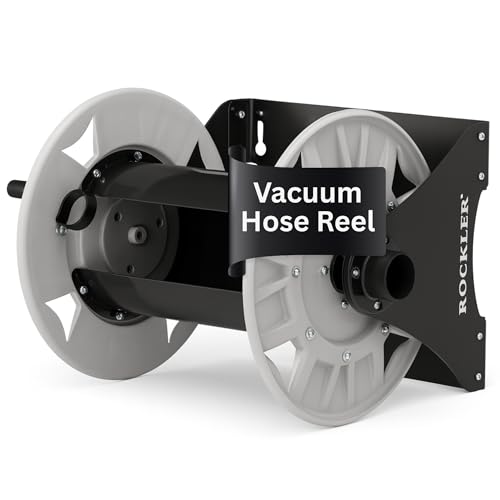
Rockler Wall Mount Vacuum Hose Reel (40 ft, 1-1/2 in.)

Super Mini Table Saw for Crafts 7-Speed 200W

Zericuf Mini Table Saw for Crafts (Dual 795 Motors, 26mm)

Zericuf Mini Table Saw for Crafts 200W/12,000RPM
Inside Each Recommended Option
The DEWALT DWE7485WS rolls onto a job site already wearing its own folding stand, so you spend the first ten minutes of the day cutting rather than hunting for sawhorses. The 15 amp motor spins at 5800 RPM, which gives you the headroom to push through sheet goods and hardwood without bogging down. You get 24.5 in. of rip capacity, enough to slide a 4×8 sheet of plywood or OSB across the deck without rotating it.
Bevel cuts go all the way to 48°, handy for compound angles on trim work or angled furniture parts. The rack-and-pinion telescoping fence locks solidly and adjusts without the slop you sometimes get on stamped-steel rails. Onboard storage keeps the guard, riving knife, anti-kickback pawls, wrenches, miter gauge, and push stick together, so nothing rattles around in the truck bed on the drive over.
What Works In Its Favor
- Folding stand collapses for transport, eliminating a separate piece of gear to haul and store
- 24.5 in. rip handles full plywood sheets with room to spare, saving you the gymnastics of flipping panels
- Power-loss reset stops the blade from spinning up unexpectedly after a tripped breaker, a real safety plus
- Rack-and-pinion fence stays square after months of adjustment, critical for cabinet work
Some Limits To Know
- The 8-1/4 in. blade limits depth-of-cut on thicker stock compared to a 10 in. contractor saw
- At around 90 pounds with the stand, it asks for a truck or SUV, not a compact car
Who Will Love This
Contractors and remodelers who need a single, accurate saw that travels between job sites without slowing them down.
Where Another Pick Suits Better
For pure hobby work in a one-car garage, the lighter DEWALT DWE7485 delivers most of the same cuts without the stand footprint.
Strip the wheeled stand off the DWE7485WS and you land here, the bare DWE7485, which slots into small shop floors and tight van storage without complaint. The 15 amp, 5800 RPM motor and 24.5 in. of rip are identical to its sibling, so you give up the rolling stand, not the cutting performance. A telescoping fence (a fence that extends and locks along a sliding rail) driven by a rack-and-pinion gear keeps adjustments repeatable, which matters when you’re matching dados across a stack of shelves.
For weekend builders with a one-car garage, the lighter footprint is the real win. The same 8-1/4 in. blade and 48° bevel range carry over, so trim work and angled joinery stay on the table. Without the bundled stand, the saw pairs with aftermarket (third-party, non-OEM) mobile bases that roll out of the way when you need the floor for another tool.
Positive Takeaways
- Lighter and easier to lift into a trunk or back seat than the wheeled version
- Same rip capacity as the stand-equipped model, so sheet goods cut cleanly
- Compact base fits shops where floor space matters more than transport wheels
Practical Considerations
- You’ll likely add a mobile base or stand separately if you want job-site mobility
- Blade depth is still capped by the 8-1/4 in. blade diameter, limiting very thick stock
Feature Snapshot
Right Fit For
Home shop owners and remodelers working in tight spaces who value accuracy and a manageable footprint over a bundled rolling stand.
Not Your Match When
For roll-on, roll-off job-site work, step up to the DEWALT DWE7485WS with its folding stand.
Bench Cookies aren’t a saw, but once you add a table saw to your shop, you discover the clamp problem fast. Routed panels, sanded doors, and small joinery cuts all fight you for a grip. The Rockler Bench Cookies Plus Work Grippers stack under a workpiece and hold it with high-friction rubber, lifting the board off the bench so you can sand, route, or finish all four edges without unbolting a clamp every time you spin the panel.
A four-pack covers the corners of an average cabinet door or a small shelf, and the dots stack on each other to raise taller work. The grippy surface saves your finish from clamp marks and your hands from sliding tools. For hobbyists with a small footprint, this 4-pack quietly makes the rest of the bench more useful without adding a single cord.
Everyday Advantages
- Lifts the workpiece so you can finish or rout all four edges without stopping
- Replaces clamps for many finishing tasks, saving setup time and protecting delicate surfaces
- Stackable design adapts to thicker stock and odd shapes
Honest Caveats
- Four pieces only cover small to mid-size panels; full sheets still need bench dogs or clamps
- Owners commonly report the rubber losing grip on very oily or waxy exotic woods
Made For
Garage woodworkers and finishers who route, sand, or apply finish to panels and small parts on a regular basis.
A Better Fit Elsewhere
For full-sheet ripping on a table saw, the Rockler Crosscut Sled adds precision where Bench Cookies can’t reach.
A crosscut sled turns a table saw into a precision cutting station, and Rockler’s sled leans into the detail work that cabinet and furniture builders chase. The 1/2 in. thick phenolic resin base (a hard, dense plastic-laminate board) rides in standard miter slots (the grooves on the saw table that guide sleds and miter gauges) without swelling, warping, or wearing out, a step up from plywood sleds that shift with shop humidity. The telescoping fence extends to support longer boards, and the flip stop lets you repeat the same cut dozens of times without re-measuring.
Mitered cuts land anywhere between 90° and 45°, accurate enough for face frames and small boxes. A sled is a sensible add-on to either DEWALT saw above, and frankly, it pays for itself the moment you batch out matching parts. The weight of the phenolic base also dampens vibration, which you can hear in cleaner cuts on hardwood.
Good Reasons To Consider
- Phenolic base resists warping in damp shops, a real upgrade over shop-built plywood sleds
- Telescoping fence supports long boards so you don’t lose accuracy mid-cut
- Flip stop turns repeatable cuts into a one-handed operation, speeding up batch work
Where It May Fall Short
- You give up part of your table-saw surface to the sled, which tightens very small shops
- Best results assume your saw’s miter slots are square, a quick check with a precision square
Best Suited To
Cabinet makers and furniture builders who need batch-after-batch repeatability on 90° and 45° crosscuts.
Reach For A Different Pick When
For routing and finishing panels off the saw, the Rockler Bench Cookies Plus offer more flexibility.
Dust collection separates a usable shop from a dusty one, and the FlexiPort hose kit slots straight onto a table saw, miter saw, or handheld sander. The hose stretches from about 3 ft to 12 ft and locks into a click-connect fitting that swaps between tools without a fuss. Four FlexiPorts in varying sizes come in the box, so you can move the same hose from a 1-1/4 in. port on a sander to a 2-1/2 in. port on a table-saw dust shroud without a parts hunt.
The flexible hose material is a comfort on long runs to a ceiling-mounted collector, and it coils down small for storage. In practice, you end up dragging the hose far less than a rigid PVC pipe (rigid plastic plumbing pipe) setup, especially on offcuts and angled cuts where the saw moves around. Owners commonly report that sawdust capture improves noticeably once the FlexiPort sits right at the port.
Everyday Perks
- Four included ports cover most common power tool dust outlets, no extra adapters to chase down
- Click-connect fitting swaps tools in seconds, so the hose actually gets used rather than left on the floor
- Expandable length keeps the hose out of your way when not extended
Worth Bearing In Mind
- Flexible hose can kink at sharp bends, mildly reducing suction if the run is tight
- Larger stationary tools may still want a rigid line for full airflow
Perfect Match For
Shops with several different power tools that all need quick, occasional dust collection without permanent plumbing.
Look Elsewhere When
For a fixed 40 ft run that lives on the wall, the Rockler Wall Mount Hose Reel takes over from here.
The Wall Mount Vacuum Hose Reel brings central-vacuum convenience to a working shop. Mount it on the wall, drop in up to 40 ft of 1-1/2 in. hose, and you pull out only what you need. When the work is done, a gentle tug retracts the hose back onto the reel, no more tripping over coils or moving a clunky shop vacuum across the floor mid-cut.
The steel frame keeps the reel stable, even when you yank the hose out at full extension. For permanent shops, this is a quieter, cleaner alternative to dragging a rolling vacuum around the table saw. The reel pivots and locks, so the hose end sits exactly where you need it for the cut at hand.
Where It Helps
- 40 ft of hose reach covers most single-bay garages and small workshops
- Auto-retracting design keeps the floor clear, lowering the trip hazard on busy workdays
- Steel frame handles the weight of a full hose without flexing at the mount
Less Ideal Details
- Mounting requires wall studs or solid backing, a real constraint for some rental shops
- 1-1/2 in. hose is fine for chips but less efficient on fine dust at high CFM (cubic feet per minute, a measure of airflow volume) tools
Built With In Mind
Permanent home shops and small pro shops where a tidy floor and quick cleanup matter as much as cut quality.
Swap It Out When
For a portable shop that moves between sites, the FlexiPort Expandable Hose Kit is a friendlier answer.
The Super Mini Table Saw from Zericuf is built for a different audience than the DEWALT rigs above, and that’s the point. Hobbyists cutting basswood, balsa, thin plywood, and plastic don’t need 5800 RPM or 24 in. of rip. They need 7 selectable speeds, dual motors that split cutting and polishing duties, and a transparent guard that keeps the cut visible without removing the safety shield.
Top output sits at 200W, which is plenty for craft materials and most modeling woods. The 122-piece accessory kit covers the routine work, sanding drums, drill bits, grinding wheels, and polishing pads, so most hobbyists can leave the toolbox closed. The compact body slides onto a desk or workbench, which is exactly the footprint a small apartment shop offers.
A Few Strong Suits
- 7-speed control matches the right RPM to soft balsa, hardwood, or plastic, protecting delicate work
- Dual motors and switches prevent cutting and polishing from running at the same time, a genuine safety plus
- 122-piece accessory kit means the saw is genuinely useful the day it arrives
Trade-Offs To Consider
- 200W output will not drive cuts through thick hardwood or construction lumber
- Smaller table and fence limit stock length, so the saw fits the hobby desk, not the workbench
Whose Shelf It Belongs On
Model makers, diorama builders, and craft hobbyists working with thin woods, plastic, and soft materials on a desktop.
Where A Sibling Pick Shines
For full-size plywood projects, step back up to the DEWALT DWE7485, which is in a different cutting class entirely.
The 2026 upgrade to this Zericuf mini saw leans hard into speed and cutting height. The 24-tooth transmission system drives a 200W motor up to about 12,000 RPM under load, which is a useful jump when you’re pushing through basswood sheets or thin hardwood. The 26mm adjustable table height is a real-world win for users slicing thicker craft stock without swapping to a larger saw.
The dual 795 motors keep cutting and polishing on separate switches, so you can’t accidentally fire the polishing drum while the blade is engaged. The accessory bundle covers the common craft tasks, drill bits, sanding bands, and cutting wheels. For model makers who need more headroom than the entry-level hobby saws offer, this sits in a useful middle ground.
A Strong Showing
- 26mm adjustable height handles thicker craft stock and small hardwood pieces
- 12,000 RPM top speed cleans up edges on basswood and plywood without fuzzing them up
- Separate switches for each motor cut down on accidental activation, a thoughtful safety detail
Points To Keep In Mind
- Like other mini saws, it is not designed for dimensional lumber or plywood thicker than about 1/2 in.
- Owners commonly report that dust collection requires a small shop vac, not the included port alone
Who Should Grab It
Hobbyists and crafters who need a step up in cutting depth and motor speed for slightly thicker model-making stock.
Another Choice May Suit
For the very best beginner safety story, the Zericuf Mini Table Saw below offers an arguably more intuitive control layout.
This third Zericuf saw wraps the same dual-motor setup in a layout aimed at first-time hobbyists. Each motor runs on its own dedicated switch, so the cutting blade and the polishing spindle can’t fire together, an important detail for anyone new to power tools. Top speed of 12,000 RPM and 200W output match the upgraded model above, so the cut quality is essentially identical.
The 26mm adjustable table height gives room to work with slightly thicker stock, and the accessory kit covers drill, sand, and polish tasks out of the box. As a gift for a teenager learning model making or a partner picking up a new hobby, the dual-switch control and full-view safety guard make this the more forgiving pick. In most small craft spaces, the footprint fits on a corner of a desk without a problem.
The Good Stuff
- Dual-switch design is the most beginner-friendly safety setup of the three mini saws
- Transparent guard keeps the cut line visible while still blocking flying chips
- Accessory bundle means the saw is useful the moment it lands, no extra trips to the hobby store
Where It Is Less Suited
- 200W ceiling still rules out cutting construction lumber or full hardwood boards
- For long batch cuts on a single day, the 7-speed sibling above adjusts faster to different materials
The Right Fit
Beginners, gift-givers, and casual hobbyists who want a forgiving, dual-switch setup for crafts and small handmade projects.
Where A Sibling Pick Shines
For higher-speed or thicker-stock craft work, the Zericuf Mini Table Saw with the 24T transmission system is the sibling to reach for.
Picking The Right Table Saw Setup Under $1000
A table saw under $1000 can mean two very different things, and the right call depends entirely on the work in front of you. A contractor hauling sheet goods needs rip capacity and a stand. A weekend builder in a one-car garage needs a lighter footprint. A model maker needs a different machine altogether, and the accessories around the saw often matter as much as the saw itself.
Jobsite Saws Versus Stationary Setups
Portable 8-1/4 in. saws like the DEWALT DWE7485 and DWE7485WS earn their place because they balance rip capacity with weight you can still lift. The stand-equipped model rolls onto a job, the compact version lives happily on a rolling base in a small shop. A full-size cabinet saw, by contrast, costs more and weighs north of 200 pounds, so the math only works if the saw will stay put.
Rip Capacity And Blade Diameter
Rip capacity, the distance between the blade and the fence, matters more than blade size for sheet-good work. The DEWALT models’ 24.5 in. of rip handles a 4×8 sheet on its edge, saving you from rotating the panel mid-cut. The 8-1/4 in. blade keeps the saw light but caps depth-of-cut, so trades that slice thick beams should look at 10 in. contractor saws instead, and budget for a higher tier.
Mini Saws Are A Different Category Entirely
The Zericuf mini saws are not competing with the DEWALT workhorses. They are benchtop craft tools, sized for balsa, basswood, plastic, and soft materials. Watch the wattage, the speed range, and the safety features, and match the saw to the materials and the user. A 200W motor is plenty for a 1/4 in. basswood sheet and not enough for a 2×4.
Accessories That Quietly Run The Shop
A bench cookie set, a crosscut sled, a flexible dust hose, and a wall-mounted hose reel each solve a different shop problem. Buyers tend to focus on the saw and ignore the support gear, only to discover the gaps in the first week. Budgeting for one or two accessories alongside the saw tends to deliver more satisfaction per dollar than upgrading to a marginally more expensive model.
Key Considerations Across These Picks
Common Shopping Slip Ups
The most common slip up in this category is buying a stationary cabinet saw when a portable saw actually fits the workflow. A second common mistake is over-indexing on the included stand, only to find that aftermarket (third-party) mobile bases work better. Buyers also tend to skip the dust-collection plan and then wonder why the shop turns into a dust cloud by lunch. A third trap is reading wattage or RPM without matching it to the materials you’ll actually cut, which is how 200W motors get blamed for failing at jobs they were never designed to do.
What The Higher Tier Buys
Stepping up to a premium table saw tier above $1000 generally buys a 10 in. blade, a heavier cast-iron table, and a more powerful motor. For professionals cutting thick hardwood daily, that upgrade pays for itself in cut quality and tool life. For most home shops, the gains are real but modest, and the savings on a sub-$1000 saw fund the accessories and blades that actually shape day-to-day work. The upgrade makes more sense once the lighter saw starts holding back the kind of projects you take on.