


Rough lumber rarely arrives at the thickness your project needs. A solid thickness planer turns a board from cupping and oversize to a flat, even, repeatable dimension you can actually build with. Whether you mill rough-sawn slabs for a dining table or just tame construction lumber for shop projects, the right machine changes your whole workflow.
The lineup below spans industrial 25-inch workhorses down to portable 13-inch benchtop picks, so there’s something here for small home shops and full production floors alike. Each pick earned its spot by solving a real woodworking problem, not by padding a spec sheet. The rest of this guide breaks down what separates casual planers from shop anchors, and how to match capacity, cutterhead style, and power to your daily workload.
The Lineup, Simplified

Powermatic 22-Inch Planer 7-1/2 HP Helical Cutterhead (Model 201HH)
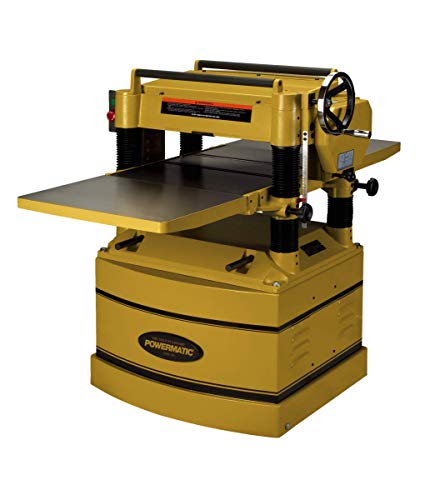
Powermatic 20-Inch Thickness Planer 5 HP 4-Speed (Model 209HH)

Powermatic 25-Inch Planer 15 HP Helical Cutterhead (Model WP2510)

RIKON 25-135H 13-Inch Portable Planer Helical Cutterhead
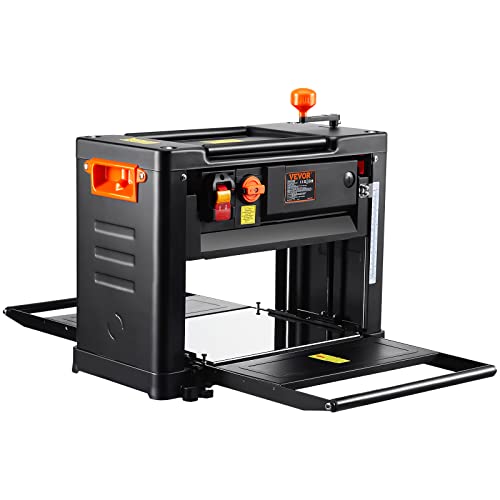
VEVOR Power Benchtop Planer Three-Blade Two Speed 13″

VEVOR 13-Inch Two-Blade Benchtop Planer 15-Amp
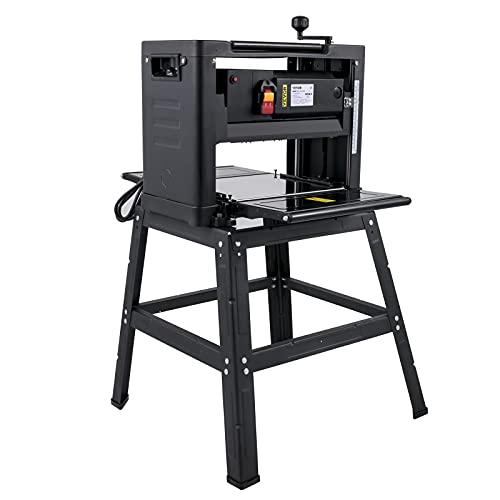
VEVOR 13-Inch Foldable Benchtop Planer with Iron Stand
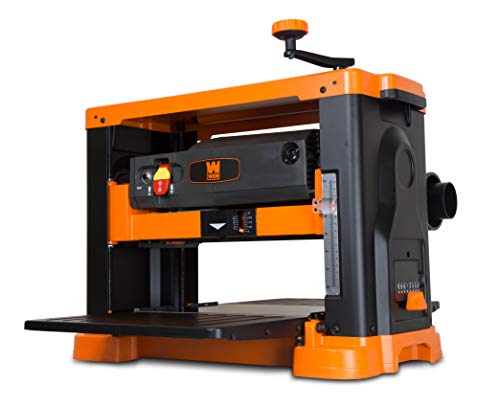
WEN PL1326 15-Amp 13-Inch Spiral Benchtop Planer
A Deeper Look At The Lineup
The 201HH earns its reputation through sheer mass. Weighing roughly 1,300 pounds in cast iron, this planer resists vibration the way a piece of fine machinery should, holding tolerance across long runs of wide stock. In a busy cabinet shop or custom millwork studio, that rigidity translates into dimensionally consistent boards you can send straight to a glue-up without re-milling.
The 7-1/2 HP motor paired with a helical cutterhead carrying 125 four-sided carbide inserts means quieter operation and a smoother finish than traditional straight-knife heads. Operators moving from lighter machines typically notice the difference in surface quality the moment they run figured hardwood through it. Compared to the more portable RIKON and VEVOR options covered later, the 201HH sits firmly in industrial territory.
The Practical Payoff
- Cast iron build keeps cuts dimensionally accurate across full-width passes
- Helical cutterhead with 125 carbide inserts delivers a quieter, cleaner cut than straight-knife designs
- Hinged top opens access to rollers and knives for routine maintenance
- 5-inch dust port hooks into standard shop dust collection
Things To Consider
- Requires 230V three-phase power, which many home shops cannot supply without a phase converter
- The 1,300-pound weight means a permanent install rather than a movable benchtop setup
Who Will Love This
Custom millwork shops and serious cabinetmakers running full-width hardwood day in and day out will get the most from this kind of mass and motor.
Where Another Pick Suits Better
For a home shop on single-phase power, the Powermatic 209HH is a more practical professional alternative.
Variable feed rates matter more than most spec sheets admit. The 209HH lets you dial in 16, 20, 24, or 31 feet per minute, which means you can slow down for figured walnut and speed up through soft maple without changing machines. That kind of flexibility changes the rhythm of a production day.
The 100 four-sided carbide inserts in the helical cutterhead rotate to a fresh edge when one dulls, skipping the sharpening appointment of straight-knife machines. A chip breaker and pressure bar work together to reduce snipe, the small ridge at the end of a board that often means a hand-planing pass. Where the bigger 201HH demands three-phase power, the 209HH ships in 230V or 460V three-phase variants, giving shops a choice based on their service.
Where It Helps
- Four feed rates let you match cutting speed to species and finish quality
- Cast iron table with extensions gives 55-1/2 inches of working length for long stock
- Helical cutterhead with 100 four-sided inserts extends knife life between changes
- Chip breaker and pressure bar noticeably reduce snipe at the ends of boards
Worth Noting
- Still requires three-phase electrical service, so single-phase shops need a converter
- 20-inch width capacity limits it on wide panels compared to the 25-inch WP2510
Made For
Mid-volume professional shops milling varied species and lengths will benefit most from the adjustable feed rate and the cast iron stability.
Look Elsewhere When
Hobbyists on a residential electrical panel should step down to the RIKON 25-135H instead, which runs on standard 115V.
The WP2510 is the kind of planer you spec into a shop when output numbers start to matter. Fifteen horsepower and a 25-inch capacity handle wide slabs and thick hardwoods without bogging down, and the digital readout takes the guesswork out of repetitive setup. A digital readout, for the unfamiliar, is a numeric display that shows exact table height, so you can return to the same thickness pass after pass without re-measuring.
The helical cutterhead carries 174 four-sided carbide inserts, the highest count in this lineup, which spreads wear across more cutting edges and extends time between rotations. Segmented infeed rollers paired with segmented chip breakers make it possible to feed multiple boards of different thicknesses through in succession. In a production environment milling stair treads, flooring, or wide table slabs, that throughput stacks up fast.
Good Reasons To Consider
- 174 four-sided carbide inserts mean long intervals between knife rotations
- 15 HP motor sustains full-width cuts in dense hardwoods
- Digital readout and PC controller simplify table height adjustments on repeat runs
- Segmented infeed and chip breakers handle varied stock thicknesses in continuous feed
Points To Keep In Mind
- Three-phase power requirement rules out most residential installations
- Footprint and weight demand a dedicated floor space in a production shop
The Right Fit
Commercial mills, flooring manufacturers, and high-end furniture shops running wide stock all day will see payback from the capacity and power.
Swap It Out When
Smaller custom shops should consider the Powermatic 209HH, which trades width and power for a friendlier footprint.
Garage shops and on-site trim carpenters tend to want helical-cutter finish quality without dedicating a corner of the floor to a stationary machine. The RIKON 25-135H answers that brief by putting a 26-insert helical-style cutterhead into a portable benchtop body. It runs on a standard 15-amp, 115V household circuit, so you can plug it in wherever there’s an outlet.
The 15-amp motor and 1/8-inch maximum depth of cut keep it in hobbyist territory, but the indexable HSS (high-speed steel) inserts, which you rotate to expose a fresh edge rather than sharpening the whole blade, give it a finish quality that punches above its class. Compared to the three-blade VEVOR below, the RIKON trades raw material removal rate for a noticeably quieter, cleaner cut.
The Upside
- Plugs into standard 115V household circuits, no special wiring needed
- 26 indexable HSS inserts rotate to a fresh edge instead of requiring sharpening
- Portable build suits job-site and garage use
- Helical-style cut runs noticeably quieter than straight-knife benchtop machines
Trade Offs
- 1/8-inch max depth of cut means more passes for thick stock removal
- 13-inch width limits it on wider boards compared to full industrial planers
Best Suited To
Hobbyist woodworkers, trim carpenters, and garage-shop owners who want helical finish quality on a 115V circuit.
Reach For A Different Pick When
For higher production volume on a benchtop budget, the VEVOR Three-Blade two-speed model offers faster material removal.
Three blades on a benchtop planer at this price point is unusual, and the extra blade counts in real use. Where a two-blade head leaves small ridges on figured grain, the third blade cleans up the cut and gives a smoother finish right off the machine. The two-speed gearbox lets you pick between finish-quality feed and faster material removal on rough lumber.
Board support comes from a precision-machined cast iron bed and steel plate, with pull-out extensions adding up to 35 inches of total length. The 13-inch width matches most of the benchtop field, and the 6-inch thickness capacity covers nearly every standard dimensional lumber size. For a hobbyist dipping into surfacing rough-sawn hardwoods, the combination of three blades, two speeds, and a cast iron bed is hard to beat at this tier.
Well-Handled Touches
- Three-blade cutterhead leaves a smoother finish than typical two-blade benchtop machines
- Two-speed gearbox lets you choose between fast feed and finish-quality passes
- Cast iron bed and steel plate support stay flat under load
- 35-inch total table length handles longer boards with the extensions out
A Few Limitations
- Straight-knife blades require periodic sharpening or replacement rather than rotating an edge
- Dust collection port performance varies with shop vacuum capacity
Perfect Match For
Weekend woodworkers and small-shop hobbyists who want smoother cuts and faster material removal without stepping up to a helical machine.
Consider Something Else When
If you want the quieter operation and edge-rotating convenience of a helical cutterhead, the RIKON 25-135H is the better step up.
The 15-amp motor here puts out a genuine 2000 watts, which keeps the cutterhead turning through denser stock without stalling the way weaker benchtop motors do. The 12-inch extended infeeding table adds real support for longer boards, a small detail that separates this from stripped-down benchtop designs. For someone milling rough-sawn 2x material into clean 3/4-inch stock, the capacity is honest.
Two blades rather than three means slightly more visible cutter marks on figured grain, but the cast iron bed and steel plate construction keeps the surface flat during cuts. A low-noise design helps in shared spaces like attached garages or basement shops. Compared to the three-blade VEVOR above, this trades one blade for a friendlier entry price, which matters if the planer is a first-time purchase.
Useful Touches
- 15-amp, 2000W motor sustains cuts through dense stock without bogging down
- 12-inch extended infeeding table adds support for longer boards
- Cast iron bed keeps the work surface flat under cutting load
- Low-noise operation suits shared or attached workshop spaces
Honest Caveats
- Two-blade head leaves slightly more visible cutter marks than three-blade designs
- Straight knives require periodic sharpening or replacement
Whose Shelf It Belongs On
First-time planer owners and weekend builders looking for a solid entry into surfacing rough lumber without a large investment.
A Better Fit Elsewhere
For smoother off-the-machine finishes on figured wood, the VEVOR three-blade model is a worthwhile step up.
Small shops and mobile setups often lose floor space to a planer that only sees weekend use. The foldable frame on this VEVOR lets it collapse down between projects, which is the kind of feature that earns its place in a one-car-garage workshop. The included iron stand gives it a stable base when deployed, and the dust exhaust port hooks into a shop vac for cleaner operation.
The 2000W motor and 8000 RPM cutterhead deliver 6 meters per minute of feeding speed through the 13-inch width, plenty for hobby-scale work. Two double-edged cutter blades use a honing process to stay sharp through repeated passes, and you may find that the 15-amp draw requires a dedicated circuit on older home wiring. The build lands between the two-blade and three-blade VEVOR options, leaning toward portability over cutting refinement.
Bright Spots
- Foldable frame collapses for storage in tight workshop spaces
- Iron stand provides a stable platform during use
- Dust exhaust port integrates with a standard shop vacuum
- 2000W motor sustains cutting through typical hardwood dimensional lumber
Points To Note
- 15-amp draw may need a dedicated circuit on older home electrical panels
- Two-blade head produces a slightly rougher finish than three-blade machines
Built With In Mind
Mobile woodworkers, small-space hobbyists, and anyone who needs to stow a planer between occasional project weekends.
Skip It When
If your shop has the floor space and you want smoother cuts, the VEVOR three-blade benchtop planer is a more capable stationary alternative.
The PL1326 brings spiral-cutter technology into a price range that hobbyists can justify as a first planer. A spiral cutterhead arranges its cutting edges in a staggered helix around the drum rather than in straight parallel lines, which sheers wood rather than chopping it, and the result is a noticeably quieter cut and a smoother finish on figured grain. The 15-amp motor spins that head past 10,000 RPM at a 26-feet-per-minute feed rate, which is plenty aggressive for surfacing 13-inch-wide stock.
Twenty-six staggered HSS blades handle both hard and soft woods, and the simple control layout keeps setup approachable for first-time planer owners. You may find the depth-of-cut adjustment takes a few boards to dial in, but the learning curve is gentler than on industrial machines. The honest read is that this is a smart entry point for someone moving from hand-planing rough lumber into a powered workflow.
The Case For It
- Spiral cutterhead with 26 staggered HSS blades produces a smooth finish on figured wood
- 15-amp motor sustains 10,000+ RPM for aggressive material removal
- 26 FPM feed rate balances speed and finish quality for hobby use
- Simple control layout keeps setup approachable for new planer owners
Room For Improvement
- 13-inch width caps the size of boards you can surface in a single pass
- Dust collection works best with a higher-CFM shop vacuum than a basic household unit
Right Fit For
First-time planer owners and hobbyist woodworkers who want spiral-cutter finish quality without the industrial price tag.
Where A Sibling Pick Shines
For a benchtop planer with a cast iron bed and longer infeed support, the VEVOR three-blade model is a sensible alternative.
What To Weigh Before Choosing a Thickness Planer
A thickness planer is one of the heavier purchases a woodworker makes, and the right machine depends on what you’re actually running through it. Width capacity, cutterhead style, power, and electrical requirements all matter, and they matter differently depending on whether you mill rough-sawn slabs on weekends or feed a daily queue of cabinet parts.
Width and Thickness Capacity The 13-inch benchtop class handles most dimensional lumber and narrower boards, while 20- to 25-inch industrial machines take wide slabs in a single pass. Maximum thickness capacity runs 6 inches on the benchtop picks in this lineup, enough for typical 4/4 and 8/4 rough lumber, while industrial planers push higher.
Cutterhead Style Helical and spiral cutterheads, like the ones on the Powermatic 209HH, RIKON 25-135H, and WEN PL1326, use multiple small cutting edges arranged around the drum. A helical or spiral design sheers wood more cleanly than straight-knife heads, runs quieter, and lets you rotate a single dull edge instead of changing the whole blade. Straight-knife heads cost less upfront but need periodic sharpening.
Power and Electrical Service Benchtop planers in this roundup run on standard 115V household current, while the Powermatic 201HH, 209HH, and WP2510 require 230V or 460V three-phase service. A home shop on single-phase power needs a phase converter to run the industrial machines, and that converter is a real added cost to factor in.
Feed Rate and Production Pace Variable feed rates, such as the four-speed gearbox on the Powermatic 209HH, let you slow down for figured hardwood and speed up through softwood. A faster fixed feed rate moves more material per hour but can leave a rougher surface on figured grain. Production shops benefit more from adjustable feed than occasional users do.
Common Shopping Slip Ups and What The Higher Tier Buys
Where Shoppers Go Wrong
The most common mistake is choosing a benchtop planer for wide slab work, then getting frustrated by the 13-inch width limit. Measure your largest typical board before shopping, and remember that rough lumber often needs 1 to 2 inches of oversize on each edge before jointing. Another trap is underestimating dust collection needs. A planer throws off a serious volume of chips, and a basic shop vacuum often can’t keep up. Plan for a dust collector with adequate CFM (cubic feet per minute of airflow) for the machine you choose, or expect a messy workflow. Finally, don’t overlook electrical service. A 15-amp benchtop planer plugs into a standard outlet, but a 230V three-phase industrial machine needs wiring your shop may not have.
When Paying More Pays Off
Higher-tier thickness planers earn their price through three things: heavier cast iron construction that holds tolerance over years of use, helical cutterheads that lower noise and extend knife life, and wider capacity that lets you mill full panels in one pass. For a hobbyist running a few boards a month, a 13-inch benchtop is honest value. For a professional shop feeding a daily queue of wide hardwood, the jump to a 20- or 25-inch helical machine pays back through faster throughput, longer knife life, and fewer re-milling passes. The upgrade is worth it when your current machine is the bottleneck in your workflow, not when you’re chasing a spec sheet.
Frequently Asked Questions
What size thickness planer do most hobbyists need? A 13-inch benchtop planer handles the bulk of hobby work, covering standard dimensional lumber and most narrow hardwood boards. You step up to a 20- or 25-inch machine when you regularly work with wide panels or full-width hardwood slabs.
Is a helical cutterhead worth the extra cost? For shops that run their planer frequently, helical cutterheads pay back through quieter operation, smoother finishes, and the ability to rotate a single insert rather than sharpening or replacing an entire blade. For occasional hobby use, a straight-knife benchtop is a reasonable starting point.
Can a thickness planer replace a jointer? A planer creates parallel faces and consistent thickness, while a jointer creates a flat face and a square edge. They complement each other rather than substitute, and most woodworkers end up wanting both once they start milling rough lumber.
How important is dust collection? Very important. A planer generates a high volume of chips, and running one without adequate dust collection creates a messy shop and a potential health concern from fine wood dust. Plan for a dust collector or a high-CFM shop vacuum before the planer arrives.
What electrical service do industrial planers need? The Powermatic 201HH, 209HH, and WP2510 all require three-phase power, either 230V or 460V depending on the model. Home shops typically run on single-phase service and would need a phase converter to operate these machines.




