


A thin kerf blade cuts a narrower slot in your stock than a standard full-kerf blade, which means less material gets turned to sawdust, less waste on expensive hardwood, and noticeably less push on the workpiece from a smaller lower-horsepower saw. If you own a compact contractor saw, a portable jobsite table saw, or a cordless model with a 7-1/4-inch capacity, the right thin kerf setup can be the difference between bogging down on a thick rip and gliding through it. The list below focuses on blades that genuinely earn the “thin kerf” label, balancing tooth count, plate thickness, and carbide quality for the way you actually work.
A Snapshot Of The Selections

DEWALT 10-Inch 2-Blade Combo (DW3106P5)

Diablo Ultra Finish Carbide Saw Blade (7-1/4″, 60T)
Diablo TrexBlade Composite Saw Blade (7-1/4″, 44T)

CMT Fast Framing Blade (6-1/2″, 24T)
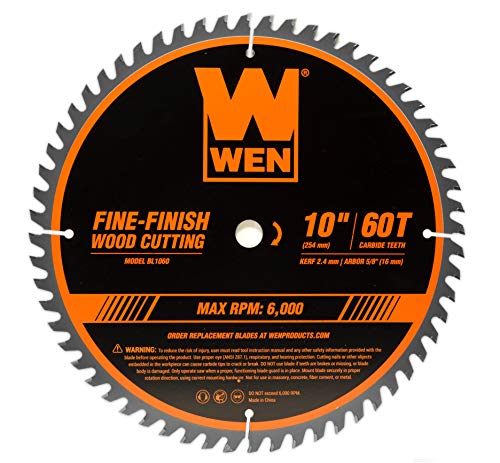
WEN BL1060 10-Inch 60-Tooth Fine-Finish Blade
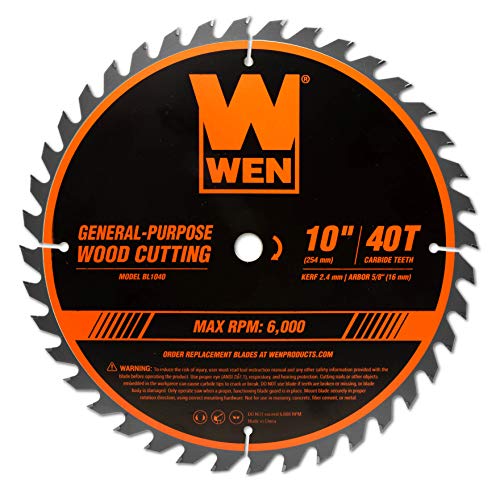
WEN BL1040 10-Inch 40-Tooth Carbide-Tipped Blade

CMT ITK Plus Finish Saw Blade (165mm, 36T)
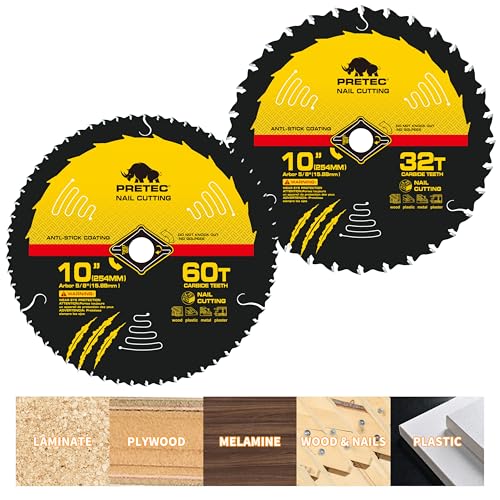
PRETEC 10-Inch 32T and 60T Combo Pack

DEWALT DWA11040 10-Inch 40-Tooth Fine-Finish Blade
Why These Options Stand Out
Most of the picks below are single blades designed for one job. The DEWALT DW3106P5 ships as a pair: a 60-tooth finishing blade and a 32-tooth combination blade, both 10 inches and built around a 5/8-inch arbor, the standard size for full-size table and miter saws in North American shops. For someone setting up a new saw, the value of a matched set is real. You do not need to think about compatibility, tooth count math, or which blade is in the drawer when a project changes direction.
Both discs are built around a thin kerf plate, which on a contractor saw or a 15-amp portable makes a tangible difference when ripping 4/4 hardwood or trimming down a plywood sheet. The 60-tooth is the friend for crosscutting veneered plywood without blowing out the face layer, while the 32-tooth handles ripping and general construction. Together they cover roughly 90 percent of what a homeowner or remodeler touches in a week.
The Good Stuff
- Two matched blades cover ripping and finishing without extra shopping
- 5/8-inch arbor fits the majority of full-size table and miter saws on the market
- Carbide teeth stay sharp enough for repeated trim cycles on pine and poplar
- Computer-balanced plate keeps cuts straight, which matters for long rip fences
- One of the easier ways to replace two worn blades at once on a contractor saw
Things To Consider
- Neither blade is purpose-built for composite decking or abrasive plastics, so specialty projects need a different disc
- Storage takes more drawer space than a single blade, which matters in a tight shop
Who It Suits Best
DIYers and remodelers running a 10-inch contractor or miter saw who want a coordinated rip and finish pair from a recognized brand.
Consider Something Else When
Anyone focused on composite decking installs should look at the Diablo TrexBlade 7-1/4-inch instead, since its tooth geometry is tuned for plastics and capped composites.
The Diablo D0760A is a 7-1/4-inch, 60-tooth blade that defines the “ultra finish” category it sits in. The ATB tooth pattern (alternating top bevel, where each tooth is angled in opposite directions) is a classic formula for splinter-free crosscuts on plywood and melamine-coated panels. On a cordless 7-1/4-inch saw, where every milliamp of battery and every gram of motor torque matters, the thin plate geometry frees up power that a thicker kerf blade would waste.
You will find this disc doing fine trim and cabinet work where the cut quality on the show face is non-negotiable. Compared to the 10-inch DEWALT pair above, this one targets a smaller tool platform, so it pairs well with track-style saws, smaller benchtop units, and cordless circular saws. If you have a miter saw and a table saw on different platforms, the 5/8-inch arbor and 7-1/4-inch diameter fit a huge share of those tools.
Good Reasons To Consider
- ATB grind keeps face veneers intact on plywood and melamine
- Thin kerf plate reduces battery drain and motor load on cordless saws
- 5/8-inch arbor is the most common shank size for portable saws
- TiCo carbide tip formulation extends edge life on abrasive sheet goods
Honest Caveats
- 60 teeth make it slow when ripping solid lumber thicker than 2 inches
- Smaller 7-1/4-inch diameter caps maximum cut depth compared to a 10-inch blade
Made For
Trim carpenters, cabinet builders, and serious DIYers using a cordless or compact corded circular saw for finish cuts on plywood, melamine, and solid hardwood trim.
Where Another Pick Suits Better
For full-sheet plywood break-downs on a jobsite table saw, the 10-inch DEWALT 32-tooth option is a faster ripping partner than this 60-tooth finish blade.
Composite decking cuts nothing like softwood, and using a standard framing blade on capped composite is a fast way to scorch the cap, melt the plastic core, and dull the carbide in an afternoon. The Diablo TrexBlade uses a modified triple chip grind, abbreviated MTCG, which alternates a flat raker tooth with a high chamfered tooth. That geometry is the trick the industry uses to break chips out of dense, heat-sensitive material without letting the kerf get hot enough to remelt the cut edge.
At 7-1/4 inches with 44 teeth and a 5/8-inch arbor, it slips into the same cordless circular saws and 7-1/4-inch miter saws the Diablo D0760A fits, but the cutting discipline is different. This one is the right tool for the homeowner finally getting around to a backyard deck, or the pro building a few hundred square feet of capped composite. It is overkill for framing lumber, but for the materials it is engineered around, it pays for itself by delivering clean, melt-free cuts that do not leave a fuzzy or scorched edge.
The Case For It
- MTCG geometry fights heat buildup in plastic and composite cores
- Hi-density carbide formulation resists wear on abrasive filler material
- Clean cuts reduce post-cut sanding on the visible edge of deck boards
- 5/8-inch arbor matches the most common portable saws
Small Caveats
- Not efficient for ripping dimensional lumber, so it is a one-job disc
- 44-tooth count produces a slower cut than 24-tooth framing blades on softwood
Right Fit For
Homeowners and pros cutting composite or PVC deck boards, fence boards, and similar cellular plastic materials where edge quality and heat control matter.
Skip It When
You are doing more wood than composite work, in which case the CMT Fast Framing 6-1/2-inch will be a more useful shop mate.
The CMT 271.165.24H is a 6-1/2-inch framing blade, which means it targets a different tool platform from the rest of this list: the smaller cordless circular saws and trim saws that many remodelers reach for over a full-size 7-1/4. With 24 teeth and an ATB plus shear grind (a hybrid that uses a steep bevel for clean entry and a flatter face for fast stock removal), it sits in the “fast and aggressive” end of the spectrum. The thin kerf keeps the motor and battery drain manageable, which is the whole point on a cordless platform.
For rough framing, subfloor work, and ripping down sheet goods on a cordless saw, this blade is the kind of disc that lets the tool feel like a bigger saw than it is. Compared to the Diablo D0760A in the slot above, this one is the opposite end of the tooth-count trade-off: fewer teeth, faster cut, rougher edge. The right blade is the one that matches the cut you are making that afternoon.
What Makes Sense
- 24-tooth aggressive grind powers through 2x stock and pressure-treated lumber
- ATB plus shear geometry balances speed and a reasonably clean edge
- 20mm bore with 5/8-inch washer fits both metric and imperial cordless saws
- Compact 6-1/2-inch size matches slim-body cordless circular saws
Points To Keep In Mind
- Edge finish is rougher than higher-tooth count blades on the same saw
- Limited maximum cut depth compared to a 7-1/4-inch blade on the same tool family
Best Suited To
Framers, remodelers, and serious DIYers using a compact cordless circular saw for rough cuts where speed matters more than finish.
Look Elsewhere When
You want finish-quality cuts on a 6-1/2-inch cordless platform, in which case the Diablo D0760A on a 7-1/4-inch saw is the better upgrade path.
The WEN BL1060 is the fine-finish sibling to the BL1040 reviewed below, leaning all the way into 60 teeth on a 10-inch plate to deliver glassy crosscuts on hardwood, plywood, and trim. The thin kerf design keeps motor load light on a 1.5 to 2 horsepower cabinet saw, but the 60-tooth count is overkill for ripping, so most users keep it mounted on a miter saw or a dedicated finish setup. Machine-cut carbide tips hold an edge on dense species like maple and walnut better than economy blades in the same diameter class.
Within this list, the BL1060 pairs naturally with the WEN BL1040. One disc lives on the miter saw for finish cuts, the other lives on the table saw for the workhorse 80 percent of cuts. If you are running a smaller benchtop table saw that struggles with full-kerf blades through 8/4 stock, the thin kerf of this 60-tooth makes a real difference.
Reasons It Performs
- 60-tooth grind produces tear-out-free edges on figured hardwood and veneered plywood
- 5/8-inch arbor is the standard for full-size North American table and miter saws
- Carbide-tipped teeth handle a wide range of domestic and imported hardwoods
Some Limits To Know
- Too fine for efficient ripping, so it should be a dedicated finish blade
- Single blade sold alone, so pairing with a ripping blade doubles the spend
Who Will Love This
Cabinet makers, trim carpenters, and hobbyists who need furniture-quality crosscuts on a 10-inch miter or table saw without switching to a full-kerf premium blade.
Another Choice May Suit
Shoppers wanting a two-blade solution in one box should look at the DEWALT DW3106P5 instead, which delivers a finish and a combination blade in a single purchase.
Where the BL1060 above is the finish specialist, the WEN BL1040 is the everyday all-rounder. Forty teeth on a 10-inch plate is the classic middle ground: enough teeth to crosscut hardwood and plywood with a clean enough edge for paint-grade trim, but few enough teeth to feed stock into a rip cut without making the motor work too hard. The thin kerf plate on a smaller benchtop saw frees up the spindle and battery on portable tools.
It is the blade most hobbyists leave mounted in their table saw year-round, and the one that handles the random Saturday project: ripping down a sheet of MDF, crosscutting 2x4s, sizing oak boards for a small shelf. If you only own one blade, this is a sensible choice. If you own two, the BL1040 lives on the table saw and the BL1060 takes over the miter saw.
Bright Spots
- 40-tooth count covers both crosscut and light ripping on most home-shop saws
- Carbide-tipped construction handles pine, oak, poplar, and maple without early dulling
- 5/8-inch arbor fits standard full-size miter and table saws
Trade Offs
- Edge finish is rougher than the 60-tooth BL1060 on figured hardwood
- Not optimized for extended ripping in dense hardwood, so heavy production shops may want a dedicated ripping disc
Perfect Match For
Home-shop woodworkers and DIYers who want a single blade that handles the full range of weekend projects without swapping discs.
Reach For A Different Pick When
Your work centers on fine furniture and trim, where the WEN BL1060 will leave a noticeably cleaner show face on hardwood.
The CMT 272.165.36H is a 165mm (about 6-1/2 inch) blade with 36 teeth and a 20mm bore that comes with a 15.87mm reducer ring, which is the European standard, so the kit slips into a wider range of plunge saws, track saws, and compact cordless saws than a North American 5/8-inch-only disc. The 1.7mm plate is firmly in thin-kerf territory, and the ATB plus shear tooth geometry targets clean cuts on hardwood and veneered panel.
For track saw owners and European-spec tool users, the ITK Plus line is a thoughtful fit. Compared to the CMT Fast Framing blade in slot 4, this one is the finish cousin: more teeth, slower cut, cleaner edge. It is also noticeably smaller than the 10-inch blades from WEN and DEWALT, so it lives on a different tool, but the thin-kerf design philosophy carries across the CMT line.
Where It Delivers
- 36-tooth ATB plus shear grind handles hardwood and sheet goods with minimal tear-out
- 20mm bore with 15.87mm reducer fits track saws and European-spec plunge saws
- 1.7mm plate keeps the cut narrow on battery-powered saws
Practical Considerations
- Smaller 165mm diameter limits maximum cut depth on the same tool platform
- Higher tooth count means slower feed on thick rip cuts
Built With In Mind
Track saw and plunge saw owners who need a thin-kerf finish blade in the European 165mm size for sheet goods and hardwood.
Swap It Out When
You are working on a full-size North American table saw, where the 10-inch DEWALT 32-tooth combination blade covers the same job with a much deeper cut capacity.
The PRETEC combo lands the same idea as the DEWALT DW3106P5 reviewed first, but at a lower entry price: a 32-tooth combination blade for general work and a 60-tooth finishing blade for fine crosscuts, both 10 inches, both on a 5/8-inch arbor. The set is aimed at the new saw owner or the weekend hobbyist who needs two blades to cover a real range of cuts but does not want to spend on a name-brand pair right out of the gate.
A Teflon-style non-stick coating helps reduce pitch and resin buildup on the plate, which is one of the most common practical headaches when cutting pine and other resinous softwoods. For someone buying a benchtop saw for the first time, the combination pack is the simplest path to a working setup: mount the 32-tooth for the rough cuts, swap to the 60-tooth for trim, and call it a day.
What Helps Most
- Two-blade pack covers rough and finish cuts in one purchase
- Non-stick coating reduces resin buildup on softwoods and keeps the plate cleaner
- 5/8-inch arbor fits standard 10-inch table and miter saws
- Entry-level price point suits first-time saw owners
Worth Noting
- Edge retention and carbide quality are typically below the WEN and DEWALT options above
- Not built for composite or abrasive materials, so it is a wood-only solution
Whose Shelf It Belongs On
New saw owners and budget-minded DIYers setting up a first benchtop or portable table saw and wanting one purchase to cover both rough and fine cuts.
Where A Sibling Pick Shines
Anyone already running a cordless 7-1/4-inch circular saw will get more use from the Diablo Ultra Finish 60-tooth in slot 2 than from this 10-inch pair.
The DEWALT DWA11040 lands in the same 10-inch, 40-tooth category as the WEN BL1040 in slot 6, with optimized tooth geometry meant to extend the working life of the carbide tip. Where this blade earns its keep is on jobsite table saws and daily-driver shop saws, where the same blade might make hundreds of cuts a week across softwood framing and hardwood trim. The thin kerf plate keeps the cut load light on smaller 15-amp motors, which are the most common jobsite saws in North America.
It is a single-blade solution, so it lacks the convenience of the DEWALT two-blade combo at the top of this list, but for a worker who has one saw and one blade slot, the DWA11040 is a sensible all-rounder. It is the right pick for the remodeling contractor who wants one disc to do most cuts without thinking about it.
Useful Strengths
- 40-tooth count handles crosscut, rip, and trim on a single blade
- 5/8-inch arbor is the standard for 10-inch table and miter saws
- Thin kerf plate reduces motor load on portable jobsite saws
- Carbide tip geometry tuned for extended service life
Less Ideal Details
- Single blade only, so finish-quality work is rougher than a 60-tooth dedicated disc
- Edge retention on dense exotic hardwoods is a step below specialty blades
Who Should Grab It
Contractors and remodelers who run one saw on a truck and need a single blade to cover ripping, crosscutting, and trim work day in and day out.
Not Your Match When
You are doing high-volume finish cabinetry, where a dedicated 60-tooth blade like the WEN BL1060 will deliver noticeably cleaner results on hardwood.
Picking The Right Thin Kerf Blade For Your Saw
Match The Blade To The Saw, Not The Other Way Around
The first thing to check is the bore size, which is the diameter of the center hole that mounts the blade to the saw’s spindle. The dominant size in North America is 5/8 inch, while many European and Asian-built saws use 20mm or 30mm. A 20mm blade will sometimes ship with a reducer ring, like the CMT ITK Plus in slot 7, but a 5/8-inch blade on a 20mm spindle is a non-starter. Diameter matters just as much: 10 inches is the standard for full-size table and miter saws, 7-1/4 inches covers most cordless and compact circular saws, and 6-1/2 inches fits slim-body cordless models.
Tooth Count Drives The Cut Character
A rough rule of thumb: 24 teeth and under is for fast ripping, 36 to 40 is the all-purpose range, and 50 to 80 is for fine crosscuts and plywood. A thin kerf blade keeps the same tooth-count logic as a full-kerf blade, so the cut quality and the material removal rate behave the same way. Choosing a 60-tooth blade for ripping 4/4 oak is a recipe for burning the workpiece and overheating the motor.
Plate Thickness And Runout, The Quiet Specs
A thin kerf blade is typically 1.5mm to 2.0mm at the plate, with a slightly wider cut at the tooth tips. For a cordless 7-1/4-inch saw, the thinner the plate the better, because the motor and battery simply do not have the torque of a 15-amp corded saw. Plate runout, meaning how much the plate wobbles as it spins, matters more for cut quality than people think. Quality blades from DEWALT, Diablo, CMT, and WEN use laser-cut plates and tensioning rings to keep runout low.
Material Coatings And Tooth Geometry
Tooth geometry like ATB (alternating top bevel), MTCG (modified triple chip grind), and shear grinds each behave differently against different materials. A non-stick or Teflon coating on the plate reduces pitch buildup on pine and slows corrosion in damp shop environments. For abrasive materials like MDF and composite decking, a higher-density carbide tip formulation will outlast a budget blade by a wide margin.
Key Considerations Across These Picks
Common Shopping Slip Ups
The most frequent mistake is buying a thin kerf blade with the wrong bore, which is a frustrating return for a part that should have been a quick install. The second most common slip is choosing tooth count by price instead of by purpose. A 60-tooth blade looks like an upgrade over a 24-tooth framing blade, but mounting it on a jobsite saw for rip cuts will overheat the motor and produce a wavy edge. Always match the tooth count to the work the blade will see most weeks, and add a specialty blade for the one or two projects that demand a different grind.
What The Higher Tier Buys
The jump from a budget blade to a premium blade in this category is mostly about carbide quality, plate runout, and tooth geometry refinement. A higher-density carbide tip holds an edge longer on abrasive materials, which is why a blade like the Diablo TrexBlade survives composite decking that dulls a generic 40-tooth in an afternoon. The higher tier also tends to ship with tensioned plates, which means the disc stays flat and quiet at higher RPM, and the cuts stay straight over a long rip fence. For a hobbyist who cuts a few boards a month, the upgrade is harder to justify. For a contractor or remodeler, the extra life and the cleaner edge pay back the spend quickly.




