


Porcelain tile is famously tough on the wrong blade, so the choice between a turbo rim, a continuous rim, and a segmented design genuinely shapes the final cut. Anyone trimming a bathroom wall, fitting a kitchen backsplash, or shaping outdoor porcelain pavers needs a diamond blade that matches the material, the saw, and the wet/dry setup they own. The nine diamond blades below cover the most common scenarios homeowners, remodelers, and weekend DIYers actually face, and each is paired with honest trade-offs rather than brochure talk.
How The Shortlist Stacks Up

DEWALT Diamond Blade for Porcelain Tile 4-1/2-Inch (DW4765)

Makita B-69711 5″ Diamond Blade, Turbo
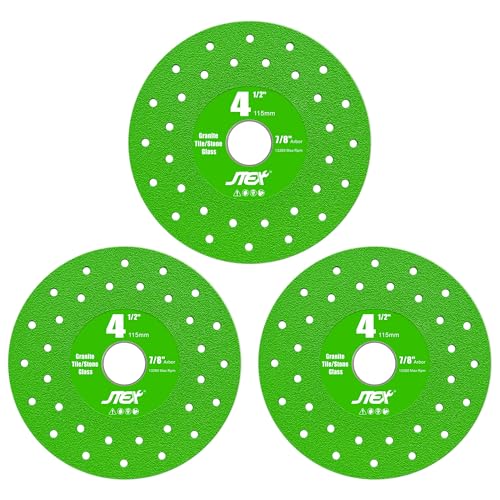
JTEX 4-1/2″ Rock Slab Grinding Disc 3-Pack

FOXBC 4-1/2″ Tile Cutter Diamond Blades 3-Pack

SEESII 4.5″ Diamond Blade for Angle Grinder 2-Pack

FOXBC 4-1/2″ Tile Glass Cutting Disc 3-Pack
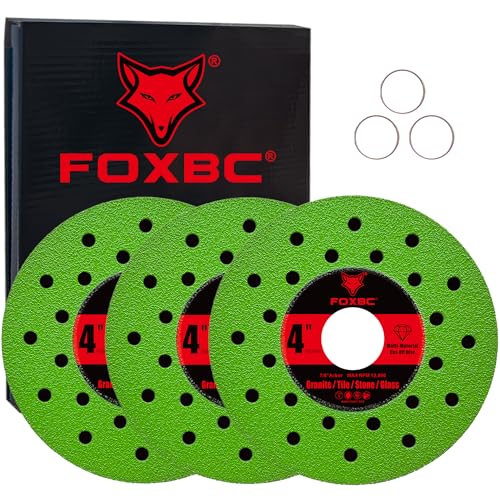
FOXBC 4″ Tile Cutter Diamond Blades 3-Pack

DRILKING 4-1/2″ Tile Cutter Diamond Saw Blade 3-Pack

Solidure 5″ Turbo Rim Diamond Saw Blade
What Each Pick Brings To The Table
The DEWALT DW4765 has earned its place as the porch light of the porcelain world, a familiar option that homeowners reach for when they don’t want surprises. Sized for 4-1/2-inch angle grinders, it runs wet or dry, so a small bathroom renovation with a spray bottle and a tile-saw setup are both in play. The blade is designed for the kinds of cuts people actually make around the house: notch-outs around shower valves, L-cuts behind toilets, and trim cuts on plank porcelain.
What separates this blade from a generic disc is the build quality that DEWALT puts into the steel core. The tensioned core reduces wobble on long rip cuts, which matters when you’re slicing a 36-inch porcelain plank and the run starts drifting. In a kitchen backsplash context, that steadiness means fewer crooked edges that need a rub brick to clean up later.
Strong Points
- Runs wet or dry, giving you flexibility for indoor cuts and outdoor tile saws alike.
- 4-1/2-inch size fits the angle grinders most homeowners already own.
- Tensioned steel core helps keep the cut line straight on longer rips.
- Designed specifically for porcelain, so the bond and grit match the material.
- Backed by a recognizable brand, which makes warranty conversations easier if a defect shows up early.
Points To Note
- A single blade, so heavy users may find themselves ordering multiples to keep a fresh edge on hand.
- Dry cutting porcelain raises dust and chipping risk; wet setup gives the cleanest result.
Quick Facts
Who It Suits Best
Homeowners and remodelers trimming porcelain around fixtures, plumbing, and edges on a 4-1/2-inch angle grinder.
Consider Something Else When
Anyone cutting visible-edge porcelain slabs with high chip concerns should look at the JTEX 4-1/2″ Rock Slab Grinding Disc 3-Pack, which uses a thinner 1mm profile for cleaner results.
The Makita B-69711 is a turbo-rim blade built for people who don’t want to swap discs every time they switch from porcelain to cured concrete to block. The 5-inch diameter suits a common size of angle grinder and small wet tile saw, and the turbo segments stay in constant contact with the material for a smoother finish than a typical segmented blade leaves behind.
One notable detail is the 13mm segment height, about 50% taller than entry-level blades, which generally translates into more usable life on harder materials. For a tile contractor running cuts all week, that extra segment depth can be the difference between finishing a job and stopping to swap a fresh disc mid-day.
Good Reasons To Consider
- Turbo rim profile leaves a cleaner edge than a fully segmented blade.
- Taller 13mm segments for extended cutting life on hard materials.
- General-purpose design works on block, brick, cured concrete, and tile.
- Makita’s broad support network simplifies replacement sourcing if you burn through a blade.
Trade-Offs
- Not a porcelain-only blade, so chip resistance on glazed porcelain is good but not class-leading.
- 5-inch size requires a grinder that accepts the larger diameter, so smaller 4-inch tools won’t fit.
Right Fit For
Tradespeople and serious DIYers who cut multiple materials on the same job and value a smooth turbo-rim edge on porcelain.
A Better Fit Elsewhere
Remodelers focused on visible-edge porcelain detail cuts may prefer the SEESII 4.5″ Diamond Blade 2-Pack, which pairs a segmented turbo rim with a smaller diameter for finer work.
The JTEX disc earns attention for one specific reason: a 1mm thickness that is genuinely thin by tile-blade standards. Most porcelain blades sit closer to 1.2mm or thicker, and the difference shows up on exposed cut edges where chipping is the giveaway. For a waterfall countertop edge or a mitered corner on a porcelain slab, that thinner kerf reduces the area the cut has to chip out.
The diamond segment is built with high-manganese steel and a brazed bond, and the porous rim design is intended to keep the blade cool during longer cuts. On a hot afternoon grinding a porcelain paver, that porosity tends to extend the working life before the diamond glazing over becomes a problem.
Real Benefits
- 1mm ultra-thin kerf reduces chipping on visible edges.
- Brazed diamond technology holds sharpness longer on hard porcelain.
- Porous rim design supports cooling on extended dry cuts.
- Three-pack format gives spares for jobs that run long.
- Works across rock, tile, marble, granite, masonry, and glass for versatile project use.
Worth Noting
- Thin profile is more flexible under side load, so straight cuts demand a steady hand or a guide.
- Higher per-pack cost than thicker multi-material discs.
Key Specs
Best Suited To
Fabricators and detail-oriented remodelers making finish cuts on porcelain slabs where the cut edge will be visible.
Skip It When
Heavy demolition cutting is more the territory of the Solidure 5″ Turbo Rim Diamond Saw Blade, whose thicker 2.5mm segments handle impact and heat better.
The FOXBC 4-1/2-inch disc is a sensible middle ground for homeowners who don’t want to overthink blade selection. It cuts and grinds, so one wheel covers trimming a porcelain tile, smoothing a sharp edge, and shaving down a stone threshold without forcing a tool change. The 7/8-inch arbor with a 5/8-inch bushing fits the most common angle grinder spindles.
The three-pack format is genuinely useful for a one-room renovation, because the honest reality is that porcelain chews through blades faster than ceramic tile. Having two spares on the shelf means you don’t stop mid-project to wait for shipping.
Noteworthy Benefits
- Cuts and grinds, so one disc handles trim and edge-smoothing work.
- 7/8-inch arbor with bushing fits the most common grinder sizes.
- Three-pack format keeps the project moving when a blade wears out.
- Multi-material design covers porcelain, glass, ceramic, marble, and stone.
Honest Caveats
- Generalist design won’t match the chip-free precision of ultra-thin specialty blades like the JTEX 4-1/2″ Rock Slab Grinding Disc.
- Cutting and grinding on the same disc shortens its life faster than a dedicated cut-off wheel.
Who Should Grab It
Homeowners tackling a one-bath remodel with mixed tile, stone, and trim cuts on a single angle grinder.
Look Elsewhere When
Specialists who want a glass-and-crystal-friendly disc should consider the FOXBC 4-1/2″ Tile Glass Cutting Disc 3-Pack, which is rated for higher RPM and finer surface work.
The SEESII 4.5-inch blade is built around a segmented turbo rim, the hybrid of a segmented and a continuous rim that aims to balance chip-free cuts with debris-clearing airflow. The slots in the rim pull dust out of the kerf, which keeps the diamond cooler and typically results in faster cuts than a fully continuous rim on the same material.
For a homeowner trimming porcelain tile in a kitchen or bathroom, the segmented design tends to feel less grabby than a continuous rim, so the cut tracks more predictably on a hand-guided grinder. Two blades in the pack cover most weekend projects without leaving you short.
Notable Upsides
- Segmented turbo rim clears debris and stays cool during dry cutting.
- Reduces chipping compared to standard continuous-rim blades.
- 4.5-inch size fits a wide range of common angle grinders.
- Two-pack value matches the size of most DIY renovations.
Possible Compromises
- Segmented rims leave a slightly rougher edge than continuous-rim blades on glazed porcelain.
- Wet cutting still gives the cleanest result on polished porcelain.
Feature Snapshot
Who Will Love This
DIYers running trim and renovation cuts on porcelain, ceramic, and masonry who want a forgiving rim that tracks well in hand.
Reach For A Different Pick When
Anyone cutting visible mitered edges on porcelain slabs will find cleaner results with the JTEX 4-1/2″ Rock Slab Grinding Disc 3-Pack, whose 1mm profile is purpose-built for exposed edges.
The FOXBC Tile Glass disc is a wide-net blade for people who cut more than just porcelain. The 7/8-inch arbor with a 4/5-inch bushing matches standard angle grinder spindles, and the 13,280 RPM ceiling gives it room to run on most corded 4-1/2-inch grinders. It handles tile, glass, wine bottles, crystal, masonry, and rebar, so it’s a popular pick in craft and hobby settings.
For a small workshop that cuts porcelain tile one day and shapes glass tile the next, this disc reduces the tool-change overhead. It’s not the most specialized porcelain option on the list, but for mixed-surface projects it pulls more weight than a single-purpose blade.
Useful Strengths
- High 13,280 RPM ceiling suits most corded angle grinders.
- Cuts tile, glass, crystal, masonry, and even rebar.
- Three-pack format covers multi-day project schedules.
- Mesh-style rim designed for cool, low-chip cutting on brittle materials.
Some Limits To Know
- Glass and crystal cutting requires light pressure; aggressive feed wears the disc fast.
- Generalist design means slightly less specialization on dense porcelain than a dedicated blade like the DEWALT DW4765.
Made For
Crafters and tile installers who regularly switch between porcelain, glass, and masonry on the same grinder.
Not Your Match When
Heavy-output demolition cuts on thick porcelain are better matched by the Solidure 5″ Turbo Rim Diamond Saw Blade, which has the segment thickness to handle sustained load.
The 4-inch FOXBC disc fills a niche that the bigger 4-1/2-inch and 5-inch blades can’t quite cover: working inside tight corners, around outlet boxes, and in spots where a larger wheel would simply not fit. It’s a multi-material cut-off and grinding disc with a 7/8-inch arbor and a 5/8-inch bushing for smaller grinder spindles.
For a tile installer doing detail cuts behind a toilet or a sink pedestal, the smaller diameter is the difference between a clean notch and a chiseled hole. The trade-off is shorter cut depth, so it isn’t the right tool for slicing a 24-inch porcelain plank in a single pass.
What Works In Its Favor
- 4-inch diameter reaches into corners larger blades can’t access.
- Cuts and grinds on porcelain, stone, marble, and glass.
- Three-pack format covers the volume of a typical repair job.
- 5/8-inch bushing adds compatibility with smaller grinder spindles.
Soft Spots
- Smaller cutting depth means longer rips require multiple passes or a flip.
- Less surface area for heat dissipation, so dry cutting on hard porcelain benefits from short bursts.
Perfect Match For
Detail-oriented remodelers cutting notches and recesses around plumbing, electrical, and tight corners.
Swap It Out When
Long rip cuts on 24-inch porcelain planks call for the SEESII 4.5″ Diamond Blade 2-Pack, whose segmented turbo rim and 4.5-inch size handle longer runs more comfortably.
The DRILKING disc is built around a vacuum-brazed diamond rim, a bonding process that holds individual grit particles more aggressively than a standard metal-bonded rim. The result on hard porcelain and granite tends to be a longer working life before the cutting edge dulls, which is the main complaint people raise about economy diamond blades.
The porous body design also aims to reduce heat, noise, and dust, which matters during indoor sessions. For a homeowner cutting a stack of porcelain tile in an unventilated laundry room, a cooler, quieter disc is easier on the lungs and the neighbors.
The Value In It
- Vacuum-brazed diamond rim extends sharpness on hard materials.
- Porous design lowers heat buildup during dry cutting.
- Solid steel core reduces vibration and improves control.
- Three-pack format suits multi-room renovations.
What To Weigh
- Vacuum-brazed rims can glaze over if pushed too hard without water or a fresh abrasive exposure.
- Steel core adds weight, so extended overhead cuts tire the arm faster.
Built With In Mind
Indoor DIYers running longer cutting sessions where dust, noise, and heat are practical concerns.
Where Another Pick Suits Better
Outdoor pros who need maximum cutting speed on thick stone will find the Solidure 5″ Turbo Rim Diamond Saw Blade a closer match, since its thicker 2.5mm segments are tuned for hard-material bulk cutting.
The Solidure 5-inch blade leans into the harder end of the cutting spectrum. With a 2.5mm segment thickness and 8mm segment height, the rim is built for sustained contact with dense stone, hard pavers, and thick porcelain. The slant-protection teeth on the segments help prevent undercutting, a wear pattern that can ruin a blade before the diamond is fully spent.
The 5/8-11 thread plus a 5/8-11 adapter is a useful touch for anyone who owns a polisher or a grinder with a threaded spindle, since the blade can be mounted without a separate arbor. For outdoor patio work on porcelain pavers, that combination of segment thickness and threaded fit is genuinely practical.
Advantages To Know
- 2.5mm thick segments handle impact and heat from hard-material cutting.
- 8mm segment height supports a long working life on dense stone.
- 5/8-11 thread with included adapter fits threaded-spindle grinders and polishers.
Less Ideal Details
- Thicker kerf removes more material than a thin-profile blade like the JTEX 4-1/2″ Rock Slab Grinding Disc.
- 5-inch size requires a larger grinder, so smaller 4-inch tools won’t fit.
Key Product Details
Whose Shelf It Belongs On
Contractors and homeowners who regularly cut granite, hard pavers, and dense porcelain on a 5-inch grinder.
Another Choice May Suit
For a smoother finish on glazed porcelain detail work, the Makita B-69711 5″ Diamond Blade, Turbo offers a similar diameter with a cleaner-edge turbo rim profile.
How To Choose Tile Blades For Porcelain Without Burning Through Packs
Match The Rim To The Cut
Continuous rims give the cleanest edge and are typically the right pick for glazed or polished porcelain. Segmented rims cut faster and stay cooler on dry jobs but leave a slightly rougher edge. Turbo rims sit in the middle, blending a smoother finish with debris-clearing slots, and are a popular compromise for mixed work.
Pick The Diameter That Fits The Saw
A 4-inch blade is genuinely useful for notches and tight corners, while 4-1/2-inch discs match the most common angle grinders. 5-inch blades add cutting depth for longer rips but require a grinder that accepts the size. For a tile saw, match the blade diameter to the saw’s rated capacity rather than to the angle grinder you own.
Check The Arbor And Thread
Most 4-1/2-inch diamond blades use a 7/8-inch arbor, often with a 5/8-inch bushing for smaller spindles. A blade with a 5/8-11 thread, like the Solidure 5″ Turbo Rim Diamond Saw Blade, mounts directly on a threaded-spindle grinder or polisher without a separate adapter. Confirm the spindle type on your tool before ordering.
Wet Cutting Versus Dry Cutting
Porcelain cuts cleaner and cooler with water, which is why most wet tile saws use continuous-rim blades. Dry cutting is convenient for handheld work, but it raises dust and chip risk. For indoor porcelain projects, the DRILKING 4-1/2″ Tile Cutter Diamond Saw Blade 3-Pack uses a porous design that helps manage heat and dust on dry cuts.
Smart Considerations For Tile Blade Shoppers
Pitfalls Shoppers Hit
Many first-time blade shoppers pick a segmented blade for polished porcelain and are surprised by chipping, or pick a thin continuous-rim blade for thick pavers and burn through it in minutes. Match the blade to the material density and the finish, not just to the grinder you own. Buying a single blade for a multi-room project is another common slip, since porcelain wears through diamond rims faster than ceramic does, and a fresh spare on the shelf keeps the day on schedule.
Where The Extra Money Goes
Higher-tier blades earn their cost through longer segment life, better steel cores, and bond formulations tuned for porcelain. The JTEX 4-1/2″ Rock Slab Grinding Disc 3-Pack uses a 1mm kerf and brazed diamond for cleaner edges, which matters on visible mitered corners. The Makita B-69711 5″ Diamond Blade, Turbo uses 13mm segments that roughly double the usable life of entry-level options. The honest read is that you pay more per blade, but you replace blades less often and finish jobs with cleaner results.
Frequently Asked Questions
What RPM should a porcelain tile blade handle?
Match the blade’s listed RPM rating to the no-load speed of your grinder. Most 4-1/2-inch discs list ratings above 13,000 RPM, which covers typical handheld grinder output. A 4-1/2-inch blade used on a high-RPM cut-off tool can run outside its rated range, so confirm the rating on the disc itself before mounting.
Can one diamond blade cut porcelain and glass?
Some multi-material discs, like the FOXBC 4-1/2″ Tile Glass Cutting Disc 3-Pack, are designed to handle both. Pure porcelain blades tend to have a harder bond that can chip glass, and glass-specific rims can glaze over quickly on dense porcelain, so a hybrid design is the practical compromise.
How long does a porcelain diamond blade typically last?
Abrasive life depends on the material density, the cut length, and whether you cut wet or dry. A 4-1/2-inch blade on a small bathroom backsplash may last through several projects, while the same blade on outdoor porcelain pavers can wear down in a day. Keeping spares on hand, as the 2-pack and 3-pack options in this list provide, removes the timing risk from longer jobs.
Is wet cutting necessary for porcelain?
Wet cutting is not strictly required, but it meaningfully reduces chipping and dust on porcelain. Dry cutting works for short trim cuts and is convenient for handheld work, though it shortens blade life and raises the risk of overheating the diamond bond. For visible edges, a wet tile saw with a continuous-rim blade is the cleanest setup.
What arbor size fits most angle grinders?
Most 4-inch and 4-1/2-inch diamond blades use a 7/8-inch arbor, often supplied with a 5/8-inch bushing to fit smaller grinder spindles. Larger 5-inch blades with a 5/8-11 thread, like the Solidure 5″ Turbo Rim Diamond Saw Blade, mount directly on threaded-spindle tools without a separate adapter. Always confirm your grinder’s spindle type before ordering.




