


Sheet metal has a way of humbling people fast. One wrong cut and the panel is wasted, the edge is jagged, and your knuckles pay the price. A solid pair of tin snips changes that math, whether you’re trimming ductwork in a crawlspace, slicing flashing for a roof patch, or shaping a backyard fabrication project. The right blade direction, handle geometry, and steel grade make the difference between a clean pass and a fight with the metal.
This list rounds up nine well-regarded aviation snips and tinner shears worth your attention. The picks lean into different strengths, so you’ll find options for tight curves, heavy stock, and everyday straight-line trimming. No lab coat, no inflated claims, just a clear look at what each tool actually brings to the bench.
A Fast Comparison Of The Options

VANQUISH 10 Inch Right-Cut Aviation Tin Snips (3031)

VANQUISH 10 Inch Left-Cut Offset Aviation Tin Snips (3038)

VANQUISH 10 Inch Left-Cut Aviation Tin Snips (3033)

VANQUISH 10 Inch Right-Cut Offset Aviation Tin Snips (3037)

MIDWEST Bulldog Aviation Tin Snip MWT-6716B

vomex 10-Inch Chrome Vanadium Straight-Cut Snips
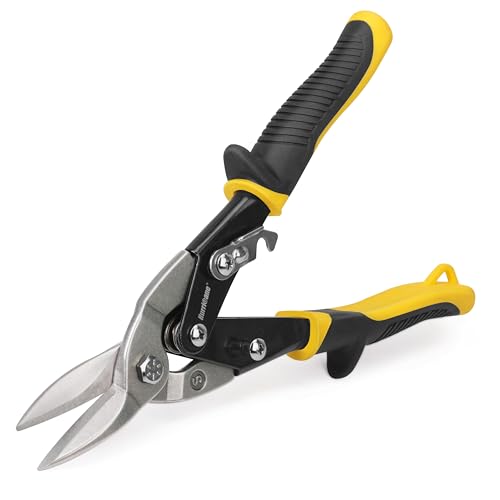
HURRICANE 10 Inch Straight-Cut Aviation Tin Snips
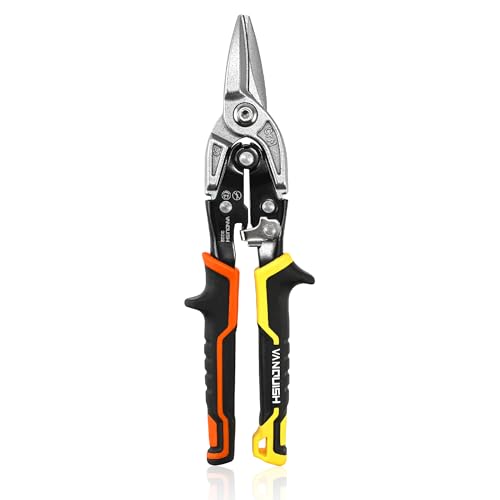
VANQUISH 10 Inch Straight-Cut Aviation Tin Snips (3032)

Crescent Wiss 7-Inch Tool Line Clamp Snip WDF7S
What Each Pick Brings To The Table
Right-cut snips travel in a clockwise direction, which is exactly what most people need for trimming duct, cutting notches, or slicing curves that open to the right. The VANQUISH 3031 uses drop-forged Chrome Molybdenum steel, an alloy known for toughness and edge retention under repeated sheet-metal work. The blades are reported to last up to ten times longer than ordinary cast blades, which matters when you’re pushing through dozens of cuts a day.
The flush pivot bolt sits below the blade line, so the snips glide through material without snagging on the work surface. A reinforced lock keeps the blade alignment tight, and a dark chrome plating helps fight rust in humid basements or outdoor jobs. For homeowners doing occasional HVAC patches, the comfort comes from the soft ergonomic grips and the one-handed metal safety lock.
Practical Pluses
- CR-MO drop-forged blades hold an edge through heavy sheet metal use
- Flush pivot design prevents the snips from hanging up on curves
- Dark chrome finish resists corrosion in damp storage
- One-handed metal lock adds a layer of safe handling
- Lanyard hole reduces the chance of drops off a ladder or scaffold
Things To Consider
- Right-cut geometry can feel awkward for left-handed users
- 10-inch size may feel bulky in tight electrical-box work
Who It Suits Best
Right-handed hobbyists and HVAC techs who shape ductwork, flashing, or sheet panels on a regular schedule.
Consider Something Else When
Left-handed users who frequently cut counterclockwise curves will get a more natural feel from the VANQUISH 10 Inch Left-Cut Aviation Tin Snips (3033).
The offset handle is the headline feature here, and once you use offset snips on a long run, you understand why tradespeople keep a pair in the truck. The 45-degree handle geometry lifts your hand above the work, which clears the cut material out of the way. On a roofing job or a sheet-metal brake, that extra visibility prevents the kind of misaligned cut that ruins a panel.
Forged CR-MO construction matches the standard 3031 build, and the bolt lock keeps the pivot tight. The satin-polished finish helps the snips glide along the cut instead of dragging. For left-cut work, that means smooth counterclockwise curves on metal siding or HVAC transitions without your knuckles dragging across the sheet.
Useful Strengths
- 45-degree offset handle provides real clearance over the cut
- Drop-forged CR-MO blades built for high cycle counts
- Polished finish reduces drag during long sweeps
- Safety lock and lanyard hole support ladder and roof work
Trade Offs
- Offset angle can feel unfamiliar to users trained on straight-handle snips
- Less precise for very tight, small-diameter circles
- Heavier head than compact tinner shears for delicate trim
Made For
Sheet metal workers and roofers who need clean left-curving cuts with their hand kept safely above the workpiece.
A Better Fit Elsewhere
Those chasing tight, controlled circles will find the VANQUISH 10 Inch Right-Cut Aviation Tin Snips (3031) easier to maneuver.
Left-cut snips are the mirror image of the right-cut set, and they’re essential for counterclockwise work like trimming the left side of a circle or cutting a notch that opens to the left. The VANQUISH 3033 carries the same drop-forged Chrome Molybdenum blades as the rest of the lineup, so you get the same longevity story, just pointed in the opposite direction.
The straight handle keeps the snips close to the workpiece, which is the right choice when you want maximum control on tight patterns. Soft ergonomic grips take the sting out of long sessions, and the lanyard hole is the kind of detail that pays off on a roof or scaffolding. You may find the metal lock slightly stiff at first, but it tends to loosen up with use.
Well-Handled Touches
- CR-MO blade steel for repeated cuts without rapid dulling
- Flush pivot keeps the action clean on curves and notches
- Dark chrome plating helps the snips survive outdoor storage
- One-handed lock makes storage quick between cuts
Worth Noting
- Left-cut direction can be confusing for first-time users
- Lacks the offset handle clearance of the 3038 model
Right Fit For
Right-handed users whose work involves more counterclockwise cuts than clockwise ones, including exhaust work and custom panel shaping.
Skip It When
Most of your work runs clockwise, in which case the VANQUISH 10 Inch Right-Cut Aviation Tin Snips (3031) is the more natural fit.
This is the right-cut companion to the offset 3038, and it pairs the same 45-degree handle lift with a clockwise cutting direction. For shop work on a metal brake or down at floor level on duct runs, the offset head keeps your knuckles away from the panel, which is the small ergonomic win that adds up over a long day.
Drop-forged CR-MO blades deliver the longevity claim you’ll see across the VANQUISH line, and the satin-polished finish keeps friction low. Bolt lock and flush pivot hardware round out a snip that feels like a serious shop tool rather than a garage-only pick. The one-handed safety lock adds storage peace of mind on cluttered benches.
What Pays Off
- Offset geometry protects knuckles during long sweeps
- Polished finish reduces drag on galvanized and cold-rolled sheet
- Ergonomic grips stay comfortable during extended cutting sessions
- Lanyard hole helps prevent tool drops from elevated work platforms
Honest Caveats
- Offset head adds slight learning curve for users new to angled snips
- Right-cut direction is the wrong choice for left-handed operators
Best Suited To
Garage and shop fabricators who cut sheet metal for brackets, panels, and repairs with a right-hand cutting bias.
Another Choice May Suit
For thin stock and duct repairs, the HURRICANE 10 Inch Straight-Cut Aviation Tin Snips is a lighter, less expensive alternative.
Bulldog snips occupy a specific niche: heavy stock, multiple layers, and notch cuts where ordinary aviation snips bog down. The MIDWEST MWT-6716B is built around that brief, with a compact 9-inch head designed to bite aggressively into extra-thick sheet. The serrated cutting edge grips the metal, which prevents the slips that ruin work and skin.
One notable attribute is the US-based manufacturing, which tends to mean tighter quality control and easier access to replacement parts. The blades are hot drop-forged, a process that aligns the steel grain for longer edge life. The trade-off is weight, since bulldog snips are denser than straight-cut counterparts, so wrist fatigue is a real factor on long shifts.
Real-World Strengths
- Bulldog geometry chews through thick, multi-layer stock
- Hot drop-forged blades resist edge deformation under load
- Serrated edge prevents metal slippage during heavy cuts
- Compact 9-inch length fits into tight spots other snips cannot reach
Points To Note
- Heavier than standard aviation snips, with more wrist strain
- Notch-cutting design leaves a rougher edge on straight trim work
- Shorter blade length means more passes for long cuts
Feature Snapshot
Who Will Love This
Tradespeople who regularly cut thick sheet, multiple layers, or notched metal where standard aviation snips struggle.
Reach For A Different Pick When
Your work centers on long, clean straight cuts, where the vomex 10-Inch Chrome Vanadium Straight-Cut Snips will feel lighter and faster.
Chrome Vanadium steel, often abbreviated Cr-V, sits in a sweet spot for hand tools: tough enough for repeated work, more affordable than the CR-MO alloy used in higher-end aviation snips. The vomex 10-inch straight-cut snips lean on that alloy, with serrated blades designed to grip sheet without skating across the surface.
The capacity numbers tell the real story. These snips handle 18-gauge cold-rolled steel, 18-gauge galvanized sheet, and 22-gauge stainless, which covers most household and light-trade projects. Straight cuts and gentle curves are the design brief, so don’t expect tight circles. They also cut copper, aluminum, and even hardware cloth, so the same pair covers plumbing patches, gutter work, and garden fencing.
The Good Stuff
- Cr-V serrated blades grip sheet metal to prevent skating
- Handles 18-gauge cold-rolled and galvanized stock comfortably
- Cuts copper, aluminum, and hardware cloth for project flexibility
- 10-inch length gives solid leverage for everyday straight trimming
Potential Drawbacks
- Straight-cut geometry limits tight circular cuts
- Less blade life than CR-MO aviation snips under heavy daily use
Perfect Match For
Home renovators and light-trade users who make frequent straight and gentle-curve cuts across mixed materials.
Look Elsewhere When
Your work demands tight, controlled curves, where the VANQUISH 10 Inch Right-Cut Aviation Tin Snips (3031) handles directional cuts more naturally.
For DIYers who want a reliable straight cutter without overspending, the HURRICANE 10-inch snips deliver the essentials. The Cr-V steel blade handles thin sheet metal, aluminum, and gutter work, and the capacity tops out around 20-gauge cold-rolled steel. That’s lighter than pro-grade snips, but more than enough for a homeowner patching a downspout.
The Tyregrip handle is the real differentiator. The textured rubber grip holds steady when your hands are cold, dusty, or gloved, which is more useful than it sounds during outdoor projects. The product is sold as a single straight-cut pair, so you’ll want to pair it with a left or right cutter for curve work. Depending on your storage setup, that can mean two loose tools instead of one matched set.
Advantages To Know
- Tyregrip handle stays secure in cold, wet, or gloved conditions
- Cr-V blade handles thin sheet, aluminum, and gutter repairs
- Lightweight design reduces fatigue during homeowner-scale projects
Some Limits To Know
- Not designed for tight circles or sharp angles
- Lower gauge capacity than thicker-stock aviation snips
- Sold as a single cutter rather than a matched set
Feature Snapshot
Who Should Grab It
DIYers and homeowners doing gutter, duct, and thin sheet-metal repairs without the need for heavy industrial capacity.
Swap It Out When
You’re cutting heavier stock or need left and right cutters, where the VANQUISH straight-cut (3032) and offset pair make a more complete kit.
The 3032 is the straight-cut sibling in the VANQUISH line, and it shares the same drop-forged CR-MO construction as the right and left variants. For long, clean straight runs across ductwork, flashing, or sheet metal panels, this is the cutter that stays in the holster for daily use. Where the bulldog snip chews through thick stock, this one glides through thin and medium gauge with less muscle.
The 10-inch length gives you enough leverage to push through heavier cuts without torquing your wrist. Flush pivot hardware means the snip doesn’t catch on the cut edge when you finish a long sweep, and the dark chrome plating fights the rust that comes with storing tools in a damp garage. The metal safety lock is one-handed, which sounds small until you’re climbing down a ladder holding a panel.
Key Advantages
- CR-MO drop-forged blade built for daily sheet-metal work
- 10-inch length offers solid leverage for medium stock
- Dark chrome finish resists corrosion in unheated shops
- One-handed safety lock simplifies storage between cuts
Where It Is Less Suited
- Straight-cut design won’t follow tight curves or circles
- Less specialized than offset snips for overhead visibility work
Built With In Mind
Tradespeople and serious DIYers who run long straight cuts through ductwork, flashing, and sheet panels on a regular basis.
Where A Sibling Pick Shines
For curves and notches, the VANQUISH 10 Inch Right-Cut Aviation Tin Snips (3031) is the natural pair to keep alongside this straight cutter.
The WDF7S is a clamp-style tinner snip, which means it works differently from the aviation snips on the rest of this list. Rather than relying on the directional cut of the blade, a clamp snip holds the material steady while the blade comes down, much like a small shear. For thin stock, HVAC line sets, and precision trimming where a controlled bite matters more than sweeping cuts, the design shines.
At 7 inches, this is a compact tool, light enough to keep in a pocket or a small pouch. Wiss has a long history in metal-cutting tools, and the brand reputation carries weight with veteran tradespeople. Depending on the work you do, you may find the clamp action slower than aviation snips for long cuts, but more controlled for short, accurate trimming.
What Stands Out
- Clamp design holds material steady for controlled short cuts
- Compact 7-inch size fits into tight pouches and pockets
- Wiss heritage appeals to tradespeople who value the brand
Practical Considerations
- Slower than aviation snips for long sweeping cuts
- Less suited to thick stock where bulldog snips excel
Whose Shelf It Belongs On
Tradespeople and detail-focused hobbyists who need precise, short cuts on thin stock and want a compact second tool alongside larger aviation snips.
Not Your Match When
Long straight or curved cuts are the priority, in which case the vomex 10-Inch Chrome Vanadium Straight-Cut Snips will save time and effort.
What Matters Before Choosing Your Next Pair Of Tin Snips
Cut direction is the first decision, and it shapes everything else. Right-cut snips travel clockwise, left-cut snips counterclockwise, and straight snips run a clean line without a directional bias. Choosing the wrong direction means fighting the metal, so match the snip to the curves and notches your work actually involves.
Blade steel determines how long the tool stays sharp. CR-MO alloys like Chrome Molybdenum resist edge deformation under repeated sheet metal work, while Cr-V, or Chrome Vanadium, is more affordable and well-suited to lighter duty. The trade-off is longevity: if you’re cutting daily, CR-MO pays off. For weekend projects, Cr-V is plenty.
Handle geometry is where comfort lives. Offset handles, angled around 45 degrees, keep your hand above the workpiece and your knuckles safe. Straight handles sit closer to the cut and offer more control for tight patterns. Think about the angles you work at most and pick the geometry that protects your hand.
Capacity ratings are the most concrete spec. Gauge numbers run opposite to thickness, meaning 18-gauge is thicker than 22-gauge. Match the snip’s listed capacity to the thickest stock you plan to cut, with a small margin for harder materials like stainless. A snip rated for 18-gauge cold-rolled steel typically handles 22-gauge stainless, but check the manufacturer’s listing to be sure.
Smart Angles Before You Add To Cart
Pitfalls Shoppers Hit
Buying one snip and expecting it to do every cut. Straight, left, and right cutters each have a job, and forcing the wrong direction leaves a ragged edge. Most home workshops benefit from a matched pair at minimum.
Ignoring gauge ratings. A snip rated for 20-gauge cold-rolled steel will struggle or chip on 18-gauge, and the damage isn’t always visible until the next cut. Match capacity to your thickest expected stock before anything else.
Overlooking handle comfort. A snip with hard plastic grips might feel fine for a five-minute trim, but it wears your hand out over a full day. Soft ergonomic or Tyregrip handles cost only a little more and protect your grip during longer sessions.
Where The Extra Money Goes
Premium snips earn their higher price through blade alloy, drop-forged construction, and tighter pivot hardware. CR-MO blades, compared to standard cast steel, hold an edge far longer under heavy use, so a pro-grade pair typically outlasts two or three budget replacements.
Offset and ergonomic handle designs also cost more to manufacture, and they deliver real benefits on long jobs. The honest read is that for occasional homeowner use, a mid-tier Cr-V snip is enough. For daily shop work, the upgrade to drop-forged CR-MO with offset geometry usually pays for itself in saved time and reduced hand fatigue.
Frequently Asked Questions
What Is The Difference Between Left-Cut And Right-Cut Tin Snips?
Left-cut snips travel in a counterclockwise direction and are best for curves opening to the left, while right-cut snips move clockwise for curves opening to the right. Straight-cut snips don’t have a directional bias and work for long, clean lines and gentle curves.
How Do I Know What Gauge Of Sheet Metal My Snips Can Handle?
The product listing will state a maximum gauge for different metals, such as 18-gauge cold-rolled steel or 22-gauge stainless. Remember that lower gauge numbers mean thicker metal, so pick a snip rated for the thickest stock you plan to cut.
Can Aviation Snips Cut Stainless Steel?
Yes, within the manufacturer’s capacity rating. Most aviation snips handle 22-gauge stainless even when rated for thicker cold-rolled steel, because stainless is a harder alloy. Pushing past the rating risks blade chipping, so always check the spec sheet.
How Do I Maintain Tin Snips So They Last Longer?
Wipe the blades clean after each use, especially when cutting galvanized or stainless stock, and apply a light oil film before storage. Tighten the pivot bolt if the cut starts to drift, and avoid cutting hardened materials like wire or screws, which chip the edge.
Are Offset Handle Snips Worth The Extra Cost?
For long, repeated cuts and overhead work, yes. The angled handle keeps your hand above the workpiece, which improves visibility and protects your knuckles. For short detail work in tight spaces, a straight handle is usually easier to control.




