


Hauling hand tools, a multimeter, pliers, and a laptop through a service van or up a ladder eats into your day, and the wrong bag makes it worse. A purpose-built electrician’s backpack keeps diagnostic gear upright, separates leads from batteries, and shrugs off drywall dust. The seven options below cover the realistic range: welding-grade haulers, modular service packs, classic tradesman bags, and a rolling option for those long site walks.
A Side-By-Side Look

MELOTOUGH Welding Tool Backpack with Helmet Holder

Veto Pro Pac MB5B Extra Large Tool/Meter Bag

WELKINLAND 5-In-1 Electrician Backpack and Pouch Set

Klein Tools 55482 Tradesman Pro Tool Organizer Backpack

TICONN Heavy Duty Tool Bag Organizer with Shoulder Strap
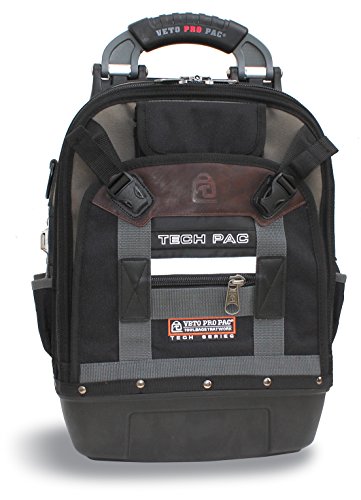
Veto Pro Pac Tech Pac Tool Backpack

DEWALT Pro Rolling Tool Bag DWST60107-1
The Strengths Of Each Pick
Built for abuse, the MELOTOUGH Welding Tool Backpack uses a 6000 Denier ballistic nylon shell, a material woven tightly enough to resist scuffs on rebar and concrete, and rates its load capacity north of 50 pounds. The detachable helmet pouch snaps off when you need to climb into a tight weld cell without dragging the whole pack behind you.
Up front, three large open compartments swallow wire spools and larger hand tools, while the rear padded sleeve protects a laptop up to 17 inches. The trade-off is bulk. For most service vans this pack is overkill, but on a fab floor it earns its weight.
Everyday Advantages
- Ballistic 6000D nylon shrugs off sparks, sparks of weld spatter, and drywall scuffs better than lighter 600D shells.
- Detachable helmet pouch doubles as a stand-alone carrier for grinders or a small inverter.
- Padded rear sleeve fits a full-size laptop for site walk-throughs and email.
- Open-front layout means you can spot a specific wrench without dumping the whole bay.
Trade-Offs To Consider
- Loose open pockets can jumble small parts during long walks; owners commonly add small zip pouches.
- Larger than a service-only bag, so it crowds out passenger seats.
Best Suited To
Welders, ironworkers, and fabricators who need a helmet-ready hauler that can take a beating.
Swap It Out When
The Klein Tools 55482 Tradesman Pro is a calmer choice for residential electricians who never touch a stinger.
Where most “backpacks” act like soft totes, the Veto Pro Pac MB5B leans into professional layout. V-SWAP refers to a system of removable center panels you can swap in and out depending on the meter or analyzer you’re carrying, which keeps a $1,200 multifunction tester from rattling against a screwdriver. Twenty-one exterior pockets plus two side-mounted padded meter bays give you a place for everything.
At roughly 15 by 15 by 10 inches with a 45-pound payload rating, the MB5B is substantial. Detachable backpack straps let you carry it briefcase-style through a server room. For most apprentices it feels like a lot of bag, but for a controls tech running point-to-point checks daily, the layout earns the footprint.
Where It Excels
- V-SWAP panels protect sensitive meters and let you reconfigure for different job types.
- Padded tablet pocket fits a full-size iPad or inspection laptop.
- Repositionable interior pockets adapt to non-standard tools like clamp meters or insulation testers.
Honest Caveats
- Empty weight of 9 pounds is heavy before you load a single wrench.
- Premium pricing reflects a service-trades focus; homeowners won’t use the V-SWAP system.
Quick Facts
Whose Shelf It Belongs On
Service technicians, low-voltage installers, and metering specialists who need a configurable panel system.
Reach For A Different Pick When
The TICONN Heavy Duty Tool Bag Organizer is a simpler grab-and-go for apprentices who don’t need modular panels.
The WELKINLAND 5-In-1 set pairs a main backpack with four zippered canvas pouches, which is the difference between fumbling for a Klein nut driver and having it clipped to your belt. MOLLE is a webbing system of horizontal straps that lets you clip accessories to the outside, and 51 MOLLE straps open up real customization. The waxed-canvas shell gives it an old-school feel that still holds up to weather.
Thirty-seven pockets is generous for the price, and high-density nylon stitching is what keeps the seams from splitting under a heavy load. For HVAC and remodel electricians who need to split a load between van and body, the modular pouches are a real asset.
Everyday Wins
- Detachable pouches let you leave the main pack in the truck and carry just the day’s tools.
- MOLLE webbing accepts aftermarket clips, holsters, and tape holders.
- Waxed canvas develops character over time and resists light rain.
Worth Noting
- Canvas looks great but shows dirt and grease faster than nylon.
- More pieces to keep track of on a busy site; the pouches can migrate between trucks.
Made For
HVAC techs, remodel electricians, and field service pros who split their kit across multiple locations.
Where Another Pick Suits Better
The Klein Tools 55482 Tradesman Pro is a single-bag solution for those who’d rather not manage multiple pouches.
Klein Tools has been a fixture on electricians’ belts for generations, and the 55482 Tradesman Pro Backpack leans on that lineage. Twenty-one pockets handle the realistic load: pliers, a 4-in-1 screwdriver, a non-contact voltage tester, wire nuts, and a Klein MM6000 multimeter. The 1680D ballistic weave means the fabric is woven densely enough to resist punctures from sheet-metal screws.
The front flap unzips halfway for a quick grab or fully extends to act as a workstation mat. For residential service and trim-out work, this is the bag most journeymen end up carrying, and for good reason: it’s predictable, well-organized, and quiet to set down.
Reasons It Performs
- 21 pockets hit the sweet spot between too few and too many for typical service work.
- 1680D ballistic weave handles rough site storage better than budget 600D bags.
- Wide-opening front flap turns the pack into a small workstation for breaker panels.
- Water-resistant fabric buys time in a sudden rain without soaking your meter.
Less Ideal Details
- Single-bag design means no modular pouches for splitting loads between van and site.
Feature Snapshot
Right Fit For
Residential electricians, service techs, and apprentices who want one reliable bag for daily calls.
Look Elsewhere When
The WELKINLAND 5-In-1 set is the better call if you want to split your kit into modular pouches.
The TICONN Heavy Duty Tool Bag Organizer is technically a soft tool box, but the shoulder strap and 600D Oxford shell (a midweight synthetic fabric that handles scrapes and light moisture) make it backpack-adjacent. The wide-mouth opening is the real story: you can see every tool at a glance, which matters more than pocket count on short service calls.
For apprentices building a first kit, this is a sensible entry point. The 12-inch base keeps it compact enough for a car trunk, and exterior pockets handle pliers, tape, and fasteners. It’s not built for the abuse a Veto or MELOTOUGH can take, but for the price, the construction is fair.
The Case For It
- Wide-mouth opening makes tool retrieval faster than digging through vertical pockets.
- Compact 12-inch base fits behind a truck seat.
- Shoulder strap plus handles for short carries between truck and panel.
Some Limits To Know
- 600D Oxford fabric is midweight, so it scuffs faster than ballistic weaves under daily jobsite use.
- No laptop sleeve, so plan to carry a tablet separately.
- Limited internal organization compared to a 21-pocket backpack.
Who Should Grab It
Apprentices, DIYers, and homeowners tackling small electrical projects who want a basic organizer.
A Better Fit Elsewhere
The Klein Tools 55482 Tradesman Pro Backpack suits working electricians who need real pocket density.
The Veto Pro Pac Tech Pac is the standard against which other tool backpacks get measured. Forty-six pockets cover everything from manifold gauges to fish tapes, and the patented center panel splits the interior into two storage bays with tool platforms on each side, so drill bits don’t end up next to your lunch. Industrial-strength double nylon stitching is what keeps the seams from blowing out under a 40-pound load.
The waterproof molded base lets you set the pack down in standing water without wicking into the fabric. Ergonomic padded straps and EVA back padding (a foam that absorbs impact and stays comfortable over long carries) make the Tech Pac manageable on multi-floor jobs. For HVAC and controls contractors, this is the gold-standard carry.
Strengths Worth Knowing
- 46 pockets cover diagnostic, hand-tool, and consumable storage in one organized shell.
- Dual-bay center panel keeps meters separated from drill bits and consumables.
- Waterproof molded base handles wet floors, snow, and jobsite mud without wicking.
- EVA back padding reduces fatigue on long site walks between units.
Possible Compromises
- Heavier than nylon-only competitors, even before loading tools.
- Premium price reflects professional trades use; casual users won’t tap the pocket count.
Feature Rundown
Who Will Love This
HVAC contractors, controls techs, and full-time service electricians who carry a complete diagnostic kit daily.
Skip It When
The Veto Pro Pac MB5B is a more focused meter bag if you don’t need 46 pockets of capacity.
The DEWALT Pro Rolling Tool Bag breaks the backpack format on purpose. Twenty-seven pockets plus an IP54 water-resistant compartment mean a spilled coffee doesn’t kill your Fluke meter, and the wheels handle long site walks when a 50-pound load would destroy your shoulders. The 1680 denier fabric with dirt-repellant tarpaulin shrugs off jobsite grime and rinses clean at the end of the day.
For service electricians pulling a cart from a van to a basement mechanical room, the rolling format is a back-saver. It’s overkill for a quick trim-out call, but on commercial service routes, the wheels and rugged build earn their place.
Advantages To Know
- Wheels and telescoping handle take the load off your back on long site walks.
- IP54 water-resistant compartment protects sensitive electronics from splashes.
- 1680D fabric with tarpaulin resists jobsite grime and rinses clean.
Where It May Fall Short
- Wheels and handle add bulk, so stairs and ladders remain a shoulder carry.
- Larger footprint than a true backpack for tight van storage.
Quick Technical Notes
Perfect Match For
Service electricians with long walks from van to mechanical room who want to save their back.
Consider Something Else When
The Klein Tools 55482 Tradesman Pro Backpack is the smarter pick for ladder-heavy residential work.
What To Weigh Before Choosing A Tool Backpack
Pocket Count Versus Real Workflow
A 46-pocket pack sounds impressive, but pocket count only matters if it matches your daily load. Residential service electricians typically need 15 to 25 pockets for hand tools, a meter, and consumables. Controls and HVAC techs pushing diagnostic kits can genuinely use 30 or more. Buying a bag with double the pockets you need adds weight and bulk without real benefit.
Material And Denier Rating
Denier measures fabric thread weight: 600D is midweight, 1680D is dense, and 6000D is built for impact. For most residential work, 1680D ballistic weave balances weight and durability. Welding and metal fab environments justify stepping up to 6000D to shrug off sparks and spatter.
Comfort Features For Long Days
Padded straps, EVA back panels, and sternum straps matter more on days with multiple site visits than on a single in-home call. Detachable straps, like the ones on the Veto MB5B, also let you switch between backpack and briefcase carry for tight server rooms or office visits.
Key Considerations Across These Picks
Pitfalls Shoppers Hit
The most common mistake is buying a pack based on pocket count alone, then discovering the layout forces you to dump the whole bag to reach a meter. Look for wide-mouth openings, vertical meter pockets, and interior platforms that separate diagnostic gear from hand tools. Another trap is underestimating loaded weight: a pack that feels fine empty can punish your back at 35 pounds across a parking lot.
Where The Extra Money Goes
Premium pricing in this category typically buys three things: tougher fabric (1680D to 6000D ballistic weaves instead of 600D Oxford), reinforced stitching at stress points, and modular systems like Veto’s V-SWAP panels. For a full-time tradesperson, those upgrades translate to years of service rather than a season of fraying seams. For occasional users, a mid-tier pack like the Klein Tools 55482 covers the realistic workload without the premium.
Frequently Asked Questions
How Many Pockets Do Electricians Actually Need?
For most residential and light commercial work, 15 to 25 pockets covers hand tools, a meter, and consumables without overcomplicating the layout. HVAC and controls contractors running full diagnostic kits may use 30 to 46 pockets to keep leads, manifolds, and testers separated.
Is A Rolling Tool Bag Better Than A Backpack?
Rolling bags shine on long walks from van to mechanical room, where wheels save your back across a parking lot or warehouse. Backpacks still win on stairs, ladders, and tight residential calls where bulk becomes a liability. Many electricians keep both for different job types.
What Is MOLLE Webbing And Does It Matter?
MOLLE stands for Modular Lightweight Load-carrying Equipment, a system of woven straps that lets you clip pouches, holsters, and accessories to the outside of a pack. It matters if you want to add aftermarket holders for tape, a hard hat, or a specific meter without buying a new bag.
Can These Backpacks Handle A Laptop?
Several options, including the MELOTOUGH, the Veto MB5B, and the WELKINLAND, include padded rear sleeves that fit laptops up to 17 inches. If you carry a tablet for inspection reports or site plans, a dedicated padded pocket is worth prioritizing over raw pocket count.
How Do You Clean A Ballistic Nylon Tool Backpack?
Most ballistic nylon shells wipe clean with a damp cloth and mild soap, and the dirt-repellant tarpaulin on the DEWALT rolling bag rinses off with a garden hose. Avoid harsh solvents, which can break down waterproof coatings, and let the pack air-dry fully before storing to prevent mildew in the pockets.




