Cordless tools changed the way weekend projects get done, and the battery system behind them decides whether your work feels effortless or frustrating. Anyone who has watched a drill die mid-job, or fumbled through a junk drawer for fresh AAs, knows the storage and power question runs deeper than brand loyalty. This shortlist pulls together the storage caddies, replacement packs, and cordless tools that share a common thread: the right power source, ready when you need it. Home renovators, garage tinkerers, and plumbers on tight schedules will find something here that matches the way they actually work.
How The Shortlist Stacks Up

Storacell AA-12 Battery Storage Caddy (Pack of 4)
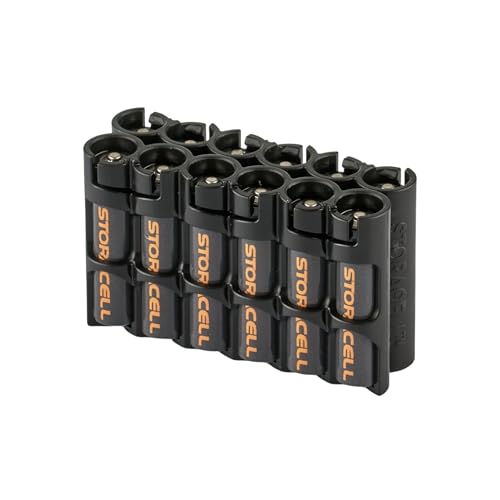
Storacell by Powerpax AAA Battery Storage Caddy (Black)

Qxphthorix 2 Pack 12000mAh Replacement for Dewalt 20V Max

DEWALT 20V Max XR Oscillating Multi-Tool Bundle with Blades

Makita XBP05ZB 18V LXT Sub-Compact Band Saw (Tool Only)

DEWALT 20V MAX XR Oscillating Multi-Tool (DCS356B)

DEWALT 20V MAX XR Oscillating Tool Kit (DCS356C1)
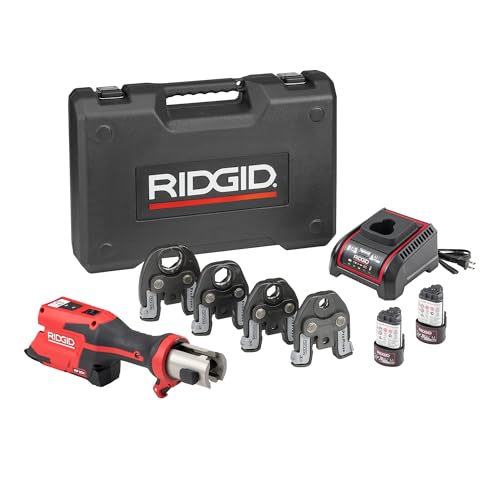
RIDGID 78148 RP 251 Compact Press Tool Kit

Makita XSL05Z 18V LXT Compact Miter Saw (Tool Only)
Loose AAs rattling around a junk drawer are a small daily annoyance that compounds fast. The Storacell AA-12 caddy tackles that with a rigid plastic shell sized to hold 12 cells upright, so each battery stays visible and accessible at a glance. Buying the pack of four means you can outfit the kitchen, garage, camera bag, and travel kit without doubling up on the same tray.
You pop a battery out from the top with a thumb, and the spring-loaded contacts release cleanly without prying. Compared to the AAA version reviewed next, the AA model handles the bulkier cells you lean on for flashlights, game controllers, and wall clocks, so the heavier cell stays anchored. For most households running a mix of remotes and small electronics, this caddy keeps everything from turning into an archaeological dig.
What Pays Off
- Holds 12 AA cells in a single tray, enough for most household backup sets.
- Top-loading design means no dumping the tray to find a matching cell.
- Pack of four supports sorting by location, so you stop hunting across rooms.
- Break-resistant plastic shell holds up in tool bags and glove boxes.
Small Caveats
- Batteries are not included, so budget for cells separately.
- Color-coded packs help if you mix alkalines and rechargeables, though mixing cell types in one tray is not advised.
- Not sealed, so store away from moisture in garage or shop settings.
Right Fit For
Anyone tired of digging through a junk drawer before a family movie night, or anyone who keeps AA-powered gear in more than one room.
Look Elsewhere When
Your household runs mostly AAA-powered electronics, in which case the Storacell by Powerpax AAA Battery Storage Caddy is a tighter fit.
AAA cells are smaller, easier to lose, and tend to vanish into couch cushions at twice the rate of AAs. The Storacell by Powerpax AAA caddy uses the same vertical-slot layout as its AA sibling, scaled down to keep 12 cells lined up and visible. The black housing reads as low-key enough to leave out on a desk or shelf without screaming “tool box.”
Photographers, hobbyists, and anyone who packs a travel kit will appreciate how the caddy slips into a camera bag side pocket. The plastic body flexes slightly when dropped, which is reassuring if you carry it into the field. Think of it as the quiet sidekick to the AA version, handling the small electronics that tend to drain in clusters.
Practical Advantages
- Holds 12 AAA cells upright for quick grab-and-go access.
- Compact footprint fits a kitchen drawer or camera bag without hogging space.
- Lightweight plastic shell makes it genuinely portable for travel.
- Black finish looks tidy in an office or workstation setting.
Points To Note
- Batteries are not included, so you will need a separate cell purchase.
- Single-tray capacity means swapping locations requires buying a second unit.
Feature Snapshot
Built With In Mind
Travelers, remote workers, and parents who keep AAA-powered thermometers and small toys within arm’s reach.
Consider Something Else When
You mostly use AA-powered flashlights and game controllers, where the Storacell AA-12 Battery Storage Caddy matches the larger cell format better.
Anyone deep into the Dewalt 20V MAX platform knows the pain of one pack dying while the other sits on the charger. This Qxphthorix two-pack aims to break that cycle by adding two high-capacity lithium-ion cells to your rotation. The rated 12000mAh capacity claims to outlast standard packs, which matters on a long framing day or a deck build where stopping to swap kills momentum.
Compatibility covers a long list of Dewalt 20V MAX models, including the DCB200, DCB201, DCB204, DCB206, and DCB207 series cells, so most existing tool owners can drop these in without a fuss. The included charger accepts AC100-240V input, which is helpful if you work between a shop and a jobsite trailer. In daily terms, you’re buying extra runtime rather than a new tool platform, and the value shows up on extended projects.
Everyday Perks
- Two-pack format keeps a fresh cell on the charger while the other runs.
- 12000mAh rating targets longer runtime per charge than standard packs.
- Broad compatibility with the DCB200 series covers most 20V MAX tools.
- Charger accepts 100-240V input for shop, trailer, and generator use.
Honest Caveats
- Third-party cells, so firmware updates from Dewalt can occasionally affect performance.
- Higher capacity means added weight compared to compact 3Ah packs.
- Not a fit for 12V MAX or 40V MAX tools on other Dewalt platforms.
Whose Shelf It Belongs On
Dewalt 20V MAX owners running framing, decking, or remodeling work who need extra runtime on hand at all times.
Skip It When
You have not yet invested in the 20V MAX platform, in which case the DEWALT 20V MAX XR Oscillating Multi-Tool Kit (DCS356C1) is a smarter entry point.
Oscillating multi-tools earn their keep on flush cuts, grout removal, and trim work where a saw or sander simply will not fit. The DEWALT 20V Max XR bundle pairs the DCS356B tool body with a five-piece blade kit, which is helpful for first-time owners who do not yet own a single accessory. Running on the 20V MAX battery platform, it slots into a tool collection many homeowners already have going.
The brushless motor and three-speed selector give you meaningful control across materials, from soft wood trim to harder nail-embedded surfaces. Variable speed matters when you do not want to scorch paint or chatter through thin material. For most trim and renovation work in a home shop, the bundle covers the common blades right out of the box.
Good Reasons To Consider
- Bundled blade kit saves the separate accessory trip for new owners.
- Brushless motor design supports longer runtime and durability over brushed units.
- Three-speed selector handles wood, metal, and detail work without swapping tools.
- Universal accessory adaptor opens up third-party blade options later on.
Trade Offs
- Bundles commonly ship as tool-only, so check for battery and charger inclusion before purchase.
- The included blades cover basic cuts but you will want specialty blades for grout or metal.
At A Glance
Best Suited To
Remodelers and homeowners stepping into the 20V MAX platform who want blades in the box from day one.
A Better Fit Elsewhere
Current 20V MAX owners who already own batteries and prefer to choose their own blade kit should consider the DEWALT 20V MAX XR Oscillating Multi-Tool (DCS356B) tool-only option.
Band saws are usually big, bench-mounted, and firmly planted in a metal shop. The Makita XBP05ZB flips that expectation with a sub-compact body sized for one-handed overhead cuts in tight mechanical rooms. The brushless motor delivers variable blade speed, which makes a real difference when you switch between thin-wall conduit and thicker black pipe.
Running on the 18V LXT platform means anyone already invested in Makita’s slide-style battery family can drop in a pack and get to work. Compared to the oscillating multi-tool covered above, this saw cuts deeper and straighter through metal but with less finesse on trim. For HVAC techs, plumbers, and anyone cutting steel or copper on a ladder, the sub-compact format is the main event.
Key Advantages
- Sub-compact body supports one-handed operation in tight overhead spaces.
- Brushless motor design extends runtime on the 18V LXT platform.
- Variable blade speed adapts to different metal thicknesses and pipe sizes.
Things To Consider
- Tool only, so you need an 18V LXT battery and charger ready to go.
- Cut capacity is limited compared to a full-size bench band saw.
- Blade changes require a few minutes of setup, not instant swaps.
Quick Facts
Who Should Grab It
Trade professionals cutting copper, steel, or threaded rod in tight spaces where a full-size saw is impractical.
Another Choice May Suit
Finish carpenters focused on wood, trim, and flush cuts should look at the DEWALT 20V MAX XR Oscillating Multi-Tool Bundle instead.
Many homeowners already own a stack of 20V MAX batteries and just need the tool body. The DEWALT 20V MAX XR Oscillating Multi-Tool ships as tool-only, which keeps the cost down for anyone not chasing a starter bundle. The DCS356B includes the same brushless three-speed core as the kit version, with two wood cutting blades to keep you busy on day one.
An integrated LED light helps in dim corners where trim meets the floor, and the universal accessory adaptor accepts most aftermarket blades. Side by side with the bundle option above, the main difference is what arrives in the box: the bundle adds three more blades, while this one trims the package down to the essentials. You trade a fuller accessory set for a smaller footprint in the cart.
The Value In It
- Tool-only price makes sense for owners already stocked with 20V batteries.
- Brushless three-speed motor covers soft trim and harder material cuts.
- LED work light improves visibility in tight, shadowy corners.
- Universal accessory adaptor broadens blade choices beyond the included set.
Less Ideal Details
- No battery or charger included, so this is not a standalone starter tool.
- Only two blades ship in the box, so expect to buy specialty blades separately.
Made For
Existing 20V MAX households who want to add a multi-tool body without repurchasing batteries or a charger.
Where A Sibling Pick Shines
First-time multi-tool owners would get a better out-of-box experience from the DEWALT 20V MAX XR Oscillating Multi-Tool Bundle with Blades.
The DCS356C1 is the most complete way to step into the DEWALT oscillating tool lineup. You get the brushless three-speed tool body, a battery, a charger, and a starter set of blades in one box. That matters for first-time owners who do not yet own a single 20V MAX pack and would otherwise have to buy everything separately.
The tool reaches up to 20,000 oscillations per minute, which is fast enough for trim cuts and aggressive material removal without bogging down. Compared to the bare tool-only DCS356B reviewed just before, this kit adds roughly everything needed to start working the same day you open the box. The trade-off shows up in the higher total cost and the slightly larger pack size.
What Works In Its Favor
- Full kit ships with battery, charger, and starter blades for same-day use.
- Up to 20,000 OPM covers trim, drywall, and detail sanding tasks.
- Quick-change accessory system swaps blades in seconds without wrenches.
- Universal accessory adaptor keeps aftermarket blade options open.
Room For Improvement
- Higher upfront cost than the tool-only body for owners who already own batteries.
- Starter blades cover basics only, so expect to add specialty blades later.
Feature Snapshot
Perfect Match For
Homeowners and first-time multi-tool shoppers who want a fully equipped kit ready to use straight out of the box.
Reach For A Different Pick When
You already own several 20V MAX batteries, in which case the DEWALT 20V MAX XR Oscillating Multi-Tool (DCS356B) is the better value play.
Press tools have largely replaced solder and torch work on modern plumbing jobs, and the RIDGID 78148 RP 251 sits in the compact-press sweet spot. The in-line body keeps your wrist neutral during overhead copper and PEX connections, which adds up across a long service call. The kit includes ProPress jaws covering 1/2″ to 1-1/4″, enough for most residential water lines.
The tool is built for plumbers who already know the difference between copper, stainless steel, and PEX fittings, since each material takes a different jaw. Compared to the Makita band saw above, this is a step further into specialty trade work, focused on making connections rather than cutting pipe. The compact size also means easier entry into crawl spaces and tight mechanical closets.
Notable Gains
- In-line body reduces wrist strain during overhead and wall-mounted presses.
- Includes ProPress jaws from 1/2″ to 1-1/4″ for residential copper, PEX, and stainless.
- Compact form factor fits crawl spaces and tight mechanical rooms.
- Compatible with the broader RIDGID Compact Series jaws and accessories.
Practical Considerations
- Higher upfront cost than general-purpose drills and saws, which fits a trade buyer more than a casual homeowner.
- Requires a learning curve to match jaw profile to fitting material and size.
Who Will Love This
Licensed plumbers and remodelers who press copper or PEX connections regularly and want a compact, ergonomic tool body.
Swap It Out When
You mainly need to cut metal pipe rather than press fittings, where the Makita XBP05ZB 18V LXT Sub-Compact Band Saw is the better fit.
Cordless miter saws used to be a punchline, but brushless motors changed the math. The Makita XSL05Z runs on the 18V LXT platform and packs a 6-1/2″ blade that handles trim, baseboards, and smaller molding cuts without dragging a cord across a jobsite. The dual-bevel head and integrated laser make angle work feel more controlled than a single-bevel saw in this size class.
At around 14.6 pounds with a battery, the saw is light enough to carry one-handed to a second-floor room or a driveway cutting station. The trade-off is the 6-1/2″ blade, which limits you on wider crown molding and bigger dimensional lumber. For finish carpenters and trim installers on the move, that portability often matters more than raw capacity.
Practical Pluses
- Brushless motor supports longer runtime on the 18V LXT platform.
- Dual-bevel design simplifies compound cuts without flipping the workpiece.
- Integrated laser line speeds up alignment on repetitive trim cuts.
- Lightweight around 14.6 lbs with battery for portable jobsite use.
Factors To Consider
- 6-1/2″ blade capacity limits you on wider crown molding and thicker stock.
- Tool only, so 18V LXT batteries and charger must already be on hand.
Who It Suits Best
Finish carpenters, trim installers, and homeowners running an 18V LXT battery fleet who want a portable miter saw for site work.
Not Your Match When
You regularly cut wider boards and need more capacity, in which case a 10″ or 12″ corded or larger cordless miter saw is worth the upgrade.
## Choosing the Right Tool Battery System for the Job The right tool battery system starts with the platform you already use or are willing to invest in. Dewalt 20V MAX, Makita 18V LXT, and RIDGID 18V each have wide ecosystems, and sticking with one platform saves real money on batteries over time. A homeowner with two batteries and a charger has already paid the entry fee, so the next purchase should plug into that same platform rather than starting fresh. Capacity matters differently depending on the work. A 12000mAh replacement pack, like the Qxphthorix option, helps when a job runs long and downtime is expensive, but it adds weight. Smaller 3Ah or 4Ah packs keep tools light, which matters for overhead drilling and one-handed saw work. Match the pack to the job rather than chasing the largest number on the label. Storage is the part most people ignore. AA and AAA caddies from Storacell solve a real daily friction point, and keeping cells organized in a drawer, camera bag, or travel kit prevents the mid-project scramble. The cost is small, and the time saved compounds. Treat the caddy and the cordless battery as parts of the same system, since both shape how smoothly the day goes. Brushless motors have become the standard in mid- and high-tier cordless tools, and the runtime difference versus brushed designs is meaningful. For tool-only purchases, also weigh whether you need a full kit. A bundle like the DEWALT 20V MAX XR Oscillating Tool Kit (DCS356C1) is a smarter first purchase than a bare body, while the tool-only DCS356B makes more sense for households already stocked with 20V MAX batteries. ### Where Shoppers Go Wrong The most common trap is buying a bare tool body when the household does not yet own a battery and charger, then realizing the tool cannot run. The flip side also happens: purchasing a full kit when you already have three batteries on the shelf, paying for cells you will not use. Match the kit format to your current battery inventory. Another mistake is underestimating the gap between tool platforms. A Makita 18V LXT tool cannot use Dewalt 20V MAX batteries, and adapters do not exist for these professional platforms. Choose one platform and commit, because cross-brand shopping fragments your battery collection and inflates the long-term cost. ### What Separates Premium From Basic Higher-tier cordless tools in this category earn their price with brushless motors, metal gearing, and stronger electronics that handle drops, dust, and weather. For a homeowner doing weekend projects, mid-tier tools often deliver enough performance at a lower cost. Trade professionals who rely on their tools daily benefit more from premium build quality, since downtime on a service call costs real money. ## Key Considerations Across These Picks Storage caddies sit at the entry level of any tool battery system. They cost little, fit anywhere, and remove the daily friction of lost cells. The trade-off is they hold cells, not power them, so they are a complement to, not a replacement for, a cordless platform. Replacement battery packs occupy the middle of the market, and the value question is whether you already own the platform they fit. For homeowners deep into Dewalt 20V MAX, a high-capacity third-party pack stretches every workday. For shoppers not yet on a platform, the smarter move is a tool kit that ships with its own battery. Specialty cordless tools like the RIDGID press tool and the Makita sub-compact band saw target trade professionals. The price reflects that, but the runtime and ergonomics pay off for daily users. Weekend hobbyists can typically defer these purchases until their workload actually demands them. ## Frequently Asked Questions **What is a tool battery system?** A tool battery system is the combination of rechargeable batteries, chargers, and compatible cordless tools from one brand or platform, designed so batteries can be shared across multiple tools. Common systems include Dewalt 20V MAX, Makita 18V LXT, and RIDGID 18V. **Can I use batteries from one brand with another brand’s tools?** Generally no. Each major brand designs its battery footprint and electronics around its own platform, and cross-brand adapters are not widely available. Sticking with one platform across your tools keeps your battery collection consolidated. **How long do lithium-ion tool batteries last?** Lithium-ion tool batteries typically last several years with normal use, though runtime per charge gradually declines. Storage in a cool, dry place and avoiding full discharges extends overall battery life. **Are higher-capacity replacement batteries worth it?** For long workdays or heavy tools, a higher-capacity pack reduces swap frequency and keeps momentum going. For short tasks or light tools, a smaller battery keeps the weight down and may suit the work better. **Should I buy a tool-only body or a full kit?** Buy a full kit if you do not yet own any batteries or charger for that platform, since it ships with everything you need to start. Choose tool-only if you already have compatible batteries on hand, since you avoid paying for cells you do not need.