


Roofing work punishes gear. Between kneeling on grit, hauling nail bags up ladders, and pivoting across uneven sheathing, your tool belt has to stay put, hold the right mix of fasteners, and not fall apart by the second Tuesday on the job. The picks below lean on a mix of full-grain leather pouches, oil-tanned carriers, and one full rig with suspenders, each matched to a specific kind of roofer. Roofing apprentices, framers who double as shingle crews, and seasoned pros who already own a harness all get a sensible option here.
A Fast Comparison Of The Options

LAUTUS Electrician Full Top Grain Leather Tool Pouch (Black)

LAUTUS Leather Tool Holder, 3 Pockets

WELKINLAND 39-Pocket Tool Belt With Suspenders
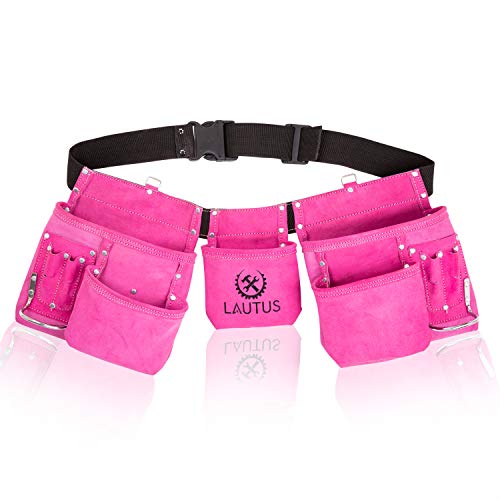
LAUTUS Pink Tool Belt, 11 Pockets

LAUTUS Oil Tanned Leather Tool Pouch (White)
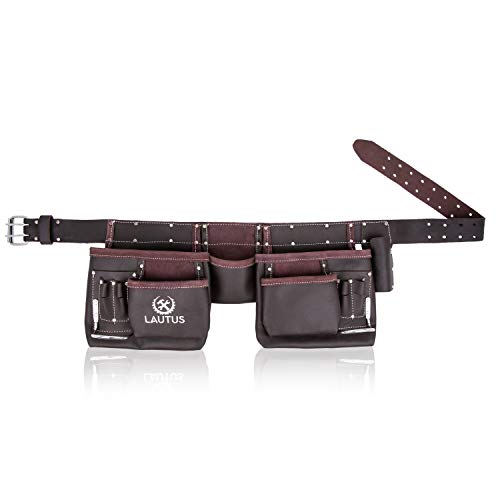
LAUTUS Oil Tanned Leather Tool Belt
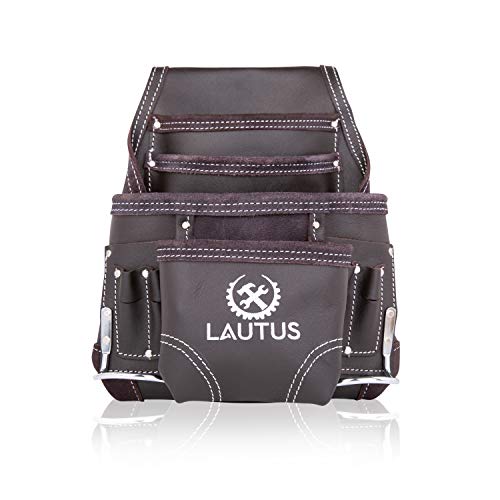
LAUTUS Oil Tanned Leather Tool Pouch (Dark Brown)

Klein Tools 5425M Tool Belt
A Breakdown Of The Leading Choices
Where the LAUTUS Electrician pouch earns its keep is the 3.5mm saddle leather, a thickness you can feel the moment you unclip the buckle. On a re-roof, that stiffness matters less than you think, because the leather softens within a week of honest use, but it still protects your hip when you kneel on decking. The five tapered pockets are sized for the awkward stuff, from lineman’s pliers down to a torpedo level, and the front-mounted “T” chain keeps a roll of electrical tape one-handed accessible.
Roofers who moonlight on service panels, or who run PV conduit across new builds, will appreciate the metal dog hook clipped to the side. It swallows a folding rule or a stubby wrench without spinning. If you already wear a separate belt, the riveted back plate slips over standard 2-inch webbing without binding.
Standout Benefits
- 3.5mm top-grain saddle leather resists tearing at pocket corners, even after months of asphalt grit.
- Front “T” chain is a thoughtful touch for tape, and a small time-saver when you are mid-wire on a service run.
- Steel washer rivets reinforce the stress points that cheaper pouches blow out first.
- Compact five-pocket layout keeps the silhouette narrow, so you are not snagging it on ladder rails.
Trade Offs
- The thick leather takes a few days of break-in before pockets hang open naturally.
- Five pockets is tight if you are also carrying coil nail packs for a shingle day.
Made For
Electricians and dual-trade roofers who need a hip-hugging pouch that survives daily ladder hauls and panel work.
Consider Something Else When
Shingle crews running hammers and nail bags should reach for the WELKINLAND 39-Pocket Tool Belt With Suspenders instead, since it carries far more hardware.
The LAUTUS 3-Pocket holder is the smallest piece in this list, and that is the point. Climbers who already wear a Klein-style work belt and a full harness do not want extra bulk. This holder clips over belts up to 2 inches wide and stays put when you lean across a ridge. The three pockets are purpose-built for pliers, a folding rule, and a flat-head or Phillips, which mirrors what most roofers reach for on a service call.
Where it differs from the 5-pocket LAUTUS above is simplicity: fewer compartments, lighter on the hip, and easier to swap between belts if you own more than one. Knife snap retention is a small but appreciated detail for a fixed-blade roofer’s knife.
The Good Stuff
- Lightweight, low-profile shape works under a harness without digging into your ribs.
- Knife snap holds a fixed-blade securely even when you are inverted on a slope.
- Slide-over belt loop fits standard 2-inch webbing you probably already own.
- Genuine leather body breaks in fast compared to thicker saddle-grade pouches.
Points To Keep In Mind
- Three pockets is too small for shingle day; you will be back to a nail bag regardless.
- No dedicated hammer loop, so plan to carry your hammer separately.
Key Specs
Right Fit For
Linemen, service roofers, and anyone running a harness who wants a slim secondary pouch for hand tools.
Where Another Pick Suits Better
Roofers doing tear-offs and re-shingling will get more from the LAUTUS Oil Tanned Leather Tool Belt, which is sized for full days of nail and hammer carry.
The WELKINLAND 39-Pocket rig is the only full belt-and-suspender setup on this list, and it solves the core problem with any heavy pouch: lower-back fatigue. By redistributing the weight across your shoulders through the suspender straps, you can run a 4.3-inch padded waist belt loaded with fasteners, a hammer, a utility knife, and still feel fine at the end of a shingle run. The set includes two pouches, two belts, a hammer holster, and four belt loops, so you can configure it for left- or right-handed carry.
Where the leather pouches on the rest of this list keep you honest about how much you can haul, the WELKINLAND welcomes a full kit. For framing-to-roofing crossover days, the EVA padding and breathable lining make the rig noticeably cooler than older canvas setups, though you will still work up a sweat in August.
A Few Strong Suits
- Suspender system offloads weight from your lumbar spine on long tear-off days.
- 39 pockets split across two pouches cover everything from coil nails to chalk reels.
- HD EVA padding keeps the waist belt from cutting in when fully loaded.
- Configurable layout works for both right- and left-handed roofers.
Practical Considerations
- Suspenders add a layer of bulk that some roofers find restrictive under a safety harness.
- More pockets mean more nooks to clean after dusty shingle days.
Whose Shelf It Belongs On
Full-time shingle and framing crews who carry a complete hand-tool loadout and want weight off their lower back.
A Better Fit Elsewhere
Service and repair roofers running lighter loads will find the LAUTUS 3-Pocket holder more comfortable under a harness.
Function aside, the LAUTUS Pink pouch is the easiest belt on this list to spot on a crowded roof or in a stacked gang box. The 11 pockets give you enough room to run a full shingle day without going back to the truck, and the 2-inch webbing belt adjusts to fit a wide range of waist sizes out of the box. The pink dye is not paint; it is a full hide finish, so the color does not rub off on your shirt after a summer of use.
Two steel hammer holders, one on each side, let you set up ambidextrously or stash a pry bar alongside your hammer. If you are a crew lead who wants trainees to stand out on a busy site, color-coding the gear is a cheap safety upgrade.
Positive Points
- Hi-vis pink color is easy to track on dark shingles and in dim attic spaces.
- 11 pockets cover framing, trim, and shingle work without bulging.
- Dual steel hammer holders add versatility for right- or left-handed carry.
- Genuine leather body ages into a softer feel over a season of use.
Honest Caveats
- The pink finish is polarizing; some roofers simply will not wear it.
- Webbing belt is fine for lighter loads, but heavier shingle days may want a stiffer leather belt.
Feature Snapshot
Best Suited To
Crew leads, trainers, and anyone who values on-site visibility over matching the rest of the gang.
Skip It When
Roofers who want a low-key, traditional look should grab the LAUTUS Oil Tanned Leather Tool Belt in dark brown instead.
Oil-tanned leather is what most old-school roofers mean when they say “real tool bag”. The LAUTUS White pouch uses that same hide-treatment approach, which starts supple and only gets softer with sun, sweat, and shingle dust. Out of the box, you do not have to fight the leather to open a pocket. The 10-pocket layout splits cleanly between fasteners, hand tools, and a square or chalk reel.
Compared to the 11-pocket pink pouch earlier in this list, the white version trades one pocket for a more uniform color and a slightly dressier look. The two hammer holders sit low and tight, so the pouch does not swing when you climb.
Everyday Perks
- Oil-tanned leather is broken in from day one, no painful break-in period.
- White color shows scuffs and asphalt dust, which means you notice wear before it becomes a tear.
- Low-profile hammer holders reduce snag points on ladder rungs.
- Full-grain leather body resists punctures from nail points and utility knife slips.
Worth Noting
- White shows every grease and tar mark, so plan on a leather conditioner once a season.
- 10 pockets is one fewer than the pink LAUTUS, which matters on full shingle days.
Core Details
Made For
Roofers who want a leather pouch that is comfortable from the first day and do not mind a little patina on the hide.
Look Elsewhere When
Shingle crews needing maximum storage should consider the WELKINLAND 39-Pocket rig, which carries far more hardware.
The dark-brown LAUTUS oil-tanned belt-and-pouch combo is the most balanced pick on this list for full-time roofers. The belt itself is sized to fit a wide range of waist sizes, and the attached pouch carries the same volume as the white version above, just in a hide that hides wear. For roofers who are on a roof four or five days a week, that is a meaningful difference: scuffs blend in rather than stand out.
What separates this from the LAUTUS Pink option is mostly color and the 11-versus-10 pocket count. Functionally, both are honest leather workhorses. You may find the dark finish better at hiding asphalt grit, which matters if you are on tear-off days.
Notable Upsides
- Oil-tanned leather starts soft and stays flexible across temperature swings.
- Dark-brown finish hides asphalt and tar stains far better than white or pink.
- Adjustable belt fits a broad range of waist sizes right out of the box.
- Solid build quality that should last multiple seasons of daily use.
Some Limits To Know
- Not as visibility-friendly as the pink pouch on a busy, multi-crew site.
- Belt and pouch ship as a set, so swapping just the pouch is not as easy.
Who Should Grab It
Working roofers who want one honest leather setup for both shingle and repair days, without fussing over color or finish.
Swap It Out When
Anyone prioritizing on-site visibility will be happier with the LAUTUS Pink Tool Belt, which stands out on a crowded deck.
The dark-brown LAUTUS 10-pocket pouch is the standalone version of the oil-tanned belt setup reviewed just above, and it is the friendliest entry point on this list for new apprentices. You supply your own belt (it fits any 2-inch webbing), and you get the same 10-pocket layout and dual hammer holders as the pricier full-rig version. For shop class, a first season on the crew, or a backup that lives in the truck, it is a sensible outlay.
The honest read is that this pouch will not feel as polished as the LAUTUS 5-pocket electrician pouch reviewed first, but the leather is the same family, and the storage volume is double. For most first-year roofers, that is a better trade.
The Case For It
- 10 pockets at a price point that does not sting if it gets lost on a job site.
- Slides onto any 2-inch work belt you already own.
- Two hammer holders cover ambidextrous setups and a pry-bar slot.
- Dark-brown finish forgives daily abuse and looks fine covered in dust.
Points To Note
- Pouch only; you need a separate belt, which adds a small step to the setup.
- Stitching at pocket corners is the first place to watch on cheaper leather.
Right Fit For
Apprentices, handymen, and roofers building a kit piece by piece who want a real leather pouch without the full belt-and-suspender price.
Not Your Match When
Crews needing an all-in-one rig should consider the WELKINLAND 39-Pocket system with suspenders instead.
The Klein Tools 5425M is not a pouch; it is the foundation. This cotton/polyester webbing belt wears over a fall-arrest harness, which is the exact setup most steep-slope and commercial roofers are required to run. The forged, quick-release buckle is the headline feature: one pull and the belt is off, which is the difference between a clean rescue and a bad day if you ever take a fall or snag on something.
The medium size fits waist sizes from 30 to 44 inches, and the mildew-resistant webbing handles the inevitable sweat and weather of outdoor work. It pairs naturally with the LAUTUS pouches earlier in this list, which slide onto its 2-inch webbing without complaint.
What Stands Out
- Quick-release buckle is a real safety feature, not a marketing flourish.
- Cotton/polyester webbing resists mildew in humid or wet conditions.
- Wears over a harness as required for many commercial roofing sites.
- Pairs with any of the leather pouches in this roundup for a custom rig.
Potential Compromises
- Webbing belt is less rigid than leather, so very heavy loads may sag on the hip.
- No pockets of its own; you will need a separate pouch to carry tools.
Perfect Match For
Roofers working under fall-protection rules who need a quick-release belt that layers cleanly over a harness.
Where A Sibling Pick Shines
Roofers wanting a single, self-contained unit should pick the WELKINLAND 39-Pocket rig with suspenders, which combines belt and storage in one setup.
What To Weigh Before Choosing Tool Belts For Roofers
Material Matters More Than Pocket Count
Leather, webbing, and synthetics each have a place on a roof. Full-grain and oil-tanned leather are the traditional choice because they soften with use and resist punctures from nail points, though they need a few days to break in and benefit from occasional conditioning. Cotton/polyester webbing, like the Klein belt above, is lighter, dries faster, and is the right call when you are layering over a fall harness. Synthetic pouches are the lightest option but tend to wear through at pocket corners within a season of full-time shingle work.
Match The Setup To The Job
A re-roof with tear-off, underlayment, and shingle work is a different loadout than a flashing repair or a solar service call. Crews running full shingle days usually want a suspender rig or a wide leather belt so weight sits on the hips and shoulders, not the lower back. Service roofers who already wear a harness benefit from a slim pouch on a quick-release webbing belt, the kind that releases in a single pull if anything goes wrong.
Buckles, Loops, And Small Details
Forged quick-release buckles are a quiet safety upgrade that pays off in the rare event of a fall or snag. Tapered pockets sized for specific tools, pliers, knives, folding rules, hold those tools more securely than a single oversized pouch. Riveted stress points, the kind you see on the LAUTUS electrician pouch earlier, extend the life of a belt that would otherwise blow out at the seams. For roofers who already own a belt, a slide-on pouch is a smarter buy than a fixed belt-and-pouch combo.
Things Worth Knowing Before You Buy
Pitfalls Shoppers Hit
Most first-time tool belt purchases focus on pocket count and forget about weight distribution. A 39-pocket rig sounds useful, but loaded with fasteners it pulls hard on the lower back without a suspender setup, so a wide padded waist belt or shoulder straps should be the deciding factor. Another common miss is ignoring harness compatibility. Roofers who wear fall protection need a belt that releases cleanly and slides over a harness D-ring, not one that fights the gear they are already required to wear.
Where The Extra Money Goes
Spending up in this category buys three things: thicker leather, more refined stitching, and better hardware. A premium oil-tanned pouch like the LAUTUS white version above starts soft and outlasts cheaper splits, which matters when a failed pocket mid-shift can cost an hour. Quick-release buckles and mildew-resistant webbing on higher-end belts also save real money over time, because they tend to be the parts that fail on entry-level models. For full-time roofers, the upgrade usually pays for itself within a couple of seasons.
Frequently Asked Questions
How Many Pockets Do Roofers Actually Need?
Most working roofers settle on 8 to 11 pockets for daily shingle and repair work, enough for fasteners, a couple of hand tools, a square, and a utility knife. Anything more than that tends to add weight without adding function unless you also add a suspender rig.
Can You Wear A Tool Belt Over A Fall Harness?
Yes, but only if the belt is designed to sit over the harness with a quick-release buckle, like the Klein Tools 5425M. Standard leather belts without quick-release hardware can complicate rescue scenarios and may not meet site safety rules.
Is Leather Or Synthetic Better For Roofing?
Leather holds up better to nail points, knife slips, and daily abrasion, and it softens into a custom fit over time. Synthetics are lighter and dry faster, but they tend to wear through at pocket corners under heavy shingle-day use.
Do Suspender Belts Really Help On Long Days?
For full-time shingle crews, suspenders make a real difference by offloading weight from the lumbar spine to the shoulders. For occasional service work, the extra bulk is often more trouble than it is worth.
How Do You Care For A Leather Tool Belt?
Wipe off grit and asphalt dust at the end of each shift, and condition the leather a few times a year with a standard leather conditioner. Stored dry, a quality oil-tanned belt can last several seasons of daily use.




