Cutting metal siding isn’t a job where improvisation pays off. Aluminum panels, steel sheets, and trim all demand a tool that grips, slices, and doesn’t fold under pressure. Whether you’re trimming a gable end, replacing a dented panel, or fabricating custom flashing, the right snips or specialty cutter make the difference between a crisp edge and a jagged one that telegraphs every mistake.
The picks below cover straight cuts, tight curves, notches for bend lines, and the occasional crimp that locks everything together. Most home projects need a basic pair of straight-cut aviation snips. Bigger jobs call for a multi-direction set, a V-notcher for bend relief, and a snap-lock punch for joining panels. Keep the cut profile in mind, match the gauge of the material, and let the tool do the work.
A Snapshot Of The Selections

DeWalt DWHT14675 ERGO Straight Cut Aviation Snip
HURRICANE 10 inch Aviation Tin Snips
HURRICANE 12 Inch Aluminum Tin Snips

BETOOLL 3-Piece Hand Seamers Set

Diablo Spade Bit Set 3-Piece

HURRICANE 10 Inch Premium CR-MO Snips

HURRICANE 3-Piece Aviation Tin Snips Set

HURRICANE Sheet Metal V Notcher
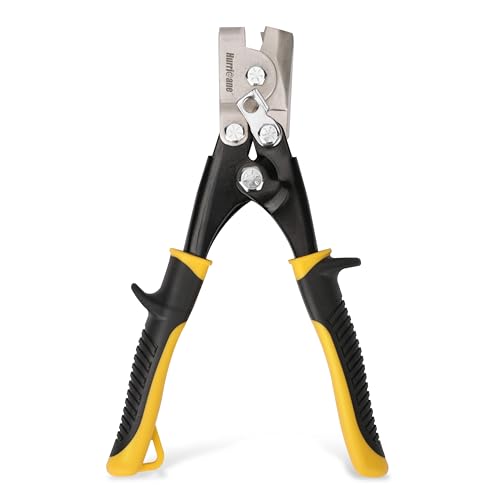
HURRICANE Snap Lock Punch Tool
The Strengths Of Each Pick
For a full afternoon of trimming aluminum fascia or shearing off a stack of steel trim pieces, hand fatigue is the silent killer of any siding job. The DeWalt DWHT14675 ERGO Straight Cut Aviation Snip addresses that head-on with a reduced handle span that requires less muscle effort per cut. Where bulkier aviation snips can leave your palm cramped after forty minutes, this one keeps the grip comfortable through a long session.
It’s a single-purpose tool, designed purely for straight lines and gentle curves, so it pairs well with the HURRICANE 10 inch straight snips covered below when you want a backup or a different handle feel. The improved external latch design keeps the blades locked shut during storage, which matters when the snips are rattling around in a crowded tool bag alongside drills and screws.
Key Advantages
- Reduced handle span lowers the muscle effort per cut
- External latch keeps blades locked during transport
- Clean action on aluminum, vinyl trim, and thin sheet metal
- Comfortable for extended trimming sessions around the house
Worth Noting
- Only handles straight cuts and wide curves, not tight radii
- Single color variant may not be easy to spot in a busy job site
Who It Suits Best
Homeowners tackling a multi-panel siding replacement who want a comfortable, fatigue-friendly straight cut tool.
Where Another Pick Suits Better
The HURRICANE 3-Piece Aviation Tin Snips Set is a stronger match when projects demand both straight and curved cuts from the same starter kit.
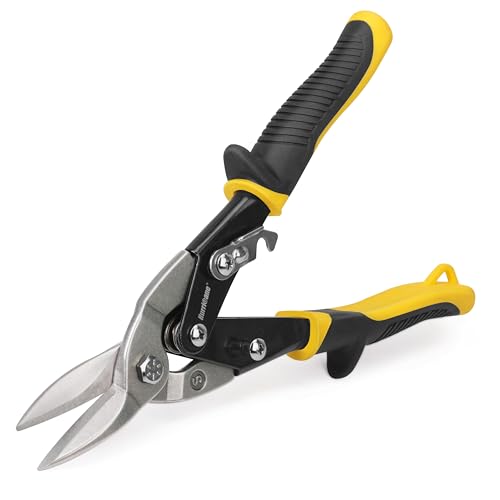
Not every siding project calls for premium alloys. The HURRICANE 10 inch Aviation Tin Snips are the workhorse option for thin sheet metal, gutter mends, and occasional aluminum trim work. The blades are chrome vanadium steel, a common cutlery-grade alloy that holds an edge well under light to moderate use, and the non-slip Tyregrip handle keeps the tool planted in your palm even when gloves come off.
This is a tool aimed squarely at DIY territory. HVAC duct repairs, gutter patches, and trimming around a window opening all fall within its comfort zone. The CR-V blades (a mid-range cutlery steel) handle cold rolled steel and stainless steel sheets up to the gauge listed in the spec, which covers most home-shop needs. For tighter or compound cuts, you’ll want to swap to the HURRICANE 3-Piece Set reviewed later.
Everyday Advantages
- Non-slip Tyregrip handle stays secure during cuts
- Chrome vanadium blades handle common thin gauges
- Reaches into HVAC ductwork and gutter runs easily
- Straightforward to sharpen and maintain at home
Trade Offs
- Limited to straight and gentle curves
- Heavy-duty production cutting will wear blades faster
Feature Snapshot
Made For
First-time DIYers fixing a sagging gutter section or trimming HVAC duct panels on a quiet weekend.
Consider Something Else When
The HURRICANE 10 Inch Premium CR-MO Snips earn their slot when you regularly cut 18-gauge cold-rolled steel and want longer edge life.
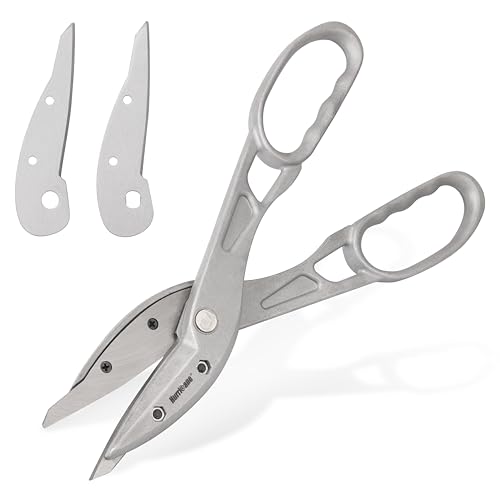
Weight is the underrated factor in any handheld cutting tool, and the HURRICANE 12 Inch Aluminum Tin Snips use an aluminum body to drop grams where it matters most. Vinyl siding, aluminum coil stock, and copper flashing all cut cleanly with the high-carbon steel blades, and the longer 12-inch reach gives you a smoother stroke on longer panels than the 10-inch versions above.
Replaceable blades are the quiet highlight here. Most aviation snips become scrap when the edge finally dulls, but this design lets you swap in a fresh blade and keep going. The large handles add comfort for users with bigger hands, a small but real ergonomic gain during overhead trim work. The steel blades still need periodic lubrication to avoid rust, especially when cutting vinyl, which can leave residue on the edge.
The Value In It
- Aluminum body trims weight for overhead cuts
- Replaceable blades extend the tool’s working life
- Large handles suit users with bigger hands
- Cuts vinyl siding without cracking or distortion
Points To Note
- Blades benefit from light oiling after vinyl cuts
- Not designed for tight curves or sharp inside radii
Best Suited To
Remodelers cutting vinyl or aluminum siding overhead who want a light tool and easy blade replacement.
Look Elsewhere When
The BETOOLL 3-Piece Hand Seamers Set is the right call once the panels are cut and you need to bend or fold clean edges for trim.
Cutting is half the job. The BETOOLL 3-Piece Hand Seamers Set picks up where the snips leave off, giving you the leverage to fold and flatten sheet metal into clean seams. Each jaw runs 2.4 inches wide, enough to grip a panel edge without twisting it, and the three profiles cover straight folds, 45-degree angles, and crisp 90-degree bends for trim and flashing.
The carbon steel bodies with a heat-treated chromium finish shrug off corrosion during outdoor storage, and the rubber handle keeps your grip planted when bending heavier-gauge stock. The included storage case is a small but welcome touch, since seamers have a habit of disappearing into the back of a drawer when you need them most. This isn’t a cutting tool, so you’ll still need a pair of snips from earlier in this list for the initial cut.
Advantages To Know
- Three jaw angles cover most common bend profiles
- Chromium finish resists rust in damp garages
- Rubber handles stay secure during heavier bends
- Storage case keeps all three seamers organized
Practical Considerations
- Doesn’t cut, so pair it with snips for full workflow
- Wider jaws can mark softer metals without backing
Core Details
Who Will Love This
Metalworkers and serious DIYers who routinely bend trim, flashing, or HVAC transitions by hand.
Skip It When
The HURRICANE Sheet Metal V Notcher is the better fit when you need relief cuts for inside bends rather than straight folds.
Spade bits aren’t cutting tools for metal, but they show up in any siding job that needs holes drilled for fasteners, wiring, or vents through underlying sheathing. The Diablo Spade Bit Set covers the three sizes that come up most often: 5/8, 3/4, and 1 inch, all sharing a common 1/4-inch hex shank that fits standard drill chucks and impact drivers.
The self-feeding SPEED-TIP design pulls each bit into the workpiece without a separate pilot hole, which speeds up repetitive drilling along a siding run. Hex shanks also reduce slippage in the chuck, a real benefit when you’re drilling at an angle into a fascia board. The 1/4-inch hex fits most modern drill drivers, though older keyed chucks may need an adapter.
Practical Advantages
- Self-feeding tip starts without a pilot hole
- Three sizes cover common fastener and wiring holes
- 1/4-inch hex shank fits standard drill chucks
- Solid construction handles repeated drilling in softwoods
Factors To Consider
- Not designed for metal siding itself
- Bits heat up during deep, continuous drilling
Perfect Match For
Installers who need to drill through sheathing and trim before mounting siding panels or running exterior wiring.
Another Choice May Suit
The HURRICANE 12 Inch Aluminum Tin Snips handle the actual metal cutting, while the Diablo set handles the prep work.
For tougher steel and repetitive work, the standard CR-V blades on the HURRICANE 10 inch basic snips start to feel underbuilt. The HURRICANE 10 Inch Premium CR-MO Snips step up to chrome molybdenum steel, a tougher alloy that holds an edge through harder cutting and longer sessions. Micro-serrated blades grip slick aluminum and coated steel without skating, which produces cleaner cut lines and fewer ragged edges.
Compound leverage multiplies your hand force at the pivot, so cutting 18-gauge cold-rolled steel feels closer to cutting thinner stock. The safety lock and comfort grip handle round out a tool aimed at users who cut metal often rather than once in a while. The trade-off is a slightly heavier tool than the basic version, which becomes noticeable during long overhead runs.
Benefits That Matter
- Chrome molybdenum steel outlasts standard CR-V
- Micro-serrated edges prevent skating on slick stock
- Compound leverage eases 18-gauge cuts
- Built-in safety lock for storage
Possible Compromises
- Heavier than the standard CR-V version
- Premium steel pushes the cost above basic models
Feature Snapshot
Right Fit For
Frequent users cutting harder steel stock who want a longer-lasting edge and easier leverage.
Reach For A Different Pick When
The HURRICANE 10 inch Aviation Tin Snips make more sense for one-off DIY jobs that don’t justify the premium blade.
One pair of snips rarely covers an entire siding job. The HURRICANE 3-Piece Aviation Tin Snips Set includes yellow straight-cut, red left-curve, and green right-curve snips, color-coded so you can grab the right tool without thinking. Each pair uses the same CR-V blades and Tyregrip handles as the single-tool versions, so the feel is consistent across the set.
The set removes the need to stop mid-cut and search for the right direction. Following a curve around a vent opening or cutting a quarter-round into a soffit becomes a single continuous workflow. The non-slip Tyregrip handle carries over the comfort of the standalone version, though with three tools in rotation, storing them in a dedicated tray or bag keeps the set tidy.
The Practical Payoff
- Color coding eliminates guesswork mid-project
- All three cut directions in one matched set
- Consistent CR-V blades across each tool
- Cuts sheet metal, aluminum, gutter, and vinyl siding
Details To Watch
- Takes more storage space than a single snip
- All three blades share the same maintenance needs
Built With In Mind
Anyone tackling a full siding project with vents, corners, and curved trim who needs every cut direction on hand.
Swap It Out When
The DeWalt DWHT14675 ERGO Straight Cut Aviation Snip is the lighter alternative when only straight cuts are on the agenda.
Notches are the unsung step in clean metal bends. The HURRICANE Sheet Metal V Notcher creates 30-degree V-shaped cuts up to 13/16 inch deep, which gives sheet metal the relief it needs to fold around inside corners without buckling. For HVAC ductwork and gutter end caps, that notch is the difference between a tight joint and a wavy one.
The tool targets 24-gauge mild steel and 26-gauge stainless steel, covering the most common HVAC and roofing materials. The safety locking latch keeps the blades closed when the notcher isn’t in use, which matters since the cutting edges are exposed on both sides. A single-purpose tool like this pays off most on projects with several inside bends, where measuring and hand-cutting each notch would eat up the time saved.
Strong Points
- Produces consistent 30-degree relief notches
- Reaches up to 13/16 inch deep for thicker stock
- Safety latch keeps blades closed in storage
- Targets the gauges used in HVAC and gutter work
Less-Strong Areas
- Single cut angle limits flexibility on odd profiles
- Specialty tool, so value depends on bend frequency
Feature Rundown
Whose Shelf It Belongs On
HVAC installers and gutter fabricators who run the same inside bends on every project and need uniform relief cuts.
Where A Sibling Pick Shines
The BETOOLL 3-Piece Hand Seamers Set covers the folding side of the workflow for projects with more varied bend angles.
Once panels are cut and notched, the next step is locking pieces together without screws or fasteners. The HURRICANE Snap Lock Punch Tool creates a 3/8-inch impression crimp, the standard width for joining aluminum and vinyl siding panels and for securing gutter end caps. The compound leverage design multiplies your hand force, so the punch requires less squeeze than budget crimpers that fight you on every stroke.
It arrives fully assembled and ready to use, which is unusual for specialty hand tools that often need a few minutes of setup. The tool works on aluminum, vinyl siding, and HVAC duct material, giving it crossover value beyond a single trade. For one-off jobs, the cost is hard to justify, but on a multi-panel siding project, the time saved compounds quickly.
Points In Its Favor
- 3/8-inch impression matches standard panel locks
- Compound leverage reduces hand strain
- Ready to use straight out of the box
- Works on aluminum, vinyl, and HVAC duct material
Where It Is Less Suited
- Single-purpose tool with limited use cases
- Impression size isn’t adjustable for non-standard locks
Who Should Grab It
Installers handling multiple siding panels or gutter runs who need fast, consistent locking crimps without screws.
Not Your Match When
The HURRICANE 3-Piece Aviation Tin Snips Set covers the cutting side better for homeowners who only need to trim and shape panels.
What To Weigh Before Buying Tools For Cutting Metal Siding
The first call to make is between straight-cut snips, a multi-direction set, or a powered option. Straight snips handle long panel edges and trim cuts, but anything with a curve calls for left- and right-cutting snips to keep the cut line clean. A three-piece set covers most residential work without swapping tools mid-cut.
Gauge matters more than most people expect. Cold-rolled steel at 20-gauge cuts cleanly with mid-range snips, while 18-gauge stock demands high-leverage or CR-MO blades. Aluminum and vinyl siding are softer, so they cut easily with lighter snips but benefit from replaceable blades, since vinyl residue dulls edges faster than bare metal.
Ergonomics are the hidden cost of cheap snips. A reduced handle span and non-slip grip reduce fatigue during long overhead runs, and a locking latch keeps the blades closed in a crowded tool bag. Higher-end alloys like CR-MO extend edge life for users who cut metal weekly, while casual DIYers rarely need the upgrade. Add a V-notcher for bend relief on ductwork and a snap-lock punch for joining panels, and the toolkit covers almost any residential siding scenario.
Smart Choices When Shopping For Tools For Cutting Metal Siding
Pitfalls Shoppers Hit
Buying a single pair of snips and expecting them to handle every cut is the most common misstep. Straight snips can’t follow a curve, and forcing them leaves a jagged edge. Match the snip direction to the cut profile from the start, and add a V-notcher for projects with inside bends. Skipping blade material is another frequent error. CR-V steel works for occasional use, but frequent cutters benefit from CR-MO or similar alloys that hold an edge longer.
When Paying More Pays Off
Premium snips earn their place through better leverage, longer edge life, and replaceable blades. A high-leverage pivot cuts 18-gauge cold-rolled steel with less hand force, which matters on production runs. Replaceable blades turn a dulled tool into a renewed one rather than scrap, spreading the cost over years. The upgrade pays off fastest for users who cut metal weekly; casual DIYers usually find mid-range snips more than adequate.