Steel roofing rewards the right cutting approach and punishes the wrong one fast. A wrong blade choice can curl a clean panel, burn through a battery, or leave a ragged edge that catches water months later. You need gear that matches the gauge you’re working with, the layout of your roof, and the cuts you actually make: long straight runs, tight valley trims, or odd notches around vents and chimneys. This roundup walks through nine solid options, mixing hand tools, power nibblers, and oscillating blade kits, so you can match a pick to the way you really work, not just the way a product page describes it.
A Snapshot Of The Selections

WILLBOND Dolphin Navajas Roofing Knife with Sheath, Yellow

BETOOLL 3-Piece Hand Seamers Sheet Metal Set

Makita JN1601 16 Gauge Nibbler

PAYA Hooked Cutter Blade for Tight Spaces, 5-Pack

PAYA Segment Saw Blade for Windshield Sealant, 2-Pack

WILLBOND Dolphin Navajas Roofing Knife with Sheath, Silver

PAYA Straight Cutting Blade with Rigid Depth Stop, 2-Pack

WILLBOND Dolphin Navajas Roofing Knife with Sheath, Green
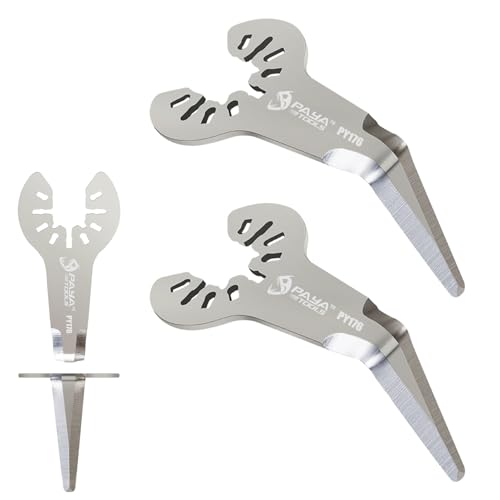
PAYA L-Shaped Windshield Removal Tool, 2-Pack
The Picks, Examined More Closely
The WILLBOND Dolphin Navajas roofing knife arrives as a two-pack with sheaths, so you can keep a backup clipped to your belt while the first one is in use. The yellow housing stands out on a busy roof, which actually matters when you set the tool down to grab a fastener or a chalk line. The hook-style blade is the real workhorse here, designed for slicing through roofing felt, asphalt shingles, insulation board, and similar soft materials you meet before the metal panels even go on.
For most homeowners patching a porch roof or DIYers building a small shed, this is the entry point that gets the prep work done. Tradespeople also like it for opening bundles and trimming underlayment without grabbing a fresh utility blade every time. The included sheath protects your hands in a tool belt and keeps the hook from catching on other gear during the climb up the ladder.
Features That Help
- Two knives per order, useful for spares or two-person crews
- Sheath included for safer carry on ladders and tool belts
- Yellow body improves visibility on a crowded roof surface
- Hook blade profile handles felt, shingle, and insulation with one shape
- Lightweight, so it stays comfortable on long trim sessions
Things To Consider
- The hook blade is not designed for steel panels themselves, so you’ll still need a separate tool for the metal work
- Housing durability under heavy drops on stone or concrete is a common concern with all-plastic utility knife bodies
Right Fit For
Homeowners and shed builders prepping underlayment before the metal panels go up.
Where Another Pick Suits Better
The Makita JN1601 nibbler is the smarter reach once you start cutting the steel panels themselves.
Cutting steel roofing rarely stops at the cut itself. Once a panel is shaped, you need to bend, fold, and lock edges, and the BETOOLL 3-piece hand seamer set covers the three angles you’ll reach for most: straight, 45°, and 90°. Each jaw is 2.4 inches wide, so you can grab a generous section of edge without slipping. The set ships in a plastic case, which keeps the three tools from drifting around the truck bed or the bottom of a jobsite bin.
After the first pick handled the underlayment, this set steps in for the metal-forming side of the job. DIYers working on a small porch roof or a chicken coop appreciate that the tools are hand-powered, no compressor or power source needed. You’ll feel the resistance on heavier gauge, but the geometry holds up.
Standout Benefits
- Three angles in one set cover the most common seam shapes
- 2.4 inch jaw width gives a solid bite on the panel edge
- Carrying case keeps the trio organized between trips
- Carbon steel body with a corrosion-resistant finish
- Hand-powered, so you can use them anywhere on the roof
Worth Noting
- Hand seamers work best on lighter gauges, so very thick steel will fight you
- They shape metal, they don’t cut it, so pair them with a nibbler or snips
Made For
Roofers and DIYers locking standing seams and edges after the panels are cut to size.
Skip It When
The Makita JN1601 nibbler is a better match if your job is mostly straight cutting and not seam forming.
The Makita JN1601 nibbler is the kind of tool that quietly changes how you approach a metal roof. Instead of wrestling tin snips or reaching for a circular saw with a specialty blade, you trace the tool along a marked line and the punch-and-die head chews out a clean strip. A nibbler (a power tool that punches small crescent-shaped pieces out of sheet metal as you push it along) handles curves, notches, and inside corners that other cutters only dream about.
Its 1/4 inch stroke per cycle is the sweet spot for 16-gauge steel roofing, and the rotating die head lets you pivot the cutting direction without twisting your wrist. For pros and serious DIYers replacing a porch roof or a barn, the learning curve pays off in cleaner edges and less fatigue. You will need a heavy corded outlet nearby since this is a corded tool.
Noteworthy Benefits
- Cuts curves and tight notches that snips can’t reach cleanly
- Rotating die head keeps cut direction flexible
- Ergonomic grip reduces wrist strain on long runs
- Built-in thickness gauge speeds material checks
Honest Caveats
- Corded design requires power on-site or a long extension cord
- Heavier than snips, so over-the-head work tires the shoulder faster
- Punch and die are wear items and need replacement eventually
Quick Facts
Best Suited To
Roofers and advanced DIYers who need clean curves in corrugated or flat steel panels.
Look Elsewhere When
The WILLBOND Dolphin Navajas roofing knife covers you better when the task is felt and underlayment, not metal itself.
The PAYA hooked cutter blade pack is a five-pack of oscillating multi-tool blades, sized for caulk and sealant removal in tight corners. The hooked 0.47 inch edge curls under old bead of sealant and lifts it away without gouging the metal underneath. If you have ever tried to dig out a hardened bead of roof sealant with a flat blade, you know the difference the hook shape makes.
These are blades, not a tool, so you will need an oscillating multi-tool to drive them. Used in combination with the WILLBOND knife earlier on this list, the knife handles the bulk cutting while these blades clean up the messy detail work around vents, flashings, and ridge transitions.
Bright Spots
- Stainless steel body resists rust on damp roof surfaces
- Hook shape gets under sealant without scratching the panel
- Five-pack covers the loss and breakage common to small blades
- Universal fit works with most oscillating multi-tool brands
Soft Spots
- Requires a separate oscillating tool investment if you don’t own one
- Small profile means longer working time on large removal jobs
Who Will Love This
Roofers and remodelers doing panel replacement who need to scrape out old sealant cleanly.
Swap It Out When
The PAYA segment saw blade is a better reach for cutting urethane and bulkier sealants rather than scraping.
The PAYA segment saw blade is the cutting cousin of the hooked blade above. Where the hook scrapes, the segment edge saws, slicing through urethane sealants, gasket material, and similar soft but stubborn barriers that hold panels in place. The two-pack gives you a backup when the first one dulls halfway through a roof.
Segmented blades (blades with a curved, toothed edge rather than a flat plane) excel at plunging into a bead of sealant and tracking along it without skipping. You will need a steady hand because the aggressive edge can wander on slick metal, but for long runs along a ridge or around a chimney base, this is faster than a hook blade.
Where It Delivers
- Segmented edge cuts rather than scrapes, speeding up long beads
- Stainless steel build handles outdoor moisture without flash rusting
- Universal interface fits most oscillating multi-tool brands
- Two-pack covers the work day without a reorder
Practical Considerations
- Requires a confident hand, since the teeth can grab and skip on slick metal
- Not designed for the steel panels themselves, only the sealant layer
Built With In Mind
Roofers and restoration specialists cutting out urethane beads on metal panel edges.
Another Choice May Suit
The PAYA straight cutting blade with depth stop suits work where controlled shallow depth matters more than bulk sealant cutting.
The silver WILLBOND Dolphin Navajas knife is the same tool as the yellow version, just in a more neutral housing. Functionally there is no difference, so this is really a question of taste and jobsite convention. Some crews color-code their tools to avoid grabbing someone else’s gear on a shared roof, and silver tends to blend with metal panel surfaces if you set it down mid-cut.
Compared to the yellow pick, this one trades a little visibility for a cleaner look, and the rest of the package, the hook blade, the sheath, the lightweight plastic body, stays the same. Most homeowners will not care about the color, but contractors buying in volume often do.
Points In Its Favor
- Two-knife pack, same as the yellow version
- Sheath keeps the hook safe on a tool belt
- Neutral color suits crews that prefer a low-visibility look
- Hook blade handles felt, insulation, and shingle work
Room For Improvement
- Less visible than the yellow version on shingle or felt underlayment
- Plastic body is the same durability concern as the other WILLBOND knives
Key Product Details
Whose Shelf It Belongs On
Multi-trade crews and contractors who want a low-visibility tool with the same WILLBOND blade profile.
A Better Fit Elsewhere
The Makita JN1601 nibbler belongs on the truck for the actual steel cutting step.
The PAYA straight cutting blade brings two useful features to the oscillating blade format: a Z-bend body that flexes slightly under load, and a rigid depth stop that controls how deep the blade sinks. The Z-bend design is a curved body shape that lets the blade cut at a slight angle without binding, useful when you are working along a flat panel and want the teeth to engage at the right depth without skating.
The depth stop is the more interesting feature. It keeps the blade from plunging past a set point, which matters when you are cutting near a substrate you cannot afford to score. For detail work on metal roofing trim, around skylight frames, or near a membrane layer, that controlled depth is the difference between a clean cut and a repair.
Strengths Worth Knowing
- Rigid depth stop prevents over-cutting on layered surfaces
- Z-bend geometry keeps the blade tracking along the line
- Two-pack gives you a backup on multi-day projects
- Universal fit for most oscillating multi-tool brands
Possible Compromises
- Requires a separate oscillating tool purchase if you don’t own one
- Depth stop adds bulk, so very tight corners may be hard to reach
Feature Snapshot
Who Should Grab It
Roofers doing trim work near skylights, vents, or membranes where cut depth is critical.
Reach For A Different Pick When
The PAYA L-shaped windshield removal tool is a smarter choice for plunging into a deep seal pocket.
The green WILLBOND Dolphin Navajas knife is the third color option in the lineup, sitting between the high-visibility yellow and the neutral silver. Green shows up well on grass and landscaping but is less glaring than yellow on a finished roof. For homeowners or crews who like a middle-ground look, this is the pick.
Functionally it is identical to the yellow and silver versions, so the decision comes down to your preference and how you use the tool. DIYers often find the green less harsh in the eyes during long afternoons of trimming underlayment, while still easy enough to spot if you set it down in the yard.
The Case For It
- Two knives per pack for a spare on the roof
- Sheath included for safe belt carry
- Mid-tone color is visible without being aggressive on the eyes
- Hook blade handles felt, shingle, and insulation
Some Limits To Know
- Same plastic housing durability caveat as the other WILLBOND knives
- Color choice is purely cosmetic, no functional difference from siblings
Perfect Match For
Homeowners and small crews who want the WILLBOND knife in a less flashy color.
Where A Sibling Pick Shines
The yellow version is easier to spot if you tend to misplace tools on a busy job site.
The PAYA L-shaped windshield removal tool is built for tight spaces, and the L-shape is not a marketing flourish. The offset geometry lets the cutting edge reach into a narrow gap between a metal panel and a flashing without removing the flashing first. For roofers, that means less disassembly when you need to cut out a single damaged section.
Originally designed for automotive glass urethane, the same principle applies to roofing sealants and trim pockets. The two-pack gives you a backup and lets one tool stay on the oscillating multi-tool while the other sits on the bench.
Where It Excels
- L-shaped design reaches into gaps that straight blades cannot
- Stainless steel body resists corrosion in outdoor conditions
- Universal quick release works with most oscillating multi-tool brands
- Two-pack covers wear and loss on multi-day projects
Where It Is Less Suited
- Requires a separate oscillating tool investment
- Specialty shape limits versatility for general cutting tasks
Whose Shelf It Belongs On
Roofers and restoration pros who need to reach behind flashings and trim pieces without full disassembly.
Swap It Out When
The PAYA straight cutting blade with depth stop is the better call for shallow, controlled cuts on open surfaces.
What Matters Most Before You Choose Your Cutting Tools
Steel roofing cuts differently than asphalt, and the tool you grab should match the gauge and the cut pattern, not just the brand on the box.
Match The Tool To The Material, Not The Other Way Around
Most steel roofing runs between 22 and 29 gauge. Thinner panels give you more options, including tin snips and certain circular saw blades. Thicker panels push you toward a nibbler, a dedicated shear, or a power shear with enough torque. A WILLBOND hook knife won’t touch the steel itself, so don’t expect it to substitute for a real metal cutter. For prep work on felt and underlayment, the knife is fine. For the panels, you need something rated for the gauge you bought.
Corrugated panels add another wrinkle, because the ridges mean a flat blade catches on the high points. A nibbler like the Makita JN1601 chews through the ridges without climbing them, which is why pros reach for it on those jobs.
Hand Tools Versus Power: Know Your Day
Hand seamers, snips, and hook knives need no power source and stay quiet, which is a real plus for a homeowner working on a Saturday. The trade-off is effort and time, especially on long runs. Power nibblers and oscillating multi-tools cost more upfront and need a power source or battery, but they save your wrist on bigger projects. For a small shed or a single porch patch, hand tools are often plenty. For a full re-roof, the power tool pays for itself in time saved.
Blade Geometry Drives Cut Quality
Hook blades pull through soft material. Segmented blades (curved toothed edges) saw through sealants. Z-bend straight blades track along a line without skating. L-shaped blades reach into gaps. The shape isn’t decoration, it changes how the blade meets the surface and what kind of cut you get. Pick the geometry that matches the cut, not the other way around.
Comfort, Weight, And Vibration Matter More Than Specs Suggest
An eight-hour day on a roof with a heavy vibrating tool wears you down, and fatigue leads to mistakes. A lighter tool with a comfortable grip is worth more than a slightly faster tool that punishes your hands. If you can, hold the tool in a store or test a friend’s before committing. For DIYers, an oscillating multi-tool is often the lightest path through tricky detail work.
Key Considerations Across These Picks
Where Shoppers Go Wrong
The most common mistake is buying a tool for the material you wish you had, not the material you actually bought. A 29-gauge panel cuts easily with aviation snips, but a 22-gauge panel will dull the snips and your hand in a single pass. Check your panel gauge before you choose a tool, and match the tool to the thinnest and thickest material you expect to meet on the job.
Another slip is treating oscillating blades like general-purpose cutters. The PAYA hooked, segmented, straight, and L-shaped blades each have a specific job. Using a hook blade to cut a long bead of urethane works, but it takes three times as long as the segment saw. Match the blade to the task and your back will thank you at the end of the day.
When Paying More Pays Off
Higher-tier tools in this category usually spend the extra money on a longer-lasting motor, better balance, or a more precise punch-and-die geometry. A prosumer nibbler like the Makita JN1601 keeps its accuracy longer than a budget nibbler, and the difference shows up in cleaner edges and fewer panel replacements. If you are doing a single small project, a budget pick is fine. If you are doing a full roof or plan to do more in the future, the upgrade pays off in the second project, not the first.
Frequently Asked Questions
What gauge of steel roofing can I cut with hand tools?
Aviation snips and hook knives handle up to about 29 gauge without much trouble. Heavier gauges, anything from 22 to 26, push hand tools past their comfort zone, and a power nibbler or shear is the better fit.
Do I need a separate tool for underlayment and panels?
Yes, in most cases. Hook knives like the WILLBOND Dolphin Navajas are great for felt, insulation, and shingle work, but they are not designed for steel panels. A nibbler or dedicated shear handles the metal itself.
Can an oscillating multi-tool replace a nibbler for steel roofing?
For detail cuts, sealant removal, and small notches, an oscillating multi-tool with the right blade does a respectable job. For long straight runs in thick gauge, a nibbler is still faster and cleaner.
What safety gear should I plan for when cutting steel roofing?
Cut-resistant gloves, safety glasses, hearing protection for power tools, and a non-slip roofing harness are the basics. Metal shards are sharp and unpredictable, so a long-sleeve shirt and sturdy boots round out the kit.
How do I keep my cutting tools from rusting on the job?
Wipe blades down at the end of each day, especially in humid climates, and store them in their case or sheath. Stainless steel bodies help, but even stainless tools benefit from a dry storage spot overnight.