Planting a new tree should feel like progress, not punishment. The right digging tool turns a sweaty afternoon into a clean, satisfying job, whether you’re setting out a single maple or lining up a privacy screen of saplings. This list pairs root-chewing shovels with drill-mounted augers so you can match the tool to your soil, your tree size, and your stamina. Eight picks, each with a clear reason to earn a spot in your shed.
The Choices Worth Comparing

Root Slayer 22011 Garden Shovel

Root Slayer 22311 Nomad Garden Spade
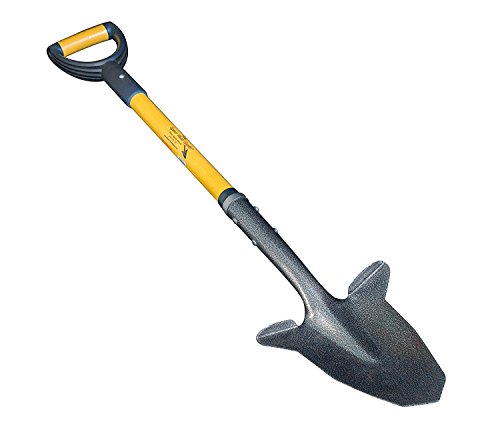
Spear Head Spade SHFD3 40″ Garden Spade

SYITCUN 4″x24″ Auger Drill Bit
SYITCUN 4″x16″ Auger Drill Bit

SYITCUN 4″x32″ Auger Drill Bit

SORANGEUN 3″x24″ Garden Auger Drill Bit

SORANGEUN 2″x32″ Auger Drill Bit
The Picks, Examined More Closely
If your yard punishes ordinary shovels, the Root Slayer 22011 is built to push back. Its signature inverted V cutting tip is sharpened to saw through roots that would send a standard spade bouncing, and the ergonomic grip is angled to ease strain on hands and wrists during long digging sessions. In a neglected corner where the soil has gone brick-hard, this is the kind of tool that earns its keep fast.
Where it really earns its place is in tree-planting prep. You can score a root-bound perimeter, lever out stubborn shrubs, and carve a planting pocket without swapping tools. The serrated edge along the blade sides doubles as a root saw, so you trim and dig in the same motion. Compared to the Spear Head Spade covered later, this one trades the long fiberglass handle for a shorter, more controllable feel.
Standout Benefits
- V-shaped cutting tip chews through roots that stop standard spades cold
- Side serrations on the blade work as a root saw while you dig
- Angled ergonomic grip reduces hand and wrist fatigue over long sessions
- Acts as a shovel, root hatchet, and saw in one head, so you carry less into the bed
Things To Consider
- Heavier than a traditional garden spade, which can slow quick, light work
- Sharpened tip needs occasional cleaning to prevent sap and soil buildup
Who It Suits Best
Homeowners wrestling with established beds, mature trees to remove, or compacted soil where a basic shovel just scrapes the surface.
Consider Something Else When
Reach for the Spear Head Spade SHFD3 instead if a longer handle and lighter fiberglass shaft matter more than a root-slicing tip.
The Nomad is a scaled-down version of the Root Slayer 22011, tuned for travel, camping, and tight backyard jobs. The shorter shaft makes it easier to stash in a car trunk or carry to a remote planting site, and the same serrated, V-tipped head that defines the brand stays intact. For a small tree, a fence repair, or a wildflower pocket on a weekend trip, it’s surprisingly capable.
What it gives up is leverage. Taller gardeners may find themselves hunching more than they’d like, and heavy clay still demands effort. In our view, the Nomad earns its slot when portability matters more than raw digging force, and that tradeoff is worth knowing before you buy.
Reasons It Performs
- Compact build fits easily in camping gear, car trunks, and small sheds
- Keeps the V-tip and serrated edges of the full-size Root Slayer
- Multi-purpose head handles digging, weeding, and root trimming in one tool
Worth Noting
- Shorter shaft means more bending, especially for taller users
- Less leverage for deep tree-planting holes in packed earth
Made For
Campers, hikers, and homeowners who need a portable digging tool for occasional small jobs.
Not Your Match When
Step up to the Root Slayer 22011 if you mainly work in a fixed backyard and want the full-size leverage for mature tree work.
The SHFD3 leans into comfort and reach. At 40 inches end to end with a 9-by-11-inch beveled blade, it suits a wide range of gardener heights and gives you enough shaft to drive the blade into tough ground without folding yourself in half. The steel-reinforced fiberglass handle keeps the weight manageable while shrugging off weather that would splinter a wood handle.
Where the Spear Head Spade differs from the Root Slayer 22011 is in the tip geometry. It’s a flat, beveled spade rather than a V-shaped root saw, so it slices cleanly through sod and separates perennials with less hacking. For a homeowner planting a row of young ornamentals or transplanting established bushes, that cleaner cut matters.
A Strong Showing
- 40-inch overall length suits taller gardeners and reduces back strain
- Steel-reinforced fiberglass handle stays light and weather-resistant
- Cushioned D-grip improves control during heavy pushes
- Beveled blade separates perennials and edges beds cleanly
Points To Keep In Mind
- Flat spade tip doesn’t saw through thick roots the way a V-tip does
- Longer shaft can feel unwieldy in tight raised beds
Key Product Details
Right Fit For
Gardeners planting several ornamentals in one session who want a forgiving, full-length spade that doesn’t punish the back.
Look Elsewhere When
The SYITCUN 4″x24″ Auger Drill Bit is a smarter grab if you’d rather drill dozens of uniform planting holes than dig them by hand.
Once you start planting in volume, a hand shovel stops being fun. The SYITCUN 4×24 auger mounts to a standard 1/2-inch hex drive drill and turns tree-planting prep into a controlled, repeatable process. Twin alloy blades lead the cut, so each pull is a clean cylinder rather than a ragged crater, and 24 inches of length is enough for most balled-and-burlapped saplings.
The honest read is that this is a drill attachment, not a stand-alone tool. You’ll want a corded or high-torque cordless drill with serious muscle, and you should clear the hole of stones first. For gardeners converting a lawn into an orchard, that small prep is well worth the hours it saves.
Positive Points
- 4-inch diameter matches the root ball of many young trees
- Twin alloy cutting blades stay sharp through rocky and clay-heavy soil
- 24-inch depth suits most bare-root and small balled stock
- Standard 1/2-inch hex drive fits a wide range of common drills
Trade Offs
- Needs a high-torque drill, which is a separate purchase for many households
- Struggles in soil with large rocks or heavy root mats without prep work
Who Should Grab It
Homeowners and small-scale landscapers planting multiple trees in a single day who already own or can borrow a capable drill.
A Better Fit Elsewhere
The Spear Head Spade SHFD3 is a more practical choice for one-off plantings where firing up a drill feels like overkill.
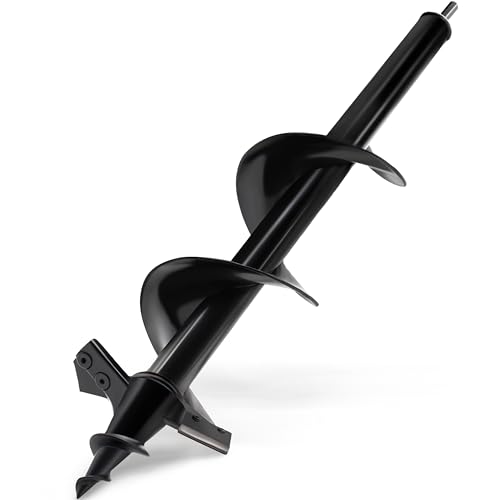
This shorter sibling of the 24-inch SYITCUN trades depth for a lighter, more compact feel. At 16 inches long with a 3/8-inch hex drive, it pairs with smaller, more common household drills, and the patent-pending blade geometry aims to keep soil flow smooth. It’s a smart match for shallow-rooted ornamentals, container transplants, and small bedding trees.
You may find the 16-inch length limiting on deeper balled stock or in very loose soil where you want to set the tree lower. For most home gardeners planting in prepared beds, though, that depth is plenty and the easier handling wins the day.
Positive Takeaways
- 3/8-inch hex drive fits a wider range of standard household drills
- Shorter shaft reduces fatigue and gives finer control in tight beds
- Patent-pending blade design keeps soil moving instead of balling up
Honest Caveats
- 16-inch depth won’t reach the bottom of larger balled root masses
- Still benefits from clearing stones and debris before drilling
Best Suited To
Gardeners planting small ornamentals, shrubs, or container-grown trees with modest root balls.
Skip It When
Move to the SYITCUN 4″x32″ Auger Drill Bit for taller gardeners and deeper holes where extra reach changes the experience.
For taller gardeners and deep planting pockets, the 32-inch SYITCUN auger takes the back pain out of the equation. You stand mostly upright while the extra length drives the cutting head down, and the 1/2-inch hex drive handles higher torque from a serious corded or brushless drill. Twin alloy blades lead the cut, keeping soil moving rather than jamming the spiral.
The trade-off shows up in transport and storage. A 32-inch auger doesn’t slide into a small drawer, and you’ll feel the extra length in tight corners. In open beds and along fence lines, though, the reach is a real productivity gain.
Key Advantages
- 32-inch shaft suits gardeners over six feet and reduces stooping
- Reaches the bottom of deeper root balls without forcing you to dig by hand
- 1/2-inch hex drive handles high-torque drills for heavy soil
Potential Drawbacks
- Longer shaft is harder to maneuver in tight raised beds
- Takes up more storage space than the 16-inch version
Feature Snapshot
Who Will Love This
Taller homeowners and anyone planting larger balled-and-burlapped trees in open ground.
Another Choice May Suit
The SORANGEUN 2″x32″ Auger Drill Bit makes more sense for narrow bulb plantings where width, not depth, is the priority.
Where the SYITCUN augers push raw digging power, the SORANGEUN 3×24 leans into a slimmer, more controlled spiral. The 3-inch diameter is well-matched to small ornamental trees, landscape shrubs, and post-hole prep for light garden structures. The upgraded spiral design is built to keep the bit engaged in the soil rather than skating across the surface.
The narrower cut means less soil disturbance around each planting, which helps young roots establish faster. It’s also a more comfortable weight for a smaller drill, so you won’t burn out a budget handheld on the first planting row.
Points In Its Favor
- 3-inch diameter leaves less soil disruption around each root ball
- Solid shaft design adds rigidity during heavy drilling
- Hex drive compatibility works with common household drills
- Solid length handles standard bedding depth without forcing
Soft Spots
- Not wide enough for larger balled-and-burlapped root systems
- Spiral can clog in wet clay without occasional clearing
Perfect Match For
Homeowners planting rows of small ornamentals, shrubs, or installing light fence posts in soft to moderate soil.
Reach For A Different Pick When
The SYITCUN 4″x24″ Auger Drill Bit is a smarter pick for trees that need a wider root pocket.
The narrowest auger in this roundup, the 2×32 SORANGEUN, is built for a different job. Bulb planting, shallow seedlings, and any task that needs dozens of slim, uniform holes in a hurry. The 32-inch length spares your back and knees, and the 3/8-inch hex drive slots into most common household drills without an adapter.
At 2 inches across, it simply can’t host a meaningful tree root ball. That’s the honest trade-off, and the reason to keep it as a specialist rather than your only digging tool. For mass bulb beds and small annuals, though, nothing on this list moves as fast.
What Works In Its Favor
- 32-inch length protects back and knees during long planting sessions
- 2-inch diameter suits bulbs, annuals, and small seedlings perfectly
- 3/8-inch hex drive works with standard household drills
- Narrow cut disturbs surrounding plantings and mulch very little
Less Ideal Details
- Too narrow for any meaningful tree root ball
- Very long shaft can be awkward in tight, densely planted beds
Built With In Mind
Spring bulb planting, mass annual beds, and small seedlings where dozens of consistent holes matter more than depth.
Where A Sibling Pick Shines
The SYITCUN 4″x24″ Auger Drill Bit is the right call for actual tree planting where the 2-inch spiral is just too slim.
What To Match Between Your Soil And The Tool
Blade Geometry And Tip Style
Shovel tips fall into two camps: V-shaped cutting heads that saw through roots, and flat, beveled edges that slice cleanly through sod and loose soil. In compacted or root-heavy ground, a V-tip like the Root Slayer 22011 saves hours of frustration. For edging, transplanting, and cleaner cuts in prepared beds, a beveled spade like the Spear Head Spade SHFD3 holds the line.
Drill Augers And Why Length Matters
An auger drill bit is a spiral cutting head that mounts to a standard hex-drive drill, turning rotary torque into a clean cylindrical hole. Length controls how upright you can stand, and diameter controls how much root ball the hole accepts. Taller gardeners usually do better at 24 inches or more, while 16 inches suits compact drills and shallow work.
Drive Size And Drill Compatibility
Drive size refers to the hex shank that locks into the drill chuck. A 3/8-inch drive fits most common household drills, while a 1/2-inch drive handles higher-torque models and tougher soils. Matching drive size to your existing drill avoids adapter hassle and prevents chuck slippage under load.
Material And Long-Term Care
Steel-reinforced fiberglass handles resist weather and splinters, while solid steel auger bits hold an edge longer in rocky soil. Either way, wipe the tool clean after each session and store it dry to keep rust at bay. Coated or painted bits benefit from a light oil rub before long storage.
Key Considerations Across These Picks
Pitfalls Shoppers Hit
Auger sizing is the most common misstep. A 2-inch bit sounds generous until you try to drop a 1-gallon root ball into it, and an over-wide 4-inch bit chews through unnecessary soil in a tight bulb bed. Soil type matters just as much: rocky or heavy clay ground demands tougher blades and a higher-torque drill than sandy loam. Skipping a clear of stones and roots before drilling is the fastest way to bog down or snap a bit.
Where The Extra Money Goes
Spending up usually buys two things: longer shaft reach and tougher blade materials. A 32-inch auger or a fiberglass-reinforced spade handle costs more because it reduces fatigue and lasts through seasons of hard use. For a one-time planting, the budget tier makes sense. For a recurring orchard or landscaping project, the upgrade pays back in time saved and replacement tools avoided.
Frequently Asked Questions
How deep should the hole be for a new tree?
Most young trees need a hole roughly as deep as the root ball and two to three times as wide, so the roots can spread into loosened surrounding soil.
Can a regular drill power a planting auger?
A 3/8-inch hex drive auger often runs on a standard household drill, but a 1/2-inch auger in hard soil usually needs a higher-torque corded or brushless model.
Are auger drill bits safe for tree roots?
Yes, when used on bare soil to start a new planting hole, since there are no existing roots to damage. Avoid drilling near established trees where the bit could slice through live feeder roots.
What size auger matches a 5-gallon tree?
A 4-inch diameter bit handles most 5-gallon container trees comfortably, with 16 to 24 inches of depth depending on the root mass.
Do I still need a shovel if I own an auger?
An auger speeds up the hole itself, but a spade or shovel is still useful for loosening the sides, removing the plug, and backfilling the planting pocket.