Bamboo rhizomes turn tidy beds into underground networks surprisingly fast. The good news: the right tool turns a weekend wrestling match into a focused afternoon. This list pairs heavy-duty shovels and serrated spades with smaller hand weeding tools, so you can match the tool to the size of the rhizome you’re facing. Each pick below was chosen for a specific kind of bamboo removal, from compact container cleanup to thick grove extraction.
An Overview Of The Picks

Root Slayer 22311 Nomad Garden Spade (Red)

Fiskars Ergo Garden Cultivator

MASAKIYO Japanese Weeding Sickle (Full Size)

nascom Japanese Hand Weeder (Ambidextrous)

FANHAO 3-Piece Garden Trowel Set
CKG Metal Detecting Shovel with Pouch Set

CKG Carbon Steel Metal Detecting Shovel (Carbon Black)

CKG Heavy Duty T-Handle Root Cutter Spade
The Picks, Examined More Closely
The Root Slayer Nomad takes the aggressive cutting geometry of the brand’s full-size spade and shrinks it into a packable, one-hand-friendly tool. Its serrated edge acts like a saw when it meets a rhizome, slicing through fibrous runners rather than just bending them aside.
For most home gardeners clearing a wayward bamboo shoot or a creeping border, this is the tool that pulls double duty. You get leverage for deeper cuts and control for tight spots around existing plants. Compared to the cultivator and sickle below, it sits in the middle: more muscle than a hand tool, less commitment than a long-handle shovel.
Notable Upsides
- Serrated edge chews through rhizomes instead of glancing off them
- Compact size works in raised beds and container gardens
- One-handed design keeps the other hand free for pulling debris
- Useful well beyond bamboo: taproots, sod, and compacted soil all yield
- Red color is easy to spot when you set it down in tall grass
Things To Consider
- Shorter shaft means more kneeling for deep rhizomes
- Blade needs drying after use to prevent surface oxidation over time
Made For
Homeowners dealing with a moderate bamboo invasion and gardeners who want a single tool for both root cutting and general digging.
Skip It When
You’re clearing a mature grove with rhizomes thicker than your wrist; the CKG Heavy Duty T-Handle Root Cutter Spade has the leverage you’ll want.
The Fiskars Ergo Cultivator is a three-tine hand tool designed to break up soil and tease out shallow roots. At roughly 3 by 4 by 13 inches, it slips into tight gaps where a spade simply won’t fit.
Where this cultivator earns its spot is in the prep work: loosening compacted soil around a bamboo cluster so a bigger tool can get underneath. The aluminum head keeps weight down, and the ergonomic grip reduces hand fatigue during long sessions. It complements the Root Slayer Nomad rather than competing with it.
What Stands Out
- Aluminum tines resist rust in damp soil
- Light enough for extended raking and loosening work
- Hang hole at the handle end makes shed storage simple
Points To Note
- Tines will bend if you pry directly into thick rhizomes
- Hand-scale tool means it works best paired with a spade for big jobs
Right Fit For
Gardeners clearing surface roots in flower beds and anyone prepping soil before bringing in a heavier cutter.
Look Elsewhere When
You need to sever woody rhizomes in a single pass; the CKG Carbon Steel Metal Detecting Shovel offers a more direct approach.
The MASAKIYO sickle is a hand-forged high carbon steel blade with a curved cutting edge. Where a trowel pushes soil aside, this sickle slices through it, severing thin rhizomes and feeder roots with a single draw.
Its real value is precision. You can clear a strip of shallow runners from a packed bed without disturbing nearby ornamentals. For bamboo, the sickle handles the cleanup work after a spade has done the heavy lifting. Treat the edge with respect; high carbon steel holds a sharp edge longer than most, but it asks for a quick wipe-down after use.
The Value In It
- High carbon steel keeps its edge through extended weeding sessions
- Curved blade slices at ground level with minimal soil disturbance
- Compact size fits into spaces a shovel can’t reach
Honest Caveats
- Uncovered blade demands careful storage and handling
- High carbon steel can discolor without a protective oil film over time
Who It Suits Best
Detail-oriented gardeners who want surgical cuts around prized plants and don’t mind maintaining a sharp edge.
Consider Something Else When
You need a tool that also loosens soil; the Fiskars Ergo Cultivator handles both jobs in one pass.
The nascom hand weeder, known in Japanese gardening as a Kusatori Kana, is a flat-bladed weeding tool made in Japan. Its thin steel blade scrapes along the soil surface and can be flipped to work as a small hoe.
For bamboo work, this is the maintenance tool. Once a spade has removed the main rhizome, this weeder catches the stragglers that try to regenerate from cut pieces. The ambidextrous design means left-handed users get the same control as right-handed ones, and the resharpenable blade rewards a little ongoing care.
Benefits That Matter
- Flat blade doubles as a scraping and hoeing tool
- Works equally well for left- and right-handed users
- Steel blade can be resharpened, extending tool life over the years
Small Caveats
- Small blade means more passes for larger clearings
- Not the right pick for thick, woody rhizome networks
Best Suited To
Beginners maintaining a bed after initial bamboo removal and gardeners with small patches who want precision over power.
Reach For A Different Pick When
You’re facing deeply embedded rhizomes from an established grove; the Root Slayer 22311 Nomad Garden Spade digs deeper per stroke.
The FANHAO set bundles three cast-aluminum hand tools: a trowel, a transplanter, and a cultivator. The cast-aluminum construction keeps the heads light, and rubberized grips keep them steady in wet conditions.
For bamboo removal, no single tool in the set is a powerhouse, but the trio covers the support roles. The trowel digs pilot holes around a cluster, the transplanter works narrow gaps, and the cultivator breaks up loosened soil. Owners commonly report that the cast-aluminum heads hold up well to rocky soil without snapping.
A Few Highlights
- Three tools cover digging, transplanting, and cultivating in one purchase
- Cast-aluminum heads resist rust through damp seasons
- Non-slip rubber grips stay secure in wet or muddy soil
- Light enough for users with reduced hand strength
Worth Bearing In Mind
- Hand-scale tools will not sever mature rhizomes on their own
- Set works best as a complement to a spade, not a stand-alone solution
Built With In Mind
Casual gardeners who want versatile hand tools for ongoing yard work and a few light bamboo touch-ups.
Swap It Out When
You’re clearing a thick, established stand; the MASAKIYO Japanese Weeding Sickle handles dense roots with cleaner cuts.
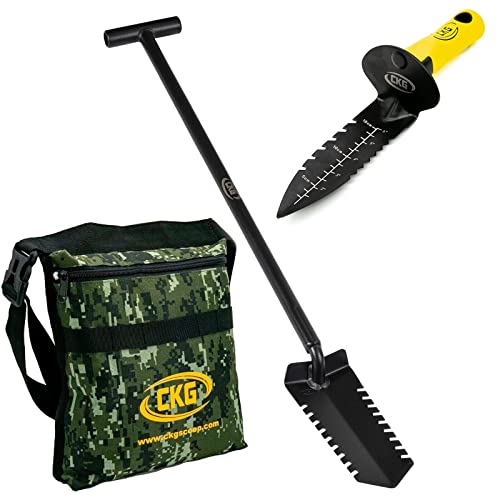
The CKG metal detecting shovel borrows a design originally built for treasure hunters and adapts it to garden duty. The double serrated edge runs along both sides of the blade, so cuts work in either direction.
For bamboo, that double edge is a quiet advantage. You can push and pull the blade through a rhizome network without flipping the tool. The included pouch keeps the serrated edge covered during storage, a thoughtful touch for a sharp tool. Depending on your soil, the compact head may mean more cuts per session, but each one is clean.
What Helps Most
- Double serrated blade cuts in both push and pull strokes
- Compact size works in garden beds and travel situations
- Included pouch protects the edge and your storage area
Practical Considerations
- Smaller blade area means more effort for wide root masses
- Serrated edge requires drying to prevent corrosion in damp storage
Whose Shelf It Belongs On
Gardeners who want one tool that crosses over from yard work to outdoor adventures, with bamboo as one of several uses.
Where Another Pick Suits Better
You face a serious grove with deep rhizomes; the CKG Heavy Duty T-Handle Root Cutter Spade has the reach and steel weight for that work.
The carbon steel variant of the CKG shovel trades a bit of mass for easier handling. The carbon handle keeps the overall weight low, which matters during a long afternoon of cutting and prying.
You still get the double serrated blade, and the carbon construction maintains rigidity under load. For most home sessions, the lighter swing keeps you working longer without forearm fatigue. In our view, this is the pick for gardeners who want a sharp, serrated tool without the heft of a full-duty spade.
Features That Help
- Carbon handle cuts overall weight for less fatigue
- Double serrated blade still cuts in both directions
- Black finish hides scuffs from regular yard work
- Compact enough for transport between garden and storage
Some Limits To Know
- Lightweight design means you provide the force on tough roots
- Carbon steel benefits from a light oiling after heavy use to prevent rust
Perfect Match For
Gardeners with moderate bamboo problems who prefer a lighter tool and don’t mind adding a bit of elbow grease.
Not Your Match When
You want maximum cutting power with minimal effort; the Root Slayer 22311 Nomad Garden Spade uses serrated leverage more aggressively.
The CKG Heavy Duty T-Handle Root Cutter Spade is the most aggressive tool in this list. It uses tempered steel with a sharpened, pointed tip, and the T-handle design gives you a two-handed grip for serious leverage.
For a mature bamboo grove with rhizomes running several feet from the parent plant, this is the spade that gets called in. The pointed tip punches through compacted ground, and the serrated edge then widens the cut. Owners commonly describe it as overkill for small flower beds and exactly right for clearing overgrown lots.
What Earns Its Place
- Tempered steel construction handles high-intensity digging
- T-handle allows two-handed leverage on thick roots
- Pointed tip breaks through hard or compacted soil
- Double serrated edge cuts rhizomes on both push and pull strokes
- Suited for both garden clearing and treasure hunting recovery work
Potential Compromises
- Full-size spade is too much tool for small flower beds
- Heavier head increases fatigue during very long sessions
- Requires storage space for a longer-handle tool
Made For
Homeowners with established bamboo groves and landscapers clearing overgrown areas where smaller tools run out of reach.
Skip It When
Your bamboo problem is a few stray shoots in a tidy bed; the FANHAO 3-Piece Garden Trowel Set covers that scale without overkill.
What Matters When Choosing Bamboo Root Tools
Bamboo rhizomes are a different beast from typical garden weeds. They run shallow but wide, they flex before they snap, and a single missed node can regrow a new shoot. The right tool depends on how deep and how thick those rhizomes run in your soil.
Blade geometry and serration. A plain edge pushes rhizomes aside. A serrated edge, like the teeth on the Root Slayer Nomad or the CKG spades, cuts them on contact. Serration is the single biggest performance factor for fibrous bamboo roots. For shallow or fine roots, a sharp flat blade like the nascom weeder’s does the job.
Tool length and leverage. Hand tools (cultivators, sickles, trowels) give you precision and access to tight spots. Long-handle spades give you the leverage to reach rhizomes 8 to 12 inches down and the body weight to drive through them. For most home removals, you end up using both.
Handle design and grip. Bamboo work involves prying motions, not just downward force. A T-handle or a cushioned grip helps you twist and lever without blistering. For wet soil, rubberized grips stay secure when the work gets slippery.
Material and maintenance. Carbon steel holds an edge longer but needs drying and occasional oiling. Aluminum and cast aluminum resist rust but can bend if forced against rocks. Tempered steel handles the roughest conditions but adds weight. Match the material to your soil and your willingness to maintain it.
Smart Considerations Before You Buy
Where Shoppers Go Wrong
A common slip is grabbing the biggest, heaviest spade on the assumption that more tool means faster work. The honest read is that oversized tools in tight beds just gouge soil and damage nearby plants. A second misstep is starting with a sharp hand sickle on thick rhizomes; the blade works hard but the handle takes a beating. Match tool size to rhizome size, and use the right blade geometry for the cut. Skip the temptation to leave any rhizome fragment in the soil, because each piece can regenerate a new plant.
The Upgrade Payoff
Stepping up to a heavy-duty spade costs more in weight and storage, but it pays off when the bamboo has been established for several seasons. Higher-tier tools use tempered or hardened steel that holds an edge through rocky ground and resists bending under leverage. For one-time cleanups of a small patch, a mid-range pick like the Root Slayer Nomad is plenty. For ongoing management of an aggressive running bamboo, the upgraded steel and T-handle design save time and hand strain over the long run.
Frequently Asked Questions
What is the best tool for digging up bamboo roots? A serrated spade like the Root Slayer 22311 Nomad Garden Spade or the CKG Heavy Duty T-Handle Root Cutter Spade cuts through rhizomes cleanly. For small patches, a sharp hand weeder like the MASAKIYO Japanese Weeding Sickle handles thin surface roots.
How deep do bamboo roots actually grow? Most running bamboo rhizomes grow 8 to 14 inches deep, with some reaching 24 inches in loose soil. A long-handle spade with a pointed tip reaches them more easily than a hand tool.
Can you remove bamboo without heavy machinery? Yes, for patches up to a few hundred square feet, manual tools work fine. The key is cutting rhizomes into small pieces and removing them, since leftover fragments can regrow.
Do I need a special blade for bamboo roots? A serrated or saw-toothed edge makes a real difference. Plain spade edges tend to slip off the smooth, fibrous rhizome surface rather than cutting into it.
How do I stop bamboo from coming back after removal? Cut rhizomes back to the parent plant and remove as much of the network as possible. New shoots from missed nodes can be controlled by snapping them off when they emerge, which eventually depletes the rhizome’s stored energy.