Tiling a bathroom, building a kitchen backsplash, or trimming a patio slab all come down to the same moment: the cut. Ceramic tile chips easily, and the wrong blade or tool turns a clean line into a ragged edge that ruins the fit. You need cutting tools matched to the job, whether that’s straight rip cuts on porcelain, a notch around a pipe, or a curved shape for a mosaic insert. This list walks through nine solid options for angle grinder blades, hand tools, and a manual rail cutter, each sized for common 4-1/2 inch grinders or hand strength, so you can match the right cutter to your skill level and project.
The Leading Options At A Glance

FOXBC 4-1/2 Inch Cut-Off Wheels for Angle Grinder (50 Pack)

ONEGOTOOL 4-1/2 Inch Indestructible Cutting Discs (3 Pack)

FOXBC 4-1/2 Inch Tile Cutter Diamond Saw Blades (3 Pack)

FOXBC 4-1/2 Inch Indestructible Multi-Material Cut-Off Disc (3 Pack)
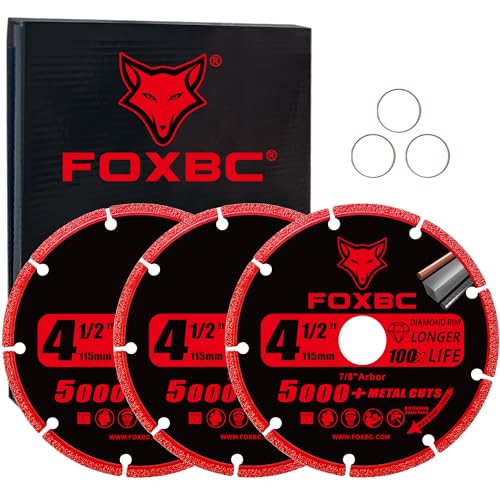
FOXBC 4-1/2 Inch Diamond Cutting Wheel for Angle Grinder (3 Pack)

FOXBC 4-1/2 Inch Tile Glass Cutting Disc (3 Pack)

Goldblatt 2-Piece Tile Nippers Set

ONEGOTOOL 4-1/2 Inch Tile Cutter Diamond Saw Blade (3 Pack)

Sigma Tile Cutter Art. 4EN 125 cm
The Picks, Examined More Closely
Bulk-buy cutting wheels suit anyone who works a grinder hard and burns through discs. The FOXBC 4-1/2 inch cut-off wheels are Type 1 flat discs, the standard shape for straight-on metal cutting, sized at 4-1/2 inches with a 7/8 inch arbor that fits most common angle grinders. The 0.045 inch thickness is on the thin side for a cut-off wheel, which usually means less material wasted per cut and slightly faster slicing through stock.
For context, these are not tile blades. They are aluminum-oxide-bonded metal cutters, so the comparison to the diamond-rimmed tile picks later in this list is intentional. Use these where steel, stainless, or rebar rule the day, and keep a separate tile disc on hand for any ceramic work in the same project.
Key Advantages
- Fifty discs in a single pack means infrequent reordering for high-volume shops
- 0.045 inch thin profile reduces kerf (the width of material removed by the cut) and cuts faster on steel stock
- Standard 7/8 inch arbor fits the angle grinders most DIYers already own
- Type 1 flat geometry supports straight plunge cuts into sheet metal and pipe
Trade-Offs To Weigh
- Not designed for ceramic tile, so they belong in a metal-only rotation rather than a primary tile setup
- Thin bonded wheels can wear quickly under heavy side pressure, a common issue with cut-off discs pushed past their design limits
Made For
You handle a lot of steel, stainless, or rebar cutting and want a deep bench of spare wheels ready to go.
Reach For A Different Pick When
You mostly cut porcelain or ceramic, where the FOXBC 4-1/2 Inch Tile Cutter Diamond Saw Blades (3 Pack) is the better match.
When a single disc can move from rebar to porcelain without a wheel swap, your tool kit shrinks fast. The ONEGOTOOL 4-1/2 inch indestructible cutting discs are built as a one-piece manganese steel construction, which the brand markets for impact resistance. The same disc covers metal, steel bar, stainless, marble, ceramic tile, stone, and plastic pipe, so it fits a remodel where the demo phase and the finish phase happen in the same afternoon.
Compared to the bulk metal-only FOXBC discs that opened this list, the value here is versatility rather than quantity. You get three discs that step into multiple roles, useful for someone who doesn’t want to maintain a separate blade for every material under the sun.
Practical Advantages
- Spans tile, metal, stone, and plastic in one disc, reducing wheel swaps mid-project
- One-piece molded body aims to resist shattering under stress
- 7/8 inch arbor with a 4-1/2 inch diameter fits the most common handheld grinder size
- Three-pack size is friendly to a weekend toolkit rather than a shop pallet
Points To Keep In Mind
- Multi-material claims usually mean compromise on any single material, so pure tile specialists may prefer a dedicated diamond blade
- Manganese steel construction adds weight compared to standard bonded abrasive discs
Built With In Mind
You tackle varied jobs on a single grinder and want fewer disc changes during a project.
A Better Fit Elsewhere
You focus on long, clean porcelain rip cuts, where the Sigma Tile Cutter Art. 4EN 125 cm manual rail cutter provides a quieter, dust-free alternative.
This is the first true tile-focused pick on the list. The FOXBC 4-1/2 inch tile cutter diamond saw blades carry a diamond grit rim, which is the abrasive type designed to grind through porcelain, glass, ceramic, marble, and stone rather than slicing metal. The set arrives as a 3-pack with a 7/8 inch arbor and a 5/8 inch reducing bushing, so the same blade works on grinders with either shaft size.
The big shift from the first two items: these blades are designed for cut-off and grinding in a single wheel, which removes the need to swap between a cutting disc and a grinding disc when you need to smooth an edge after a cut. The trade-off is that diamond blades behave differently from bonded abrasive wheels, so you need to let the disc do the work rather than forcing it.
Notable Gains
- Diamond rim handles porcelain and ceramic cleanly, the two materials that chip standard abrasive wheels
- Combined cut-off and grinding function reduces tool changes mid-project
- Includes a 5/8 inch bushing to fit grinders with the smaller shaft size
- Three-pack coverage is well matched to a full bathroom or backsplash layout
Worth Bearing In Mind
- Diamond blades cost more per disc than basic abrasive cut-off wheels, so initial spend runs higher
- Wet cutting extends blade life, but the wheel can overheat during long dry passes, so you’ll want to pace your cuts
Right Fit For
Homeowners and remodelers installing porcelain or ceramic tile who want a grinder-compatible blade without renting a wet saw.
Swap It Out When
You need absolute straight, repeatable rip cuts on full sheets, where the Sigma Tile Cutter Art. 4EN 125 cm beats any handheld grinder for accuracy.
Where the previous FOXBC blade leaned into porcelain and ceramic, this sibling widens the net. The FOXBC 4-1/2 inch indestructible multi-material cut-off disc also carries a diamond rim, but the design stretches across wood, metal, plastic, cement, ceramic, stone, tile, granite, marble, slate, and glass, dry or wet. The 7/8 inch arbor and 5/8 inch bushing combo matches the tile-focused blade, so swapping between the two in the same grinder requires no adapter change.
For mixed job sites, this is the blade that lives on the grinder most of the time. It won’t cut as fast as a pure metal wheel on rebar, and it won’t chip porcelain as cleanly as the dedicated tile blade, but it never gets in the way. The honest read is that “multi-material” is a real strength and a real compromise, and the right call depends on how often you switch substrates.
Real-World Strengths
- Spans wood, metal, cement, tile, stone, and glass without a wheel change
- Dry and wet cutting compatibility adds flexibility for indoor and outdoor use
- Same arbor and bushing setup as the tile-focused FOXBC blade above, so you can run both without retooling
Honest Caveats
- Cutting speed on hard metal lags behind a dedicated bonded abrasive wheel
- Edge finish on ceramic may be rougher than what a tile-only diamond blade produces, so cleanup sanding can take longer
Who Should Grab It
DIYers and remodelers whose projects bounce between wood framing, metal brackets, and tile accents in the same day.
Where A Sibling Pick Shines
You mainly run porcelain tile and want a cleaner edge, where the ONEGOTOOL 4-1/2 Inch Tile Cutter Diamond Saw Blade (3 Pack) is built for that finish-focused work.
The FOXBC 4-1/2 inch diamond cutting wheel sits in a slightly different lane. It is a diamond-rimmed wheel aimed at metal, rebar, angle iron, cast iron, stainless steel, alloy steel, aluminum, pipe, and sheet metal. The construction uses an electroplating process, which is a method of bonding diamond grit to the steel core using a metal deposit, and the brand points to even distribution of the diamond abrasive along the cutting edge. The 7/8 inch arbor matches standard grinders, and three wheels ship per pack.
For shop work where you burn through blades, a diamond wheel on metal costs more up front but holds its edge far longer than a bonded abrasive disc. The result is fewer mid-job changes and more consistent cut quality across a long session.
What Works In Its Favor
- Diamond rim typically outlasts standard bonded abrasive wheels on metal, especially rebar and stainless
- Electroplated edge aims for even grit distribution and cleaner cuts on hard stock
- Three-pack size suits shops with steady metal-cutting volume
- Standard 7/8 inch arbor fits common 4-1/2 inch angle grinders without adapters
Some Limits To Know
- Higher per-disc cost than basic aluminum oxide cut-off wheels, so light users may not see a return
- Not designed for tile, so it complements rather than replaces a tile-specific blade in a mixed toolkit
The Right Fit
You run a metal fab shop or a fabrication-heavy DIY setup and want a longer-lasting disc for rebar and angle iron work.
Not Your Match When
You mostly cut ceramic and need a single-disc solution, where the FOXBC 4-1/2 Inch Tile Glass Cutting Disc (3 Pack) covers tile and glass in one pass.
Tile and glass behave differently from wood or metal under a grinder, and the FOXBC 4-1/2 inch tile glass cutting disc is built for that brittleness. The diamond wheel covers tile, glass, wine bottles, crystal, masonry, and tuckpointing (the process of removing and replacing mortar joints between bricks or tiles), and it can also handle plastic, marble, stone, slate, cement, concrete, and rebar in a pinch. The 7/8 inch arbor and 4/5 inch bushing fit common grinder shafts, and the wheel is rated to a max of 13280 RPM.
For a kitchen backsplash that mixes ceramic tile with a glass mosaic strip, this disc handles both on the same grinder. Just keep in mind that brittle materials benefit from a lighter touch and steady pacing; forcing the cut causes chipping faster than almost any other variable.
Useful Highlights
- Designed specifically for brittle materials like glass and ceramic, where standard abrasive wheels chip badly
- Tuckpointing capability adds mortar repair to the wheel’s range of use
- Comes with a bushing to fit a different shaft size out of the box
- Three-pack supports a full project with a spare for the inevitable chip or wear event
Potential Drawbacks
- Glass cutting requires a slow, steady hand; aggressive pressure on a grinder leads to cracking
- Compared to a wet tile saw, dust control is limited and a respirator or good ventilation is a must indoors
Who It Suits Best
You cut tile and glass in the same project, like a backsplash with a glass accent, and prefer a single grinder-mounted disc over a wet saw rental.
Consider Something Else When
You trim small mosaic pieces by hand for a craft project, where the Goldblatt 2-Piece Tile Nippers Set offers finer control without power-tool risk.
Not every cut belongs on a grinder. The Goldblatt 2-piece tile nippers set handles the small, awkward cuts that a saw or grinder cannot: nibbling the corner off a mosaic tile, curving an edge for a pipe penetration, or trimming a sliver too narrow for any blade to bite. The set ships as two pieces, both built from drop-forged carbon steel (steel shaped by hammering heated metal into a die for strength) and heat-treated for hardness, with a sandblasted and polished finish. The brand specifies a max cutting thickness of about 3/8 inch (9.5 mm), so you know the upper limit of what the jaws can handle in a single bite.
Nippers take practice to use cleanly. The technique is small bites, not big ones, and the edge often needs a rub with a sanding block afterward. For most mosaic and detail work, though, no power tool replaces the control of a good hand nipper.
Bright Spots
- Two-piece set covers most small-format tile and mosaic sizes
- Drop-forged carbon steel aims for durability under repeated pressure
- Heat-treated jaws hold a cutting edge longer than cheaper stamped steel
- No power, no dust, no grinder noise, useful for indoor detail work
Factors To Consider
- Brand notes the surface arrives with anti-rust oil, so a wipe-down before first use is part of the routine
- 3/8 inch max thickness rules out thicker pavers and quarry tile, where a wet saw is the better tool
Best Suited To
Mosaic artists, bathroom remodelers fitting around pipes, and DIYers doing detail trims where a grinder is overkill.
Skip It When
You face a long run of straight cuts, since the Sigma Tile Cutter Art. 4EN 125 cm rail cutter will save you real time and reduce hand fatigue.
Where the FOXBC tile blade above targets pure tile work, the ONEGOTOOL 4-1/2 inch tile cutter diamond saw blade focuses on the finish. The blade uses fine-grained, high-intensity diamond particles, which the brand positions for smooth, low-chipping cuts on porcelain, ceramic, glass, and marble. The one-piece molded construction adds a safety angle, since the wheel is less likely to fragment under stress than a layered design.
For visible edges, like a shower niche or a mitered corner, finish quality matters more than cut speed. A blade that leaves a clean edge cuts down on the sanding and polishing that turns a one-hour job into a half-day.
What Makes Sense
- Fine diamond grit targets low-chipping cuts on porcelain and glass
- Low cutting resistance reduces operator fatigue on longer sessions
- One-piece molded body aims to resist breakage under stress
- Three blades per pack suits a mid-size tile project with a spare on hand
Points To Note
- Fine-grit wheels can feel slower on first cuts compared to coarse diamond rims, so patience matters at the start
- Glass and porcelain work best with light pressure, so the learning curve is real for first-time grinder users
Perfect Match For
Finish-focused tile installers and DIYers who care about edge quality on porcelain, ceramic, or glass tile.
Look Elsewhere When
You cut thick porcelain pavers, where the Sigma Tile Cutter Art. 4EN 125 cm rail cutter handles larger material with better control.
The list shifts from grinder-mounted blades to a manual rail cutter, and the Sigma Tile Cutter Art. 4EN 125 cm is the most purpose-built tool here. The aluminum frame houses a 125 x 125 cm metric measuring bar, a rotating engraving wheel (the small cutting wheel that scores the tile surface before the snap), and an ergonomic handle. Cutting thickness runs from 0 to 19 mm, and the engraving wheel rolls on a bearing for smooth, consistent scoring.
Manual rail cutters are the quiet, dust-free alternative to a wet saw or angle grinder. The trade is speed on large format tile, where a powered saw still wins, but for straight rip cuts on standard ceramic and porcelain, the precision and clean edge are hard to beat. The 125 cm capacity covers most floor tiles and many wall tiles in a single pass.
Benefits That Matter
- Manual operation means no dust, no noise, and no power source needed on site
- Aluminum frame keeps weight manageable while staying rigid for accurate cuts
- 125 cm measuring bar supports full-length cuts on most floor tile
- Engraving wheel on a roller bearing aims for consistent scoring pressure
What To Weigh
- Cutting thickness tops out at 19 mm, so thick pavers and some stone tiles fall outside its range
- No power means the operator drives the cut, so a long floor tiling job tests arm and hand endurance
Who Will Love This
Tilers and serious DIYers who want repeatable, dust-free straight cuts across many tiles in a row.
Not Your Match When
You mostly do small one-off cuts and don’t want to dedicate space to a 125 cm rail tool, where a Goldblatt 2-Piece Tile Nippers Set or a simple grinder blade covers the job.
What To Look For When Choosing Ceramic Tile Cutting Tools
Blade Material And Abrasive Type
The first fork in the road is abrasive type. Aluminum oxide bonded wheels, like the FOXBC 50-pack that opened this list, cut metal fast but chip ceramic badly. Diamond-rimmed blades, like the FOXBC tile cutter blade or the ONEGOTOOL smooth-finish blade, grind through porcelain and glass without the chipping pattern you see from bonded wheels. If your project is mostly tile, prioritize a diamond rim from the start, and only reach for a bonded abrasive wheel if metal cutting shows up along the way.
Blade Fit And Arbor Size
A 4-1/2 inch blade with a 7/8 inch arbor fits most handheld angle grinders sold today. The catch is that some grinders ship with a 5/8 inch shaft, which is why several blades in this list include a reducing bushing. Check your grinder’s arbor (the central hole in a blade that mounts to the tool’s spindle) before ordering, and confirm a bushing ships with the blade if your shaft is the smaller size. An oversized arbor that does not seat on the spindle is the most common reason a new blade refuses to mount.
Manual Versus Powered Cutting
Powered angle grinders with diamond blades handle curves, notches, and small cuts with speed, but they throw dust, require water management for long sessions, and demand a steady hand. Manual rail cutters, like the Sigma 4EN 125 cm, deliver cleaner straight cuts with no dust and no noise, but they cannot do curves. Most tilers end up with both, a rail cutter for the straight rip cuts and a grinder with a diamond blade for the notches and trim cuts. Picking one over the other depends on how much of each cut type your project contains.
Material Thickness And Tile Type
A blade that handles 3/8 inch ceramic will not always cut 19 mm porcelain cleanly, and a manual rail cutter rated to 19 mm may not have the leverage for dense porcelain. Match the tool’s rated capacity to your thickest tile before buying. For mosaic and small-format tile, hand nippers, like the Goldblatt set, fill the role that no power tool handles well.
Smart Shopping Notes For Ceramic Tile Tools
Common Shopping Slip Ups
The most common mistake is reaching for a metal cut-off wheel, the cheap 50-pack option, and expecting it to score porcelain. Metal wheels chip ceramic the moment they touch it, and the broken tile is a sunk cost. Another trap is ignoring the arbor size and ordering a blade that physically cannot mount on the grinder. Finally, buyers often skip the bushing, the small spacer ring that steps a 7/8 inch arbor down to 5/8 inch, only to find the blade wobbles on the spindle. Measure your grinder shaft before you order, and check whether a reducing bushing ships with the blade or needs a separate purchase.
Where The Extra Money Goes
Higher-tier diamond blades cost more because the diamond grit is graded finer, the bond that holds the grit is engineered for longer life, and the steel core is thicker for less vibration. For a one-time backsplash, a basic diamond tile blade is plenty. For a full bathroom floor in porcelain, a finer-grit blade like the ONEGOTOOL smooth-finish pick, or a manual rail cutter, saves time on edge cleanup and reduces the number of chipped tiles that go in the trash. The upgrade pays off when the job has many cuts and the tile cost is high, since waste avoidance alone often covers the tool premium.
Frequently Asked Questions
What Is The Best Type Of Blade For Cutting Ceramic Tile?
Diamond-rimmed blades cut ceramic and porcelain with far less chipping than bonded abrasive wheels. Look for a continuous-rim diamond blade, which has an unbroken diamond edge rather than segmented teeth, sized to your grinder, usually 4-1/2 inches for handheld work.
Can I Use A Metal Cut-Off Wheel On Ceramic Tile?
Metal cut-off wheels chip ceramic tile badly and are not recommended. The aluminum oxide bond is designed for steel, not brittle tile, and the result is usually a cracked or jagged edge. Use a diamond tile blade instead.
Do I Need A Wet Saw For A Small Backsplash?
Not necessarily. A 4-1/2 inch angle grinder with a diamond tile blade handles a small backsplash well, especially with straight cuts and a few notches. A wet saw is helpful for very large projects or when dust control is critical indoors.
How Thick Of Tile Can Hand Nippers Cut?
Most hand nippers, including the Goldblatt set in this list, are rated to roughly 3/8 inch (about 9.5 mm). Thicker pavers and quarry tile exceed that range and call for a wet saw or angle grinder with a diamond blade.
What Is The Difference Between A Rail Cutter And An Angle Grinder?
A manual rail cutter scores and snaps tile in a straight line, with no dust, no noise, and no power required. An angle grinder with a diamond blade cuts curves and notches but throws dust and demands a steady hand. Many tilers own both for different parts of the same job.