Woodworking rewards patience, but the wrong tool punishes it. A chisel that catches, a saw that wanders, or a cutter that crushes vinyl instead of slicing it can turn a Saturday project into a salvage job. The eight picks below cover the main jobs you’ll actually face: lathe hollowing, cordless detail work, hand-saw precision for hardwood and trim, and clean vinyl-plank flooring cuts. Every one was chosen because it solves a specific cutting problem better than a generalist, and the right match depends on your shop, your skill level, and the material in front of you.
The Shortlist At A Glance

Easy Wood Tools Mid-Size Easy Hollower #1 (6601)

DEWALT 20V MAX XR Oscillating Multi-Tool (DCS356B)

Easy Wood Tools Ci1-SQ Square Carbide Replacement Cutter
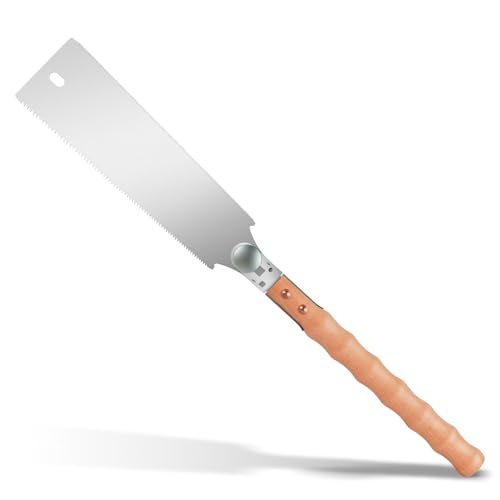
welltoy 10-Inch Double-Edge Japanese Pull Saw

welltoy 2PC 6-Inch Japanese Pull Saws

MAIHUITE 10mm 13-Inch Vinyl Floor Cutter

MAIHUITE 10mm Pro Vinyl Floor Cutter with Extra Blade
MAIHUITE 8.5mm Pro Vinyl Floor Cutter with Extra Blade
What Each Pick Brings To The Table
Vessel hollowing is one of those lathe skills that looks calm in the hands of an experienced turner and chaotic in anyone else’s. The Easy Hollower #1 from Easy Wood Tools exists to give you a controlled entry cut, the kind that opens a clean throat into a hollow form before deeper work begins. Designed for the mid-size handle system, it accepts a replaceable carbide cutter, which means you can swap a dulled edge in seconds rather than resharpening mid-project. If you turn dried vessel blanks with narrow openings, this is the tool that does the work where a standard gouge simply won’t reach.
You get repeatable performance from the carbide geometry, and a single cutter can grind through hours of practice blanks before needing attention. Mid-size handles also tend to suit woodworkers with average hand sizes, which is a small comfort during a long hollowing session.
Key Advantages
- Carbide cutter (a brazed metal edge that stays sharp far longer than high-speed steel) opens narrow vessel mouths with control
- Mid-size handle balances reach and fatigue for most turners
- Replaceable insert cuts sharpening downtime, so you stay at the lathe instead of the grinder
- Plays well as the first stage in a three-step hollowing progression, followed by #2 and #3 shapes from the same maker
- Backed by Easy Wood Tools’ reputation among American lathe accessory builders
Trade Offs
- Only handles the first rough hollow; expect to add a second, more curved tool for the upper walls
- Carbide geometry leaves a less refined surface than a sharp scraper, so plan a light finish pass
- Stock may be patchy in some regions, and the cutter itself is a separate purchase for new users
At A Glance
Who It Suits Best
Intermediate to advanced turners already comfortable with spindle and bowl work, who want to step into hollow form vessels without grinding custom tooling.
Consider Something Else When
The welltoy 10-Inch Double-Edge Japanese Pull Saw is a better match for general workshop users focused on furniture and joinery rather than lathe work.
An oscillating multi-tool (a power tool that drives a blade back and forth in a tight arc, ideal for plunge cuts and trim work) earns its place in almost every remodeler’s bag, and the DEWALT DCS356B is one of the more capable cordless versions on the market. The brushless motor (a motor with no internal brushes, so it runs cooler and uses battery power more efficiently) is the headline feature, and it shows up in longer runtime per charge and less heat buildup during heavy plunge cuts. Three speed settings give you the control to slow down for soft pine or speed up for trim, and the included wood cutting blades mean you’re unboxing to first cut in a few minutes.
The LED work light is a small but useful touch when you’re cutting inside a cabinet or under a sink. Tool-only means you bring your own DEWALT 20V battery, which is the right move if you already own the platform and a pricey mistake if you don’t.
Positive Points
- Brushless motor design extends runtime compared to brushed equivalents, helping you finish a job on one charge
- Three-speed selector matches speed to material, from soft pine to dense oak trim
- Universal accessory adapter accepts the wide range of aftermarket oscillating blades most shops already own
- LED work light brightens the dark corners where oscillating tools usually work
- Slides into an existing DEWALT 20V battery family, so no second charging system is needed
Worth Noting
- Sold without battery or charger, which adds cost for first-time DEWALT buyers
- Oscillating action cuts slowly in thick stock, so it shines on detail and trim, not on ripping lumber
- Blade changes can be fiddly; owners commonly recommend keeping the included Allen key on a lanyard
Feature Rundown
Made For
Trim carpenters, remodelers, and homeowners already invested in the DEWALT 20V platform who need a reliable cut-and-detail tool.
Look Elsewhere When
The welltoy 10-Inch Double-Edge Japanese Pull Saw is the better pick for shop-based woodworkers who mostly cut on a bench and want quiet, blade-only precision.
Carbide lathe cutters do not last forever, even when they last a long time. The Ci1-SQ from Easy Wood Tools is the factory replacement insert for the full and pro size Easy Rougher tools, and it is shaped for the roughing cuts that remove the bulk of material before finer tools take over. Manufactured in the USA from a carbide grade tuned for the balance between sharpness and edge life, it includes the mounting screw so you are not scrounging the hardware bench at midnight.
The honest read is that this is a maintenance part, not a starter tool. If you already own the matching Easy Rougher and need a fresh edge, this insert restores factory performance without buying a whole new handle.
Points In Its Favor
- Square profile matches the geometry of full and pro size Easy Rougher handles, so no fitting guesswork
- Carbide grade chosen for the sharpness-versus-durability balance turners actually need at the roughing stage
- Mounting screw included, sparing a trip through the spare-parts drawer
- Authentic Easy Wood Tools part, which matters for warranty and fit on proprietary handles
- Quick to swap, so an interrupted turning session stays interrupted for only a minute or two
A Few Limitations
- Only fits full and pro size Easy Rougher tools, so smaller mid-size users need a different insert
- Square geometry is for bulk material removal; finish cuts still need a separate finishing tool
- Carbide, once dulled, is not user-resharpened, so plan on replacement rather than re-grinding
Right Fit For
Turners already using a full or pro size Easy Rougher who want a like-for-like replacement edge without buying a new tool.
Another Choice May Suit
The Easy Wood Tools Mid-Size Easy Hollower #1 is the better starting point for turners new to carbide who do not yet own a rougher handle at all.
Japanese pull saws (saws that cut on the pull stroke rather than the push, allowing thinner blades and finer control) changed the way a lot of Western woodworkers think about hand-cut joinery, and the welltoy 10-inch double-edge version packs two saws into one handle. One side runs a coarser gradient tooth count (TPI, or teeth per inch, is the number of cutting teeth in a one-inch span) suited to rip cuts along the grain. The other side steps up to a fine 18 TPI for cleaner crosscuts, where tear-out is the enemy. The blade is SK5 high-carbon steel, a tough, wear-resistant alloy often used in quality hand-tool blades, with a chrome and electrophoretic coating to slow rust.
You get a bamboo-handled grip that resists slipping, and the replaceable blade system means a dull or damaged edge swaps out without retiring the whole tool.
Useful Strengths
- Two saws in one tool: coarse side for ripping, fine side for crosscutting
- SK5 steel blade holds an edge well and resists bending during the pull stroke
- Chrome and electrophoretic surface treatment slows corrosion in damp shop environments
- Bamboo handle stays grippier than smooth hardwood when your hands sweat
- Replaceable blade extends the working life of the handle well past a single edge
Honest Caveats
- Pull-saw technique differs from Western push saws, and there is a real learning curve for first-timers
- 10-inch blade limits the depth of cut on thicker stock, so deep rip cuts may need a longer saw
- Thin blade flexes if forced sideways, which rewards patience and punishes heavy pressure
Feature Snapshot
Best Suited To
Fine woodworkers and hobbyists building furniture, cabinets, or joinery where clean cuts and finish quality matter more than speed.
Skip It When
The MAIHUITE 10mm Pro Vinyl Floor Cutter is the smarter pick for anyone laying floating vinyl floors rather than cutting solid wood.
Sometimes the best tool is the smallest one that fits the cut. The welltoy 2PC set pairs a 6-inch single-edge flush-cut saw with a 4-inch drywall saw, both with flexible SK5 steel blades. The flush-cut saw is the headliner: it lets you trim dowels, dowel pins, and protruding tenons flush with a surface without marring the wood around them. The 17 TPI tooth count is on the fine side, which keeps the cut clean even on hardwood trim. Anti-slip handles give you control in tight spots where a full-size saw would be awkward.
This pair is the kind of set that lives in a drawer for years and earns its place every time you need a small, accurate cut. You may find yourself reaching for the drywall saw more often than expected for small repair and remodeling jobs.
Notable Upsides
- Flush-cut saw trims dowels, tenons, and pegs without scarring the surrounding surface
- 17 TPI produces clean cuts on hardwood and MDF, reducing the need for a sanding pass afterward
- Flexible SK5 blade navigates curves and inside corners where a rigid saw would bind
- Two-tool set covers both woodworking and drywall work in one purchase
- Anti-slip handle keeps the saw planted in your hand during angled cuts
Small Caveats
- 6-inch blade is short for any kind of ripping or general carpentry, so it is a specialist, not a daily driver
- Drywall saw is a useful bonus but adds little if you do not tackle drywall patches
- Flexible blade will wander if forced through thick material, so heavy cuts call for a stiffer saw
Quick Facts
Who Will Love This
Model makers, trim carpenters, and detail-oriented DIYers who often need precise flush cuts in small or awkward spaces.
Reach For A Different Pick When
The welltoy 10-Inch Double-Edge Japanese Pull Saw is the smarter buy for general woodworking where longer rip and crosscuts dominate your work.
Vinyl plank flooring looks easy to install until you fire up a circular saw indoors and discover how much dust, noise, and smell one room can produce. The MAIHUITE 10mm floor cutter sidesteps all of that with a manual guillotine design (a long blade that shears down through the material, rather than spinning) that cuts cleanly through vinyl plank, LVT, LVP, SPC, PVC, WPC, and VCT up to 13 inches wide. There is no power cord, no spinning blade, and no dust to chase. For occupied homes and apartments where noise rules apply, the silence is the whole point.
The trade-off is that this tool cuts only vinyl-based materials. Push it through laminate or hardwood and you risk damaging the blade, so always confirm your flooring type before each cut.
What Pays Off
- Manual operation means zero dust, zero noise, and zero need for an outlet
- Clean cuts on vinyl plank, LVT, LVP, SPC, PVC, WPC, and VCT up to 10mm thick
- Ideal for indoor renovations where a circular saw would disturb neighbors or family
- Compact footprint stores on a closet shelf between projects
- 13-inch capacity covers the width of most plank flooring on the market
Factors To Consider
- Not for laminate, porcelain, or hardwood, so verify your flooring type before any cut
- Manual pressure tires the hand on large rooms with hundreds of cuts
- Replacement blades are sold separately, and a dull blade chips edges rather than slicing them
Perfect Match For
DIYers laying vinyl plank in a single room or small apartment who want a clean, quiet install without dragging power tools inside.
Swap It Out When
The MAIHUITE 10mm Pro Vinyl Floor Cutter with Extra Blade is the better match for anyone planning a full-house install who wants a spare blade on hand from day one.
The Pro version of the MAIHUITE floor cutter is built for volume. The aluminum alloy frame resists bending and warping even when you are pushing through hundreds of cuts in a week, and the design supports straight, lengthwise, and 0 to 45-degree angle cuts along with L-cuts and U-cuts for tricky corners and door frames. The included extra blade is the real story: rather than waiting for a replacement to ship when the edge dulls, you swap in a fresh one in under a minute and keep working. It is the difference between finishing a job on schedule and losing half a day to logistics.
You still need to stay within the vinyl family of materials, but for SPC, LVP, LVT, WPC, RVP, VCT, and PVC, the cutter handles the lot without complaint.
Useful Highlights
- Aluminum alloy frame stays rigid under repeated high-volume use, which suits contractor schedules
- Versatile cut types: straight, lengthwise, 0 to 45-degree angle, plus L and U shapes
- Spare blade ships in the box, so downtime for a dull edge is minutes, not days
- Built-in aluminum ruler keeps each plank stable and aligned during the cut
- Manual design keeps noise and dust out of occupied homes and finished spaces
Where It Is Less Suited
- Heavier than the standard MAIHUITE cutter, which adds effort to move between rooms on a big job
- Higher up-front cost, so casual single-room DIYers may not need the extra capacity
- Still not rated for laminate, hardwood, or porcelain tile, so material match is non-negotiable
Feature Overview
Built With In Mind
Flooring contractors and serious DIYers handling whole-home vinyl installs who need a heavy-duty cutter and a backup blade ready to go.
A Better Fit Elsewhere
The MAIHUITE 10mm 13-Inch Vinyl Floor Cutter is the lighter, lower-cost option for single-room weekend projects where spare blades can wait.
Most modern rigid-core vinyl plank flooring lands in the 4mm to 8mm range, and the 8.5mm capacity of this MAIHUITE model lines up with the bulk of what is actually on shelves right now. You get the same aluminum frame, the same range of straight, angle, L, and U cuts, and the same spare-blade convenience as the 10mm Pro, but with a thinner-stock sweet spot that suits the era’s most common flooring thicknesses. If you are laying newer product rather than older thick-stock luxury vinyl, this is the version that aligns with what you will actually cut most days.
The thinner capacity also means the cutter requires slightly less hand pressure per stroke, which adds up over a long day on a job site.
Where It Helps
- 8.5mm capacity matches the dominant thickness range of modern rigid-core vinyl plank
- Aluminum frame and the same heavy-duty build as the 10mm Pro model
- Spare blade included, so a dull edge does not stall the job
- Same multi-shape cutting capability, including 0 to 45-degree angles, L, and U cuts
- Manual, dust-free, and quiet for indoor installs in occupied spaces
Less-Strong Areas
- Will not cut the older 10mm-plus boards some homeowners keep in older stock
- Still not rated for laminate, hardwood, or porcelain tile
- Premium price for what is, in practice, a thickness-specific Pro tool
Whose Shelf It Belongs On
Professional flooring installers and homeowners installing modern rigid-core vinyl plank where the 8.5mm ceiling covers nearly every board on the market.
Not Your Match When
The MAIHUITE 10mm Pro Vinyl Floor Cutter is the right tool for anyone working with thicker luxury vinyl stock above 8.5mm.
Picking The Right Cutting Tool For Your Workshop
Match The Tool To The Material First
Wood, vinyl, and composite flooring each punish the wrong blade in their own way. Carbide-tipped lathe tools and Japanese pull saws excel at shaping solid wood, while manual guillotine cutters are built for the flexible, dense cores of vinyl plank. Choosing by material first prevents the common frustration of buying a tool that is technically capable but wrong for the job at hand. Skill level comes second: a beginner on a lathe needs a different starter than an experienced turner.
Consider Cutting Action And Control
Push saws, pull saws, oscillating multi-tools, and guillotine cutters all behave differently. Pull saws reward light pressure and give cleaner cuts on hardwood. Oscillating tools excel at plunge cuts and trim detail but crawl through thick material. Manual floor cutters trade physical effort for silence and zero dust. Matching the cutting action to the kind of cuts you make most often saves time and improves results.
Think About Volume And Workspace
A one-room weekend install and a whole-house contractor job sit at opposite ends of the volume scale. For a single room, a basic manual cutter is plenty. For volume work, the heavier Pro model with a spare blade and multi-shape capability pays back its higher cost in saved downtime. Noise and dust rules in apartments or occupied homes also push the decision toward manual options that keep the workspace calm.
Don’t Skip Maintenance And Replacement Parts
Carbide cutters eventually dull and need swapping rather than resharpening, saw blades rust if stored damp, and floor-cutter blades chip when pushed past their rated material. Choosing a tool with available replacement parts and a clear care routine keeps the tool useful for years rather than months.
Common Buying Mistakes And Smart Upgrades
Pitfalls Shoppers Hit
The most common mistake is matching a tool to the wrong material, and it shows up most often with floor cutters pushed into laminate or hardwood. Another trap is buying a tool-only cordless multi-tool without owning the battery platform, which doubles the real cost. Skipping a spare blade on a high-volume cutter is also a common regret once the primary edge dulls mid-project. A quick material check and an honest read of your own tool kit prevent all three.
What The Higher Tier Buys
Stepping up from a basic floor cutter to a Pro model with a heavier frame, multi-shape capability, and a spare blade is not just about longevity, it buys you uptime and cut versatility on the same tool. The same logic applies to cordless multi-tools: a brushless motor and multi-speed control pay back in cleaner cuts and longer runtime per charge. For most shoppers, the upgrade is worth it once the tool sees more than occasional use, when downtime starts costing more than the price difference.