


A stripped bolt on a Sunday afternoon teaches a quick lesson. You thought the fastener was tight enough, and now the threads are rounded, the afternoon is gone, and a parts run is on the schedule. The right torque wrench keeps that story from repeating. The picks below span digital readouts for precision work, heavy-duty click models for trucks and trailers, and slim quarter-inch wrenches for bikes and small engine work, so the right tool lines up with the job at hand.
The Essentials At A Glance
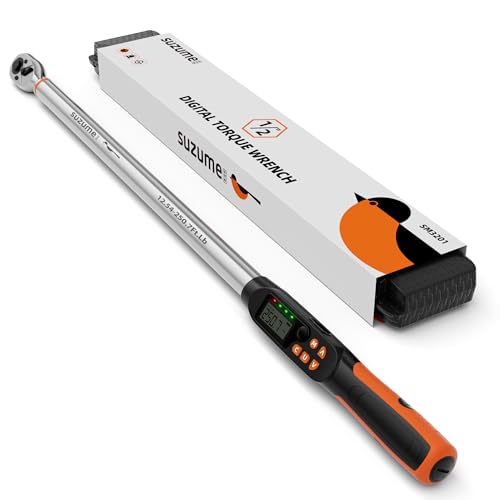
SUZUME Digital Torque Wrench 1/2 Drive (12.5-250.7 Ft. Lb)

SK Hand Tool Micrometer Torque Wrench Set 1/2″ & 3/8″

SUZUME Torque Wrench Set 1/2 3/8 1/4 Drive

SUZUME 3/4 Torque Wrench Drive Loud Click (100-650 Ft.Lb)

SUZUME 1 Inch Torque Wrench Loud Click (200-1200 Ft.Lb)
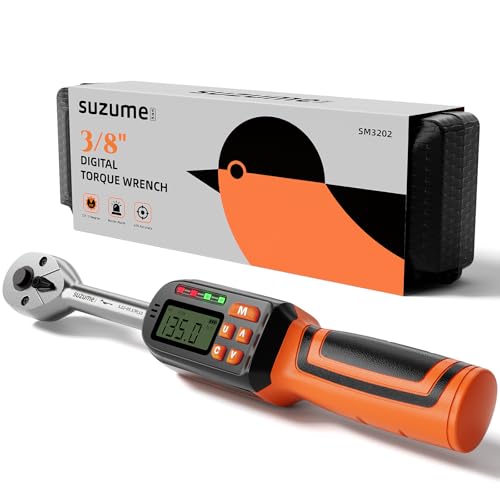
SUZUME Digital Torque Wrench 3/8 Drive (5.02-99.57 Ft. Lb)

SUZUME Torque Wrench 1/2 Drive (10-170 Ft. Lb) Loud Click

SUZUME 3/8 Inch Drive Torque Wrench (5-45 Ft.Lb)

SUZUME Inch Pound Torque Wrench 1/4 Drive 20-220 In.Lb
Inside Each Recommended Option
When you want a torque value confirmed by more than feel, a digital readout takes the guesswork out. The SUZUME 1/2 drive digital wrench covers 12.5 to 250.7 ft-lb, which lands right in the middle of where most car and light truck fasteners live. The display replaces a needle scale, so there is no squinting at laser-etched marks under a hood lamp.
Mechanics working in tight engine bays tend to appreciate the live reading, since you can see the number climb as you pull. Compared to the SK set covered next, this one swaps a traditional click mechanism for an electronic sensor, which can appeal to data-driven users but also introduces a battery dependency that pure mechanical wrenches avoid.
The Good Stuff
- Digital display removes reading errors on a swing scale.
- 12.5 to 250.7 ft-lb covers most automotive wheel and engine fasteners.
- Audible and visual cues confirm when the target torque is reached.
- 1/2 inch drive matches the most common socket sets in home garages.
Points To Keep In Mind
- Battery life governs how reliably the display works between charges.
- Dropping the unit can crack the screen or shift the internal sensor calibration.
Key Specs
Best Suited To
Tech-comfortable home mechanics and small-shop techs who want a clear digital reading on each fastener.
Skip It When
You need broader coverage, because the SK Hand Tool Micrometer Torque Wrench Set pairs a 1/2 inch and a 3/8 inch wrench in one bundle for shops handling mixed jobs.
Two wrenches in one bundle solve a problem most people do not think about until they are mid-job. The SK set pairs a 1/2 inch model covering 30 to 250 ft-lb with a 3/8 inch model covering 10 to 100 ft-lb, so heavier suspension and wheel work stays separate from the smaller fasteners on an engine or transmission. Both feature a dual SAE and metric scale.
For transportation and heavy-duty auto techs, the audible and tactile click (a clear physical feedback when the preset torque is hit) provides confidence that the digital-only approach cannot always match. Compared to the SUZUME 1/2 Drive digital wrench covered earlier, this set trades electronic readouts for mechanical reliability, which is appealing for daily shop use.
Well-Handled Touches
- Two wrenches cover a much wider torque window than a single tool.
- Increments of 0.5 to 1 ft-lb let you dial in tighter specifications.
- Dual SAE and metric scales reduce unit conversion mistakes on the bench.
- Mechanical click needs no batteries, so it always works in the bay.
Trade Offs
- Storing and transporting two large wrenches takes more drawer space.
- Calibration drift can creep in if wrenches are never reset to zero between jobs.
Feature Snapshot
Right Fit For
Working technicians and serious auto enthusiasts who need two dedicated wrenches rather than one versatile tool.
A Better Fit Elsewhere
You mostly tighten smaller fasteners in the 5 to 50 ft-lb range, because the SUZUME 3/8 Inch Drive Torque Wrench covers 5 to 45 ft-lb in a single compact body.
Three drive sizes in one case solves the “wrong wrench” problem for the DIY crowd. The SUZUME set ships with 1/2 inch, 3/8 inch, and 1/4 inch click wrenches, which means a single purchase covers everything from wheel lugs down to bicycle and electronics fasteners. The chrome-plated CR-V (chromium-vanadium) steel construction is built to shrug off shop wear.
Compared to the SK two-wrench set covered earlier, this SUZUME option trades a slightly higher accuracy window (around ±3%) for the convenience of having a 1/4 inch drive ready for low-torque work. The aluminum-alloy handles keep the smaller wrenches light, which matters during long sessions overhead.
Real Benefits
- Three drive sizes cover cars, motorcycles, bikes, and home repairs.
- Chrome-plated CR-V steel resists corrosion in a humid garage.
- Lightweight aluminum handles reduce fatigue on overhead jobs.
- Storage case keeps the wrenches and adapters organized between uses.
Where It May Fall Short
- Three wrenches take up more storage space than a single-purpose tool.
- Each wrench should be reset to zero before storage to preserve spring life.
Built With In Mind
DIYers and weekend mechanics who want one organized kit to handle a wide mix of household and automotive repairs.
Reach For A Different Pick When
You really only work on trucks and industrial bolts, because the SUZUME 3/4 Torque Wrench Drive covers 100 to 650 ft-lb for the heaviest tasks.
Truck lug nuts and heavy equipment do not care about a polite click. The SUZUME 3/4 inch drive wrench ranges from 100 to 650 ft-lb and is engineered to produce a louder, clearer click when the preset value is reached, which matters when you are working in a noisy shop or with thick gloves. The wider 3/4 inch drive matches the impact sockets used on commercial trucks.
Compared to the SUZUME 1/2 Drive Loud Click wrench covered next on the list, this 3/4 inch model trades compact size for sheer torque capacity, making it the better pick for fleet work and trailer axles. Owners commonly report that the loud click cuts through background shop noise where quieter wrenches get missed.
Why It Works Well
- 100 to 650 ft-lb range handles truck, trailer, and heavy equipment fasteners.
- Loud click stands out in busy shop environments with impact guns running.
- 3/4 inch drive accepts heavy-duty impact sockets.
- Dual ft-lb and N.m scale covers both imperial and metric specs.
Practical Considerations
- Larger size makes it awkward for engine bay fasteners on a car.
- Best results come from using the middle 20% to 85% of the rated range.
Whose Shelf It Belongs On
Diesel mechanics, fleet techs, and rural property owners who service trucks, trailers, and tractor fasteners.
Another Choice May Suit
You work on lighter vehicles most weekends, because the SUZUME Torque Wrench 1/2 Drive (10-170 Ft. Lb) Loud Click is friendlier for car and motorcycle jobs.
When 650 ft-lb is not enough, the SUZUME 1 inch drive torque wrench steps up. Ranging from 200 to 1200 ft-lb, this is the workhorse for structural bolts, mining equipment, and the kind of fasteners where a wrong number is not a mistake you walk back. The 1 inch drive fits the largest impact sockets in commercial use.
Compared to the 3/4 inch model covered just before, this 1 inch wrench is purpose-built for the heaviest end of the spectrum. For most home users, it is overkill, but for industrial crews, it fills a real gap that a smaller wrench simply cannot. The loud click feedback remains consistent through the long handle.
Noteworthy Benefits
- 200 to 1200 ft-lb capacity handles the heaviest structural and equipment fasteners.
- 1 inch drive accepts the largest commercial impact sockets.
- Audible click remains clear even at the top end of the range.
Less Ideal Details
- Length and weight make it impractical for car or motorcycle use.
- Spring tension increases at the high end, so resetting to zero after each use matters more than ever.
Made For
Industrial mechanics, structural crews, and operators working on heavy equipment that lives above 650 ft-lb.
Swap It Out When
You need coverage below 200 ft-lb, because the SUZUME 3/4 Torque Wrench Drive Loud Click (100-650 Ft.Lb) reaches much lower into the heavy-duty range.
A digital wrench in the 3/8 inch drive size fills the gap between micrometer click wrenches and the larger 1/2 inch models. The SUZUME 3/8 drive digital wrench covers 5.02 to 99.57 ft-lb, which fits motorcycle engines, lawn equipment, and most accessory drive fasteners. The compact head reaches into tight engine bays where a 1/2 inch wrench feels clumsy.
Compared to the SUZUME 3/8 Inch Drive Torque Wrench (Loud Click) covered later, this digital model replaces the audible click with a numerical readout for users who prefer data over feel. Riders working on bikes tend to value the lower end of the range, since many motorcycle torque specs sit between 5 and 50 ft-lb.
Strong Points
- Lower torque floor of 5.02 ft-lb covers small fasteners without skipping values.
- 3/8 inch drive slips into spots a 1/2 inch wrench cannot reach.
- Digital readout gives an exact target number for spec-driven work.
Things To Weigh
- Battery and screen are vulnerable if the wrench is dropped on concrete.
- Not suited for heavier suspension or wheel lug work that exceeds 100 ft-lb.
Perfect Match For
Motorcycle owners, small-engine mechanics, and home users who want precise torque data on smaller fasteners.
Where A Sibling Pick Shines
You prefer a mechanical click to a digital display, because the SUZUME 3/8 Inch Drive Torque Wrench Loud Click delivers the same 5 to 45 ft-lb range with a traditional click.
Most car owners will never need more than the 10 to 170 ft-lb range. The SUZUME 1/2 inch drive click wrench covers exactly that window, from spark plug torque to wheel lug specs on a passenger car. The loud click was designed to be heard over background shop noise, which helps in a busy garage.
Versatility is the headline here: cars, light trucks, boats, motorcycles, and basic home repairs all fall inside the 10 to 170 ft-lb window. Compared to the SUZUME 3/4 Drive covered earlier, this model trades ceiling torque for everyday friendliness, which is exactly the trade most home users want.
Strengths Worth Knowing
- 10 to 170 ft-lb range covers the vast majority of car and light truck fasteners.
- Loud click helps signal the target torque clearly during use.
- 1/2 inch drive matches the most common socket sets in home shops.
- Compact enough to live in a drawer between weekend projects.
Honest Caveats
- Not the right tool for truck or trailer lugs that need higher torque.
- Mechanical calibration can drift over years of regular use, so periodic checks are wise.
Who Should Grab It
Car owners and weekend home mechanics who want one wrench that handles virtually every fastener on a passenger vehicle.
Not Your Match When
You mostly work on heavy trucks, because the SUZUME 3/4 Torque Wrench Drive Loud Click (100-650 Ft.Lb) reaches the higher torque those fasteners need.
Small fasteners deserve a small wrench. The SUZUME 3/8 inch drive click wrench covers 5 to 45 ft-lb, the sweet spot for bicycles, lawn mowers, and small engine work. The laser-engraved dual scale stays readable even in bright daylight, which is a real plus when you are working outside.
Compared to the SUZUME Inch Pound Torque Wrench covered last, this 3/8 inch model uses ft-lb instead of in-lb, which suits users who think in foot-pounds for engine and bike work. For most home users, 5 to 45 ft-lb covers the small-engine side of the shop without forcing a tiny scale.
Practical Advantages
- 5 to 45 ft-lb range is purpose-built for small engines and bicycle work.
- 3/8 inch drive fits compact sockets that reach awkward fasteners.
- Laser-engraved scale stays readable after years of garage use.
- Light enough to toss in a bike bag or trail tool kit.
Points To Note
- Not suitable for car wheel lugs or any fastener above 45 ft-lb.
- The lower end of the scale can feel touchy, so a steady hand helps with precision.
Who Will Love This
Cyclists, small-engine repair hobbyists, and homeowners maintaining mowers, tillers, and outdoor power equipment.
Look Elsewhere When
Your work lives below 45 ft-lb and you think in inch-pounds, because the SUZUME Inch Pound Torque Wrench 1/4 Drive covers 20 to 220 in-lb for bike and instrument work.
Low-torque work has its own language. The SUZUME 1/4 inch drive torque wrench measures 20 to 220 in-lb, the units most bicycle, scope, and instrument manufacturers use in their specifications. A 1/4 inch drive accepts the small bit sockets typically used on bikes and electronics.
Compared to the 3/8 inch ft-lb model covered just before, this 1/4 inch wrench speaks the units low-torque work demands, so there is no converting 88 in-lb into 7.33 ft-lb in your head. For dedicated bike mechanics or instrument builders, the precision of the inch-pound scale is the real point.
Good Reasons To Consider
- 20 to 220 in-lb range matches the specs most bike and instrument manufacturers publish.
- 1/4 inch drive accepts small bit sockets for delicate work.
- Laser-engraved scale holds readability over years of use.
- Lightweight build keeps hand fatigue low during long tune-ups.
A Few Limitations
- Not suited for any fastener above 220 in-lb (around 18.3 ft-lb).
- Thin drive head can flex if the user over-applies force, so a gentle grip matters.
Who It Suits Best
Bicycle mechanics, guitar and instrument builders, and hobbyists who work on low-torque fasteners all day.
Consider Something Else When
You want one tool for both bikes and small engines, because the SUZUME 3/8 Inch Drive Torque Wrench (5-45 Ft.Lb) covers small engines in foot-pound units.
What To Weigh Before Choosing Torque Wrench Sets
Drive Size and Task Match
The drive size (the square tang on the wrench that accepts sockets) shapes which fasteners a wrench can reach. A 1/2 inch drive is the daily driver for cars and light trucks, while 3/8 inch handles smaller engine and accessory work, and 1/4 inch reaches into bicycle and instrument territory. For heavy trucks and trailers, 3/4 inch and 1 inch drives step up to handle lugs and structural bolts. Picking a wrench whose drive size matches the sockets you already own saves money and bench clutter.
Torque Range and Where the Specs Actually Live
A wider range sounds better, but the meaningful spec is whether the range covers the fasteners you actually service. Most passenger car wheel lugs sit between 80 and 120 ft-lb, motorcycle engine fasteners live between 5 and 50 ft-lb, and bicycle components rarely exceed 220 in-lb. Buying a wrench that overlaps the highest and lowest spec you encounter keeps each job inside the tool’s accurate range.
Mechanical Click vs Digital Readout
Mechanical click wrenches use a spring and lever that snap when the preset torque is hit, which is durable and battery-free. Digital wrenches replace the click with a live numerical display, which can appeal to spec-driven users but introduces a battery and screen to maintain. For noisy shops, a loud mechanical click is hard to beat, while quiet garages benefit from a digital readout that confirms the exact number.
Calibration, Storage, and Long-Term Care
Any torque wrench drifts over time, especially after drops or heavy shop use. Resetting to zero between sessions and storing in a case extends spring life. Mechanical wrenches should be sent for recalibration every few thousand cycles or after any hard impact, while digital wrenches benefit from battery checks before each project. Treat the wrench as a precision tool, not a breaker bar, and it will hold accuracy longer.
Key Considerations Across These Picks
Pitfalls Shoppers Hit
A common mistake is buying a wrench whose range is too wide for the work at hand, which means most torquing happens at the very bottom of the scale where accuracy is weakest. Another is treating a torque wrench like a ratchet, using it to break loose fasteners, which can damage the internal spring. A third slip is skipping the zero-reset step, which leaves the mechanism under tension during storage and shortens its service life.
Where The Extra Money Goes
Higher-tier torque wrenches in this category typically cost more because of tighter accuracy tolerances, longer calibration cycles, and stronger internal springs. Premium digital models add live readouts, peak-hold modes, and data output, while top mechanical models use thicker chrome-vanadium steel and more precise ratcheting heads. For occasional home use, mid-tier accuracy is plenty, but daily shop users benefit from the longer life and lower drift a higher tier delivers.
Frequently Asked Questions
What torque wrench size do most home mechanics need?
A 1/2 inch drive wrench in the 10 to 170 ft-lb range covers nearly every fastener on a passenger car and most light truck work, which is why it is the most common pick for home garages.
How often should a torque wrench be recalibrated?
Most manufacturers suggest a calibration check every 5,000 cycles or once a year for regular users, and immediately after any drop or impact that could have shifted the internal mechanism.
Can a torque wrench be used to loosen bolts?
Using a torque wrench to loosen a stuck fastener is not recommended, since the high breakaway force can damage the spring or ratcheting mechanism. A breaker bar or impact wrench is the safer tool for loosening.
What is the difference between ft-lb and in-lb?
One ft-lb equals 12 in-lb, and the units refer to the same physical torque value at different scales. Foot-pounds suit automotive work, while inch-pounds match bicycle and instrument specifications.
Why does a torque wrench need to be reset to zero?
Storing the wrench with the spring compressed leaves it under constant tension, which causes the metal to fatigue and drift out of calibration. Resetting to zero between uses keeps the spring relaxed and extends the tool’s life.




