


Crisp edges on baseboards and door frames don’t happen by accident. The right trim brush makes a wall and ceiling line look painted by someone who actually knows what they’re doing, even when your hand is far from steady. Most weekend painters reach for whatever’s lying around, then spend extra time taping, cutting, and cursing the bleed. This roundup focuses on angled and short-handle brushes built for trim work, cutting in edges, and tight corners where a standard wall brush turns clumsy. You get clean release, predictable control, and bristles that don’t shed into your finish halfway through the second coat.
An Overview Of The Picks

Wooster Brush Q3211-2 Shortcut Angle Sash Paintbrush, 2-Inch (Pack of 6)

Wooster Brush Q3211-2 Shortcut Angle Sash Paintbrush, 2-Inch White (Pack of 12)
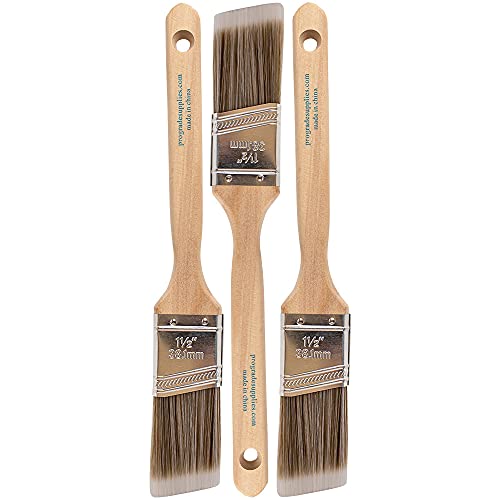
Pro Grade Angled Paint Brushes, 1.5 Inch Paint Brush Set for Trim, 3 Pc
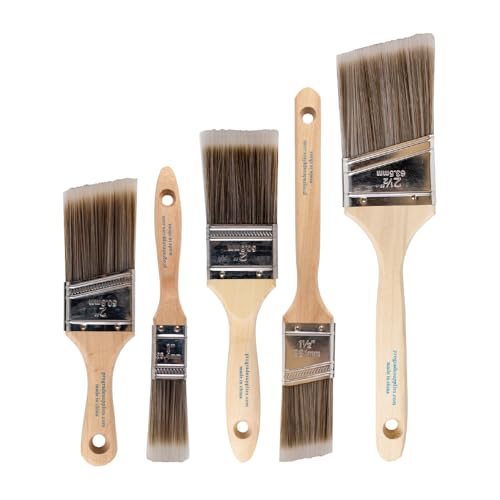
Pro Grade Paint Brushes, Paint Brush Set for Walls, Trim & Stain, 5-Piece

King Origin Paint Brush Set 30 Pack (0.5″, 1″, 1.5″, 2″, 2.5″)
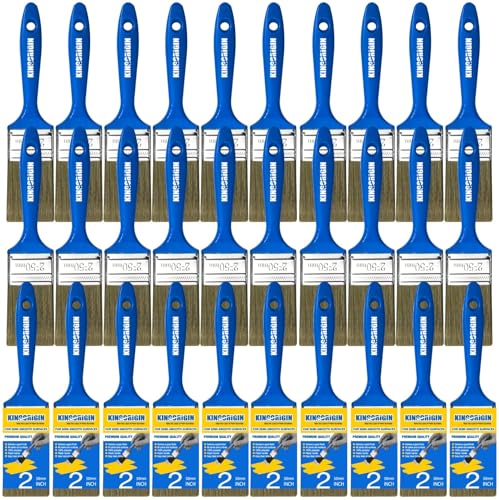
King Origin Versatile Paint Brush Set, 30 Pack, 2 Inch

King Origin Versatile Paint Brush Set 40 PCS 1 Inch

King Origin 10 PCS 2 Inch Paint Brushes, Versatile Paint Brush Set

Pro Grade Paint Brushes, Flat & Angled Paint Brush Set, Walls & Trim, 2 Pc
Why These Options Stand Out
The Wooster Shortcut has earned its reputation in contractor circles, and for good reason. Its 2-inch angled head pairs with a stubby handle that sits naturally in the palm, so reaching behind a toilet or under a window apron stops feeling like a balancing act. The synthetic blend works with latex and water-based stains, which covers nearly every can in a typical DIY garage.
Compared to the longer-handled sash brushes that dominate hardware store shelves, this design trades reach for control. For a single accent wall, that tradeoff makes sense. For ceilings and tall walls, you’ll want to pair it with a roller or extendable tool.
Bright Spots
- Stubby handle improves leverage in corners where longer brushes bind
- Synthetic filament holds and releases evenly with latex and acrylic paints
- Angled bristles lay a clean line along ceiling and baseboard edges
- Pack of 6 gives spares for messy cleanup days
- Reusable across multiple rooms with a proper rinse
Worth Noting
- Short handle reaches less far than full-length sash brushes, so ladders become useful sooner
- Owners commonly report the dense bristles need a thorough break-in before the first stroke feels smooth
Right Fit For
Anyone cutting in edges around door frames, window trim, and baseboards who values fingertip control over reach.
A Better Fit Elsewhere
The Pro Grade 1.5-Inch Angled Set suits tight corners where a slightly narrower head navigates more cleanly.
This is the same Wooster Shortcut design as pick one, just bundled twelve to a pack. For a whole-house repaint, that math finally works. You toss the brush the moment bristles start to bend instead of stopping mid-wall to clean, and that single shift in workflow saves hours.
The white handle version is a small aesthetic touch, but it also helps when brushes go missing on a busy job site. Grab the right tool without hunting for a stray purple handle under the drop cloth.
The Case For It
- Twelve brushes cover multiple rooms without mid-project cleanup breaks
- Same Wooster filament formula holds up across latex and water-based stains
- Short handle cuts wrist fatigue on long trim sessions
- Lower per-brush cost than buying singles over time
Trade Offs
- Buying twelve at once overbuys for a single-room touch-up
- Bristles may arrive with sizing residue that requires a wash before first use
Key Specs
Whose Shelf It Belongs On
Property managers, rental turnovers, and homeowners tackling every room at once.
Swap It Out When
The King Origin 30-pack (pick 5) fits better for someone who wants varied widths in one bundle.
The narrower 1.5-inch head on this Pro Grade set is the trim brush most people forget they need. Where a 2-inch brush feels clumsy against a window mullion or a cabinet door edge, this one slips in and lays paint right up to the corner. The thinner tip pulls cleaner lines along crown molding without dragging extra paint where it doesn’t belong.
It also works wonders for small touch-up jobs. A scuff on a wall corner, a chip near a switch plate, and a worn spot on a door frame all get fixed in a single stroke. The wooden handle feels more substantial than budget foam grips, which matters once your hand is on the third hour of trim work.
A Few Strong Suits
- 1.5-inch width handles detail spots a wider brush overshoots
- Thin tapered tip improves line accuracy along edges
- Comfortable wooden grip reduces cramping on long sessions
- Three-pack covers common project rotation
Points To Note
- Narrower width means more trips back to the tray on longer runs
- Wood handles need to dry fully between uses to prevent swelling
Built With In Mind
Detail-oriented painters focused on window trim, cabinet edges, and narrow moldings where precision matters more than coverage speed.
Another Choice May Suit
The Pro Grade 5-Piece Set (pick 4) fits larger projects where one size alone won’t carry the whole room.
One brush rarely handles a real room. Walls, trim, and cabinets each want a different width, and hunting for the right tool mid-cut kills your rhythm. This Pro Grade kit covers 1-inch flat, 1.5-inch angle, 2-inch flat, 2-inch angle stubby, and 2.5-inch angle in a single bundle.
The stubby 2-inch angled version is the trim standout, while the wider flat brushes tackle walls and doors without leaving lap marks. For most homeowners, this kit replaces a drawer full of mismatched brushes picked up over the years.
Good Reasons To Consider
- Five sizes cover walls, trim, cabinets, and furniture in one buy
- Stubby angled brush handles tight spots where longer handles won’t fit
- Cost per brush runs lower than buying individually
- Synthetic bristles clean easily with soap and water after latex use
Some Limits To Know
- More brushes than needed for a quick patch job
- Wooden ferrules may loosen if brushes are stored bristles-down in solvent
Feature Snapshot
Best Suited To
First-time homeowners building a starter kit and DIYers running a single project across multiple surfaces.
Skip It When
The Pro Grade 2-Piece Flat & Angled set (pick 9) works better for someone already owning one or two brushes and just filling a gap.
Bulk brush packs are a love letter to anyone who treats brushes as disposable rather than precious. Thirty brushes across five widths means one bad stroke, one wrong color, one dropped brush, and you keep moving. The mix of 0.5-inch through 2.5-inch covers everything from window lattice to wide trim boards.
The synthetic filament handles oil, latex, acrylic, stain, varnish, and gesso without complaint. That range matters in craft and DIY spaces where one project bleeds into the next, and you don’t want to keep switching brush types mid-week.
Features That Help
- Five widths cover small detail work and wider trim in a single buy
- Synthetic filament suits water- and oil-based coatings
- Large pack size replaces tossed brushes without stress
- Compatible with varnish and gesso for craft crossover
Honest Caveats
- Higher upfront cost than a single brush, even at per-unit savings
- Bulk packaging means no protective casing for storage between projects
Quick Facts
Right Fit For
Classroom art teachers, craft rooms, rental property owners, and anyone running a long stretch of mixed projects.
Consider Something Else When
Pick 6 (the matching 2-inch King Origin pack) fits when only the 2-inch width is needed in bulk.
When you know the 2-inch width is your workhorse, buying thirty of them in one pack makes sense. Furniture refinishing, cabinet doors, and consistent trim boards all benefit from a single brush size you can grab without thinking.
The lightweight handle helps during long sessions, especially when painting assembled furniture that can’t be flipped or moved easily. Synthetic filament cleans fast and holds its shape, so the brushes return to work day after day rather than ending up in the trash after one project.
What Stands Out
- Thirty matching 2-inch brushes remove guesswork mid-project
- Lightweight handle reduces hand fatigue over long sessions
- Synthetic bristle cleans easily with soap and water
- Works across latex, oil, stain, and varnish
Where It Is Less Suited
- Single width limits detail and tight-corner flexibility
- Bulk count is wasted on small one-room projects
Who Should Grab It
Furniture refinishers, craft sellers producing batch pieces, and small workshops turning out consistent products.
Where A Sibling Pick Shines
Pick 5 (the multi-width King Origin 30-pack) is a smarter match for varied projects where 2-inch alone isn’t enough.
The 1-inch head lives in that sweet spot between detail brush and trim brush. It cuts in around outlet covers, frames small wall art, lays color onto a chair leg, and touches up spots a 2-inch brush would smother. Forty of them in a pack is overkill for any single project, but perfect for an active craft room or classroom.
Categorized under arts and crafts rather than home improvement, this set leans toward creative use. That makes sense given the small head and disposable-friendly quantity. For trim work specifically, you’ll want a wider brush as your primary.
Reasons It Performs
- Forty brushes support classroom or group craft sessions
- 1-inch width handles medium-detail work cleanly
- Upgraded filament holds more paint per dip than basic foam brushes
- Reusable across multiple sessions with proper rinse
Things To Weigh
- Too narrow for whole-wall or wide-board trim work
- Bulk pack demands real storage space in a small home
Feature Rundown
Best Suited To
Art teachers, kids’ craft nights, hobby painters, and anyone doing small-batch decorative projects.
Look Elsewhere When
The Wooster Shortcut (pick 1) is the right call for a serious trim-cutting project where control matters most.
Ten 2-inch brushes hits a useful middle ground between buying a single brush and committing to thirty. A one-room repaint, a weekend furniture flip, or a hallway trim refresh all fit comfortably in this count. The upgraded filament releases paint evenly, which matters when brushstrokes are visible on a finished surface.
Storage is easier than with the 30-packs, and the cost stays reasonable for occasional users. The trade-off is fewer spare brushes if a project gets messy or runs longer than planned.
Useful Highlights
- Ten brushes cover a typical room’s trim work
- 2-inch width matches the most common trim board size
- Filament cleans up quickly with soap and water
- Suitable for latex, oil, and stain coatings
Small Caveats
- Single width limits use across different surface sizes
- Smaller pack leaves little margin for repeated misuse on the same day
Who It Suits Best
Occasional DIYers handling one room at a time who don’t want bulk-pack waste.
Not Your Match When
Pick 9 (the Pro Grade 2-Piece Flat & Angled) covers broader ground if your project mixes wall and trim work.
Two brushes that pair well together: a 3-inch flat for broad coverage and a 2.5-inch angle for cutting in. That pairing handles most wall-and-trim combinations without a third tool. The flat brush rolls paint onto a wall section, the angled brush cleans up the edges where the wall meets ceiling, baseboard, or door frame.
For a single accent wall or a small bedroom refresh, this is a thoughtful starting point without buying more than you need. Where it falls short is high-volume work, where two brushes get worn out fast and you’d rather have spares on hand.
Real-World Strengths
- Flat and angled pairing covers both wall and trim stages
- 3-inch flat speeds up coverage on broad wall sections
- 2.5-inch angle works for cut-in lines on most room edges
- Washable and reusable for multiple projects
Points To Keep In Mind
- Only two brushes in the set, with no spares for long sessions
- Both brushes share one width style per category, limiting detail flexibility
Spec Overview
Perfect Match For
Anyone repainting a single accent wall or small room with mixed wall and trim work.
Where Another Pick Suits Better
Pick 4 (Pro Grade 5-Piece) is the upgrade path once you start running more than one project at a time.
Choosing The Right Trim Brush For Your Project
The brush that paints a baseboard cleanly is rarely the brush that paints a wall fast. A trim brush earns its place by holding enough paint to lay a long stroke without dripping, then releasing it evenly along an edge. A ferrule is the metal band that clamps the bristles to the handle, and a quality ferrule keeps the bristles aligned through repeated rinsing. Synthetic filament works with both water-based and oil-based formulas, which matters for stain projects on the same day as wall paint. Natural bristle still has its place with oil-based coatings, but most modern DIY work runs on synthetic for the easy cleanup.
The handle length changes how the brush feels. Short handles, like the Wooster Shortcut design, sit close to the bristles and give you fingertip leverage for tight spaces. Long handles extend reach but trade away some of that fine control. For most weekend trim jobs, a short-handled angle sash brush handles ceiling lines, baseboard edges, and door frames without much fuss.
Width matters more than people expect. A 2-inch angled brush is the trim workhorse for standard baseboards and door casings. A 1.5-inch angle slips into tighter window and cabinet profiles. A 3-inch flat lays fast coverage on the wall itself, where the angled brush becomes the cleanup tool along edges. Buying one of each gives a complete room kit, though many DIYers start with the 2-inch angle and add others as projects grow.
What To Weigh Before You Click Add To Cart
Pitfalls Shoppers Hit
A common stumble is treating a trim brush like a wall brush. Big flat brushes lay more paint faster, but they leave lap marks and uneven edges along trim. The other mistake is buying cheap foam brushes for trim work, which save money up front but leave streaks and tear apart in oil-based coatings. Skipping the cleaning step between sessions also shortens bristle life faster than any quality difference between brands.
Where The Extra Money Goes
Premium trim brushes earn their cost in three places: bristle retention, ferrule fit, and handle ergonomics. Bristles that don’t shed mid-stroke keep your finish clean and your touch-up time down. A tight ferrule stops bristles from spreading when loaded with paint. A comfortable handle reduces fatigue across a long trim session. The upgrade makes sense for anyone painting more than a single room, less so for a one-time patch.




