


Choosing the right adhesive turns a fragile repair into a long-lasting one. The challenge is sorting through chemistry you cannot see to find a product that matches your substrate, environment, and skill level. This roundup breaks down seven strong options across construction, fabrication, and shop repair so you spend less time guessing and more time bonding.
The Leading Options At A Glance

3M Scotch-Weld DP420 Off-White 50 mL Duo-Pak

3M Scotch-Weld DP460NS Off-White 50 mL Duo-Pak
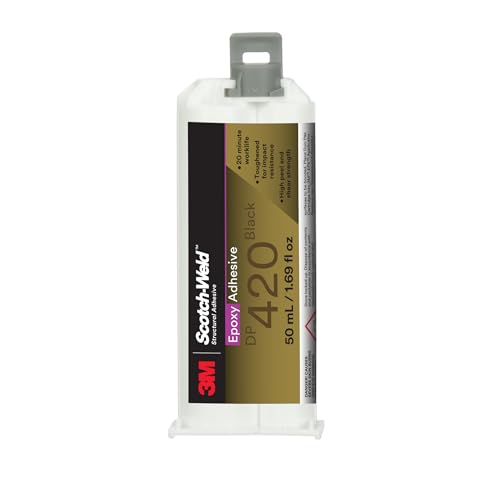
3M Scotch-Weld DP420 Black 50 mL Duo-Pak

3M Scotch-Weld DP100 Plus Clear 48.5 mL

3M Scotch-Weld DP190 Gray 48.5 mL Duo-Pak

3M Scotch-Weld 2216 Gray Tube Kit 3.33 fl oz

GREAT STUFF PRO Construction Adhesive for Wall & Floor 26.5oz
Taking A Closer Look At The Options
The DP420 in off-white is the kind of adhesive you reach for when a fastener feels like overkill and a plain glue feels underbuilt. It is a two-part epoxy (a resin and a hardener you mix in equal volumes) that cures into a tough, slightly flexible bond capable of absorbing vibration and impact. For most small shops, the 50 mL Duo-Pak fits a standard 1:1 dispensing gun, so cleanup stays manageable.
It handles metals, ceramics, wood, glass, many composites, and assorted plastics, which is a wider range than most general-purpose epoxies claim. Sporting goods repairs, metalworking fixtures, and light transportation panel bonding all fall inside its wheelhouse. High shear strength means the bond resists sliding forces once cured, so brackets, tabs, and structural patches tend to hold over the long haul.
Points In Its Favor
- Toughened formula absorbs vibration, which is helpful on sporting goods, vehicle panels, and machine housings.
- Broad substrate coverage lets you stock one cartridge for metals, ceramics, composites, and many plastics.
- Replaces mechanical fasteners in many jobs, reducing drilling, riveting, and weight.
- Standard Duo-Pak fits common 1:1 dispensing guns, keeping metering consistent.
Things To Consider
- Work life is short, so mix only what you can place in a few minutes.
- Off-white color shows on dark substrates, which is why the black version exists.
Key Specs
Who Will Love This
Shop hobbyists, fabricators, and small-batch builders who need a versatile structural epoxy across multiple substrates.
Reach For A Different Pick When
High heat or constant flex is in play, since 3M Scotch-Weld 2216 Gray Tube Kit handles thermal stress more comfortably.
Where the DP420 is the everyday shop epoxy, the DP460NS is the one you bring out when the job gets rough. It is a non-sag formulation, meaning the mixed paste stays put on vertical or overhead surfaces instead of dripping, which is a quiet but critical upgrade for overhead brackets or wall-mounted assemblies.
Bonding metals, ceramics, wood, glass, and select plastics, it leans toward construction, aircraft and automobile manufacturing, and appliance repair. A 2:1 mix ratio and roughly 60-minute work life give you more time to position parts before the cure locks in, though handling strength takes around four hours. That longer open time is a real plus on complex multi-piece assemblies.
Where It Helps
- Non-sag paste stays in place on vertical and overhead joints, reducing drips and rework.
- Handles high impact and stress, suiting transportation and structural assembly work.
- Wide material range covers metals, ceramics, wood, glass, and some plastics.
Worth Noting
- Cure is slower than fast-set epoxies, so clamping or fixturing time stretches.
- Requires a 2:1 dispensing gun rather than the simpler 1:1 tool used by the DP420.
Best Suited To
Fabricators and maintenance technicians working on aircraft, automotive, appliance, or building assemblies where vertical application and impact resistance matter.
Look Elsewhere When
You want a faster turnaround, because 3M Scotch-Weld DP100 Plus Clear sets quicker for shorter repair windows.
The black version of the DP420 is the same toughened structural chemistry as its off-white sibling, just with a darker pigment that disappears into black anodized parts, carbon fiber, and painted steel. Visible repairs on outdoor gear or motorcycle components look cleaner when the bond line blends in.
It is still rated for metals, ceramics, wood, glass, composites, and many plastics, with high shear strength and fatigue resistance. Sporting goods, metalworking fixtures, and general industrial assembly all fall inside the same use cases the off-white formula covers. The 50 mL Duo-Pak slips into the same 1:1 dispensing gun, so you can switch between the two colors without retooling.
The Value In It
- Black pigment blends into dark substrates for a cleaner finished appearance.
- Same toughened chemistry as the off-white DP420 for impact and fatigue resistance.
- Versatile substrate coverage, fitting metals, composites, ceramics, wood, and glass.
Points To Keep In Mind
- Work life is limited, so plan small batches to avoid waste.
- Black color is less forgiving on light or natural-finish materials.
Key Specs
Who Should Grab It
Technicians, custom fabricators, and restoration hobbyists who want a clean dark bond line on visible metal, carbon, or composite repairs.
Consider Something Else When
Substrates are light-toned or transparent, since 3M Scotch-Weld DP100 Plus Clear is designed for those applications.
The DP100 Plus is the clear, fast-setting cousin in the Scotch-Weld family. Its low-viscosity formula flows easily, which makes it a good fit for small joints, decorative inlays, and craft work where a transparent bond line matters. Once cured, it stays clear, so glass-to-glass and ceramic-to-ceramic repairs look cleaner than with pigmented epoxies.
It bonds metals, ceramics, glass, and many plastics while offering high shear and peel strength. The flexible cured film absorbs vibration and impact well, which is useful in assemblies that flex or receive light shocks. For hobbyists, model makers, and small electronics repairs, the 48.5 mL Duo-Pak delivers a controlled amount of adhesive that does not sit around curing in the tube.
Practical Pluses
- Stays optically clear after cure, ideal for glass, crystal, and decorative work.
- Low viscosity flows into tight joints and small gaps without pressure.
- Fast set time shortens fixturing, which helps in production-style workflows.
Small Caveats
- Thin consistency runs on vertical surfaces, so flat or horizontal joints are safer.
- Lower viscosity means thicker structural fills are not its strength.
- Not built for high-heat zones where 3M Scotch-Weld 2216 Gray Tube Kit excels.
Perfect Match For
Crafters, glass artists, and small-electronics repairers who want a transparent, vibration-tolerant bond on delicate substrates.
A Better Fit Elsewhere
You need heavy structural strength on metals, since 3M Scotch-Weld DP460NS Off-White 50 mL Duo-Pak handles industrial impact loads.
The DP190 gray is one of the more flexible two-part epoxies in the Scotch-Weld line, which makes it a comfortable middle-ground pick for assemblies that move a little after bonding. Peel strength and shear strength are both strong, a combination that handles stress coming from multiple directions rather than just along the joint.
Substrate range is broad: metals, ceramics, wood, fiberboard, glass, rubber, and many plastics. That reach is what makes the DP190 a workshop staple, since you can switch from a metal bracket to a rubber grommet without changing cartridges. The 48.5 mL Duo-Pak slots into standard 1:1 dispensing gear, so it is a familiar workflow for anyone already running Scotch-Weld products.
Standout Benefits
- Flexible cured film absorbs peel forces that rigid epoxies tend to crack under.
- Strong on rubber and fiberboard, materials that often challenge other epoxies.
- Gray color blends into common industrial surfaces for a discreet bond line.
Honest Caveats
- Not formulated for high-heat environments.
- Lower stiffness than structural epoxies like the DP420 family.
Key Specs
The Right Fit
General repair technicians, maintenance crews, and mixed-material fabricators who need one cartridge to cover a variety of substrates and stress types.
Swap It Out When
Heat and vibration dominate the environment, because 3M Scotch-Weld 2216 Gray Tube Kit is built for that combination.
The 2216 in tube form is the legacy heat-resistant workhorse in the Scotch-Weld family, and the chemistry shows it. This is a flexible, vibration-tolerant epoxy that also tolerates elevated temperatures, which is a rare combination. It adheres well to metals and stands up to vibration, shock, and flexing in service.
Cure behavior is interesting: at room temperature, full cure takes roughly seven days, which sounds long, but with heat curing you can reach full cure in about 30 minutes at 200 °F. The tube kit format (Part A and Part B) suits smaller repairs where you would rather mix by hand than load a dispensing gun. For appliance repair, exhaust brackets, and similar hot-zone fixes, the 3.33 fl oz size is manageable and shelf-friendly.
The Helpful Details
- Heat-resistant chemistry performs in elevated-temperature service environments.
- Flexible cured bond tolerates vibration, shock, and flexing.
- Tube kit format supports hand-mixing for low-volume or field repairs.
Where It May Fall Short
- Room-temperature cure time is several days, so heat curing may be required for production timelines.
- Hand-mixing is less precise than Duo-Pak dispensing, which can affect bond consistency.
Key Specs
Whose Shelf It Belongs On
Maintenance technicians, appliance repairers, and custom fabricators who routinely work on hot or vibration-heavy metal assemblies.
Not Your Match When
Fast room-temperature turnaround is essential, since 3M Scotch-Weld DP100 Plus Clear sets much quicker without a heat source.
This is the only polyurethane foam adhesive in the lineup, and it operates in a different world from the epoxies. It is a one-component, gun-applied foam adhesive designed for construction-scale jobs: subfloors, drywall, paneling, and foam panels. The 26.5 oz can lays down a continuous bead, and the pallet quantity (192 cans) is aimed squarely at contractors.
The formula grabs fast and bonds to dry, damp, and even frozen lumber, which is genuinely useful on exterior or unconditioned job sites. Off-white color disappears under most floor and wall coverings. Note that the can ships as hazardous materials and is non-returnable, so storage and handling planning matters more than with a shelf-stable epoxy cartridge.
A Few Strong Suits
- One-component foam applies from a standard foam gun with no mixing or pot-life pressure.
- Bonds to dry, damp, and frozen lumber, suiting cold-weather or exterior work.
- Coverage scales to large subfloor, drywall, and paneling projects.
Less-Strong Areas
- Subject to hazardous-materials shipping rules, which affects delivery and storage.
- Non-returnable pallet size suits contractors more than occasional users.
- Foam cure behavior differs from structural epoxies, so design loads must be checked.
Key Specs
Built With In Mind
Contractors, builders, and remodelers running subfloor, drywall, or paneling projects who need a high-volume polyurethane foam adhesive.
Skip It When
You need precise structural bonds on small parts, because 3M Scotch-Weld DP420 Off-White 50 mL Duo-Pak handles that work with much finer control.
What To Weigh Before Choosing A Urethane Adhesive
Substrate Compatibility Comes First
Match the adhesive chemistry to the materials you actually bond. Epoxies like the Scotch-Weld DP420 family and DP190 handle metals, ceramics, composites, and many plastics, while polyurethane foam adhesives like GREAT STUFF PRO are formulated for construction substrates such as subfloor lumber, drywall, and foam panels. Picking the wrong chemistry is the fastest way to waste a cartridge on a bond that fails within days.
Cure Profile Shapes Your Workflow
Work life (the time you have to position parts after mixing) and full-cure time control how the project flows. Fast-setting epoxies suit quick repairs, while longer-work-life products like the DP460NS let you assemble multi-piece joints without racing the clock. Heat-curing options like the 2216 trade slower room-temperature cures for short oven cycles, which matters on production lines.
Environment Drives The Real-World Demand
Temperature, vibration, moisture, and chemical exposure all stress a bond over time. Hot zones and constant flex call for flexible, heat-resistant epoxies rather than rigid structural types. Damp or cold job sites push you toward polyurethane foam adhesives that grab on wet or frozen lumber. Match the conditions, not just the substrates.
Format Affects Daily Use
Duo-Pak cartridges pair with dispensing guns for consistent metering, which suits repeat work. Tube kits support hand-mixing and field repairs where a gun is impractical. Foam cans deliver high-volume coverage for construction-scale jobs. Pick the format that matches your volume and tooling.
Key Considerations Across These Picks
Mistakes Worth Dodging
Choosing an adhesive by price alone tends to backfire, since cheaper chemistries often skip the toughness modifiers that handle vibration and impact. Watch the mix ratio closely with two-part epoxies; an off-ratio mix leaves a bond that never reaches full strength. For foam adhesives, ignoring substrate moisture and temperature can stop the cure from completing on the schedule you planned.
What The Higher Tier Buys
Premium structural epoxies carry toughening agents that improve fatigue and impact resistance, which matters on parts that flex or see repeated stress. Higher-tier options also tend to offer more flexible cured films and better peel strength, covering stress directions that rigid epoxies handle poorly. When joints carry load, heat, or constant motion, the upgrade typically pays for itself in fewer callbacks and rework cycles.
Frequently Asked Questions
What is the difference between epoxy and urethane adhesives?
Epoxy adhesives are two-part systems that cure into a hard, strong bond ideal for metals and composites, while urethane adhesives are typically one-part moisture-cure products that stay flexible and excel on construction substrates like wood and foam.
Can urethane adhesives be used on metal?
Polyurethane construction adhesives bond to many metals, especially in subfloor and panel applications, but for high-stress structural metal joints, a toughened epoxy like the Scotch-Weld DP420 family usually delivers stronger long-term performance.
How long do urethane adhesives take to cure?
One-component polyurethane foam adhesives typically skin over in minutes and reach handling strength within an hour, though full cure depends on humidity and bead thickness, while two-part epoxies range from minutes to several days depending on the formulation.
Are urethane adhesives waterproof?
Most polyurethane construction adhesives are water-resistant and tolerate damp substrates, but only specific marine-grade formulations are rated for continuous submersion, so always check the product’s stated exposure limits before relying on a waterproof bond.
Do I need a special gun to dispense urethane adhesives?
Gun-applied polyurethane foam adhesives require a compatible foam-dispensing gun, while two-part epoxies in Duo-Pak cartridges need a matched-ratio manual or pneumatic dispensing gun, so confirming the right tool before purchase prevents workflow delays.




