


Carpet cuts that snag, fray, or pull apart at the seam usually trace back to one culprit: a generic blade trying to do a specialist’s job. Stretch-backed carpet, padding, and tack strips all punish a soft edge, and ordinary box cutter blades dull fast or wander off the line. The right utility knife for carpet work pairs a hooked or trapezoid blade shape with enough stiffness to track through thick pile without catching.
The list below pairs full knives with bulk replacement blades, since the blade does most of the real work in carpet. You’ll see snap-off heavy-duty models, dedicated carpet blade packs, retractable metal-bodied cutters, and folding options for tight storage. Each pick is matched to a specific kind of project, from a single room re-flooring to a full multi-unit renovation.
A Fast Comparison Of The Options

OLFA 18mm Extended-Reach Heavy-Duty Utility Knife (XL-2)

OLFA 18mm Heavy-Duty Utility Knife (L-2)

CANARY Cardboard Cutter with Non-Stick Coated Blade

Hicarer 200 Pack Round End Carpet Blades Bulk

Hicarer 100 Pack Square End Carpet Blades Bulk

WORKPRO Premium Utility Knife with 10 Extra Blades
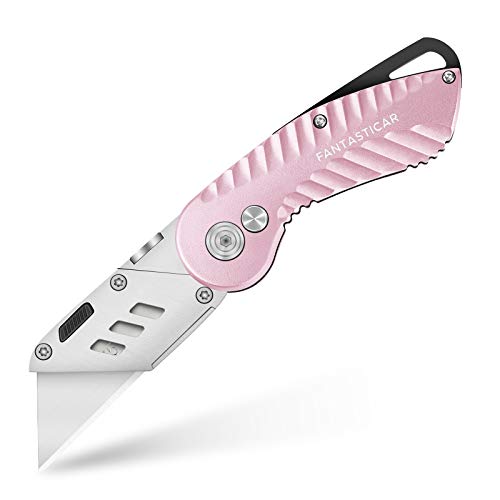
FantastiCAR Folding Box Cutter (Pink)

Hicarer 200 Pack Round End Carpet Blades with Storage Box
The Picks, Examined More Closely
Reaching into the center of a rolled-out carpet without kneeling on the fresh cut is the kind of small ergonomic win that makes a long job feel shorter. The OLFA XL-2 builds on the standard L-2 platform with an extra-long blade channel that adds 6.25 inches of reach compared to a regular utility knife. That extra distance keeps your knuckles off the carpet and lets you slide the blade under toe kicks and along wall lines without forcing your hand into awkward angles.
The ABS plastic body feels lighter than a metal knife, and the rubber grip stays planted even when your hands are dusty from old padding. The 18mm snap-off blade is preloaded, and the ratchet lock holds position firmly during long pull strokes. For installers working on full rooms, the reach is the headline feature; for occasional DIYers, it doubles as a backup straightedge guide when held against a chalk line.
Positive Takeaways
- Extra-long channel adds real reach for deep cuts without hand strain
- Ratchet lock stays firm under heavy pressure
- Snap-off blade means a fresh edge in seconds, no sharpening
- Rubber inset grip holds steady on dusty or glue-smeared hands
- Light enough to use all day on big installations
Points To Keep In Mind
- Longer body can feel unwieldy inside tight closet cuts
- Snap-off blades create more waste than fixed trapezoid carpet blades
Right Fit For
Installers and remodelers working on full rooms who want a stable grip and the reach to cut without crouching.
Look Elsewhere When
You mostly cut small patches or padding, where the CANARY Cardboard Cutter stays easier to control in tight spots.
Where the XL-2 above stretches out for reach, the L-2 stays closer to the standard utility knife form factor, which is exactly what most people want for a tool they pull out daily. The 18mm snap-off blade still uses Japanese tool-grade steel, and the eight segments per blade mean a fresh edge is a quick snap away. The ABS plastic body absorbs drops that would dent a metal knife.
The standout is the ratchet lock system. Instead of a single detent, the wheel-based mechanism locks the blade at any position along its travel. That matters when you are cutting carpet at a partial depth to score a backing without cutting through the pad underneath. It also lets you dial back the exposed blade for safer transport in a tool belt.
Points In Its Favor
- Wheel-based ratchet offers fine depth control for scoring and slicing
- ABS body absorbs jobsite drops without denting
- Standard form factor fits most utility knife holsters
- Snap-off segments keep downtime low during long runs
Honest Caveats
- Reach is shorter than the XL-2 above for deep carpet cuts
- Not designed for trapezoid carpet blades, so dedicated carpet cuts still need a separate handle
- Plastic body can flex slightly under heavy lateral pressure
Best Suited To
Contractors and serious DIYers who need an adjustable depth lock for a mix of carpet, drywall, and packaging work.
Reach For A Different Pick When
You are trimming rolled carpet at full extension and need the longer XL-2 reach to keep your hand off the cut line.
The CANARY is built around a different cutting problem than the OLFA models above. The 3-inch double-serrated stainless steel blade is shaped for slicing corrugated cardboard and packing materials, and the non-stick coating keeps adhesive tape residue from building up on the edge. That same hooked shape and serration profile translates surprisingly well to carpet padding and foam underlay.
The 7.5-inch overall length with a polypropylene handle is short and forgiving, which helps in tight spaces like closet corners where a longer knife cannot pivot. The yellow body is easy to spot on a cluttered floor, and the Japanese-made construction has a reputation for clean factory edges out of the box.
What Helps Most
- Serrated edge grips padding and foam without skipping
- Non-stick coating reduces tape and adhesive buildup during long sessions
- Compact body fits into spots a full-size knife cannot reach
- Bright yellow handle is easy to find on a crowded floor
Soft Spots
- Serrated teeth are not a substitute for trapezoid blades on woven carpet
- Plastic handle is lighter than a metal knife, so heavy cuts require more wrist effort
Who It Suits Best
Anyone trimming carpet padding, foam underlay, or vinyl tile in tight spaces where a longer knife becomes clumsy.
Skip It When
You need to slice through thick woven carpet on a tack strip, where the Hicarer 200 Pack Round End Carpet Blades mounted in a proper handle hold their line better.
A great carpet knife handle is only as good as the blade in it, and blades go dull fast on abrasive backing and pad. The Hicarer 200-pack trades down on packaging and trades up on count, giving you 200 round-end trapezoid blades for projects where one or two just will not last. The SK5 high carbon steel construction is the same grade used in many single-pack blades, so the per-cut value is strong.
The round-end profile is the safer of the two main carpet blade shapes, since the curved tip is less likely to catch a finger or punch through a subfloor. The black finish is a basic anti-corrosion coating rather than a premium treatment, so storage in a dry container matters more than with individually wrapped blades.
What Earns Its Place
- Bulk count keeps a multi-room renovation supplied from one purchase
- SK5 steel holds an edge through abrasive carpet backing
- Round-end shape is safer near skin and subfloor than pointed blades
- Per-blade cost drops significantly versus single retail packs
Where It May Fall Short
- Bulk packaging means no individual wrappers, so storage in a dry box is essential to prevent surface rust
- Requires a compatible trapezoid-blade utility knife handle, which is sold separately
- No storage box included in this 200-pack version
Made For
Renovation crews and homeowners tackling multiple rooms who want a full blade stockpile on hand before the first cut.
Not Your Match When
You need organized, grab-and-go storage, since the Hicarer 100 Pack Square End Carpet Blades with storage box keeps blades sorted and dry.
The square-end cousin to the round-end pack above trades the safer tip for a sharper corner, which makes it easier to plunge into the middle of a carpet piece for L-cuts around door jambs. The 0.02-inch thickness is a common standard that fits most trapezoid-blade utility knife handles, so compatibility is rarely a worry. SK5 high carbon steel keeps the edge honest through dense padding and rubber backing.
Half the count of the round-end pack, but the included storage box is the real reason to consider it. The plastic organizer keeps blades from dulling each other in transit and from picking up moisture in a damp basement or garage. For a single-room project that still wants more than a handful of blades, it hits a useful middle ground.
Good Reasons To Consider
- Square tip plunges cleanly for inside corner and door frame cuts
- Storage box prevents blade-on-blade dulling and moisture damage
- SK5 steel is a proven mid-grade for residential carpet
- Compatible with most standard trapezoid-blade handles
Worth Bearing In Mind
- Square tip requires more care around skin and subfloors than round-end blades
- Lower count than the 200-pack option for high-volume jobs
Whose Shelf It Belongs On
Homeowners handling a single room or two who want blades organized and ready without buying a multi-job supply.
Swap It Out When
You are staging a large multi-day renovation and want the larger Hicarer 200 Pack Round End Carpet Blades count on hand.
Carpet work tends to happen in conditions that punish tools. A knife falls off a ladder, slides under a baseboard, gets tossed into a truck bed. The WORKPRO leans into that reality with an aluminum alloy body and a powder coat finish that resists rust even after a wet day. The 3.2-ounce weight stays light enough for overhead trim cuts without tiring your wrist.
The retractable design uses three preset positions rather than the infinite adjustment of the OLFA ratchet wheel, which keeps blade swaps simple. Ten spare SK5 blades ship in the box, so a full room’s worth of work is covered without a separate purchase. The quick-change mechanism is the small detail that makes a difference when a blade dulls mid-cut.
What Makes Sense
- All-metal body survives drops that crack plastic knives
- Powder coat helps the handle resist jobsite moisture
- Ten spare blades included covers a full room’s worth of cuts
- Quick-change mechanism reduces downtime between blade swaps
Practical Considerations
- Three preset positions only, no fine depth adjustment
- Metal body can feel cold in unheated winter spaces
Who Should Grab It
Anyone who needs a drop-resistant knife for active jobsites, or who wants one tool that handles carpet plus general packaging and drywall scoring.
Consider Something Else When
You want infinite depth control for scoring carpet backing, where the OLFA 18mm Heavy-Duty Utility Knife (L-2) wheel lock still leads.
Sometimes the job is a single closet or a stair tread, and dragging out a full snap-off knife feels like overkill. The FantastiCAR folding cutter collapses into a body roughly the size of a pen, which slips into a pocket or drawer without the risk of an exposed edge catching on fabric. The aluminum and stainless steel construction is light but not flimsy.
Five extra blades ship in the box, and the quick-release button swaps them in a single motion. The pink finish is not for everyone, but it does solve the “where did I put that knife” problem the moment you set it down. For tight trim cuts and small patch work, the folding form factor earns its place.
Key Advantages
- Folding design protects the edge and your pockets during transport
- Quick-release button makes blade swaps fast
- Pen-sized body fits in places a full utility knife cannot
- Bright finish is hard to lose on a job site
A Few Limitations
- Short blade limits reach for full carpet runs
- Not a substitute for a dedicated carpet blade in thick woven goods
Perfect Match For
Apartment dwellers and homeowners handling occasional patch repairs or small trim work between full installations.
A Better Fit Elsewhere
You are replacing carpet across a full basement, where the OLFA 18mm Extended-Reach Heavy-Duty Utility Knife (XL-2) gives the length and stiffness for long seams.
Round-end carpet blades are usually the safest choice for floor work, and the 200-count silver version of the Hicarer pack pairs the same safer tip with the convenience of a plastic storage box. The 0.02-inch thickness is the standard trapezoid spec, so the blades fit the same handles as the black 200-pack above. The silver finish is a basic corrosion-resistant coating.
What shifts here is the value framing. You get the high count of the black pack plus the organized storage of the 100-pack square option, all in one. The blades are also marketed for drywall and roofing felt, so the same box can travel between weekend projects without needing a second purchase.
Practical Pluses
- Round-end tip stays safer around skin and subfloor than square tips
- Storage box included, which the 200-pack black version omits
- Works across carpet, drywall, and roofing felt
- 200-count covers extended multi-room renovations
Things To Weigh Up
- Round-end tip does not plunge for inside corner cuts as cleanly as a square tip
- Requires a separate compatible utility knife handle
- Storage box is functional, not heavy-duty for long-term stack storage
The Right Fit
DIYers and pros who want one blade supply to cover carpet plus occasional drywall or roofing work in a single organized box.
Where Another Pick Suits Better
You mostly plunge-cut around door frames and inside corners, where the Hicarer 100 Pack Square End Carpet Blades with storage box gives a sharper tip for those specific cuts.
What Matters Most When Choosing Utility Knives For Cutting Carpet
Blade Shape And Steel Grade
The single biggest difference between a generic box cutter and a real carpet knife is the blade. Standard snap-off utility blades have a flat, pointed profile that wants to dive into the carpet backing rather than ride along the top of it. Carpet-specific blades use a trapezoid shape, where a flat top edge or curved hook lets you pull the knife toward you without the tip catching the pad below. SK5 high carbon steel is the common grade in this category, and it holds an edge well through the grit and adhesive that come with old carpet. For renovation work, thicker steel (0.02 inches is a common spec) resists flexing on long pull cuts.
Handle Design And Grip Comfort
Carpet cutting involves long pull strokes and awkward angles, so a handle that fights your hand will slow you down before the blade dulls. High-impact plastic handles, like the ABS used on the OLFA models, are light and absorb drops. Aluminum handles, like the WORKPRO, are heavier but feel more solid. Rubber insets along the grip keep the knife from rotating in your hand when you are pushing hard against a seam. A ratchet-style lock with multiple detents is more useful for carpet work than a simple screw lock, because you can dial the blade depth in seconds without a tool.
Safety And Storage Considerations
Carpet blades stay sharp even when the project is done, and a loose blade in a tool drawer is a common household injury waiting to happen. Folding designs, like the FantastiCAR, hide the edge when not in use. Snap-off blade handles should retract fully before storage, and bulk blade packs benefit from the original storage box to keep edges from dulling each other or picking up moisture. For anyone working around children or shared spaces, a knife that locks closed between cuts is worth the trade-off in deployment speed.
Matching The Knife To The Project Size
A single room can usually be cut with one knife and a handful of blades, while a whole-house re-flooring job will burn through dozens of edges. Smaller projects justify spending more on a comfortable, well-balanced handle and keeping a small blade pack on hand. Larger projects favor bulk blade packs and a knife that accepts standard trapezoid blades from multiple brands, so you are not locked into one supplier when stock runs low.
Key Considerations Across These Picks
Where Shoppers Go Wrong
The most common mistake is treating carpet blades as interchangeable with box cutter blades. A standard 18mm snap-off blade will cut carpet, but it will also wander, snag, and dull much faster than a trapezoid blade designed for the job. Another frequent error is buying the cheapest bulk pack and skipping the storage box, then finding the blades rusted together in a damp garage before the project starts. Finally, many first-timers underestimate how many blades a real carpet job consumes; one room can easily eat 5 to 10 blades, and a full basement can hit 30 or more.
When Paying More Pays Off
The premium tier in this category tends to deliver in two places: better steel heat treatment and more refined locking mechanisms. A knife with a wheel-based ratchet lock, like the OLFA L-2, lets you set partial blade exposure for scoring work, which a three-position detent cannot match. Higher-grade blade steel keeps an edge through more linear feet, so over the course of a renovation the per-cut cost actually drops. The trade-off is real upfront cost, and for a single small room the math may not justify the upgrade. For anyone cutting carpet more than once a year, the better knife tends to be the one that comes off the truck when the job starts.
Frequently Asked Questions
Can a regular utility knife cut carpet?
A standard snap-off utility knife will cut through carpet, but it tends to wander off the line and dull quickly on the abrasive backing. Trapezoid carpet blades, which fit most standard handles, track straighter and last longer on the job.
How often should you change a carpet blade?
Carpet blades typically last through one to three rooms of cuts before noticeable dragging or snagging appears. The honest read is to swap the blade the moment it starts pulling fibers rather than trying to push it through the cut.
What is the safest carpet blade tip shape?
Round-end blades are widely regarded as the safer choice because the curved tip is less likely to catch a finger or punch through a subfloor. Square-end blades cut more cleanly at inside corners but require more deliberate handling.
Can carpet knife blades fit any utility knife?
Most carpet-specific blades use a standard trapezoid profile that fits the majority of heavy-duty utility knife handles. Snap-off 18mm blades are a different format entirely, so a dedicated carpet knife or a compatible handle is needed for carpet work.
Is folding or fixed better for carpet knives?
Fixed designs tend to feel sturdier during long pull strokes, while folding designs win on storage and transport safety. For active jobsite use, a fixed retractable handle usually feels more controlled in heavy cuts.




