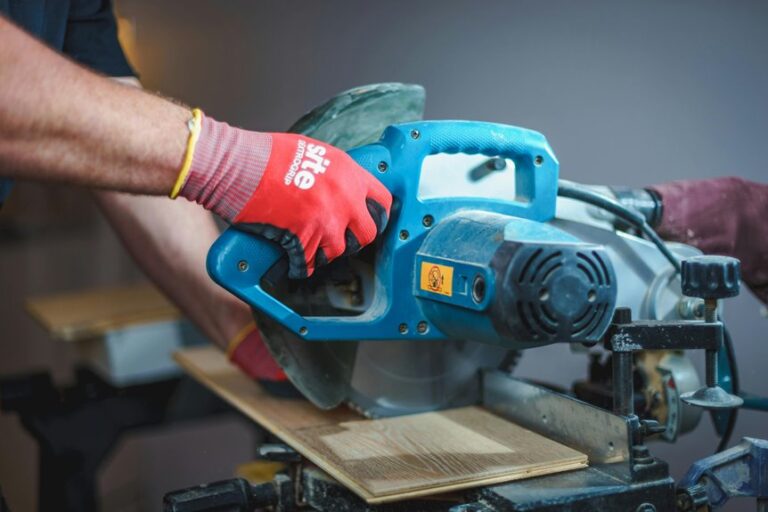
A reliable miter saw quietly runs every trim job, picture frame, and deck build you tackle. Shoppers on a realistic budget usually want enough capacity, accuracy, and durability without paying for shop-grade features they will never touch. The eight saws below cover the most common homeowner and pro-adjacent needs at sensible prices, from compact cordless models to full-size 12-inch sliders.
The Choices Worth Comparing

DEWALT 12-Inch Single-Bevel Compound Miter Saw (DWS715)

DEWALT 20V MAX 7-1/4-Inch Cordless Miter Saw (DCS361B)

DEWALT 12-Inch Double-Bevel Sliding Compound Miter Saw (DWS780)

DEWALT 10-Inch Single-Bevel Compound Miter Saw (DWS713)

DEWALT 12-Inch Double-Bevel Compound Miter Saw (DWS716XPS)

Milwaukee M18 Fuel 7-1/4-Inch Dual-Bevel Sliding Compound Miter Saw

DEWALT 20V MAX 7-1/4-Inch Cordless Miter Saw (DCS361M1)

Makita XSL05Z 18V LXT Compact Dual-Bevel Compound Miter Saw
Taking A Closer Look At The Options
The DWS715 slots into the middle of DEWALT’s compound saw line, and that is exactly why it lands on so many shortlists. It runs a 15-amp motor at 4,000 rpm, and the 12-inch blade handles nested crown up to 5-1/2 inches, which covers most baseboards and standard trim. Compared with the smaller 7-1/4-inch cordless saws later in this list, this corded model never runs out of power on a long weekend of cutting.
For homeowners outfitting a garage shop or a remodeler doing occasional finish work, the combination of repeatable miter detents and a tall fence makes setup fast. You get accurate stops for common angles without fiddling with the lock every time. The trade-off is weight and a single-bevel design, so flipping a board for opposing bevels adds a step.
Reasons It Performs
- 15-amp motor at 4,000 rpm cuts hardwood and pressure-treated lumber without bogging down
- Stainless-steel miter detent plate with positive stops speeds up repeated angled cuts
- Tall sliding fences support 5-1/2-inch nested crown, enough for most residential trim
- Cam miter lock holds settings firmly during heavy cuts, a real ownership advantage on long days
- Corded power means no battery management or charging downtime on the bench
Trade-Offs To Consider
- Single-bevel design requires flipping stock for matching angles on opposite sides
- No sliding rails, so wide boards need to be cut in pieces
- Heavier than 10-inch and cordless options, which makes it harder to move around a jobsite
Who It Suits Best
Remodelers and serious DIYers cutting 2x stock, baseboards, and crown molding in a fixed workshop benefit most from the reach and steady power.
Where Another Pick Suits Better
Shoppers who need to cut wider boards in one pass should step up to the DEWALT DWS780, which adds sliding rails and XPS cutline shadowing.
Tradespeople and mobile DIYers often need to cut where there is no outlet, and the DCS361B answers that call. The 7-1/4-inch blade is small by miter saw standards, yet the tool-only format keeps the price down for anyone already running DEWALT 20V batteries. A built-in cutline indicator projects where the blade will land, removing the second guess on every cut.
Capacity is the honest constraint. The saw handles 3-1/2-inch base molding vertically and 3-5/8-inch nested crown, which covers a lot of residential trim but not tall fireplace mantles. For occasional trim work and framing repairs, the size and weight pay off in portability.
Good Reasons To Consider
- Adjustment-free cutline indicator improves accuracy without extra setup time
- Light enough to carry between rooms or to a neighbor’s garage
- 11 positive miter stops cover the most common angles for trim and framing
- Tool-only pricing helps shoppers who already own 20V batteries
Points To Keep In Mind
- Battery and charger sold separately, so total cost climbs fast without existing DEWALT 20V gear
- Limited vertical capacity compared with the 10-inch and 12-inch corded options above
- Run time depends on battery amp-hour rating, which is worth checking before a long job
Right Fit For
Trim carpenters and homeowners with existing DEWALT 20V batteries who need a portable saw for tight spaces and quick repairs will find this format useful.
Skip It When
Buyers who do not already own DEWALT 20V batteries may get a better start with the DCS361M1 kit version, which bundles a battery out of the box.
The DWS780 is the saw that bridges homeowner ambition and contractor expectations. A 15-amp motor turns the 12-inch blade at 3,800 rpm, and the sliding rails push the crosscut capacity well past the DWS715 above. The XPS LED projects a shadow of the blade edge onto the workpiece, so you can align marks without bending over the guard. That alignment aid alone saves real time on a day of crown molding.
Double-bevel capability is the headline feature. You can tilt the head both left and right without flipping the board, which is a quiet upgrade for symmetric trim. The trade-off shows up in size, weight, and price, and the package also includes a material clamp and dust bag to round out the kit.
Everyday Wins
- XPS LED shadow line keeps both hands on the workpiece for safer alignment
- Sliding rails extend crosscut capacity for wide deck boards and large trim
- Double-bevel design avoids flipping stock on opposite angles, a real time-saver on symmetric projects
- Stainless-steel detent plate holds settings accurately across many cuts
Worth Noting
- Larger footprint demands a sturdy stand and a real work area
- Heavier than the single-bevel DWS715, so portability is limited
- Dust collection works best with a shop vac, owners commonly report emptying the included bag often
Key Specs
Best Suited To
Finish carpenters and ambitious DIYers running whole-house trim or deck builds benefit most from the sliding reach and shadow cutline.
Reach For A Different Pick When
Shoppers in a small garage without room for a full-size slider may find the Makita XSL05Z far easier to live with, since it is a fraction of the size.
Not every shop needs a 12-inch blade, and that is the case the DWS713 makes. The 10-inch saw runs the same 15-amp motor platform as the bigger DWS715 above, but at 5,000 rpm, the smaller blade feels quick and eager. A built-in carry handle and lighter weight make it easy to pull off a shelf and set on a deck or driveway.
Crown molding capacity drops to 4-1/2 inches nested, which still handles the majority of residential trim profiles. For weekend projects and small renovations, the savings over a 12-inch saw are hard to ignore, and the cutting feel stays solid.
Where It Excels
- 5,000 rpm blade speed makes quick work of 2x and trim stock
- Built-in carry handle improves portability between storage and bench
- Compact footprint suits smaller garage shops and apartment storage
- Stainless-steel detent plate adds long-term accuracy, an ownership plus over cheaper stamped plates
Honest Caveats
- No sliding rails, so wide boards still need multiple cuts
- Single-bevel design means flipping stock for opposing angles
- Limited to 4-1/2-inch nested crown, which can rule out larger custom profiles
At A Glance
Made For
DIYers and homeowners with modest trim ambitions and limited shop space get the most out of this compact, well-balanced saw.
Consider Something Else When
Anyone running large crown molding or wide deck boards will appreciate the extra reach of the DWS716XPS, which steps up to 12 inches with double bevel and XPS cutline.
The DWS716XPS sits in a useful middle ground between the no-frills DWS715 and the sliding DWS780. It keeps the 12-inch blade and 15-amp motor but adds double-bevel cutting and the XPS cutline shadow. For finish carpenters who never reach for sliding rails but demand clean, well-aligned crown cuts, the package fits the brief. It runs 3,800 rpm, and the 14 positive miter stops handle the angles a trim carpenter actually uses.
The big practical win is crown capacity: 6-5/8 inches nested, more than the DWS715 above. That single number removes a real headache on tall profiles, and the high-efficiency dust duct helps keep the cut line visible during long sessions.
Real-World Strengths
- Double-bevel action avoids flipping the workpiece for opposing angles, saving real time on symmetric trim
- XPS cutline shadow delivers accurate alignment on every cut, even on dark or reflective stock
- Tall fences support 6-5/8-inch nested crown, one of the larger capacities in this price band
- 14 positive miter stops cover the common angles a finish carpenter needs in a day
Some Limits To Know
- No sliding rails, so crosscut width is limited compared with the DWS780
- Heavier than the 10-inch DWS713, so bench placement matters
- Dust duct works best when connected to a shop vacuum, owners commonly report
Feature Snapshot
Whose Shelf It Belongs On
Finish carpenters and remodelers focused on crown molding and baseboards without sliding needs will appreciate the capacity and accuracy in a manageable size.
A Better Fit Elsewhere
Shoppers who regularly crosscut wide lumber should look at the DWS780, which adds sliding rails for those long passes.
Milwaukee’s M18 Fuel saw earns its keep on jobs where dragging a cord is not realistic. A brushless motor (a motor design that uses electronic control instead of carbon brushes for longer life and better efficiency) drives a 7-1/4-inch blade through a full day of cuts, and the manufacturer states over 600 cuts per charge on a 5.0Ah battery. Sliding rails and dual-bevel action in a cordless 7-1/4-inch platform is the unusual part, and that combination opens up real on-site workflows.
At roughly 28 pounds with battery, the saw is light enough to carry one-handed between floors. The catch shows up in capacity, since a 7-1/4-inch blade can only do so much. For trim crews and framers who already run M18 tools, however, the saw replaces a long extension cord and a generator on a lot of jobs.
The Good Stuff
- Sliding rails and dual bevel in a cordless 7-1/4-inch format, unusual in this category
- Brushless motor extends tool life and efficiency on long job days
- Over 600 cuts per charge keeps an entire trim run on one battery, per the manufacturer
- Lightweight at around 28 pounds with battery, easy to move between floors
Less Ideal Details
- Tool-only listing, so battery and charger add to the total cost
- Capacity is limited by the 7-1/4-inch blade, so wide boards still need multiple cuts
- Best value for shoppers already invested in the M18 platform
Quick Facts
Who Will Love This
Contractors and trim crews already running Milwaukee M18 tools benefit most, since the saw plugs into an existing battery ecosystem without a new charger.
Look Elsewhere When
Shoppers without M18 batteries may find the DEWALT DCS361M1 a more practical start, since the kit ships with a battery and charger ready to use.
The DCS361M1 solves the most common pain point with bare-tool saws: it ships with a battery and charger. For shoppers stepping into cordless for the first time, that bundle removes a trip back to the tool aisle. The 20V battery delivers around 183 cuts of 2×4 pine or 275 cuts of 3-1/4-inch pine baseboard per charge, based on the manufacturer’s published figures, which covers a meaningful chunk of trim work.
Cutline indication uses the same adjustment-free system as the DCS361B above, and the 11 positive miter stops cover standard angles. Where the saw stumbles is reach: a 7-1/4-inch blade tops out at 3-1/2-inch base and 3-5/8-inch nested crown, so very tall profiles will not fit.
Strong Points
- Kit includes a 20V battery and charger, a real convenience for first-time cordless shoppers
- Cutline indicator improves accuracy on every cut, day after day
- 11 positive miter stops speed up repeated angled cuts on trim work
- Compact enough to store on a shelf between projects
Things To Weigh Up
- 7-1/4-inch blade limits vertical capacity for tall crown profiles
- No sliding rails, so crosscuts stay within the blade’s reach
- Total cost is higher than the bare-tool DCS361B, so existing 20V users may prefer that version
Feature Card
Perfect Match For
First-time cordless buyers and apartment DIYers who want a complete kit ready to use on day one benefit most from the included battery and charger.
Another Choice May Suit
Shoppers with deep trim ambitions should consider the DEWALT DWS780, which adds 12-inch sliding reach for whole-house projects.
The Makita XSL05Z is the lightest saw in this lineup, and that is its pitch in a single number. At 14.6 pounds with battery, it carries like a cordless drill and stows in a closet. A brushless motor aims to extend run time and tool life, and the integrated laser gives a visual line on the workpiece for alignment. The 6-1/2-inch blade sets honest expectations, since capacity is the trade-off for size.
It feels purpose-built for trim carpenters working in finished spaces, condo renovations, and small shop owners who need a usable backup saw. Tool-only format keeps the price low for shoppers already invested in Makita 18V batteries, which is the usual catch with this category.
What Earns Its Place
- 14.6 pounds with battery, by far the lightest saw in this lineup
- Brushless motor aims for longer run time and extended tool life
- Compact footprint fits on a bench, shelf, or small work table
- Dual-bevel action avoids flipping stock on matching angles
Worth Bearing In Mind
- 6-1/2-inch blade limits vertical capacity, so tall profiles will not fit
- Tool-only listing means battery and charger are separate purchases
- Best value for shoppers already running Makita 18V batteries
Who Should Grab It
Tradespeople and DIYers working in finished spaces, apartments, or compact shops where weight and size matter most will find this saw unusually easy to live with.
Swap It Out When
Shoppers with a real workbench and regular demand for 2x stock should reach for the DEWALT DWS715, which trades the compact body for a full-size 12-inch capacity.
Shopping Smarter For Value Miter Saws
How Much Cutting Capacity Do You Need
Crown molding and wide boards drive most capacity choices. A 7-1/4-inch saw covers baseboards and small trim but stalls on tall crown. A 10-inch saw handles most residential projects, and a 12-inch saw becomes useful for deck boards, large baseboards, and ambitious trim runs. Sliding rails add crosscut width for wide stock, which matters whenever you cut a board wider than the blade can reach.
Corded Power Versus Cordless Flexibility
Corded saws like the DWS715 and DWS780 deliver steady power without managing batteries, and they tend to cost less than a comparable cordless kit. Cordless saws like the DCS361M1 and Makita XSL05Z trade some cutting power for the freedom to cut anywhere, which is a real advantage on remodel sites and apartment projects. Shoppers with no battery platform should factor in charger and battery cost, since that changes the math quickly.
Bevel And Miter Features Worth Knowing
Single-bevel saws tilt in one direction, which means flipping the workpiece for opposing angles. Double-bevel saws tilt both ways, saving real time on symmetric trim like crown molding. Miter detents (preset locking positions at common angles like 15, 22.5, 30, and 45 degrees) speed up repeated cuts, and saws with more stops tend to feel faster on a long day. A cutline indicator or shadow light removes the second guess on alignment, especially on dark or glossy stock.
Blade Size And Long-Term Maintenance
Bigger blades cut taller profiles but add weight and price. Smaller blades fit in tight spaces and lighter budgets. Blade changes happen eventually on every saw, and the availability of replacement blades in your size and tooth count is worth a quick check before you commit. Dust collection also matters, since a clogged bag or duct reduces visibility and accuracy over a long session.
Key Considerations Across These Picks
Common Shopping Slip Ups
The most common mistake is buying a saw that is too small for the work ahead, since upgrading later costs more than buying the right size first. Another trap is buying a bare-tool cordless saw without checking battery and charger costs, which can quietly double the price. Finally, a lot of shoppers overlook dust collection, then regret it the first time they cut MDF indoors. Reading the cut capacity against your actual stock size before you click is a quick win.
What The Higher Tier Buys
A higher tier saw typically adds sliding rails, a more accurate cutline system, and a brushless motor. The sliding rails unlock wide crosscuts, the cutline system improves alignment, and the brushless motor (which uses electronic control instead of carbon brushes) aims for longer tool life. None of that matters for a homeowner doing one baseboard project a year, but a trim carpenter running a whole house benefits from every upgrade. The honest read is that premium models earn their price through daily use, not occasional projects.
Frequently Asked Questions
What Size Miter Saw Is Best For A Homeowner
A 10-inch saw covers most homeowner projects, including baseboards, picture frames, and small trim. A 12-inch saw makes sense for deck boards and tall crown molding. For occasional trim work in tight spaces, a compact cordless 7-1/4-inch saw is often enough.
Is A Sliding Miter Saw Worth The Extra Cost
Sliding miter saws add crosscut width, which is the main reason to pay more. For wide deck boards, large trim, and flooring work, sliding rails save real time. For narrow baseboards and small projects, a non-sliding saw handles the job at a lower price.
Corded Or Cordless Miter Saw For Home Use
Corded saws cost less and run continuously, which suits a fixed workshop. Cordless saws work anywhere but need charged batteries and offer less sustained power. Homeowners without a battery platform usually get more saw for the money with a corded model.
How Do I Keep A Miter Saw Accurate Over Time
Keep the detent plate clean, avoid forcing the head past its stops, and store the saw in a dry spot to protect the steel components. A quick check of square with a reliable square every few months catches drift before it shows up in your cuts.
Can A Beginner Use A Miter Saw Safely
Yes, with basic precautions. Read the manual, keep hands clear of the blade path, clamp stock when possible, and let the blade reach full speed before cutting. Eye and ear protection are standard on any shop job, and a sharp blade improves both safety and cut quality.