


A torque wrench is the tool that keeps a stripped bolt from ruining your Saturday, and the right one pays for itself the first time you tighten a lug nut or scope ring to spec. The picks below cover the full spread: click-type wrenches for car and bike work, split-beam and micrometer styles for pros, a cordless impact option for speed, and a bike-specific 3/8″ drive. Each one earns its place through a clear strength, a real use case, and an honest trade-off, so you can match the tool to the job instead of the other way around.
A Side-By-Side Look

HAZET 5122-3C Torque Wrench 40-200Nm 1/2″

Milwaukee 2962-20 M18 Fuel 1/2″ Mid-Torque Impact Wrench

HAZET 5122-2CT Torque Wrench 1/2″
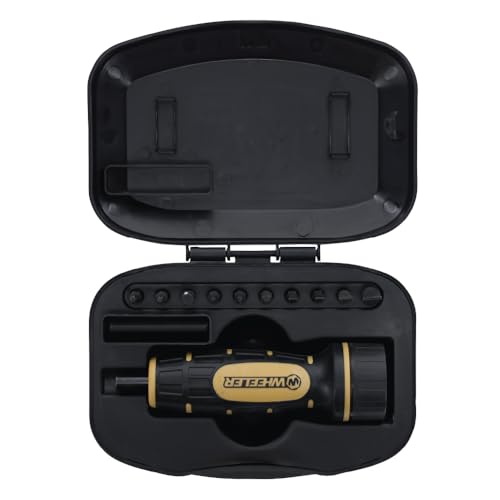
Wheeler Manual Firearms Accurizing Torque Wrench

Milwaukee 49-16-2767 High Torque Impact Protective Boot
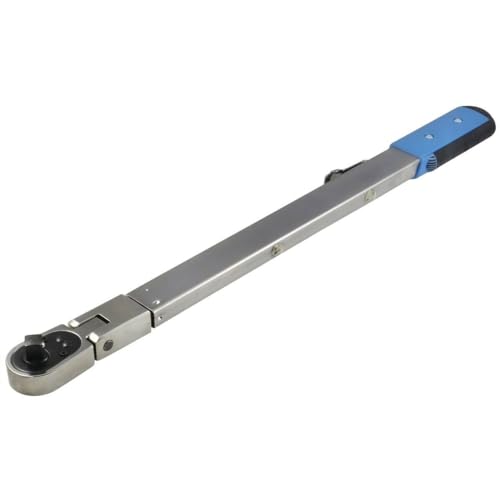
Precision Instruments PREC3FR250F Split Beam Torque Wrench

Wera Click-Torque C 3 Torque Wrench 1/2″ 40-200Nm
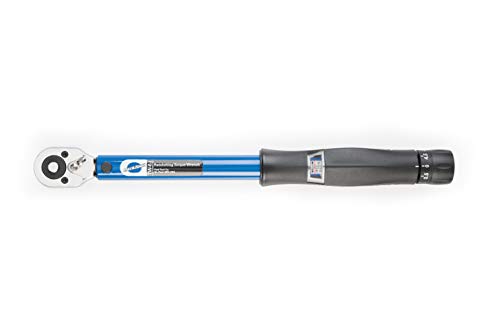
Park Tool TW-6.2 Ratcheting Torque Wrench 3/8″ 10-60Nm

DEWALT Torque Wrench Tire Change Kit 50-250 FT-LB
The Strengths Of Each Pick
The HAZET 5122-3C earns the top slot because it threads a needle most click-type wrenches miss. The 40 to 200 Nm window covers lug nuts, suspension bolts, and heavier bike components, and the 32-tooth reversible ratchet (an 11.25° swing arc) means you can swing in tight engine bays where a coarser 24-tooth head simply won’t fit.
For weekend wrenchers running through a brake job, the ±3% scale tolerance keeps fastener loads honest, so nothing is over-torqued into a snap zone. The 20.43″ length gives enough leverage to settle 200 Nm without your hand cramping, which you may notice on a stubborn axle nut.
Everyday Advantages
- ±3% tolerance keeps fastener loads honest, important for lug nuts and suspension bolts
- 32-tooth ratchet with 11.25° swing arc reaches into tight engine bays where coarser heads cannot
- 40 to 200 Nm range covers car, truck, and bicycle work in a single tool
- Reversible ratchet supports both tightening and loosening without swapping heads
- Made in Germany, with the build quality you’d expect from a shop-grade brand
Worth Noting
- 20.43″ length can feel unwieldy in a compact tool roll or small workbench drawer
- Click-type wrenches need to be returned to the lowest setting before storage, or the spring relaxes over time
Key Product Details
Who It Suits Best
DIY car and bike owners who want a German-built click wrench with tighter-than-average accuracy and enough range to handle most home jobs.
Where Another Pick Suits Better
Home techs focused on inch-pound scope rings and small fasteners should reach for the Wheeler Manual Firearms Accurizing Torque Wrench instead, since the HAZET’s 40 Nm floor is too high for that work.
The Milwaukee 2962-20 takes a different angle than the click wrenches in this lineup. It’s a brushless 18V cordless impact, sold as a tool-only body, aimed at techs who already run M18 batteries and want speed on the fast side of the job.
Where a click wrench asks for slow, deliberate hand pressure, the 2962-20 uses a 1/2″ friction-ring (hog-ring) anvil to swap sockets fast, plus auto shut-off that limits hand-tight applications to about 35 ft-lbs, so a lug nut seats without a stripped stud. Three LEDs frame the work area and reduce shadows, which matters when you’re under a vehicle.
Bright Spots
- Auto shut-off near hand-tight torque prevents over-torquing when seating a nut by feel
- Friction-ring anvil swaps sockets without a pin, saving seconds per change
- Triple-LED layout reduces shadows in low-light engine bays and undercarriages
- Brushless M18 platform shares batteries with the rest of the Milwaukee M18 line
Points To Keep In Mind
- Tool-only, so a battery and charger add to the total if you don’t already own M18 gear
- Impact wrenches don’t replace a click wrench for final torque spec on critical fasteners, plan on a separate torque wrench for finish work
Right Fit For
Shop techs and serious DIYers already running the Milwaukee M18 platform who want fast removal and pre-seat work without dragging an air hose across the floor.
Skip It When
Wheel and suspension work that demands a precise final torque spec is a better match for the HAZET 5122-3C, since impacts alone can over-shoot a target value.
The 5122-2CT is the older sibling to the 5122-3C, and the difference is in the tolerance and the seal. Where the -3C holds ±3%, the -2CT lands at ±4%, a small but real gap if you’re chasing OEM-tight numbers on a daily-driver suspension rebuild.
The optimized sealing ring is the part that justifies the upgrade for shop work. It keeps lubricant in and grit out, so the ratchet mechanism survives a daily rotation of brake jobs and tire swaps. The reversible 32-tooth head matches the -3C, so socket swaps feel familiar between the two.
Useful Strengths
- Sealed ratchet head is well-suited to daily shop environments with dust and brake dust
- Reversible head supports right-hand tightening and left-hand loosening without an adapter
- Ergonomic handle helps transmit torque without hand fatigue during long days
- German build quality with a steel body for long-term shop use
Honest Caveats
- ±4% tolerance is looser than the 5122-3C, which matters for critical suspension fasteners
- Same 20.43″ length as the -3C, so storage in compact tool drawers is still tight
- Click-type calibration can drift; periodic re-calibration is a good habit for shop tools
Feature Snapshot
Made For
Daily shop professionals and serious home techs who need a sealed, reversible click wrench and don’t mind the slightly looser ±4% tolerance.
Consider Something Else When
Critical-fastener work like carbon-steel head bolts benefits from the HAZET 5122-3C’s tighter ±3% tolerance and similar reversible head.
The Wheeler F.A.T. Wrench is a different animal. It measures inch-pounds (in-lb), the right unit for scope rings, guard screws, and action screws, where a misapplied Newton-meter reading can crack a receiver or shift a zero. For riflescopes, repeatable torque is the difference between a clean group and a walk-in zero on the second shot.
It’s a handheld manual with interchangeable bits, so you can swap from a flathead to a hex without a separate driver. The set ships in a storage case, which helps you keep all the small parts in one place, an honest ownership benefit, since losing one of the bits kills the kit.
Features That Help
- Measures in inch-pounds, the natural unit for scope bases, rings, and action screws
- Interchangeable bit system handles flathead, hex, and Torx fasteners with one tool
- Compact, handheld form factor is easier to manage in a rifle vise than a long click wrench
- Storage case keeps bits and the wrench together between range sessions
Trade Offs
- Lower torque range than automotive wrenches, so it won’t pull a lug nut
- Manual design means you set the value on the tool itself; mistakes are easy if you read the wrong scale
- Not designed for high-volume shop use; better suited to a home bench and field setup
Best Suited To
Gunsmiths, hunters, and competitive shooters who torque scope rings, bases, and action screws to consistent inch-pound values.
Look Elsewhere When
Wheel and automotive work is a better match for the DEWALT Torque Wrench Tool Set, since that kit is built around foot-pounds and includes sockets.
The 49-16-2767 isn’t a torque wrench, it’s a form-fitting rubber boot that wraps the Milwaukee M18 Fuel 1/2″ High Torque Impact (2767-20) and its ONE-KEY sibling (2863-20). Think of it as a fender for the tool, a thin layer that absorbs the sort of drops that crack a plastic housing.
The proprietary rubber is built to stand up to coolant, oil, and the de-icer residue common in winter maintenance bays. The fit is snug enough not to slide around, and the install or removal is quick, so you can pull it off for cleaning or swap it between tools.
A Favorable Mix
- Form-fitting rubber adds drop protection without making the tool bulky in a tool bag
- Proprietary rubber compound resists oils, coolants, and corrosive fluids in shop environments
- Flexible design means the boot slides on and off for cleaning or transfer between tools
- Custom fit for the 2767-20 and 2863-20, so the controls and LEDs stay accessible
Worth Bearing In Mind
- Only compatible with two specific Milwaukee M18 Fuel impact models, not a universal cover
- Adds a small amount of length, which you may feel on a tight transmission tunnel
Who Will Love This
Milwaukee M18 Fuel impact owners who work in cold-weather bays, fleet garages, or rental yards where drops and chemical exposure are part of the day.
Reach For A Different Pick When
You don’t already own the 2767-20 or 2863-20, in which case the boot is a no-go, and you should look at the HAZET 5122-3C or the DEWALT kit instead.
Split-beam torque wrenches work on a different principle than click types. There’s no spring to relax or fatigue, so the calibration tends to hold up better under heavy use, which is why trucks, fleet work, and commercial shops gravitate to them. The PREC3FR250F is the 1/2″ drive model in the silver finish with a flex head.
Setting the value takes only fingertip force, since the adjustment mechanism isn’t under load, and there’s no break-in period. The flex head helps the wrench reach over suspension arms and exhaust shields, spots where a fixed head is awkward to seat.
Where It Helps
- Split-beam design avoids the spring-fatigue problem common in click wrenches over time
- Flex head pivots to reach fasteners at awkward angles on exhaust and suspension work
- Heavy-duty construction is well-suited to commercial shop and fleet environments
- Fingertip adjustment makes setting the value quick between jobs
Practical Considerations
- Heavier than a click wrench of the same range, so fatigue sets in on a long day overhead
- Flex head introduces a slight mechanical play, which you may notice on a perfectly straight pull
Feature Snapshot
Right Fit For
Truck, fleet, and heavy-duty commercial shop techs who want a calibration-stable wrench that survives daily abuse.
Another Choice May Suit
Cassette-style home use, where a lighter click wrench is more comfortable, points to the HAZET 5122-3C, which is a similar 1/2″ range in a friendlier package.
The Wera C 3 has the look and feel of a tool designed by people who actually use torque wrenches. The black-and-green body is more than styling, the ergonomic shape and the soft-touch zone make longer sessions easier on the hand, useful if you’re doing a full car suspension refresh.
The audible and tactile click is the kind of feedback you want on a quiet fastener, so you can feel it land in a tight engine bay. It’s built to DIN EN ISO 6789-1:2017-07 standards, and the 45-tooth reversible ratchet gives a tighter swing arc than the 32-tooth ratchets in this roundup.
What Makes Sense
- Audible and tactile click feedback registers clearly through gloves and in noisy bays
- 45-tooth reversible ratchet (about 8° swing) works well in tight clearance spots
- ISO 6789-1 build standard, a useful baseline for shops that document tool accuracy
- Ergonomic handle shape reduces hand fatigue during long torque sessions
Where It Is Less Suited
- 40 Nm floor is too high for inch-pound firearm work, where the Wheeler wrench is the better fit
- Right-hand use only, so left-hand tightening requires a different tool
Who Should Grab It
Detail-focused home techs and small-shop pros who want a refined click wrench with strong tactile feedback and a tight-swing ratchet head.
Not Your Match When
Wrenching on a bicycle calls for the Park Tool TW-6.2, since its 3/8″ drive and 10-60 Nm range match small fasteners better than the Wera’s 1/2″ head.
Park Tool is a name that hangs in most home bike workshops, and the TW-6.2 is a bike-specific torque wrench through and through. The 3/8″ drive and the 10-60 Nm range cover stems, seatposts, handlebars, and most carbon-fiber componentry, where over-torque is a real risk to a frame or bar.
The dial-adjust click system lets you set the value, and the steel body keeps calibration stable between rides. The shorter length compared to a 1/2″ automotive wrench makes it easier to hold a steady hand on a small bolt, and the ratcheting head speeds up the rough-set before you finish on the click.
Practical Pluses
- 10-60 Nm range covers most bicycle component torque specs in one tool
- 3/8″ drive matches the smaller sockets bikes use, instead of clunky 1/2″ sockets
- Dial-adjust click system is easy to fine-tune between fasteners
- Shorter body length makes small-bolt work less awkward than a long automotive wrench
Things To Consider
- 3/8″ drive doesn’t fit standard automotive sockets, so this isn’t a car-shop tool
- Click-type calibration drift is a long-term concern; periodic checks keep it honest
Built With In Mind
Road, gravel, and mountain bikers who want to dial in stem, bar, and seatpost torque without cracking a carbon frame.
A Better Fit Elsewhere
Working on a car and a bike in the same week points to the HAZET 5122-3C, which has a 40-200 Nm range and a 1/2″ drive that fits automotive sockets.
The DEWALT DWMT45012 is a tire-change kit, not just a torque wrench, so you get a 1/2″ drive micrometer-style torque wrench, a breaker bar, and a mix of fractional and metric sockets in a single storage case. For the seasonal tire swap, that’s the difference between two toolboxes and one trip to the garage.
The torque range of 50 to 250 ft-lb covers most passenger-car and light-truck lug specs, and the locking trigger keeps the set value where you left it. The protective head bumper takes the edge off an accidental drop, and the bi-material grip stays comfortable on a long afternoon of rotations.
Useful Touches
- 50-250 ft-lb range covers most passenger and light-truck lug nut specs
- 12-piece kit includes the breaker bar and sockets, so no extra purchases to start
- Locking trigger keeps the set torque value from drifting mid-job
- Storage case keeps every piece in one place between seasonal swaps
- Forward and reverse torque capability without swapping drive direction
Some Limits To Know
- Lower end of the range (50 ft-lb) is too high for small bicycle and motorcycle fasteners
- Micrometer-style wrenches benefit from a return-to-zero habit, otherwise the spring relaxes over time
Whose Shelf It Belongs On
DIYers running seasonal tire swaps on passenger cars and light trucks who want a complete kit instead of piecing tools together one at a time.
Swap It Out When
Bicycle-only use is a much better fit for the Park Tool TW-6.2, since its 3/8″ drive and 10-60 Nm range match small component fasteners far more accurately.
Choosing A Torque Wrench That Actually Fits Your Work
Match The Drive Size To Your Sockets
The first cut is the drive size. 1/2″ drive covers most automotive work and pairs with the lug sockets you probably already own. 3/8″ drive fits smaller sockets for bicycles, motorcycles, and small-engine work, while 1/4″ drive handles electronics and very small fasteners. Buying a wrench whose drive doesn’t match your existing sockets means buying a new socket set, too.
Read The Torque Range Before You Buy
Every torque wrench has a usable range, and using it outside that range hurts accuracy. A 40-200 Nm wrench like the HAZET 5122-3C is wasted on scope rings, and a Wheeler 0-65 in-lb wrench can’t break a lug nut free. Match the range to the fasteners you actually touch, not the ones you might touch someday.
Decide Between Click, Beam, And Split-Beam
Click-type wrenches are the common choice and work well for most home jobs, but the internal spring can drift over years of use, so a habit of returning to the lowest setting before storage helps. Beam-style wrenches (the older dial-and-needle design) have no spring to relax, but they require a clear sightline to the scale, which is hard in tight bays. Split-beam wrenches, like the Precision Instruments PREC3FR250F, use a different internal mechanism that holds calibration well under heavy use, so they show up more in commercial shops.
Consider The Ratchet Swing Arc
The ratchet’s tooth count controls the swing arc, which is the back-and-forth motion needed to drive the wrench. A 32-tooth ratchet swings 11.25° per click, a 45-tooth ratchet (like the Wera C 3) swings about 8°, and a higher tooth count swings less. In a tight engine bay with limited handle travel, a tighter swing arc lets you actually reach the target torque without a breaker bar.
H3: What About Cordless Impact Options
A cordless impact wrench like the Milwaukee 2962-20 is a different tool. It’s fast, removes stubborn bolts in seconds, and pairs with the M18 battery platform many shops already run. It doesn’t replace a click wrench for final torque on critical fasteners, so plan on using both, the impact for speed, the click wrench for finish.
Key Considerations Across These Picks
H3: Pitfalls Shoppers Hit
A common mistake is buying a wrench that overlaps the wrong end of your fastener range. A heavy 1/2″ drive rated for 100-400 ft-lb is overkill for a motorcycle caliper bolt, and a 3/8″ bike wrench cannot break a stubborn axle nut. Another trap is treating an impact wrench as a torque wrench, since impacts don’t land on a precise value, they need a follow-up click or split-beam pass to finish the job. Finally, ignoring storage habits shortens wrench life. A click wrench left at a high setting slowly loses calibration, so the simple habit of returning to the lowest value before you put it away pays off in years of accurate readings.
H3: Where The Extra Money Goes
Higher-tier torque wrenches earn their price through tighter tolerance, better sealing, and more durable internal components. A ±3% wrench (like the HAZET 5122-3C) lands closer to spec than a ±4% budget model, which matters on suspension and head bolts where over-torque is risky. Sealed heads keep shop grit out of the ratchet, and split-beam designs skip the spring altogether, so calibration holds under daily use. For a weekend warrior doing a brake job twice a year, the basic click wrench is plenty. For a tech torquing head bolts every week, the upgrade pays back in accuracy and tool life.
Frequently Asked Questions
What Torque Wrench Do I Need For Lug Nuts?
Most passenger-car lug nuts land in the 80 to 100 ft-lb range, so a 1/2″ drive wrench with a 50 to 250 ft-lb range, like the DEWALT tire-change kit, covers the job and leaves headroom for light trucks.
How Often Should I Calibrate My Torque Wrench?
A home-use click wrench benefits from a check every year or two, especially if it’s been dropped or stored at a high setting. A daily-use shop wrench should be checked more often, and a Wheeler inch-pound wrench for firearms work deserves the same habit, since a drifting reading shifts scope-ring tension.
Can I Use An Impact Wrench Instead Of A Torque Wrench?
Impacts speed up removal and pre-seating, but they don’t land precisely on a torque value, so critical fasteners (lug nuts, suspension bolts, head bolts) still need a follow-up with a click or split-beam wrench. The Milwaukee 2962-20 is great for the fast side, the HAZET 5122-3C for the finish side.
What’s The Difference Between Nm And Ft-Lb?
Newton-meters (Nm) and foot-pounds (ft-lb) measure the same thing in different units. 1 ft-lb equals roughly 1.36 Nm, so a 100 ft-lb lug spec is about 136 Nm. The HAZET and Wera wrenches use Nm, the DEWALT kit uses ft-lb, and the Wheeler wrench uses inch-pounds, the natural unit for small fasteners.
Do I Need A Special Wrench For Carbon Bike Parts?
Carbon fiber cracks easily under over-torque, so a torque wrench set to the manufacturer’s spec is the safe play. The Park Tool TW-6.2 covers most road and mountain bike components with its 10-60 Nm range, which sits in the right window for stems, bars, and seatposts.




