


A wobbly shelf, a sagging mirror, or a TV that slowly peels off the wall usually traces back to one thing: the wrong anchor. Drywall alone can’t hold much, and the stud isn’t always where you need it. The fix is matching an anchor to the load, the wall type, and the fastener you already have on hand. Below are eight solid options, each handling a different kind of job, from a quick photo hook to a heavy cabinet mount.
A Side-By-Side Look

Fischer UV 6 S Bucket 250 Dowels + Screws

TOGGLER SNAPTOGGLE Drywall Anchors 1/4-20 Bolts 20 Pack

TOGGLER SNAPTOGGLE Drywall Anchors 1/4-20 Bolts 100 Pack

fischer DuoPower 5x25mm Universal Plugs 100pcs

fischer S6 Universal Wall Anchors 6x30mm 100 Units
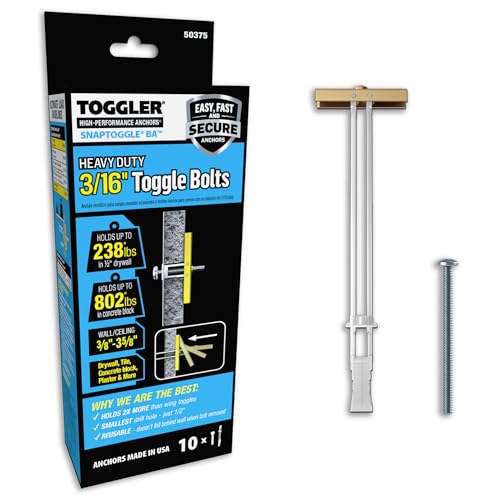
TOGGLER SNAPTOGGLE BA Toggle Anchor with Bolts 10 Pack

Qualihome Plastic Conical Wall Anchors 1 Inch

E-Z Ancor Twist-N-Lock Self-Drilling Drywall Anchors 50ct
The Details Behind The Selections
The Fischer UV 6 S ships as a working bucket, not a blister pack, and that detail changes the experience. Pulling nylon dowels from a tub in a busy garage beats fumbling with individual sleeves, and the included screws save a trip to the hardware store mid-project. The 6 x 30 mm size is the everyday workhorse for solid and perforated brick, the kind of wall you meet in older homes and basements.
What sets this apart from the smaller blister packs is the triple-segment body, which spreads expansion force along three contact zones instead of one. That means less cracking in softer brick and a more even grip. For anyone restoring a workshop or anchoring conduit, you can knock out dozens of fixings without a second thought.
A Few Highlights
- 250 dowels and 250 matching screws in one container, no counting required mid-project.
- Triple-zone expansion holds well in older, crumbly brick where single-segment plugs slip.
- Collar design stops the plug from pulling into the hole as you tighten the screw.
- Bucket format keeps your workspace tidy and the anchors clean until they’re used.
Trade Offs
- Listed as an international product variant, so packaging and instructions may not match domestic versions.
- Manufacturer warranty may not apply through the main retail channel.
Who It Suits Best
Tradespeople, renovators, and serious DIYers running a long fix-up on brick or block walls.
Skip It When
You mostly work on hollow drywall; the TOGGLER SNAPTOGGLE 1/4-20 Bolts 20 Pack is built for that job and handles heavier loads in hollow material.
Hollow walls are where most anchors fail, and the SNAPTOGGLE solves that with a metal channel that flips open behind the drywall. You push the toggle through a drilled hole, slide the plastic flange tight, and snap off the plastic straps. The 1/4-20 zinc-plated bolt threads into a solid metal bearing, so you’re hanging real weight off a wall with nothing behind it except air.
For mounting a flat-screen bracket, a kitchen cabinet run, or a heavy shelf in a rented apartment, this anchor is the kind you reach for once and never go back. Compared to the Fischer UV 6 S above, which needs brick or concrete behind the surface, this works in true hollow drywall from 3/8″ up to 3-5/8″ thick.
Everyday Perks
- Metal toggle deploys behind the wall, distributing load across a wide channel instead of a single point.
- Bolt can be removed and reinstalled without losing the anchor behind the wall, handy for fixture swaps.
- Fits hollow material from 3/8″ up to 3-5/8″, covering standard residential drywall thicknesses.
- Zinc-plated bolt resists corrosion in normal interior humidity.
Points To Note
- Requires a 1/2″ hole drilled first, more prep than a self-drilling plug.
- Plastic strap ends sit proud of the wall until snapped, so a flush finish needs careful trimming.
- Single-use channel stays behind the wall if you remove the bolt and try to abandon the spot.
Right Fit For
Apartment dwellers and homeowners mounting TVs, cabinets, or heavy shelving into standard hollow drywall.
Consider Something Else When
You’re hanging only lightweight items like picture frames; the E-Z Ancor Twist-N-Lock Self-Drilling anchors skip the pre-drill step and handle those jobs faster.
When you’re doing a full room build-out, the 20-pack just doesn’t cut it. The 100-count version of the SNAPTOGGLE uses the same 1/4-20 thread and the same metal toggle channel, just multiplied. You get the same hollow-wall performance without rationing anchors or making multiple orders for a single project.
Contractors and basement-finish DIYers tend to land on this size because the per-unit cost drops noticeably. The 2.5″ bolt length is the standard for 1/2″ or 5/8″ drywall with a 3/4″ fixture on top, covering the bulk of residential mounting situations. Compared to the 20-pack, the only real change is volume and price-per-anchor.
Where It Helps
- Bulk count covers a full room of cabinets, shelves, or TV mounts without reordering mid-job.
- Same proven 1/4-20 thread as the smaller pack, so replacement bolts are easy to source.
- Standard 2.5″ bolt suits 1/2″ and 5/8″ drywall plus typical fixture thickness.
- Lower cost-per-anchor than the 20-count for big batches.
Worth Noting
- Bigger up-front spend than the 20-pack, so it stings if you only need a few.
- Bolt included is the short 2.5″ length; deeper fixtures or thicker walls need a longer bolt sourced separately.
Made For
Pros and ambitious DIYers finishing a basement, garage, or full media wall in one stretch.
A Better Fit Elsewhere
You only need a handful of anchors; the 20-pack is a smaller commitment with the same mechanism.
The DuoPower is what you grab when you don’t know what’s behind the wall. Two materials, a harder nylon shell and a softer red component, work together: in solid concrete or brick, the body expands like a traditional plug. In hollow drywall or board, the soft part folds and knots behind the surface, locking the anchor in place.
For someone who moves between rooms, between houses, and between wall types, having one plug that handles all of them is a quiet relief. The 5x25mm size is on the small side, so this is your go-to for light to medium loads like towel bars, small shelves, and mirror frames. Unlike the SNAPTOGGLE BA reviewed later, this anchor screws in directly with a wood or sheet-metal screw, no toggle deployment required.
Bright Spots
- Two-component body adapts automatically to solid, hollow, or panel material.
- Compatible with wood, chipboard, and metric sheet-metal screws, so you use what you have.
- Compact 5x25mm size fits standard light-to-medium household loads.
- Bulk 100-count handles a whole-house refresh with anchors to spare.
Small Caveats
- Screws not included, so factor in sourcing the right diameter and length separately.
- 5x25mm size is light-duty; heavy cabinets need a larger DuoPower or a toggle anchor.
Best Suited To
Anyone juggling unknown wall types, especially renters, handypeople, and remodelers with mixed-material rooms.
Where Another Pick Suits Better
You’re anchoring into true hollow drywall with a heavy load; the TOGGLER SNAPTOGGLE 1/4-20 Bolts 20 Pack carries far more weight in that same wall.
The S6 is a classic for a reason. Rimless nylon means the plug slips all the way into the hole, so fixtures sit flush against the wall without a raised lip. The two-direction expansion pulls outward in both directions as the screw tightens, so the body wedges evenly rather than just one side. It’s a small detail, but it matters for a clean install on a finished surface.
Solid concrete and masonry are the sweet spot here, and the 6x30mm size handles medium loads like conduit clamps, handrails, and cabinet rails. Compared to the DuoPower earlier, this plug is built for harder substrates only, so the design stays simpler. The anti-rotation lock stops the plug from spinning in the hole, which is the small frustration that ruins a fast install.
The Value In It
- Two-direction expansion grips concrete and solid masonry evenly on both sides.
- Rimless body lets fixtures mount flush without a visible collar.
- Anti-rotation lock keeps the plug seated as the screw drives in.
- 100-unit pack suits a long garage or shop run.
A Few Limitations
- Not designed for hollow drywall; you’ll want the DuoPower or a toggle for that.
- Requires accurate hole diameter; a sloppy bit size cuts holding power noticeably.
Who Should Grab It
Homeowners and pros fastening into poured concrete, stone, or solid brick where flush mounting matters.
Not Your Match When
You hit hollow wall conditions; the fischer DuoPower 5x25mm adapts to both, saving a trip back to the store.
Key Specs
The BA version of the SNAPTOGGLE is the smaller sibling to the 1/4-20 unit reviewed earlier. It uses a 3/16″ thread instead of 1/4″, which means a smaller hole, a lighter overall feel, and a fit for medium-duty hollow wall work. You get the same metal-channel toggle that flips behind the drywall and locks against the back of the surface.
Where the 1/4-20 pack tackles cabinets and TVs, the BA handles items like bathroom accessories, mid-size shelves, and wall-mounted organizers. The 3/16″ bolt accepts both flat-head and round-head versions, depending on what your fixture needs. For one-person installs, the strap lets you position the toggle before threading the bolt, which is the kind of small convenience that earns a spot in a drawer.
Positive Takeaways
- 3/16″ thread needs a smaller drilled hole, less visible patching if you move a fixture later.
- Metal channel provides a strong, reusable anchor in hollow walls from 3/8″ to 3-5/8″ thick.
- One-person install works because the strap holds the toggle in place while you thread the bolt.
- Available in flat-head or round-head bolt styles to match common fixture types.
Some Limits To Know
- Not rated for the heaviest loads; cabinets and TVs belong with the larger SNAPTOGGLE.
- Plastic strap ends need snapping off cleanly to keep the install flush.
Perfect Match For
DIYers hanging medium-weight bath and storage fixtures into standard hollow drywall.
Look Elsewhere When
You need to mount a heavy cabinet or a large TV; the TOGGLER SNAPTOGGLE 1/4-20 Bolts 20 Pack handles that weight class with more headroom.
Sometimes you just need a bag of anchors for a dozen small jobs: a coat hook here, a picture rail there, a smoke alarm bracket in the hallway. These conical plastic plugs are the kind of thing you find in every hardware store, and the Qualihome set keeps the standard sizing and the simple expand-and-shim mechanism. Horizontal fins on the body stop the plug from spinning when you drive the screw.
The 1″ length works in drywall, hollow wall material, and lighter masonry, though the holding power is on the modest side. Think of these as the everyday companion to the more specialized anchors on this list. If you’re packing a kitchen junk drawer or a small repair kit, this is the bag to keep in it.
Everyday Wins
- Low cost per anchor makes this a sensible bulk buy for frequent small jobs.
- Horizontal fins prevent spinning in the hole during screw installation.
- Works in drywall, hollow wall, and standard masonry for wide compatibility.
- Flush finish once seated keeps the wall looking clean.
Honest Caveats
- Light-duty only; anything heavier than a picture frame risks pulling through the drywall.
- Plastic construction can deform if over-tightened, so a careful hand helps.
- Color and packaging format may vary between orders.
Whose Shelf It Belongs On
Casual DIYers handling light hanging projects around the house, dorm, or rental.
Reach For A Different Pick When
You need a faster install without a pilot hole; the E-Z Ancor Twist-N-Lock Self-Drilling anchors screw straight in.
The whole pitch on this anchor is that you skip the pre-drill. A Phillips bit or a screwdriver drives the zinc body straight into 1/2″ or 5/8″ drywall, and the threaded outside bites into the gypsum as it turns. A subtle “click” tells you the anchor has seated flush and the internal cam has locked, which is genuinely satisfying for a first-time user.
For shelving, mirrors, light fixtures, and bathroom accessories, the #8 x 1-1/4″ size covers the standard hanging jobs in a home. Compared to the Qualihome conical plugs reviewed just above, this is a faster install with no separate drilling step. The trade-off is that self-drilling anchors work best in true drywall, not in masonry or thick hollow material.
What Stands Out
- No pilot hole needed, the threaded body cuts into drywall as you drive it.
- Audible click signals the anchor is fully set, no guessing on depth.
- Removable with a screwdriver if you need to patch and relocate a fixture.
- 50-count covers a multi-room refresh with anchors left over for next time.
Soft Spots
- Not designed for masonry or thick hollow walls; the metal threads can snap in those materials.
- Strip-out risk if the drill bit or screwdriver slips at high torque.
Built With In Mind
First-time DIYers and renters hanging items into standard residential drywall without a drill bit library.
Swap It Out When
You’re hanging something heavy into hollow wall; the TOGGLER SNAPTOGGLE BA Toggle Anchor with Bolts handles more weight without the metal fatigue risk.
What To Match Before You Pick An Anchor
Choosing the right wall anchors for drywall starts with three honest questions: what’s behind the wall, what’s hanging on it, and what fastener do you already own. Behind the wall decides the family of anchor. A solid substrate like poured concrete, brick, or stone calls for an expanding plug, such as the fischer S6. Hollow drywall calls for a toggle or a self-drilling metal anchor. Mixed walls benefit from a universal plug like the DuoPower, which adapts on the fly.
Weight is the next filter. A coat hook or smoke alarm sits happily in a light-duty plastic plug. A floating shelf with books needs medium-duty, where a self-drilling metal anchor or a smaller toggle earns its keep. Cabinets, large mirrors, and TV brackets belong in heavy-duty territory, where the 1/4-20 SNAPTOGGLE or the larger 100-pack version keeps the load safely distributed.
Fastener compatibility matters more than people expect. Some anchors, like the DuoPower and the S6, ship without screws, so you need the right diameter and length on hand. Others, like the Fischer UV 6 S and the SNAPTOGGLE packs, include the matching hardware. If you don’t already own a collection of screws, a kit with bolts included saves a second order.
Reading The Numbers On The Package
A plug labeled 6 x 30 mm means 6 mm in diameter and 30 mm in length. The diameter has to match the drill bit exactly, while the length needs to clear the wall plus the fixture thickness with a few millimeters of thread engagement. When in doubt, a slightly longer plug outperforms a slightly fatter one in the same wall.
When You Need To Patch And Redo
Every anchor leaves a hole when removed. Self-drilling types and small toggles patch cleanly with a dab of spackle. Larger toggles and 1/4-20 SNAPTOGGLEs leave a wider hole that needs a small wall patch, so it’s worth planning the layout once and committing to it.
Key Considerations Across These Picks
Pitfalls Shoppers Hit
The most common slip is reaching for a plastic plug when the load calls for a metal toggle, or grabbing a self-drilling drywall anchor for a masonry wall that snaps the threads on install. The fix is simple: identify the wall material first, then the weight, then the anchor family. Mixing those steps leads to wobble, pull-out, or a chunk of drywall in your hand. Another trap is assuming a 20-pack is enough for a real project, when a 100-pack of the same mechanism usually costs less per anchor and saves a reorder.
Where The Extra Money Goes
Premium anchors earn their price through better materials and tighter tolerances. Nylon plugs from a known brand like fischer use a consistent density that expands predictably, while cheap plastic can crack or strip mid-install. Metal toggles like the SNAPTOGGLE pair a zinc-plated steel channel with a precise thread fit, which means the bolt seats cleanly and the anchor holds its rated load. For a single coat hook, the cost gap hardly matters. For a wall of cabinets, the upgrade pays for itself in fewer failed installs and a finish you don’t have to redo.




