You can weld anywhere a strong 250V signal is present, from a backyard generator to a home dryer outlet, and the right adapter or compact welder makes that flexibility real. For DIYers, farm owners, and hobby fabricators, the gap between “I have a generator” and “I can actually stick a bead” usually comes down to plugs, voltage, and amp headroom. This lineup covers the adapters and welders that turn a generator into a usable welding power source, so you can match gear to your actual outlet setup and skill level.
A Quick View Of The Lineup
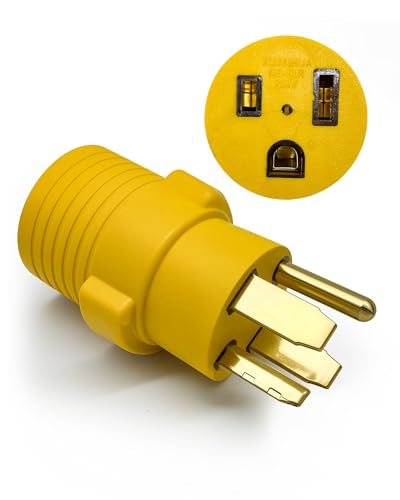
SIPIDEAUT NEMA 14-30P to 6-50R Adapter

SIPIDEAUT NEMA L6-30P to 6-50R Adapter

STARELO 30A Power Inlet Box L14-30P
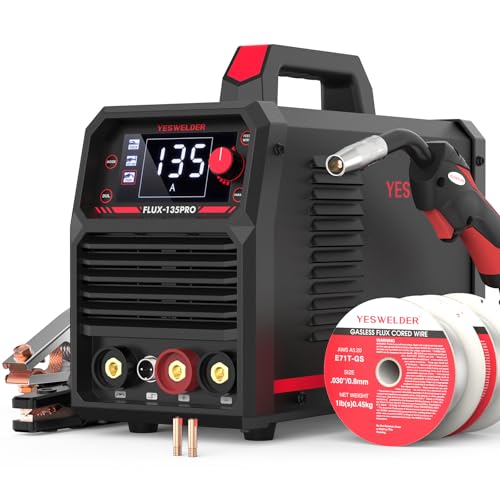
YESWELDER 135A MIG Welder, 110V

YESWELDER 160A MIG Welder, 110V/220V

YESWELDER 205A 5-in-1 MIG Welder

ESAB MINIARC Rogue ES 180i Stick Welder
The Picks, Examined More Closely
The NEMA 14-30P to 6-50R is a plug-and-play adapter that bridges a common home dryer receptacle and a 250V welder outlet, so you can run a shop tool without dedicated wiring. The 14-30P male end (a 4-prong straight-blade configuration common on dryer outlets) slides into a standard wall socket, while the 6-50R female end (a 3-prong straight-blade receptacle) accepts a typical welder plug.
You only need to confirm two things before buying: that your wall outlet is genuinely a 14-30R (not an older 10-30 three-prong dryer socket), and that your welder will not exceed a 30A draw. Most home-shop MIG and stick machines fall under that ceiling. As an alternative path, the SIPIDEAUT NEMA L6-30P to 6-50R adapter (covered below) serves a similar function but targets generator twist-lock outlets.
The Good Stuff
- Turns a dryer outlet into a usable 250V source for welders, EV chargers, and plasma cutters.
- Handles up to 30A, roughly 7,500W at 250V, which covers most home-shop welders.
- Compact, portable, and ready out of the package with no wiring or modification.
- ETL listing signals third-party safety evaluation for the electrical rating.
Things To Consider
- Cap is fixed at 30A, so heavier industrial welders drawing more current are not a match.
- Stored coiled up in a damp garage, the molded plug body benefits from a quick dry inspection before each use.
Who It Suits Best
Home garage welders who already have a 14-30R dryer outlet nearby and run a 30A or smaller welder.
Skip It When
You only have a twist-lock generator outlet, in which case the SIPIDEAUT NEMA L6-30P to 6-50R adapter is the better match.
Where the previous adapter handles a dryer outlet, this one targets portable generators fitted with an L6-30R twist-lock receptacle, a 3-prong locking outlet that prevents the plug from vibrating loose in mobile or field conditions. The L6-30P side locks into the generator, and the 6-50R side presents the same 250V straight-blade connection your welder expects.
For contractors, off-grid farm use, or anyone running a welder off a portable generator, this kind of plug bridge is the missing link. The trade-off shows up around maximum draw. It is also rated to 30A (7,500W at 250V), so your welding amperage must stay inside that window. Beyond that, the locking interface is the real win: twist-lock connectors hold firm where straight-blade plugs might walk out under vibration.
What Works In Its Favor
- Converts a 30A generator twist-lock outlet to a 250V welder receptacle with no rewiring.
- Locking plug design resists disconnection from generator vibration on rough sites.
- ETL listed, giving a baseline safety verification for the electrical path.
- Handy for both welding and other 6-50P shop loads during power outages.
Worth Noting
- 30A ceiling means heavy industrial welders are out of reach.
- Confirm your generator actually has an L6-30R before ordering, since not every portable unit ships with that outlet.
Made For
Generator owners whose portable power unit has an L6-30R twist-lock outlet and who weld at 30A or below.
Look Elsewhere When
You are plugging into a home dryer receptacle, in which case the SIPIDEAUT NEMA 14-30P to 6-50R adapter is a more direct fit.
Unlike the previous plug-and-play adapters, the STARELO 30A Power Inlet Box is a permanent outdoor entry point you mount to a wall or shed. An L14-30P configuration (a 4-prong locking inlet rated for 125/250V service) sits inside a dustproof and weatherproof enclosure designed to take rain, dust, and job-site grime.
The use case is clean: a generator feeds the inlet box from outside, and a matched cable runs inside to a transfer switch or breaker panel. From there, a 6-50 outlet (often built into the panel) feeds your welder. It is a more involved install than the prior adapters, but it also unlocks a proper 125/250V branch circuit up to 7,500W, which is the kind of power farm shops and small workshops actually want.
Good Reasons To Consider
- Hardwired outdoor inlet gives a safer, code-friendly path than a dangling cord through a window.
- ETL listing and 30A/125-250V rating handle full-size 7,500W generator output.
- Dustproof and weatherproof enclosure is built for permanent exterior mounting.
- Plays well with standard L14-30 generator cords, a common format on portable units.
Trade Offs
- Installation requires mounting hardware, a routed cable, and ideally a transfer switch or sub-panel.
- It is a building-block component, so the welder will not run until the rest of the wiring is in place.
Best Suited To
Property owners who want a permanent, weather-protected generator feed that doubles as welding power.
Consider Something Else When
You are renting or need a portable setup, in which case the SIPIDEAUT L6-30P to 6-50R adapter gets you welding without drilling holes.
Shifting away from adapters, the YESWELDER 135A is an entry-level 3-in-1 welder that runs straight off a standard 110V household outlet. It covers flux core MIG, stick, and lift TIG (with an extra torch), so a first-time welder can try three processes without buying three machines. The 135A ceiling is modest, but that is the point: it keeps you inside a normal 15-20A household circuit.
Gasless flux core welding removes the shielding gas cylinder from the equation, which is a real win for outdoor work, windy driveways, or anyone without a bottle and regulator. Compared to the heavier YESWELDER 160A covered next, this one sacrifices dual-voltage flexibility in exchange for being genuinely plug-and-play on a home outlet.
Features That Help
- Runs on a standard 110V outlet with no special wiring required for most home setups.
- Three processes in one: flux core MIG, stick, and lift TIG (extra torch needed).
- Gasless flux core option means no shielding gas cylinder to rent or refill.
- Includes extra flux core wire so you can lay a first bead the same day you open the box.
Points To Keep In Mind
- 110V-only design limits the maximum thickness you can weld comfortably.
- On a 15A household circuit, the duty cycle at high amp settings drops quickly.
The Right Fit
First-time welders, hobbyists, and homeowners who want one affordable machine that runs off a normal wall outlet.
Reach For A Different Pick When
You need 220V output for thicker steel, in which case the YESWELDER 160A gives you dual-voltage flexibility in the same brand family.
The 160A steps up the YESWELDER line by adding dual-voltage input, the ability to switch between 110V and 220V depending on what outlet is available. You get four processes in one box: flux core MIG, gas MIG, stick, and lift TIG, with the same compact footprint as the 135A.
Where the 135A is a pure home-outlet machine, this 160A plays both sides. On 110V, you still pull light garage work. On 220V, the higher amperage opens up thicker steel and longer beads. The trade-off shows up when you add a shielding gas cylinder, since gas MIG requires it and that is an extra cost beyond the welder itself. Compared to the higher-tier 205A below, you give up spool gun aluminum capability.
Real-World Strengths
- Dual-voltage design handles a 110V garage outlet or a 220V shop circuit without a second welder.
- Four-in-one process set covers flux core MIG, gas MIG, stick, and lift TIG (extra torch required).
- 160A ceiling is enough for most 1/4-inch steel work when fed from 220V.
- Reasonable footprint, easier to stash than a transformer-style buzz box.
Some Limits To Know
- Gas MIG mode needs a shielding gas cylinder and regulator, sold separately.
- No spool gun support, so aluminum MIG is off the table without upgrading to the 205A.
Whose Shelf It Belongs On
Garage hobby fabricators who want one welder that flexes between household 110V and shop 220V outlets.
Swap It Out When
Aluminum MIG is on your project list, in which case the YESWELDER 205A adds spool gun support for thinner aluminum work.
The 205A is the most process-rich welder in the YESWELDER family, packing five welding modes into one inverter unit: gas MIG, flux core MIG, spool gun aluminum MIG, lift TIG, and stick. The dual-voltage input (110V/220V) carries over from the 160A, and the 200A output ceiling gives extra headroom on heavier steel.
Spool gun aluminum MIG is the headline feature. A spool gun feeds soft aluminum wire through a small disposable spool, sidestepping the bird-nesting wire tangles that plague hobby aluminum MIG. That capability is what separates this model from the 160A above. You will need to budget for the spool gun and shielding gas as separate purchases, and on 110V input the top end of the amp range throttles back.
Practical Pluses
- Five-in-one process set, including spool gun aluminum MIG, lift TIG, and stick.
- Dual-voltage input matches both household 110V and shop 220V outlets.
- 200A ceiling is comfortable for 1/4-inch plus steel work when fed from 220V.
- Single machine replaces several dedicated welders for a small fabrication shop.
Honest Caveats
- Spool gun is required for aluminum MIG and is sold separately.
- Lift TIG also needs an extra torch, since the standard package is MIG/stick focused.
- On a 110V input, the maximum sustained amperage drops noticeably compared to 220V operation.
Perfect Match For
Home fabricators who want one inverter to cover steel, stainless, and aluminum without owning three separate machines.
Where A Sibling Pick Shines
You mainly weld mild steel at home and want a simpler 110V plug-in, in which case the YESWELDER 135A is a more straightforward match.
The ESAB Rogue ES 180i closes the list with a dedicated stick (and lift TIG) welder built for tougher work. It accepts dual-voltage input (120V or 230V) and pushes 180A of output, enough to run 5/32-inch electrodes for thicker plate work. Stick welding, also called shielded metal arc welding (SMAW), uses a consumable electrode coated in flux and is the process of choice for repair, field work, and dirty or painted steel.
Where the YESWELDER units cover hobby and DIY use, the Rogue targets professionals. Features like adjustable hot start (a brief amperage boost to ignite the arc), arc force control, and a dedicated 6010 stick mode (a deep-penetration cellulosic electrode favored in pipeline and structural work) make it more than a beginner box. The IP23S rating signals resistance to falling water and light rain, useful for outdoor job sites. Compared to the YESWELDER 205A, you give up MIG and aluminum entirely for stick-focused build quality.
Useful Strengths
- 180A output runs electrodes up to 5/32 inch, covering most structural and repair stick work.
- Dual-voltage input (120V or 230V) plus IP23S rating suits indoor and outdoor job sites.
- Adjustable hot start and arc force make arc striking easier on cellulosic 6010 rods.
- Power factor control helps the unit play nicely with generators and long extension cords.
Potential Drawbacks
- Stick and lift TIG only, no MIG or flux core option out of the box.
- Higher price tier than the YESWELDER inverters above, which reflects the pro-focused build.
Who Should Grab It
Ranch owners, contractors, and serious fabricators who need a rugged stick welder for repair and structural work.
Not Your Match When
You mostly run MIG on mild steel at home, in which case the YESWELDER 160A is a friendlier entry point.
Matching Welder Generators To Your Outlet And Skill Level
Voltage, Amperage, And Outlet Type
A welder generator setup starts with the outlet you actually have, not the machine you want. For home use, a 110V receptacle supports light flux core MIG up to about 140A. For thicker steel and longer beads, a 220V dryer-style outlet (NEMA 14-30 or 6-50) is the realistic floor. Portable generators typically expose twist-lock outlets, with L6-30R and L14-30R being the most common forms. Match the welder amperage to the outlet rating, since pulling more amps than the receptacle supports trips breakers or overheats wiring.
Process Match To Skill Level
MIG (metal inert gas welding) is the most beginner-friendly process: a wire feed, a trigger, and a steady hand are usually enough for clean beads. Stick (SMAW) demands more electrode control but handles dirty or outdoor metal. TIG (tungsten inert gas welding) is the most precise and the slowest to learn. A 3-in-1 or 5-in-1 inverter lets you start on flux core MIG and grow into stick or lift TIG on the same chassis.
Duty Cycle And Real-World Work
Duty cycle is the percentage of a 10-minute window the welder can run at a given amperage without overheating. A 30% duty cycle at 160A means 3 minutes welding, 7 minutes cooling, at full output. Real farm and shop work rarely runs flat out, so a moderate duty cycle is rarely a dealbreaker. The honest read is that duty cycle matters most on long beads, heavy plate, and stick electrode work where heat builds up quickly.
Portability And Field Use
If you weld away from a fixed shop, weight and enclosure rating matter. IP23S enclosures (a standard rating where the second digit rates water protection, here against falling spray) shrug off light rain. A built-in handle and a sub-30-pound body make a welder easier to load into a truck. Generator-powered welders also benefit from power factor control, a feature that smooths the electrical draw so the welder and generator play nicely together.
Key Considerations Across These Picks
Pitfalls Shoppers Hit
The most common mistake is choosing a welder that draws more amps than the outlet can supply. A 200A welder on a 110V/15A household circuit will trip the breaker before you strike an arc. Another trap is ignoring plug format: a generator with an L14-30R twist-lock will not accept a dryer-style 14-30P plug without an adapter, and a 6-50P welder will not plug into a 14-30R directly. Buying the wrong process is a third slip. A pure stick welder will frustrate someone who wanted to lay down clean MIG beads on sheet metal.
Where The Extra Money Goes
Higher-tier welders earn their cost in three places: build quality, electronics, and process coverage. A heavier-duty transformer and better thermal management translate into longer duty cycles, the share of a 10-minute window the machine can weld at full output. Inverter electronics add features like hot start, arc force, and generator compatibility. A 5-in-1 like the YESWELDER 205A covers steel, stainless, and aluminum in one box, while a dedicated stick machine like the ESAB Rogue trades MIG for the ruggedness professionals need on rough job sites. The upgrade pays off for heavy use, thicker steel, and the ability to weld aluminum without a second machine.
Frequently Asked Questions
Can a welder generator power a home welder?
Yes, with the right adapter and enough generator capacity. A 30A generator outlet, like an L6-30R or L14-30R, can feed a 30A welder through a matching adapter, provided the generator itself is rated to handle the welder’s surge load. Most home-shop welders up to about 200A run fine on a 7,000-9,000W portable generator.
What size generator do I need to run a 200A welder?
Plan on at least 8,000 to 10,000 running watts for a 200A inverter welder, accounting for the inrush current (the brief amperage spike at arc start) that small generators struggle with. Smaller inverter welders (135-160A) often run on 5,000-7,000W units. Generator compatibility features like power factor control help the welder play nicely with mid-size portable units.
Is a 110V or 220V welder better for home use?
A dual-voltage welder is the most flexible, since you can start on a 110V household outlet and grow into a 220V circuit later. Pure 110V machines are simpler to set up but limit you to thinner steel and shorter beads. 220V-only welders deliver more output but require a dedicated outlet or adapter from a dryer or generator source.
Can I plug a welder into a dryer outlet?
Yes, with a 14-30P to 6-50R adapter, as long as the welder draws 30A or less. Older three-prong dryer outlets (10-30) do not match this adapter, and using one risks a poor ground path. Confirm the outlet rating before plugging in.
Do I need shielding gas for MIG welding?
Gas MIG (solid wire MIG) requires a shielding gas cylinder, typically argon/CO2 mix for steel, to protect the weld pool from contamination. Flux core MIG uses a tubular wire filled with flux and does not need an external gas bottle, which is why flux core is popular for outdoor and windy conditions.