


Working on a repair, fabrication, or restoration job usually means facing steel that is not exactly clean. Light surface rust, old paint, and shop grime all complicate welding, and using a standard mild steel rod through that mess produces porosity, weak fusion, and frustration. The right electrode cuts through contaminated material, holds a steady arc on dirty plate, and gives you a sound weld even when prep time is limited.
This roundup focuses on rods built to handle less-than-pristine steel, covering stick electrodes designed for rusted or oily stock and a TIG filler option for users who prefer gas-shielded work. Below you will find options for garage hobbyists, farm repair work, structural fabrication, and budget restocks, with the trade-offs called out honestly so you can match the rod to your welder, your material, and the mess in front of you.
Your Options, Compared

Blue Demon ER70S6 Carbon Steel TIG Rod 3/32″

TOOLIOM E6013 Carbon Steel Stick Electrodes 3/32″ 10LB
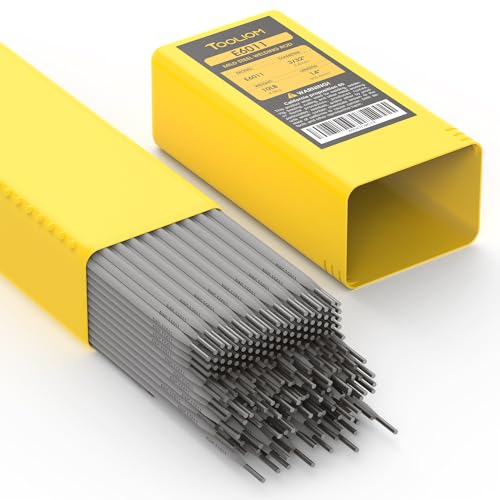
TOOLIOM E6011 Stick Electrodes 3/32″ 10LB

TOOLIOM E7018 Low-Hydrogen Electrodes 1/8″ 10LB

TOOLIOM E7018 Low-Hydrogen Electrodes 3/32″ 10LB

TOOLIOM E7018 Electrodes 3/32+1/8″ 5LB Combo

TOOLIOM E6011 Stick Electrodes 1/8″ 10LB
Inside Each Recommended Option
Stick electrodes dominate rusted-metal work, but TIG users still need a filler that tolerates imperfect surfaces. The Blue Demon ER70S6 rod is a mild steel TIG filler (a thin wire fed by hand into a tungsten inert gas weld puddle) packaged in a 1-pound tube at the 3/32-inch diameter most garage welders reach for. Its manganese and silicon content is higher than basic ER70S wire, which helps the puddle stay fluid over light contamination.
This rod suits hobbyists running a small TIG machine on mild steel automotive panels, brackets, and tubing. It is not a magic wand for thick rust scale, but it forgives a quick wipe-down better than a standard filler. Garage TIG owners already comfortable dialing in gas flow on a scratch-start or HF unit (high-frequency start, the arc-ignition method common on most modern TIG machines) will appreciate the consistency.
Reasons It Performs
- Higher deoxidizer content (manganese and silicon) helps the puddle handle mild surface contamination without porosity
- 3/32-inch diameter suits most small-footprint TIG machines used in home shops
- Carbon steel composition matches common structural and automotive mild stock
- Packaged in a sealed tube, which limits moisture pickup during storage in humid garages
Things To Weigh
- Works best after at least a wire-brush pass; heavy rust scale still demands grinding first
- TIG demands a clean gas shield, so wind and drafts will hurt results outdoors more than with stick
- 1-pound tube runs out faster on bigger projects than the 10-pound stick rod packs in this roundup
Feature Snapshot
Whose Bench It Belongs On
Shop owners and serious hobbyists who already run a TIG machine and want a forgiving mild steel filler for less-than-pristine stock.
Consider Something Else When
The TOOLIOM E6011 Stick Electrodes 3/32″ 10LB is a better fit for anyone without a TIG setup, since stick welding tolerates much heavier rust without shielding gas.
Not every dirty-metal job calls for an aggressive penetrating rod. The TOOLIOM E6013 is a general-purpose mild steel stick electrode that runs on AC or DC (alternating or direct current) and produces a smooth, steady arc with a soft, easy-to-control puddle. It is the rod many first-time welders learn on, and it handles light surface oxidation on thin to medium plate without much fuss.
This 10-pound pack of 3/32-inch rods suits weekend garage work, trailer touch-ups, fence repairs, and sheet metal patches where the base metal is not heavily scaled. Pair it with a small 120V inverter (a compact welder that plugs into a standard household outlet) or any entry-level stick machine and you get consistent results even when you cannot grind every square inch clean. Compared with the TOOLIOM E6011 a couple rows down, this rod prioritizes bead appearance and ease over brute-force penetration.
The Good Stuff
- AC and DC compatibility means it works on hobby welders and transformer machines alike
- Smooth arc and minimal spatter keeps cleanup time short for home users
- All-position capability allows flat, vertical, and overhead work without changing rod
- 10-pound pack value covers months of small projects before running dry
Points To Keep In Mind
- Not designed for deep rust or thick scale; pre-cleaning is still wise on neglected steel
- Lower penetration than E6011 means it struggles on poorly fitted, gap-heavy joints
The Right Fit
Beginners and home DIYers running a small stick welder on light to medium gauge steel with only mild surface rust.
Skip It When
The TOOLIOM E6011 Stick Electrodes 3/32″ 10LB is the smarter grab for anyone facing heavy rust, oily plate, or joints with wide gaps that need deep bite.
When the steel in front of you is genuinely grimy, the E6011 is the workhorse most professionals reach for. The TOOLIOM E6011 in 3/32-inch diameter delivers the deep arc penetration that cuts through rust, paint residue, and light oil while still running on a small AC buzz box (a basic transformer-style stick welder common in farm shops and home garages).
Farm repairs, equipment brackets, gate hinges, and outdoor structural fixes all benefit from this rod’s aggressive bite. The 3/32-inch size keeps the heat input low enough for thinner plate, though serious thick-section work on heavy dirty steel calls for the 1/8-inch sibling a few rows down. For most field repairs where you cannot bring the work back to a clean bench, this is the go-to stick in a 10-pound pack.
Practical Advantages
- Penetrates through rust, oil, and paint residue without pre-grinding in many situations
- Runs on AC power sources, making it compatible with basic farm and home welders
- All-position welding means you can use it overhead or vertical on equipment repairs
- 10-pound pack covers dozens of typical repair jobs before needing a restock
Worth Noting
- More spatter than E6013 means extra grinding and chipping to clean the finished bead
- Rod storage matters; moisture exposure can cause porosity on the first few strikes from a damp stick
Made For
Farmers, mobile welders, and rural property owners who need a forgiving stick rod for repairs on equipment, trailers, and outdoor steel that cannot be fully cleaned.
Not Your Match When
The TOOLIOM E7018 Low-Hydrogen Electrodes 1/8″ 10LB is the right call for code-critical structural welds where X-ray quality (the radiographic inspection standard used to certify welds) and low-hydrogen performance matter more than rust tolerance.
Low-hydrogen rods earn their reputation on critical welds where cracking and porosity cannot be tolerated. The TOOLIOM E7018 in 1/8-inch diameter is the heavy-section choice in this category, depositing dense, X-ray-quality weld metal with iron powder and a flux coating that holds hydrogen levels low. Pre-heating the joint is wise even on clean steel, so this rod rewards users willing to follow procedure.
Shops and serious fabricators working on pressure vessels, structural frames, and high-sulfur steel (steel with elevated sulfur content, which increases crack risk during welding) reach for 1/8-inch E7018 over the lighter 3/32-inch version. It needs more amperage, but the resulting weld is stronger and more ductile (able to flex and deform without breaking). Pair it with a 200-amp or larger machine for the best puddle control.
A Favorable Mix
- Low-hydrogen flux coating reduces the risk of underbead cracking on thick or high-carbon plate
- 1/8-inch diameter handles thick sections and multi-pass welds without burning through
- AC and DC compatibility broadens welder options for fab shops
- Smooth arc and easy slag release (the glassy coating that forms on top of the weld lifts off cleanly) reduces post-weld grinding time
Trade Offs
- Not a dirty-metal rod; heavy rust still demands grinding and pre-cleaning to reach spec
- Requires higher amperage than smaller stick electrodes, limiting use on entry-level 120V welders
- Moisture-sensitive flux means rods need a hot oven or rod quiver storage to stay usable
Best Suited To
Professional welders and experienced fabricators running 200-amp class machines on structural steel, pressure equipment, or code-required joints.
Where Another Pick Suits Better
The TOOLIOM E6011 Stick Electrodes 3/32″ 10LB is the better fit for dirty field repairs where low-hydrogen performance is less critical than rust tolerance.
Sometimes a 1/8-inch rod lays down too much heat for the steel in front of you. The TOOLIOM E7018 in 3/32-inch diameter brings the same low-hydrogen chemistry to thinner material and smaller machines, letting you run code-grade welds on plate that would burn through with the heavier sibling.
This size pairs well with mid-sized inverter welders in the 140- to 180-amp class, which most home fabricators already own. It is also handy for root passes (the first weld bead laid into a joint groove, which the rest of the weld builds on) on thicker plate where a smaller rod gives better control before stepping up to a 1/8-inch cap pass (the final, visible weld bead laid on top of earlier passes). The trade-off versus the larger E7018 is deposition rate, meaning you fill metal more slowly, so budget extra time for multi-pass joints.
Real-World Strengths
- 3/32-inch size runs on smaller welders that cannot push enough amps for 1/8-inch E7018
- Low-hydrogen flux protects against cracking on higher-carbon or dirty-adjacent steel
- All-position capability supports overhead and vertical work on detail fabrications
- Clean bead profile with minimal spatter saves post-weld cleanup time
Less Ideal Details
- Still demands clean steel; this is not a substitute for E6011 on truly rusted joints
- Flux coating absorbs moisture quickly in humid shops without proper rod storage
Quick Facts
Who Should Grab It
Fabricators running 140- to 180-amp welders who need code-grade beads on medium-thickness steel or root passes on heavier plate.
Look Elsewhere When
The TOOLIOM E7018 Electrodes 3/32+1/8″ 5LB Combo is the smarter buy for shops that want both diameters on hand without committing to a full 10-pound pack of each.
Buying two full 10-pound boxes of E7018 is overkill for many small shops. TOOLIOM solves that by bundling both common diameters, 3/32-inch and 1/8-inch, into a single 5-pound combo pack. You get half the weight of the dedicated 10-pounders but access to both rod sizes for varied work.
Home fabricators tackling a mix of thin sheet, medium plate, and the occasional heavy repair get the most from this pack. It is also useful for welders still learning which diameter fits their machine and typical material thickness, since you can experiment without committing to 10 pounds of either size. The low-hydrogen flux chemistry still demands proper storage in humid environments.
Positive Points
- Two diameters in one pack cover thin plate, medium stock, and thick-section root or cap passes
- Lower total weight than buying two full 10-pound boxes suits smaller shops and occasional welders
- Low-hydrogen chemistry matches the larger 10-pound TOOLIOM E7018 siblings for consistent weld quality
- AC and DC compatibility broadens welder pairing options for hobby and pro users alike
Small Caveats
- 5-pound total weight means heavier users will deplete the pack quickly on big jobs
- Same moisture sensitivity as the larger E7018 packs, so a rod oven or sealed storage is wise
Right Fit For
Garage welders and small fabrication shops that want E7018 quality in both common diameters without buying full-size boxes of each.
Another Choice May Suit
The TOOLIOM E6011 Stick Electrodes 1/8″ 10LB is a better match for shops that weld primarily on dirty field steel and want rust tolerance over low-hydrogen performance.
The 1/8-inch version of TOOLIOM’s E6011 line steps up to the heavy dirty-metal jobs that the 3/32-inch sibling cannot quite reach. More filler metal per pass, deeper penetration, and stronger arc force make it the right call for thick vehicle frames, trailer crossmembers, and farm equipment plate that has sat outside for years.
You will need a welder with real amperage behind it, since 1/8-inch E6011 wants at least 140 amps for a stable arc. Pair it with a 200-amp machine and you can lay down fast, deep welds on rusty 1/4-inch and 3/8-inch plate without extensive grinding. Compared with the smaller 3/32-inch E6011 covered earlier, this rod sacrifices finesse for raw deposition power.
What Makes Sense
- 1/8-inch diameter drives deep penetration through heavy rust, scale, and oil residue on thick plate
- Higher deposition rate fills gaps and grooves faster than the 3/32-inch E6011 version
- AC and DC operation suits a wide range of shop and farm welders
- 10-pound pack handles major repair projects without constant restocking
Practical Considerations
- Too much heat for thin sheet or tube; you will blow through 16-gauge (about 1.6 mm thick) steel quickly
- Heavy slag coverage means more chipping and grinding to clean welds for paint or finish work
Built With In Mind
Restoration shops, mobile welders, and heavy-equipment owners who routinely work on thick rusted plate with 200-amp class welders.
Swap It Out When
The TOOLIOM E6011 Stick Electrodes 3/32″ 10LB is the better match for thinner dirty-metal work or smaller welders that cannot push enough amps for 1/8-inch rods.
What Matters When Choosing Welding Rods For Rusty Metal
Picking the right rod starts with the condition of the steel and the welder on your bench. Match the electrode to the mess, the metal thickness, and the machine you are running rather than grabbing whatever is on the shelf.
Rod Type And Penetration
For genuinely dirty or rusty steel, E6011 stick electrodes are the forgiving workhorses, since their flux burns through light contaminants and digs deep into the base metal. E6013 rods offer smoother arcs and cleaner beads but demand more pre-cleaning. E7018 low-hydrogen electrodes deliver code-grade strength and crack resistance on thicker or higher-sulfur steel, but they want clean surfaces and proper storage. TIG users filling on less-than-pristine plate benefit from ER70S-6 filler, which carries extra deoxidizers (manganese and silicon) to keep the puddle stable.
Diameter And Amperage
Rod diameter controls heat input and weld penetration in equal measure. Smaller 3/32-inch rods run on entry-level welders and suit thin to medium plate, while 1/8-inch rods push more filler and need at least a 140-amp machine. Going up to 5/32-inch is possible on heavy structural work but requires serious amperage. Pairing rod size to material thickness prevents burn-through on sheet metal and cold laps (poor fusion where the weld fails to fully melt into the base metal) on heavy plate.
Welder Compatibility
Most stick electrodes in this roundup run on AC or DC, which means they pair with transformer buzz boxes, inverter welders, and engine-driven welders alike. TIG rods require a TIG machine with shielding gas, and low-hydrogen rods benefit from a rod oven or sealed quiver to keep moisture out of the flux coating. Always match polarity and amperage to the rod manufacturer guidance rather than guessing.
Key Considerations Across These Picks
Where Shoppers Go Wrong
Choosing a low-hydrogen E7018 rod for genuinely rusty field repair is one of the most common mistakes, since low-hydrogen flux is moisture-sensitive and will produce porosity on dirty, cold steel. Reaching for the heaviest 1/8-inch rod on a small 120V inverter leads to arc struggles and frustration. Storing opened stick rods loose in a damp garage destroys their usability overnight, so invest in a sealed container or rod oven from day one.
When Paying More Pays Off
Higher-tier E7018 rods cost more per pound, but the upgrade pays off on structural welds, pressure equipment, and any joint where cracking is a safety concern. The denser weld metal, low-hydrogen chemistry, and cleaner bead profile reduce rework, grinding time, and inspection failures. For occasional hobby welding on non-critical steel, the cheaper E6011 and E6013 rods deliver more value, but on code-grade work, the extra cost of E7018 is genuinely worth it.
Frequently Asked Questions
What is the difference between E6011 and E6013 welding rods?
E6011 penetrates deeply and handles rust, paint, and oil, making it the go-to for dirty field repairs. E6013 lays smoother beads with less spatter but needs cleaner steel to perform well, so it suits home shop work on lightly oxidized material.
Can I weld rusty metal without grinding it first?
Yes, with E6011 electrodes the flux and deep arc force can burn through light surface rust and paint residue. Heavy flaking scale, deep pitting, or thick oil still demand at least a wire brush or flap-disc pass to avoid porosity and weak fusion.
What size welding rod should I use for rusty steel?
3/32-inch rods work on thin to medium plate and run on small welders, while 1/8-inch rods handle thicker sections and require at least 140 amps. Match the rod diameter to your material thickness and the amperage your machine can deliver.
Do I need to keep E7018 rods in an oven?
Yes, low-hydrogen rods absorb moisture from humid air, which causes porosity and hydrogen cracking. A rod oven, sealed quiver, or even a homemade warm storage box keeps the flux dry and the welds sound between uses.
What polarity should I use with E6011 rods?
E6011 typically runs on DC positive (electrode positive, or reverse polarity) for the deepest penetration, but it also works on AC for older transformer welders. Check your machine’s polarity switch and the rod packaging before striking an arc.




