


A diamond blade that loses its edge halfway through a porcelain slab is the fastest way to ruin a weekend project. Choosing the wrong rim, bond, or arbor size can turn a clean score into a chipped mess, and it happens more often than most folks expect. The right wet saw blade depends on what you actually cut, how often you cut it, and the grinder or saw sitting on your bench. This list sorts through nine solid options across tile, stone, masonry, and pruning work, so you can match the blade to the job without burning money on the wrong fit.
The Picks In Brief
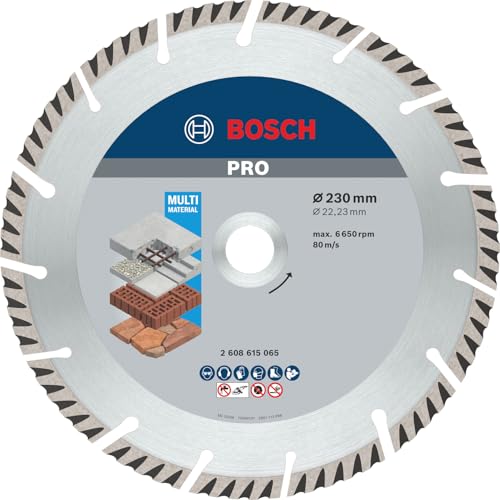
Bosch PRO MultiMat Diamond Disc for Large Grinders

SEDY 15 Inch Japanese Teeth Reciprocating Saw Blades 3 Pack

SEDY 12 Inch Japanese Teeth Reciprocating Saw Blades with Storage Box 5 Pack

SEDY 15 Inch Japanese Teeth Reciprocating Saw Blades 5 Pack

SEDY 6-Piece Japanese Teeth Reciprocating Saw Blade Set 12 and 15 Inch
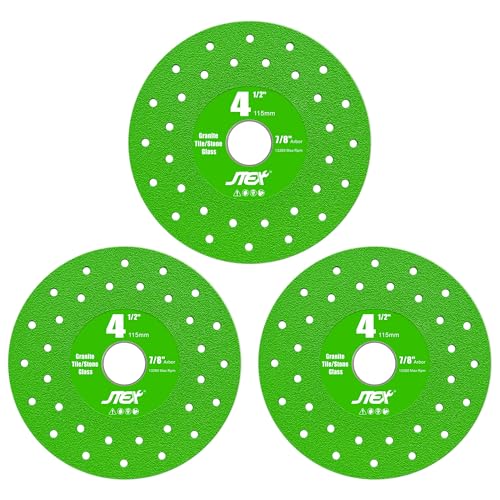
JTEX 4-1/2 Inch Rock Slab Grinding Disc for Angle Grinder 3 Pack

SEESII 4.5 Inch Diamond Blade for Angle Grinder 2 Pack

Solidure 5 Inch Turbo Granite Saw Blade
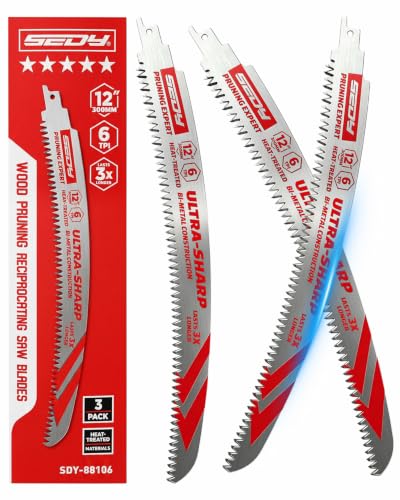
SEDY 12 Inch Japanese Teeth Reciprocating Saw Blades 3 Pack
The Details Behind The Selections
The Bosch PRO MultiMat earns its spot because it doesn’t ask you to pick one trade. Most diamond discs lean hard into either tile, masonry, or metal, and the rest get chewed up as a side effect. This one uses a continuous rim with a bond tuned for multi-surface work, which matters the moment you switch from a porcelain tile to a piece of slate without swapping wheels.
It fits large angle grinders through a 22.23mm arbor, the standard on most full-size 7-inch and 9-inch tools. For shop owners cutting mixed orders and for serious DIYers running a single grinder for a weekend kitchen remodel, that versatility pays off fast. In our view, the wider rim also resists wandering better than cheaper turbo blades when scoring thinner ceramic.
Useful Strengths
- Multi-surface bond handles tile, stone, and masonry on one wheel
- 22.23mm arbor fits the largest grinder category without adapters
- Continuous rim keeps the cut line steady on glazed ceramic
- Larger diameter covers longer reach and deeper passes
- Brand-name consistency helps with repeat orders on a job site
Worth Noting
- It is sold through the global store, so packaging and included accessories may differ from domestic equivalents
- Manufacturer warranty coverage can vary outside the standard local terms
Right Fit For
You split your time between tile, masonry, and occasional stone, and you want one diamond wheel that handles the rotation without a swap pile on the bench.
Look Elsewhere When
You’re cutting thick granite or porcelain pavers all day; the Solidure 5 Inch Turbo Granite Saw Blade is built for that workload.
The 15-inch SEDY blade is the longest option in the pruning group, and length matters when the limbs get thick. Its Japanese tooth pattern (a triple-ground offset tooth layout that engages wood at three angles) cuts aggressively through green wood and wet branches that stall standard blades, and the arc edge adds contact area to keep the stroke from skipping.
Three blades ship in the box, which is enough for a full cleanup of a storm-damaged yard without reloading. Property owners with mature trees, or contractors clearing lots, will find the reach a real asset. For a smaller yard with saplings and brush, the shorter 12-inch pick handles that scale better.
Practical Pluses
- 15-inch reach handles thick trunks and high limbs in one stroke
- Arc edge design keeps the blade seated in the cut longer
- Three-pack value covers larger projects without mid-job orders
- Pulls through green, wet, and dry wood with similar aggression
Trade Offs
- Longer blades can whip and chatter in tight spaces between branches
- Reciprocating saws vary in stroke length, so the full reach may not engage on every tool
Made For
You maintain a property with mature trees or rough growth, and you need reach and bite more than finesse.
Where Another Pick Suits Better
You mostly trim smaller brush and want a tidier storage solution; the SEDY 12 Inch set with storage box (Item 3) is the cleaner fit.
Five blades plus a hard storage case is a small thing that changes the day-to-day. You can toss the kit in the truck, the garage shelf, or a closet without hunting for loose blades later. The 12-inch arc edge profile matches the cutting performance of the longer siblings but in a more compact package.
This is a smart pick for suburban homeowners who prune seasonally and value being able to find a fresh blade six months later. Compared to the bare 3-pack options earlier in the list, you trade a small premium for a noticeable organization upgrade. In most home garages, that’s a fair swap.
The Practical Payoff
- Storage case keeps blades organized and protected from moisture
- 12-inch length is the most versatile size for a home reciprocating saw
- 5-pack covers multiple seasons of weekend trimming
- Arc edge reduces binding when cutting freshly cut, sappy wood
Small Caveats
- Case adds bulk if you only need a single blade for one task
Who It Suits Best
You prune a few times a year, want blades ready to find, and don’t need maximum reach for tall trees.
Consider Something Else When
You mostly clear thick storm debris with long limb spans; the 15-inch pick (Item 4) reaches further per stroke.
Where Item 2 gave you three long blades, this 5-pack doubles down. You get the same 15-inch Japanese tooth pattern, the same arc edge geometry, just more of them. That makes sense for arborists, rural property owners, and anyone facing a season of heavy cleanup where a dulled blade mid-cut isn’t an option.
The trade-off shows up in storage, since five long blades take up real shelf space without the included case of Item 3. If your work tends to come in bursts, you may find the bulk convenient. For light weekend gardeners, the 3-pack is plenty.
Where It Delivers
- Five long blades cover sustained heavy cutting sessions
- Japanese tooth pattern handles green and dry wood without slowing
- Compatible with most standard reciprocating saw shoe fittings
Points To Keep In Mind
- No case included, so you’ll need a separate storage plan
- 15-inch length can flex on smaller, lower-amp reciprocating saws
Best Suited To
You maintain larger properties or run a small tree care side business and burn through blades faster than the average homeowner.
Not Your Match When
Your work fits in a single weekend a few times a year; the 3-pack (Item 2) covers that scale without excess.
This set mixes 12-inch and 15-inch blades in one bundle, which sidesteps the usual buyer’s dilemma. You keep the shorter blade for tight cuts between fence slats, and pull the longer one for overhead limbs. The arc edge Japanese tooth design carries across both sizes, so cutting feel stays consistent regardless of which one you grab.
For folks who maintain a mix of small fruit trees, ornamental shrubs, and the occasional larger limb, that flexibility is more useful than an all-one-size pack. The honest read is that the bundle price lands above the 3-pack, so it’s worth it when you genuinely use both sizes.
A Few Highlights
- Mixed 12 and 15-inch sizes handle varied pruning tasks in one order
- Same Japanese tooth design across both sizes for predictable cuts
- Six blades offer strong longevity for hobbyist woodcutters
Some Limits To Know
- Higher upfront cost than single-size packs
- No dedicated case, so blade organization is on you
Who Will Love This
You have a yard with mixed pruning needs, from small branch cleanups to occasional heavy limb removal.
Swap It Out When
You only ever cut one size of material; picking a focused 12 or 15-inch set (Item 3 or Item 4) saves money.
The JTEX disc goes thin on purpose. At roughly 1mm of thickness, it slices rather than grinds, which matters for shaping rock, marble, and porcelain slabs where material loss adds up. The high manganese steel body with brazed diamond segments pulls heat away from the cut, and the porous design helps prevent glazing on long passes.
It fits a standard 7/8-inch arbor with a bushing ring, so it works on most 4.5-inch angle grinders out of the box. Stone hobbyists, jewelry makers cutting rough rock, and tile installers who trim stone in place all benefit from this profile. For general construction masonry, a thicker segmented blade is usually faster.
Advantages To Know
- Ultra-thin kerf (the width of material removed by the cut) preserves expensive slab material
- 7/8-inch arbor with bushing ring fits common angle grinders
- Three-pack covers multiple stone types without mid-project swaps
- Porous body design reduces heat buildup on long scoring cuts
- Brazed diamond segments hold up across rock, tile, marble, and porcelain
Honest Caveats
- Thin design cuts slower than thicker segmented turbo blades on dense stone
- Best used with light pressure; aggressive pushing can chip the rim
Right Fit For
You shape and trim slabs of stone, marble, or porcelain where finish quality matters more than raw cutting speed.
A Better Fit Elsewhere
You’re cutting masonry blocks or hard pavers in volume; the Solidure 5 Inch Turbo Granite Saw Blade (Item 8) drives through those faster.
The SEESII blade is a workhorse 4.5-inch diamond wheel aimed squarely at the DIY tile and masonry market. The segmented turbo rim clears debris as you cut, which keeps the blade from loading up during longer passes. Two blades come in the box, so you have a backup when the first one wears out or you hit a hidden fastener.
For homeowners running a renovation, this is the most approachable entry point. You get a usable blade on day one and a spare in the drawer for the next project. The honest read is that it doesn’t carry the premium bond chemistry of higher-priced options, so heavy daily use will shorten its life.
Strong Points
- Segmented turbo rim clears dust and debris for cooler cutting
- Two-pack value covers a full DIY project plus a backup
- Standard 4.5-inch size fits most home angle grinders
- Handles tile, masonry, and general stonework in one wheel
Points To Note
- Bond hardness may wear faster on professional daily use
- Not optimized for ultra-fine porcelain where a continuous rim cuts cleaner
Who Should Grab It
You tackle a bathroom retile or a small patio each year and want a reliable blade that won’t gather dust between uses.
Where Another Pick Suits Better
You’re working with natural stone slabs; the JTEX Rock Slab Grinding Disc (Item 6) is tuned for that material.
The Solidure 5-inch turbo blade earns its spot when granite and hard stone enter the picture. Its 8mm thick segments and slant protection teeth (small bevels that keep the rim from wearing unevenly on the underside) are engineered for hard material where thinner wheels would slow down or chip. The 7/8-inch to 5/8-inch arbor range covers most 5-inch angle grinders and tile saws.
You can run it wet or dry, which matters for indoor countertop cuts where water containment is awkward. Stone fabricators and serious DIYers working on a kitchen remodel will lean on this for speed. It is overkill for soft ceramic, so the SEESII 4.5-inch (Item 7) handles that budget better.
What Works In Its Favor
- 8mm segment thickness drives through dense granite without bogging
- Slant protection teeth reduce under-cutting on long passes
- Wet or dry capability suits different shop setups
- Cuts granite, marble, porcelain, and ceramic tile
Less-Strong Areas
- Heavier kerf than thin blades, so it removes more material per pass
- Higher segment aggression can chip delicate glazed tile if you’re not careful
Built With In Mind
You work with hard stone regularly, from countertop fitting to paver cuts, and need a blade that won’t slow you down.
Reach For A Different Pick When
Your projects center on softer wall tile; a 4.5-inch continuous rim blade gives cleaner edges on those.
The shorter SEDY 3-pack fills the gap between small brush blades and the longer 15-inch options. At 12 inches with the same arc edge Japanese tooth pattern, it works well on saplings, shrubs, and small tree limbs, which is what most home pruning jobs actually look like. Three blades give you a working blade, a backup, and a sharp one for the final pass.
Compared to the 12-inch 5-pack with case (Item 3), you save space and dollars but lose the storage case. The trade-off makes sense for a small workshop shelf. If you tackle bigger trees, the longer blades (Items 2, 4, or 5) will reach where this one stops.
A Strong Showing
- 12-inch length suits the most common home pruning tasks
- Arc edge Japanese teeth handle green, dry, and wet wood
- 3-pack strikes a balance between price and longevity
What To Weigh
- No included case, so storage is on you
- May feel underpowered for thick trunks beyond small tree scale
Perfect Match For
You handle seasonal yard cleanup with mostly small-to-medium branches and want a balanced, no-fuss pack.
Skip It When
Your work frequently involves large-diameter limbs; the 15-inch picks (Items 2 or 4) provide the extra reach.
Choosing The Right Wet Saw Blade For Your Project
A wet saw blade earns the name by using water to cool the cut and carry away dust, which extends diamond life and reduces airborne particles. Most home wet saws run 7-inch or 10-inch blades, so matching the diameter to your saw is the first filter. Continuous rim blades cut the cleanest on ceramic and porcelain, while segmented rims clear debris faster on stone and masonry.
TPI, or teeth per inch, governs how fine a blade cuts. Higher TPI means smoother edges on finished material, while lower TPI pulls through green wood and rough stock faster. The pruning blades in this list run 6 TPI, which is the sweet spot for wood cutting. Arbor size matters just as much; a blade that doesn’t seat on your spindle is useless regardless of its cutting ability.
Bond hardness controls blade life. Soft bonds release worn diamond and expose fresh grit, which suits hard materials like granite. Hard bonds hold the diamond longer for softer, abrasive materials. Matching bond to material is the difference between a blade that lasts two cuts and one that lasts two months.
Finally, think about workflow. A 2-pack covers a single weekend project. A 5-pack with a storage case suits a year of intermittent work. Match the pack count to the job, not to the lowest number on the shelf, and you’ll spend less time reordering mid-project.
Key Points Worth Weighing Before You Buy
Mistakes Worth Dodging
The most common error is matching a blade to the tool without matching it to the material. A diamond blade tuned for ceramic glaze will glaze over and burn through dense granite in minutes. The reverse happens just as often, with a hard-bond masonry blade skating across porcelain without biting in.
Another trap is ignoring arbor size. Angle grinders and wet saws use different spindle threads, and a 7/8-inch blade won’t seat on a tool expecting 5/8-inch without a bushing. Check the tool’s manual before the order, not after. For reciprocating saw blades, a 15-inch blade on a saw with a 7/8-inch stroke will only deliver a fraction of its reach, so tool and blade geometry have to align.
When Paying More Pays Off
Spending more on a diamond blade typically buys a harder bond, better segment retention, and longer life under heat. For a one-time bathroom tile, a value pick covers the workload. For a kitchen countertop or a season of regular fabrication, premium bonds prevent the frustrating mid-project failure where a cheap blade rounds over and stops cutting. The upgrade is worth it when downtime costs more than the price difference between blades.




