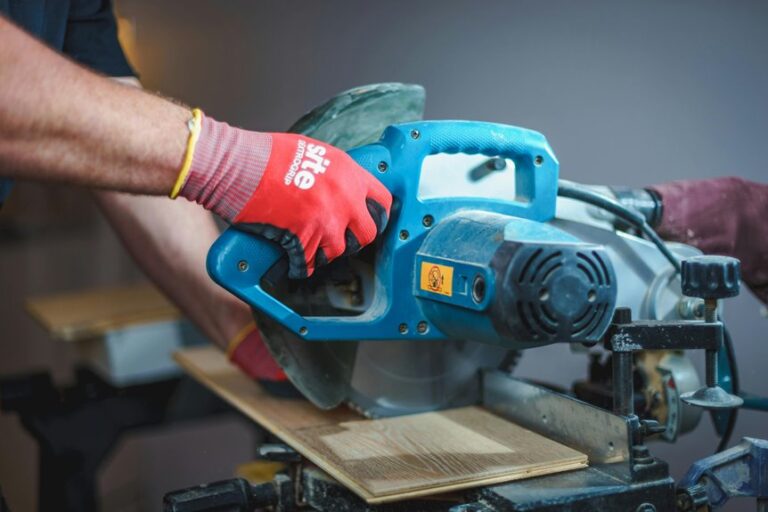
Tiling a bathroom floor, rebuilding a backsplash, or finally trimming that awkward corner of slate can stall fast without the right wet saw. Plenty of shoppers land on a model that looks capable on the box, only to find the rip capacity falls short, the blade wanders through porcelain, or the water tray never quite behaves. This roundup focuses on wet tile saws under 200 that match realistic project scopes, from a full 10-inch benchtop rig down to handheld masonry saws and replacement diamond blades. The goal is simple: help you pick a tool that fits the work, the workspace, and your comfort with the material.
The Essentials At A Glance
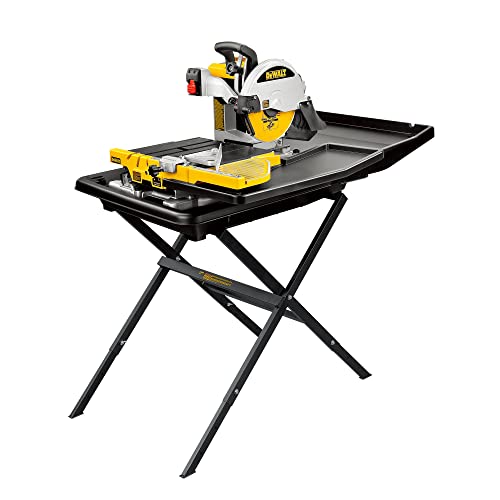
DEWALT Wet Tile Saw with Stand, 10-Inch (D24000S)

DEWALT Wet Tile Saw 10-Inch 15-Amp (D36000S)

DEWALT Wet Tile Saw 10-Inch with Safety Goggle

DEWALT DWC860W 4-3/8-Inch Wet/Dry Masonry Saw

FACHLICH 10-Inch Diamond Wet Saw Blade

FACHLICH 4-Inch Diamond Tile Saw Blades, 2-Pack

FACHLICH 4-1/2-Inch Diamond Tile Saw Blade 115mm

FACHLICH 12-Inch Metal Cutting Diamond Blade 300mm
Meet The Standout Selections
The DEWALT D24000S is a 10-inch wet tile saw paired with a rolling stand, aimed at homeowners taking on bathroom floors, kitchen backsplashes, or full shower walls. At roughly 69 pounds, it is not something you haul around casually, but the integrated stand makes it easier to set up at working height and roll aside when the job wraps. The 1.5 peak horsepower motor on a standard 120V circuit gives enough push to glide through porcelain and ceramic without bogging down on longer rips.
Unlike the handheld DEWALT DWC860W covered later, this model is a stationary benchtop platform with a submersible pump, water tray, and a 10-inch XP4 porcelain blade in the box. That kit mentality matters: you can uncrate it, fill the pan, and start cutting, rather than chasing down accessories before the first tile lands on the table. For a serious weekend remodeler, the all-in-one nature is the real draw.
Key Advantages
- Rolling stand ships with the saw, so setup at ergonomic height takes minutes rather than improvisation.
- 10-inch XP4 porcelain blade included, so the first cut happens the same day the box opens.
- 1.5 peak horsepower on 120V handles dense porcelain and ceramic without a separate breaker install.
- Submersible pump keeps water flowing to the blade, which extends blade life and reduces chipping on glazed edges.
Points To Keep In Mind
- At 69 pounds plus the stand, storage and transport need planning in tighter garages or second-floor jobs.
- The water pan requires draining and wiping after each session to prevent slurry buildup and pump clogs.
Key Product Details
Right Fit For
DIYers tackling a full bathroom or kitchen remodel who want a stationary saw that can stay set up across multiple days of work.
Swap It Out When
The DEWALT D36000S is the better match for pros needing a 37-inch rip capacity on oversized plank and slab tile.
The D36000S steps up from the D24000S with a 15-amp motor rated at 1,220 MWO, designed for installers who push their saws daily. Where the D24000S is a strong weekend tool, this one leans into production work: 37-inch rip capacity, 18 inches of left-blade clearance, and enough crosscut room to slice an 8-inch by 48-inch plank in one pass. The framing around large format tile becomes far less of a wrestling match.
That said, you trade footprint and weight for that capacity. This is a saw that wants a dedicated bay in a workshop or a clean corner of a garage, not a foldable kitchen-table setup. For the homeowner doing a single bath, the D24000S already covers the bases. The D36000S earns its keep when tile size and cut count climb.
Useful Strengths
- 37-inch rip capacity and 18-inch left-blade clearance handle 36-inch tile ripped in half with room to spare.
- 15-amp motor sustains speed through dense porcelain, reducing the chipping that comes from a struggling blade.
- Stand included, so the saw arrives ready to cut at proper working height.
Trade Offs
- Footprint is substantial, so plan a permanent spot rather than a temporary workbench perch.
- Overkill for a single-room project; the extra capacity only pays off on multi-room or commercial-scale work.
Best Suited To
Professional tile installers and remodelers running multi-day projects with large format materials.
Consider Something Else When
The DEWALT D24000S with safety goggle bundle is the better fit for first-time owners who do not need a 37-inch rip.
This bundle takes the same D24000S saw and adds a pair of DEWALT safety goggles with a hard-coated lens, which is a small but meaningful addition for new tile saw owners. Wet cutting throws water mixed with porcelain dust, and a stray fragment off a porcelain tile can ruin an afternoon. Having goggles in the box removes one excuse to skip them.
Mechanically, it matches the standalone D24000S covered earlier, with the same 1.5 peak horsepower motor, 36-by-29-inch footprint, and 28-inch plunge rip capacity. The 18-by-18-inch diagonal cut handles most floor tile without scoring. If you have not owned a wet saw before, the safety add-on is a quiet value that tends to get noticed the first time a tile chips unexpectedly.
What Makes Sense
- Safety goggles with a hard-coated lens included, so you can start cutting the same day without a separate supply run.
- Same 10-inch XP4 blade and rolling stand as the standard D24000S, keeping the cutting performance consistent.
- 45-degree bevel capacity supports mitered edges on trim and decorative pieces.
Some Limits To Know
- Bundles can carry a small premium over the standalone saw, so price-shop if you already own protective eyewear.
- At 69 pounds plus stand, this remains a stationary tool rather than something you carry across a jobsite.
Feature Snapshot
Whose Shelf It Belongs On
First-time wet saw owners who want a complete starter package without a separate trip for safety gear.
A Better Fit Elsewhere
The DEWALT DWC860W masonry saw is the smarter pick for users who mainly need handheld trimming on stone and small tile.
The DWC860W is a different animal from the benchtop saws above. This is a handheld 4-3/8-inch masonry saw built for trimming backsplashes, cutting outlet notches in tile, and scoring stone where a stationary saw cannot reach. The 10.8 amp motor and continuous-rim diamond blade cut up to 3 centimeters deep, so it handles granite, porcelain, and concrete when you need a precise plunge cut.
Where the larger DEWALT wet saws need a workspace and a power outlet, this one works on a ladder or in a tight shower surround. The trade-off is dust and water management, since handheld wet saws require more attention to keep slurry contained. Owners commonly lay down a wet rag beneath the cut to catch runoff.
Positive Takeaways
- 10.8 amp motor delivers cutting power for granite, porcelain, and concrete without bogging down on short trim cuts.
- Continuous-rim blade produces chip-free edges on glazed tile, a noticeable upgrade over segmented wheels.
- Handheld form factor reaches inside shower stalls and behind toilets where a benchtop saw cannot fit.
Where It Is Less Suited
- Not designed for long, straight rips; the small blade rewards short detail work rather than sheet tile cuts.
- Slurry and dust require a drop cloth or wet vac strategy to keep surrounding surfaces clean.
Feature Card
Made For
Trimmers and remodelers making notches, outlet cuts, and detail work in tight spaces where a benchtop saw cannot go.
Not Your Match When
The DEWALT D24000S is the smarter call for full-room tile installations requiring long rips and steady production.
This is not a saw; it is a replacement blade, but it earns its spot because every 10-inch wet tile saw eventually needs a fresh diamond blade. The FACHLICH 10-inch blade uses hot-pressed sintered diamond segments with a 10-millimeter segment height, which gives a longer working life before the rim wears down. The reinforced ring on both sides of the core helps keep the cut straight and the finish clean.
It fits the 5/8-inch arbor found on the DEWALT D24000S and D36000S covered above, so this is the natural refresh part when the original blade starts chipping or slowing down. The 60/70 grit makes it a reasonable all-purpose pick for ceramic, porcelain, marble, and granite. For a project finishing up, swapping in a fresh blade is often the difference between a clean edge and a chipped one.
Features That Help
- 10-millimeter segment height extends usable life compared to thinner rims on economy blades.
- Reinforced core on both sides of the cut reduces wobble, which translates to straighter edges on long rips.
- Works wet or dry, giving flexibility when the water tray is not set up.
Worth Noting
- Not a starter blade; you need a compatible 10-inch wet saw already on hand.
- Quality can vary across production runs, so inspect the rim for segment alignment before the first cut.
Spec Overview
Perfect Match For
Homeowners refreshing a worn blade on a 10-inch benchtop saw halfway through a multi-day project.
Skip It When
The DEWALT D24000S with safety goggle bundle is the better starting point if you do not yet own a compatible saw.
These 4-inch diamond blades ship as a two-pack, sized for small angle grinders and trim saws rather than full benchtop wet saws. The 10-millimeter segment height and 1.2-millimeter thickness make them a reasonable choice for ceramic and porcelain detail work, like cutting outlet openings or trimming backsplash edges where a 10-inch blade is overkill.
The two-pack format suits anyone who knows a small blade can wear out faster than expected on dense porcelain. Having a second blade on hand means a mid-project swap does not derail the afternoon. They cut wet or dry, though wet cutting keeps dust down and blade temperature manageable on longer sessions.
The Helpful Details
- Two blades in the package, so a worn rim does not stop the project mid-cut.
- Hot-pressed sintered diamond segments handle ceramic, porcelain, marble, and granite.
- Works with most 4-inch angle grinders already in the toolbox.
Trade Offs
- Not designed for long, straight cuts; the small diameter rewards trim and notch work.
- Dry cutting throws significant dust, so eye protection and a respirator are practical necessities.
Who Will Love This
Shower and backsplash installers who already own an angle grinder and need small detail blades on hand.
Reach For A Different Pick When
The DEWALT DWC860W is the stronger all-in-one option for users without an existing grinder setup.
The 4-1/2-inch FACHLICH blade sits between the 4-inch two-pack and a full 10-inch benchtop blade, sized for the most common angle grinder on the market. The 25-millimeter segment height is unusually tall for a small blade, which extends working life on porcelain and artificial stone, and the dual-purpose design lets you cut and grind edges with the same wheel.
The kit ships with a reducer washer to fit both 22.23-millimeter and 15.875-millimeter arbors, so compatibility with older grinders is rarely a problem. For someone shaping the edge of a bullnose tile or smoothing a freshly cut porcelain edge, the grinding function is a real convenience. A separate grinding wheel would normally add another purchase.
Real Benefits
- 25-millimeter segment height outlasts most small-diameter diamond blades on dense materials.
- Reducer washer included to fit both standard and smaller grinder arbors.
- Cuts and grinds, so one wheel handles both shaping and edge cleanup.
Practical Considerations
- Grinding adds vibration, so a two-handed grip and steady workpiece matter more than on a straight cut.
- Wet cutting on a grinder requires careful water delivery; many users run dry and accept the dust.
Built With In Mind
Tile finishers who want one wheel that handles both trimming cuts and edge smoothing on porcelain and marble.
Where Another Pick Suits Better
The DEWALT DWC860W is the better all-in-one solution for users without a compatible angle grinder.
The 12-inch FACHLICH blade is the outlier in this roundup. It is a 300-millimeter diamond cut-off wheel designed for hand-held power cutters and masonry saws, with a 1-inch arbor and a maximum rating of 5,100 RPM. The list of materials it claims to handle is long: rebar, sheet metal, angle iron, stainless steel, cast iron, PVC, and reinforced concrete all sit on the spec sheet.
That broad capability makes it a workshop workhorse rather than a tile specialist. If you cut tile in the morning and trim rebar or sheet metal in the afternoon, one blade covers both chores. For a tile-only job, the smaller 4-1/2-inch and 10-inch blades covered earlier make more sense, since a thicker 3-millimeter kerf wastes material on porcelain and ceramic.
Why It Works Well
- Handles metal, masonry, and stone in one blade, which simplifies a mixed-material workshop.
- 5,100 RPM rating suits most 12-inch handheld cutters and stationary masonry saws.
- 1-inch arbor fits common cut-off machine and masonry saw spindles.
What To Weigh
- 3-millimeter thickness removes more material than a 10-inch tile blade, which adds up on long rips.
- Overkill for a pure tile project; the smaller FACHLICH 4-1/2-inch and 10-inch blades cut cleaner on ceramic.
Who Should Grab It
Garage tinkerers and contractors who cycle between metal cutting and stone work without swapping machines.
Look Elsewhere When
The DEWALT D24000S with included 10-inch porcelain blade is the better fit for a dedicated tile installation.
What To Weigh Before Buying A Wet Tile Saw Under 200
Match The Saw To The Tile Size
Rip capacity, the longest straight cut a saw can produce, tends to be the first spec that disappoints. A 10-inch blade with 24 inches of rip handles most floor tile, but plank formats over 36 inches push you toward a high-capacity model like the DEWALT D36000S. Measuring the largest tile in your project and adding a few inches of clearance is the simplest filter.
Motor Power And Circuit Demands
A 1.5 peak horsepower motor on a standard 120V household circuit covers most homeowner projects. Higher amperage draws, like the 15-amp motor in the D36000S, still run on 120V but benefit from a dedicated circuit. Sharing a saw with a vacuum or shop vac on the same breaker can trip mid-cut, so an honest look at your workshop wiring matters before the first cut.
Wet Cutting Practicalities
Water flow is what keeps a diamond blade cool and the dust down, so the pump, tray, and water containment shape day-to-day ownership. Stationary saws with submersible pumps handle this quietly, while handheld saws need a wet rag or a second person with a spray bottle. Plan a small drainage strategy before setting up, since slurry on a garage floor becomes a slipping hazard fast.
Blade Quality And Replacement Cost
The blade determines the cut quality as much as the saw does. A worn blade chips porcelain edges and overheats fast, so a 10-inch replacement like the FACHLICH diamond blade covered above is worth keeping on the shelf. Budget for at least one replacement blade across a multi-room project.
Key Considerations Across These Picks
Pitfalls Shoppers Hit
Many first-time wet saw owners chase the largest blade they can afford and forget about rip capacity. A 10-inch blade with 18 inches of rip cannot handle a 24-inch plank without flipping the tile, which doubles the setup time. Others overlook water tray maintenance: slurry left in the pan hardens overnight and clogs the pump, leading to dry cuts and burned blades on the next session.
When Paying More Pays Off
Spending up usually buys capacity, motor strength, and stand quality. The DEWALT D36000S earns its premium through a 37-inch rip and 15-amp motor that hold up on long production days, while a budget saw in the same price band will feel underpowered after the first bathroom. For a single-room DIY job, the step up is rarely worth it. For multi-room or repeat work, the higher tier returns the difference in time saved and blades not burned.
Frequently Asked Questions
What size wet tile saw do most homeowners need?
A 10-inch blade with 24 to 28 inches of rip covers the majority of bathroom and kitchen projects. Larger capacity saws only pay off on oversized plank tile or multi-room remodels.
Can a wet tile saw cut porcelain without chipping?
Yes, with a continuous-rim diamond blade in good condition and steady feed pressure. A worn or low-quality blade is the usual cause of chipping, not the saw itself.
How often should the water be changed during a cut session?
Refill the tray whenever water flow to the blade slows or the slurry looks thick. A clean water supply keeps the blade cool and extends its working life on dense porcelain.
Is a handheld masonry saw a replacement for a benchtop wet tile saw?
Not really. Handheld saws like the DEWALT DWC860W shine on trim cuts, notches, and tight spaces, but they cannot match a benchtop saw for long, straight rips on full sheets of tile.
Do replacement diamond blades fit different saw brands?
Most 10-inch blades share a 5/8-inch arbor, and the 4-1/2-inch and 4-inch sizes use standard angle grinder mounts. Always confirm the arbor size and maximum RPM rating before mounting a new blade.