


Layout work rewards patience, and a good wheel marking gauge saves you a lot of it. A wheel cutter rolls along the workpiece instead of dragging, so you get a single fine line for joinery rather than a fuzzy pencil trail. These seven options cover everything from a brass-bodied classic to a lightweight aluminum set, helping woodworkers of all stripes mark dovetails, mortises, and tenons with the kind of repeatability hand tools demand.
A Quick View Of The Lineup

Loodmeo Wheel Marking Gauge with 0.2mm Micro Adjustment
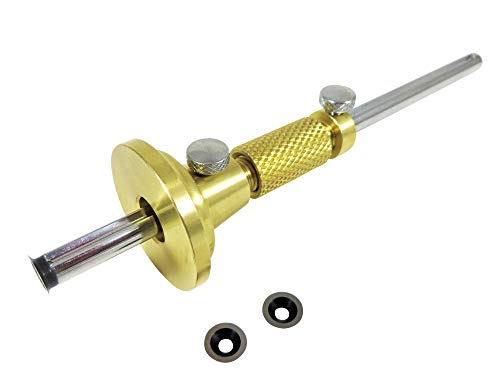
Taytools 464763 Solid Brass Marking Gauge

OOHYEE 2Sets Aluminum Wheel Marking Gauge (LPWG_A-01)
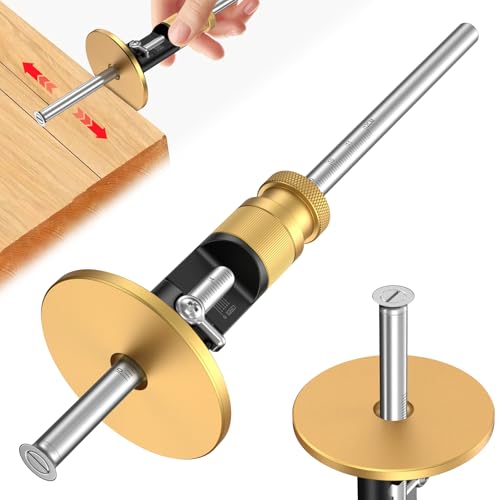
Dolenor Wheel Marking Gauge 0-12cm Brass

Clarke Brothers Wheel Marking Gauge Kit

KS TOOLS Universal Marking Gauge 200mm

OOHYEE Aluminum Wheel Marking Gauge (LPWG-01)
Taking A Closer Look At The Options
The Loodmeo gauge pairs a rollable cutting wheel with a 0.2mm micro-adjustment head, which is the kind of fine control that matters when laying out dovetails or repeated mortise walls. The micro-adjust sits in the same family as the Taytools brass head but trims down the body for a lighter feel in hand. You sense the difference on a long run of identical marks, where small drift compounds quickly.
Inside the head, a solid brass-and-steel assembly gives the cutter smooth travel without slop. The hardened wheel slices across grain rather than tearing it, so the line stays crisp and easy to follow with a chisel. For hobbyists stepping up from a basic pin-style gauge, the move here feels deliberate rather than dramatic.
Positive Takeaways
- 0.2mm micro-adjust dial supports exact repeat settings for matched pairs
- Brass and stainless steel internals hold calibration through heavy shop days
- Wheel cutter leaves a hairline scribe that chisels and saws follow cleanly
- Compact head fits tight stock where a long beam would feel clumsy
- One-handed tweaks keep your other hand free to steady the workpiece
Trade Offs To Consider
- Smaller head may feel less substantial than the all-brass Taytools body
- Wheel edges can dull over time, and replacement blades are not always included in the box
Key Product Details
Whose Bench It Belongs On
Intermediate woodworkers who want repeatable layout lines for dovetails, tenons, and mortises without committing to a full brass-bodied classic.
Skip It When
You want a heavier, all-brass tool with spare cutters in the box, in which case the Taytools 464763 is the more traditional fit.
The Taytools 464763 is the sort of gauge that gets handed down. Its head, adjustment knob, and tail are solid brass, and a 0.75-inch knurled screw lets you micro-adjust with one hand. The 1.625-inch brass head has real heft, and you can feel the inertia when you settle it against a board, which is precisely the kind of feedback that helps a layout line stay square.
The 0.375-inch hardened steel cutter rolls across grain rather than tearing it, leaving a sharp reference for chisels or marking knives. Two extra cutters ship in the box, so a dulled edge does not pause your workday. Compared to the Loodmeo above, the trade is weight for longevity: this one lives on the bench for decades.
Everyday Advantages
- Solid brass head, knob, and tail resist wear and corrosion in damp shops
- One-handed knurled micro-adjust supports fast setup without fumbling
- Hardened steel cutter slices cleanly across hardwood grain
- Two spare cutters included, so replacements do not require a separate order
- Substantial mass steadies the beam for long layout passes
Honest Caveats
- All-brass weight can tire the hand during long bench sessions
- Larger head profile may feel bulky on thin stock compared to the Loodmeo
- Brass will patina over years, and owners who prefer a polished look will wipe it down often
Right Fit For
Traditionalists and small-shop owners who want a brass-bodied tool that will outlast a few decades of weekend projects.
A Better Fit Elsewhere
Shop teachers outfitting a classroom often prefer the OOHYEE 2Sets, which ships two gauges with spare blades for a lower per-unit cost.
The OOHYEE LPWG_A-01 ships as a two-pack, which is the hook for any shop that needs a backup or a partner tool. Each gauge is built from aluminum alloy with a knurled micro-adjust knob, a pre-installed wheel cutter, and two replacement blades in the box. Compared to the Loodmeo’s brass-heavy feel, this is the lightweight cousin, easier to tote to a class or job site.
Laser-engraved metric and imperial scales run along the rod, so reading a measurement does not require a separate ruler. A flat edge on the base fence keeps the gauge from rolling off a busy workbench, a small touch that prevents the kind of dropped-cutter mishap that ends a session early. For anyone marking out matched pairs, the two-pack pays off quickly.
The Upside
- Two gauges per order support classroom or matched-pair workflows
- Aluminum build keeps weight low without sacrificing rigidity
- Knurled micro-adjust knob gives precise control for fine layouts
- Anti-roll flat on the fence protects the cutter on a crowded bench
Worth Noting
- Aluminum body lacks the heft and vibration damping of the brass Taytools
- Engraved scales can wear if cleaned with abrasive shop rags
Who Should Grab It
Shop instructors and hobbyists who want a second gauge on hand for matched work, or who are kitting out a small class.
Reach For A Different Pick When
You want a single heavier tool for solo work, in which case the Clarke Brothers gauge offers a more traditional solid bar feel.
The Dolenor gauge stretches the layout range to 0-12cm, which covers most cabinet and drawer work without needing a second tool. A 12mm hard-alloy rolling blade scribes smoothly across hardwood and softwood alike, and a quick-lock mechanism pairs with a 0.2mm fine-adjust for dialing in offsets. You sense the extra reach the moment you mark the second mortise wall, where a shorter beam forces constant resetting.
The brass option shown here leans toward the traditional feel of the Taytools above, while an aluminum variant is available for those who prefer a lighter hand. For a solo woodworker laying out dovetails on a full drawer, the 12cm window keeps the workflow moving without constant re-zeroing. Most users will find the fine-adjust knob smooth enough for hairline work on furniture-grade projects.
A Favorable Mix
- 0-12cm range handles drawer and cabinet layouts in one setup
- Hard-alloy rolling blade stays sharp through repeated hardwood passes
- Quick-lock plus 0.2mm fine-adjust streamlines setup
- Brass body offers the traditional heft some woodworkers prefer
Less Ideal Details
- Longer beam can feel unwieldy on small inlay work where a compact head shines
- Brass variant adds weight compared to the OOHYEE aluminum set
Feature Snapshot
Best Suited To
Cabinet and furniture makers who frequently lay out full-width drawer components and want fewer resets per project.
Look Elsewhere When
Most of your layouts stay under 10cm, where the Loodmeo’s compact head will feel nimbler in hand.
The Clarke Brothers gauge stands out for its roll-stop fence, a flat spot machined into the base that keeps the tool from rolling off the bench mid-cut. That is a small thing until you have watched a sharp cutter drop point-first onto a concrete floor, and the same flat doubles as a registration face when marking parallel lines.
Laser-engraved metric and imperial scales run up to 6 inches and 150mm, and a knurled micro-adjust knob sits inside the solid metal bar. Two replacement cutters ship with the kit, so a fresh edge is always in the drawer. The bar is heavier than the OOHYEE aluminum set, which trades a bit of fatigue for the kind of steady tracking that helps on long layout passes.
What Makes Sense
- Roll-stop fence prevents bench drops and doubles as a registration face
- Dual metric and imperial scales support quick reading in either system
- Solid metal bar tracks true across long layout passes
- Two spare cutters included for fast field replacement
Points To Keep In Mind
- Heavier bar can fatigue the hand during all-day marking sessions
- Knurled knob is smaller than the Taytools 0.75-inch screw, which matters for users with larger hands
Made For
Woodworkers with crowded benches who appreciate small design touches that prevent shop mishaps and keep the workflow uninterrupted.
Swap It Out When
You want a lighter aluminum build, in which case the OOHYEE LPWG-01 covers similar ground with less heft.
KS TOOLS brings a European shop sensibility to the category, and the 200mm universal gauge reads at a glance for anyone used to metric-only layouts. The stop-roller design is a different take on the wheel cutter, and the interchangeable head system is machined from a single piece of alloy steel, so it holds true under repeated adjustments.
This is the pick for users who already own or plan to expand a KS TOOLS modular system, since the heads swap out without re-zeroing the bar. The 200mm reach beats the Dolenor’s 12cm window for larger casework. For most hobbyists the modular approach is more than they need, but for a working shop the consistency across tools is the real draw.
Useful Touches
- 200mm metric reach covers large casework layouts
- Interchangeable alloy-steel heads slot into a shared bar system
- Stop roller gives a different scribe profile than a blade wheel
- Single-piece head construction resists torque distortion over time
Soft Spots
- Metric-only scaling requires conversion for inch-based furniture plans
- Modular system is overkill for a hobbyist who only needs one or two gauges
- Spare heads are a separate purchase if you want the full kit
Feature Rundown
Who Will Love This
Production shops and European-trained woodworkers who want a modular system that scales across multiple marking tasks.
Not Your Match When
You mostly work in inches and want a single dedicated tool, in which case the Clarke Brothers gauge covers that workflow more directly.
The OOHYEE LPWG-01 is the single-gauge version of the two-pack covered earlier, and it is the friendliest entry point in the lineup. The aluminum-alloy body keeps the tool light enough for extended practice sessions, and a pre-installed wheel cutter plus two replacement blades mean you can keep marking while you learn the feel of the tool.
Laser-engraved dual scales make it easy to read either metric or imperial measurements, and the knurled micro-adjust knob gives the kind of fine control that helps when transferring dimensions between workpieces. The flat on the base fence prevents the tool from rolling off a beginner’s crowded bench, a small detail that saves a cutter and a trip to the shop for a replacement. It is the practical pick when you want one tool that does the job without the heavier feel of brass.
Real Benefits
- Light aluminum body reduces hand fatigue during learning sessions
- Two replacement blades keep the tool working while you practice
- Dual metric and imperial scales support common project plans
- Anti-roll flat on the base protects the cutter on a busy bench
Some Limits To Know
- Aluminum does not damp vibration the way brass does on heavier cuts
- Engraved scale can wear faster with abrasive cleaning cloths
Perfect Match For
First-time tool owners and weekend woodworkers who want a forgiving, lightweight gauge to learn the basics of joinery layout.
Consider Something Else When
You already own a gauge and want a shop-grade upgrade, in which case the Taytools 464763 brings brass heft and spare cutters in the box.
What Matters Most Before Choosing Wheel Marking Gauge
Cutter Style And Scribe Quality
A wheel cutter rolls along the stock rather than dragging, which leaves a single fine line that chisels and saws can follow precisely. Pin-style cutters can wander on figured wood, while a hardened wheel holds its course. For dovetails and through-mortises, that single clean line saves a lot of fussy knife work later.
Adjustment Resolution And Locking
Micro-adjust knobs in the 0.1 to 0.2mm range let you dial in hairline offsets for matched joinery. Quick-lock mechanisms speed up rough setting, and a separate fine-adjust keeps the final pass exact. Make sure the lock holds under side pressure, since a slipping fence ruins an otherwise careful layout.
Body Material And Reach
Brass and steel offer mass that steadies long layout passes, while aluminum keeps the tool light for extended sessions. Reach matters too, and 10 to 20cm covers most cabinet and drawer work. If you regularly mark large casework, look for 200mm or longer bars to reduce re-zeroing.
Spare Parts And Long-Term Care
Cutters dull over time, and gauges that ship with replacement blades save a future order. Check whether the manufacturer sells spares separately, and consider a quick-release head design if you swap profiles often. Owners commonly store the tool in a dry drawer, since moisture dulls even hardened steel and patinas brass quickly.
Key Considerations Across These Picks
Where Shoppers Go Wrong
The most common slip is choosing a long-reach gauge for small inlay work, where the beam feels clumsy and over-extends the layout. Beginners also pick the cheapest available model and end up with a sloppy micro-adjust knob that drifts mid-cut. Spend a moment matching the reach to your typical project size, and test the lock before committing.
When Paying More Pays Off
The jump from an entry-level aluminum gauge to a brass-bodied classic like the Taytools buys you mass, rigidity, and a head that holds calibration through years of use. A spare cutter in the box and a tighter micro-adjust knob are the kind of small upgrades that compound over a project. For weekend hobbyists, a mid-tier pick covers most needs, but full-time woodworkers feel the brass difference every time they set the tool down.
Frequently Asked Questions
What Is A Wheel Marking Gauge Used For?
A wheel marking gauge scribes a single fine line parallel to a workpiece edge for joinery layout. The rolling cutter produces a cleaner line than a pencil and a sharper reference than a pin gauge.
How Does A Wheel Cutter Compare To A Pin-Style Cutter?
A wheel rolls across the wood, so it follows grain changes without wandering or tearing fibers. A pin cutter can drift on figured or heavily figured hardwood, which throws off the layout line.
What Reach Do I Need For Cabinet Work?
Most cabinet drawers fall within a 10 to 15cm window, so a 12cm or 200mm beam covers the majority of furniture projects. Larger casework may need a longer bar to avoid constant re-zeroing.
Do I Need A Brass Body Or Is Aluminum Enough?
Aluminum gauges work well for hobbyists and lighter daily use, especially when weight matters. Brass adds mass that steadies the beam and dampens vibration, which helps on long layout passes and feels more stable in the hand.
How Often Should The Cutter Be Replaced?
Replacement timing depends on how often you mark hardwoods and how much tear-out you see. Many woodworkers swap cutters once they notice the line drifting off course, and keeping a spare in the drawer avoids downtime.




