Electricians live by the quality of their strip. A clean cut that leaves every copper strand intact saves time on every termination, and a sloppy one costs you a connector or, worse, a callback. The right tool depends entirely on your workload: a service truck running residential jobs has different needs than a scrap yard pulling copper from Romex by the spool.
This shortlist covers the full range. You’ll find a hand-cranked bench machine, a fully automatic motor-driven unit, a 4-in-1 lineman-style plier, a classic T-handle stripper, and a couple of multi-channel workhorses for high-volume recycling. The picks favor honest trade-offs over spec-sheet heroics.
The Shortlist At A Glance

Zzunkn Automatic Wire Stripper Machine 6-Channel

ValueMax 4-in-1 Wire Stripper Pliers 10-20 AWG
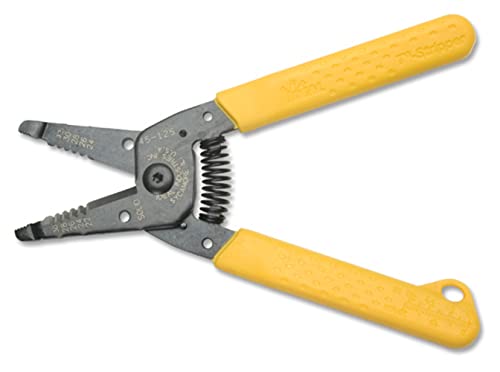
Ideal Industries 45-121 T-Stripper Wire Stripper
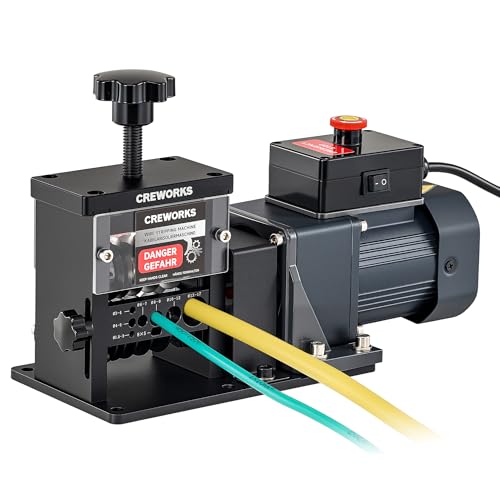
CREWORKS Automatic Wire Stripper 8-Channel

CREWORKS Manual Wire Stripper 1.5-25mm

CREWORKS 180W Electric Wire Stripper 5-Channel
A Closer Look At Each Pick
The Zzunkn sits in an interesting middle ground that the larger CREWORKS units don’t quite reach. Where most bench strippers commit to either hand-crank or motor, this one runs three ways: plug it in, turn the handle, or clamp your cordless drill to the drive port. That last mode is genuinely useful on a job site without a clean outlet.
You get six feed channels covering roughly 0.5 to 17mm, which sweeps in everything from 14 AWG household Romex up to chunky 250 MCM feeder runs. The reinforced aluminum frame keeps weight manageable if you haul it to a customer’s garage, and the multi-slotted wheels grip the insulation cleanly without chewing it.
What Makes Sense
- Drill-driven mode turns an ordinary cordless drill into the motor, no dedicated power cord required
- Six channels span the gauge range most service electricians actually see on residential and light commercial calls
- Adjustment knob lets you tune blade depth so older, brittle insulation doesn’t crumble mid-strip
- Aluminum alloy frame keeps the unit light enough to toss in a van without a hernia
Things To Consider
- Top channel caps at 17mm, so any feeder above 250 MCM needs a different machine
- Switching between modes takes a minute, which can slow you down on tight batching jobs
Key Product Details
Right Fit For
Residential and light commercial electricians who pull scrap wire alongside service work and want one machine that adapts to whatever outlet (or lack of one) the job offers.
Look Elsewhere When
You process spool after spool of industrial scrap, where the CREWORKS 180W Electric Wire Stripper 5-Channel’s higher motor output moves material faster.
Leave the bench machine in the shop. The ValueMax pliers live in your belt pouch and handle the four jobs you do fifty times a day: clamping, stripping, cutting, and crimping. For a service electrician wiring devices and running branch circuits, that covers the actual workflow.
The 4-in-1 framing shows up in real tool weight savings and faster grab-and-go. The stripper jaws cover 10 through 20 AWG solid wire, which is the meat of residential branch wiring. Compared to the bench units on this list, nothing here handles scrap recycling, but nothing in your pouch does either.
What Works In Its Favor
- Four functions in one tool cut down on trips back to the truck for a separate crimper or cutter
- 10 to 20 AWG range aligns perfectly with residential branch circuit wire sizes
- Compact plier profile fits standard electrician’s tool pouches without bulging
- Clean strip action when set correctly, leaving copper intact for terminations
Worth Noting
- Not suited for stranded wire in the same gauge range, which limits telecom and low-voltage work
- Lacks the leverage and precision of a dedicated bench stripper for repetitive production work
- Wire sizing in the jaws is set per notch, so matching the right hole to the wire matters
Best Suited To
Service electricians and apprentices working residential devices and lighting who want a single belt tool for the common strip-cut-crimp cycle.
A Better Fit Elsewhere
Anyone stripping scrap copper for recycling should step up to the Zzunkn Automatic Wire Stripper Machine 6-Channel, which moves bulk wire far faster than any plier.
The IDEAL T-Stripper is the tool many electricians trained on, and a fair number still carry. It’s a hand tool in the truest sense: no motor, no settings, no calibration. You match the wire to the notch and squeeze, and the steel jaws do the rest.
What separates it from the ValueMax plier is build and precision. The 45-121 strips 14 to 24 AWG solid and 16 to 26 AWG stranded wire without nicking the conductor, which is the failure mode that turns into a hot joint six months later. For apprentice toolkits and pros who want a no-fuss backup, the steel construction earns its keep over decades.
Where It Helps
- Steel frame and corrosion-resistant finish handle years of belt wear
- Manufactured in the United States, which simplifies parts and warranty paths
- Clean strip across both solid and stranded wire in overlapping gauge ranges
- Compact enough to pair with a screwdriver and tester on every service call
Trade Offs
- Manual operation means slower throughput on long branch circuit runs
- Notch-based sizing requires you to read the gauge markings carefully on smaller conductors
Made For
Apprentices building a first tool kit, plus experienced electricians who want a long-life backup stripper for the pouch.
Swap It Out When
You’re processing spooled scrap copper or feeding branch circuits at speed, where a bench machine like the CREWORKS Manual Wire Stripper 1.5-25mm finishes the work in a fraction of the time.
The 8-channel CREWORKS is the workhorse you bolt to a bench in a scrap yard or a busy rewiring shop. The 40W all-copper motor drives five sharp blades through insulation at speeds reaching 98.4 feet per minute, which sounds abstract until you watch a coil of Romex disappear in minutes.
Eight channels spanning 0.06 to 0.67 inches cover the bulk of wire you’ll see in residential demo and light commercial pulls. Compared to the Zzunkn reviewed earlier, this unit trades flexibility for raw speed and channel granularity. The all-copper motor is also a durability call: copper windings handle heat better than aluminum alternatives under continuous load.
Practical Advantages
- 98.4 ft per minute feed rate chews through scrap spools in a fraction of hand-crank time
- Eight channels give finer gauge matching than 6-channel units, reducing mid-strip jams
- All-copper motor resists heat buildup during extended recycling sessions
Points To Note
- Requires a dedicated outlet and stable bench mounting, less portable than the Zzunkn’s three-mode setup
- Top range caps at 0.67 inches, so large feeder cable falls outside its scope
Feature Snapshot
Who It Suits Best
High-volume recyclers and rewiring shops that run the machine for hours and need a wide channel spread to skip blade swaps.
Not Your Match When
Mobility matters more than throughput, in which case the Zzunkn Automatic Wire Stripper Machine 6-Channel’s hand and drill modes travel easier.
The hand-crank CREWORKS strips down to its essence. No cord, no switch, no settings panel. You bolt it to a workbench, drop the wire through the right feed plate, and turn the handle. The steel blade does the work and you control the pace.
Three feed hole plates cover 0.06 to 1 inch, which means you can run everything from thin signal wire to thick 1 AWG copper without ever plugging anything in. For a garage or a shop with limited power, that simplicity is the whole point. You can also clamp a drill to the drive end for automated cranking when the workload justifies it.
Notable Upsides
- Hand crank means zero electricity and zero motor failure modes to troubleshoot
- 0.06 to 1 inch range is one of the widest hand-crank spans available
- Drill attachment adds an upgrade path without buying a second machine
- Fewer moving parts tend to mean longer service life in dusty shop environments
Room For Improvement
- Hand cranking larger gauges gets tiring well before the spool is empty
- Switching between feed plates takes a few seconds per swap
Feature Rundown
Whose Shelf It Belongs On
Home workshop owners, hobbyists, and shop electricians who strip scrap occasionally and don’t want a motor on the bench.
Where A Sibling Pick Shines
Daily high-volume users should look at the CREWORKS 180W Electric Wire Stripper 5-Channel, which replaces arm fatigue with motor torque.
The 180W CREWORKS is the top-tier bench option in this lineup, with the motor and channel range to back it up. The 180W motor drives the steel blade at up to 98 feet per minute, and the 1.5 to 30mm channel range covers thicker feeder cable the smaller 8-channel unit can’t touch.
Five channels trade granularity for simplicity: fewer plate swaps and faster setup between gauge changes. Compared to the hand-crank CREWORKS reviewed just before, the upgrade is purely about throughput. Where this unit truly earns its badge is on continuous duty cycles in a pro recycling shop, where the bigger motor runs cooler under load.
The Good Stuff
- 180W motor handles continuous recycling runs without thermal shutdown
- 1.5 to 30mm range covers heavy feeder cable up to roughly 1.18 inches in diameter
- 98 ft per minute feed keeps pace with high-volume scrap intake
- Steel blade holds an edge through abrasive insulation types
Honest Caveats
- Bench-mount footprint and dedicated power requirement limit placement options
- Five channels mean more manual gauge matching than 8-channel competitors
Feature Snapshot
Who Will Love This
Pro recyclers, scrap yard operators, and busy shop electricians who need a continuous-duty machine with the largest channel range in this roundup.
Consider Something Else When
You rarely run the machine for more than a few minutes at a time, where the smaller CREWORKS Automatic Wire Stripper 8-Channel saves on cost and bench space.
Choosing Wire Stripping Tools That Match Your Workload
Manual vs. Powered Bench Machines
Hand-crank strippers like the CREWORKS Manual Wire Stripper 1.5-25mm run anywhere, last for years, and cost less. Electric and drill-driven units pay you back in time the moment your batches stretch past a few minutes. For occasional garage use, manual wins on simplicity. For daily production, motor torque changes your afternoon.
Channel Count and Gauge Range
A “channel” is the feed hole that matches a specific wire diameter. More channels mean finer matching, fewer jams, and less re-stripping. The Zzunkn 6-Channel and CREWORKS 8-Channel both handle the bulk of residential gauges. Heavy feeder work (above 1 inch) needs the CREWORKS 180W’s 30mm ceiling.
Hand Tools for the Pouch
A bench machine doesn’t replace a good plier-style stripper. The ValueMax 4-in-1 and the IDEAL T-Stripper live on your belt and handle the dozens of small terminations that don’t justify walking back to the truck. For most service electricians, both form factors earn their place in the kit.
Build, Blades, and Motors
Alloy steel blades stay sharp through rubber and PVC insulation. All-copper motor windings handle heat better than aluminum, which matters for continuous duty. Steel frames outlast aluminum in rough shop environments, but aluminum keeps weight down for mobile work. Match the construction to where the tool will actually live.
Key Considerations Across These Picks
Where Shoppers Go Wrong
Buying the largest machine for jobs that never exceed a small spool. A 180W bench unit is overkill for the homeowner stripping a few extension cords, and the cost rarely pays back. Match the channel range to your typical wire sizes, not your biggest what-if. Hand-crank or 4-in-1 pliers cover most low-volume needs at a fraction of the cost.
When Paying More Pays Off
The premium tier buys motor power, channel range, and build materials that matter under continuous duty. A recycling shop running eight hours a day will feel the difference between 40W and 180W within a week. For lighter use, the upgrade often goes unused. Spend up when your daily volume justifies the throughput, not because the spec sheet looks impressive.