


You pull a shot that tastes sour, then tweak your dose, then wonder why the burr set is letting you down. The grinder quietly sets the ceiling on every espresso you brew, and a quality conical or flat burr set changes the conversation in your kitchen. This roundup focuses on grinders built for people chasing café-level results at home, from travel-ready hand mills to programmable workhorses that pull weight-based shots on demand. Each pick balances precision, build quality, and the kind of workflow that fits a real morning routine.
A Side-By-Side Look

KINGrinder K6 Manual Coffee Grinder Straight Handle Stainless Burr

SHARDOR Conical Burr Espresso Coffee Grinder Electric with Precision Timer 2.0

Alpaca Ventures Manual Coffee Grinder with Stainless Steel Conical Burr
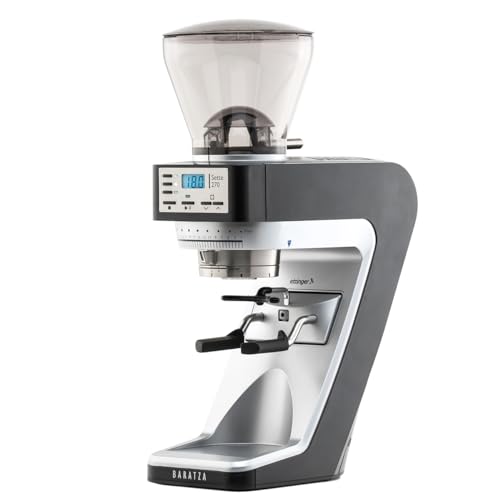
Baratza Sette 270 Conical Burr Coffee Grinder

Fellow Ode Gen 2 64mm Flat Burr Coffee Grinder

OXO Brew Compact Conical Burr Electric Coffee Grinder 50g

Tuni G1 Conical Burr Coffee Grinder 48 Settings Silver

AMZCHEF Single Dose Burr Grinder 75 Settings Oro Rosa

Baratza Sette 270Wi Grind by Weight Conical Burr Grinder
What Each Pick Brings To The Table
The KINGrinder K6 is a straight-handle manual mill that punches well above what its frame size suggests. The external adjustment nut, a ring you turn without opening the grinder, lets you tweak grind size in roughly 16-micron increments (one click), with 60 clicks per full rotation and up to four rotations of range. That gives you enough resolution to walk from Turkish-fine up through espresso and into pour-over territory without swapping tools.
Inside, a stainless steel conical burr set handles the cutting work while an aluminum body keeps the whole thing light enough for a backpack. For an apartment dweller who doesn’t want a motor whirring at 6 a.m., or a traveler who refuses to drink hotel-room coffee, the K6 fills a small but specific role. It asks for your forearm instead of your outlet.
What Works In Its Favor
- 16-micron click adjustment covers espresso through pour-over without swapping burrs
- Stainless conical burrs hold up to daily hand-grinding without dulling quickly
- External ring means no disassembly to change settings mid-brew
- Light aluminum body travels well in a carry-on or camp kit
Things To Consider
- Manual grinding takes 60 to 90 seconds for an espresso dose, which may slow rushed mornings
- No motor means consistency depends on steady hand pressure throughout the crank
Key Product Details
Built With In Mind
Travelers, campers, and home brewers in noise-sensitive apartments who want espresso-capable grinding without a motor.
Reach For A Different Pick When
The SHARDOR Conical Burr Grinder suits you better if you pull multiple shots a day and want a touchscreen to handle dosing.
The SHARDOR electric grinder leans hard into convenience without skipping the parts that matter for shot quality. A 40mm stainless steel conical burr set keeps grind temperatures down while the touchscreen panel lets you tap between 51 stepped settings, an unusually wide range for a home unit. You get the espresso-fine end for your morning pull and the French-press coarse end for the weekend carafe without swapping machines.
The Precision Timer 2.0 system lets you set cup counts from 1 to 12 and grind hands-free while you steam milk or pour water. For households where one person pulls shots and another prefers batch brew, the same grinder handles both jobs. In a kitchen where counter space counts, the touchscreen replaces a row of physical buttons that would otherwise collect grounds and spills.
Useful Highlights
- 51 stepped settings cover espresso through French press in one burr set
- 40mm conical stainless burrs balance grind speed with thermal control
- Touchscreen panel wipes clean in seconds, no crevices for grounds to lodge in
- Cup-count timer handles 1 to 12 servings for solo or batch brewing
- Anti-static build reduces the cloud of chaff on the counter after grinding
Worth Noting
- Touchscreen responds slower than a physical dial when your hands are damp or floured
- Electric motors add ambient noise that the quieter KINGrinder K6 avoids entirely
Feature Snapshot
Whose Shelf It Belongs On
Home baristas pulling daily espresso shots who want a touchscreen workflow and broad grind versatility without stepping into prosumer pricing.
Skip It When
The Baratza Sette 270 suits you better if you want three programmable dose buttons for switching between single, double, and lungo without re-entering values.
The Alpaca Ventures hand grinder targets the same travel-and-cabin crowd as the KINGrinder K6, but with a more compact footprint and a lengthened handle designed to save crank effort. A built-in bearing keeps the burr set spinning smoothly, so the work happens in the cutting chamber rather than fighting the handle. No batteries, no outlet, no morning noise complaints from the next room.
The stainless steel conical burr set covers espresso, pour-over, and French press in a single unit, which is more range than most hand mills offer at this size. The trade-off is dose speed, a real one if you brew back-to-back cups. For most people packing a grinder for a trip, the smaller carry profile outweighs the extra cranking time.
Practical Advantages
- Lengthened handle reduces wrist fatigue during multi-dose grinding
- Built-in bearing keeps rotation smooth so effort goes into cutting, not friction
- Compact travel size fits in a small backpack pocket or duffel
- Stainless conical burrs handle espresso through French press in one unit
Honest Caveats
- Hand grinding a double espresso dose takes noticeably longer than an electric counterpart
- Smaller grounds chamber means more frequent refilling for batch brewing
Right Fit For
Travelers, cabin owners, and minimalists who want one grinder that covers every brew method without plugging in.
A Better Fit Elsewhere
The KINGrinder K6 fits better if finer 16-micron click adjustment matters for your espresso dialing.
The Baratza Sette 270 is a workhorse aimed squarely at people who pull espresso every day and want the workflow to disappear. Three programmable dosing buttons sit on the front, each one memorizes a grind time to within roughly a tenth of a second, and dual dosing options let you grind directly into a portafilter or into a grounds bin. That combination turns a morning routine into a one-tap operation once you’ve dialed in your recipe.
Where the SHARDOR focuses on broad range and a touchscreen, the Sette 270 leans into repeatable dosing and an espresso-first design. Baratza is a well-known name in specialty coffee circles, and the Sette line is widely used in small cafés and serious home setups alike. In a kitchen where someone pulls a double every morning, the time savings across a year add up fast.
Noteworthy Benefits
- Three programmable dose buttons let you store single, double, and lungo settings
- Grinds directly into a portafilter for cleaner workflow at the espresso machine
- Dosing accuracy within a tenth of a second keeps recipes consistent shot to shot
- Backed by Baratza’s customer support, which is widely referenced in the specialty coffee community
Trade Offs
- Heavier than compact electric grinders, so it anchors a spot on the counter rather than getting stored away
- Conical burr set favors espresso precision over coarser brew range
Quick Facts
Best Suited To
Daily espresso drinkers who want café-style workflow at home and value repeatable dosing over touchscreen flexibility.
Where Another Pick Suits Better
The Fellow Ode Gen 2 fits better if you mostly brew pour-over and French press rather than pulling straight espresso shots.
The Fellow Ode Gen 2 is a flat-burr grinder, and that geometry produces a more uniform particle distribution than most conical sets, which matters most in filter brewing. A 64mm flat burr set is unusually large for a home grinder and is the main reason the Ode Gen 2 punches above its size. The two-stage grinding geometry breaks beans down evenly, so your pour-over and French press cups taste cleaner and brighter.
Quiet operation is the second headline. A common complaint about home grinders is the wake-up-the-house volume at 6 a.m., and the Ode Gen 2 was designed to address that. Anti-static construction keeps chaff from coating the counter after each run. One important note: Fellow optimized this grinder for brewed coffee, so it is not built for espresso range.
Bright Spots
- 64mm flat burrs deliver a uniform grind that lifts clarity in pour-over cups
- 31 settings are tuned specifically for brewed coffee methods, no wasted steps
- Quieter than most electric grinders in the same size class
- Anti-static chute keeps grounds in the bin rather than on the counter
- Single-dose workflow cuts down on bean waste between brews
Points To Note
- Not designed for espresso, so it won’t cover your full brew-method range
- Flat burr geometry favors clarity over the heavier body some espresso drinkers prefer
At A Glance
Perfect Match For
Pour-over and French press enthusiasts who want flat-burr clarity without the noise of a prosumer machine.
Consider Something Else When
The SHARDOR Conical Burr Grinder makes more sense if your morning drink is straight espresso, since the Ode Gen 2 isn’t built for that range.
The OXO Brew Compact trades some capacity for a much smaller footprint, and that trade is the point. The hopper holds up to 50 grams of beans, enough for roughly six cups of drip coffee, and the body is short enough to tuck into a cabinet when guests arrive. For apartment kitchens where counter real estate is a recurring negotiation, that compact shape earns its place.
Inside, a stainless steel conical burr set handles the cutting, and 15 settings plus 29 micro-adjustments give you a wider dialing range than the stepped count suggests. Where the SHARDOR offers 51 distinct steps, OXO’s micro-adjust layer adds fine resolution between the macro settings. Both approaches work; the difference shows up when you’re hunting for a half-step change in espresso flavor.
Well-Handled Touches
- Compact body fits small countertops and tucks into cabinets between uses
- 29 micro-adjustments layer fine-tuning on top of 15 macro settings
- Stainless steel conical burrs support consistent extraction across brew methods
- 50g hopper matches typical batch sizes for solo or small-household brewing
Some Limits To Know
- Small hopper means frequent refills for households brewing multiple cups back to back
- Fewer stepped settings than the SHARDOR, so dialing between methods takes more dial turns
Who Should Grab It
Apartment dwellers and small-household brewers who want electric conical burr quality without dedicating a permanent counter corner.
Swap It Out When
The Tuni G1 fits better if a touchscreen interface and broader stepped range matter more than the OXO’s compact footprint.
The Tuni G1 positions itself as a style-forward grinder for kitchens where the appliance shelf doubles as décor. The stainless steel body and LED touchscreen read as a deliberate design choice rather than a generic box, and the silver finish holds up to fingerprint scrutiny better than glossy plastic. For an open-plan kitchen where the grinder stays on the counter, that visual consideration matters.
Beneath the surface, 48 grind settings cover espresso through French press, and the electronic timer adjusts in half-second increments up to 40 seconds, which gives you fine control over dose weight. Cup size scales from 2 to 12, sized to an Americano serving. Compare that to the SHARDOR’s 51 settings and similar timer: the Tuni is the pick when the touchscreen and the silhouette are part of the appeal.
Reasons It Performs
- Stainless steel body resists fingerprints and matches modern kitchen aesthetics
- 48 settings cover espresso, drip, cold brew, and French press
- Half-second timer increments allow precise dose control for single and double shots
- LED touchscreen replaces physical buttons that would otherwise collect grounds
Worth Bearing In Mind
- Styling commands a noticeable step up in price over plain-button competitors
- Touchscreen is less tactile than a physical dial when you are grinding back-to-back shots
Who It Suits Best
Home baristas who care as much about the look of the countertop as the quality of the grind and want a single unit that handles every brew method.
Not Your Match When
The Baratza Sette 270 suits you better if programmable dose buttons for repeated recipes matter more than touchscreen styling.
The AMZCHEF single-dose grinder solves a problem most home grinders ignore: the grounds left behind in the chamber after each pull. The detachable magnetic outlet and included knock tool are designed to clear the chute so retention stays under 0.2 grams, which sounds small until you switch between single-origin bags and realize yesterday’s beans are quietly flavoring today’s shot. For coffee hobbyists who treat each dose as a fresh experiment, that cleanliness is the whole point.
A 40mm six-star forged conical burr set produces the grounds, and 75 stepped settings cover everything from fine espresso through coarse French press. The Oro Rosa colorway stands out on the counter without shouting. A quiet DC motor keeps the room calmer than older brushed-motor designs, and the wider setting range beats what the SHARDOR and Tuni offer, depending on how fine you like to walk the dial.
The Upside
- Sub-0.2g retention keeps single-dose switching between bean bags clean
- 75 settings give the widest stepped range in this roundup
- 40mm six-star forged conical burr supports uniform grounds for balanced extraction
- Quiet DC motor reduces morning noise compared to brushed alternatives
- Detachable magnetic outlet simplifies the knock-and-purge routine
Potential Compromises
- Single-dose workflow means you measure beans each time rather than leaving a hopper loaded
- The Oro Rosa finish looks distinctive, so it may clash with neutral-toned kitchen setups
Technical Sheet
Made For
Single-dose coffee hobbyists and home roasters who rotate through multiple bean bags and want minimal cross-flavor in the chute.
Where A Sibling Pick Shines
The Baratza Sette 270Wi suits you better if weight-based dosing and Acaia weighing technology are part of your espresso workflow.
The Baratza Sette 270Wi takes everything the standard Sette 270 does and adds a built-in scale, which is the missing piece in most home espresso setups. Using Acaia weighing technology, the grinder measures the dose as it grinds and stops automatically once your target weight is reached. Three programmable buttons let you store weights for single, double, and lungo shots. The result is one less variable between you and a repeatable recipe.
Bluetooth connectivity pairs the grinder with apps and software that log your shots, which is useful if you’re tracking how a new bean performs across a week. The conical burr set is the same lineage as the Sette 270, so the grind character carries over. For people upgrading from a time-based grinder to weight-based dosing, this is one of the more accessible paths into that workflow.
A Few Highlights
- Grind-by-weight dosing removes time-based guesswork from each shot
- Acaia weighing technology is widely referenced in specialty coffee equipment
- Three programmable weight buttons store your common dose targets
- Bluetooth connectivity enables shot logging and recipe tracking
- Conical burr set supports espresso-focused extraction with familiar Baratza workflow
Areas To Watch
- Heavier and pricier than the standard Sette 270 with similar burr hardware
- Built-in scale adds moving parts that benefit from occasional calibration checks
Who Will Love This
Espresso-focused home baristas ready to move past timed dosing and invest in weight-based repeatability for daily shots.
Look Elsewhere When
The AMZCHEF Single Dose Burr Grinder is the better choice if hopper-to-chute retention is your main frustration and weight dosing is secondary.
What To Weigh Before Choosing Your Grinder
Burr geometry shapes flavor more than almost any other spec. Conical burrs, the most common in home grinders, use a cone-shaped inner cutter against a ring-shaped outer cutter and tend to produce a slightly bimodal particle distribution (a mix of fine and coarse particles). That bimodal character suits espresso well, where the fines help build crema and the coarsers add body. Flat burrs, like the 64mm set in the Fellow Ode Gen 2, cut beans in a more uniform line and produce a tighter particle distribution, which lifts clarity and sweetness in pour-over cups.
Stepped versus stepless adjustment changes how you dial in. A stepped grinder like the SHARDOR (51 settings) or the Tuni G1 (48 settings) gives you fixed positions that you click between, which is repeatable and easy to teach. A stepless grinder lets you rotate the burrs continuously, so you can land on the exact point between two steps. For most home espresso drinkers, stepped is enough; pros and obsessive dialers prefer stepless.
Retention is the hidden variable in any grinder. The grounds left in the chamber and chute after a pull are old, often stale, and they mix into your next dose. Single-dose designs like the AMZCHEF (under 0.2g retention) and built-in scales like the Baratza Sette 270Wi address two different parts of the same problem. If you switch between single-origin bags often, low retention matters more than you might expect.
Dosing workflow affects your morning more than grind quality does once you hit a reasonable burr set. A grinder that lets you press one button and walk away, like the Baratza Sette 270 with three dose presets, will outserve a finicky grinder you have to babysit. Pick the workflow you can live with at 6 a.m., not the one that sounds best on paper.
Key Considerations Across These Picks
Pitfalls Shoppers Hit
The most common mistake is chasing a wide stepped range at the expense of burr quality. A grinder with 75 settings and a weak burr set will underperform one with 30 settings and a well-engineered conical or flat set. Burr material and geometry matter more than the count on the spec sheet.
Another trap is ignoring counter reality. Some grinders in this roundup are wide, heavy, and meant to live in one spot. If your kitchen is small or you store appliances between uses, a compact OXO Brew or a hand mill like the KINGrinder K6 will get used more often than a flagship that lives in a cupboard.
Where The Extra Money Goes
The jump from entry-level electric grinders to the higher tier in this list pays for three things: better burrs, better dosing, and better build. A 40mm or 64mm burr set cuts more uniformly and lasts longer than a 30mm set, which is why the Baratza Sette 270, Fellow Ode Gen 2, and SHARDOR sit at a different level than compact units. Dosing features like the Sette 270Wi’s Acaia scale or the Sette 270’s three programmable buttons add daily convenience, and the build quality of stainless housings or heftier chassis translates to quieter operation and longer service life.
For most people reading this, the right question is not whether to spend more, but how much of your routine you want the grinder to handle. Once that answer is clear, the right pick follows.
Frequently Asked Questions
Do flat burrs really taste different from conical burrs?
Flat burrs typically produce a tighter particle distribution, which often shows up as more clarity and sweetness in filter coffee. Conical burrs lean toward a heavier body and slightly more fines, which suits espresso texture. The difference is real, but bean quality and brew method matter more than burr shape alone.
How often should I clean a home grinder?
A brush-out every one to two weeks handles loose grounds, and a deeper clean with grinder-specific cleaning tablets every one to two months keeps oils from building up on the burrs. Single-dose grinders with detachable chutes are quicker to clean than hopper-loaded designs.
Can a single grinder handle both espresso and French press?
Most stepped grinders in this roundup cover both ranges, including the SHARDOR (51 settings) and the AMZCHEF (75 settings). The Fellow Ode Gen 2 is the exception; it is built for brewed coffee and does not reach espresso-fine. For households that switch methods daily, a wider stepped range or a stepless adjustment dial makes the transition smoother.
What is single-dose grinding?
Single-dose grinding means you weigh out only the beans you need for one cup or shot and grind them fresh, rather than keeping a hopper full. The benefit is less bean waste and no stale grounds sitting in the chute, which is why the AMZCHEF and similar designs focus on low retention.
Is a manual grinder good enough for daily espresso?
A manual grinder with fine adjustment, like the KINGrinder K6 with 16-micron clicks, can pull quality espresso shots. The trade-off is time and arm effort for each dose. For one or two daily shots, most people find that manageable; for back-to-back drinks, an electric grinder saves real time across a week.
The Takeaway
The grinder you actually use every morning matters more than the one that looks best on paper. Match the burr type to your dominant brew method, pick a footprint that fits your counter, and choose a workflow you won’t abandon in three months. Whether you land on a travel-ready manual mill, a touchscreen workhorse, or a weight-dosing espresso specialist, the right pick is the one that disappears into your routine.




