


Grinding your own meat at home changes the way you cook, turning a routine burger night into something you can dial in from start to finish. The catch is that hobby grinders often stall on a tough chuck roast, while serious hunting and small-batch processing demand a motor and grinding head that won’t quit halfway through. This roundup covers nine heavy duty meat grinders built for that workload, whether you’re running venison through a #12 head, stuffing breakfast sausage on weekends, or pushing pounds of beef for a small catering prep. Each pick is matched to a specific type of user, so you can zero in on the right machine without overbuying.
The Picks In Brief

Weston #12 Electric Meat Grinder & Sausage Stuffer

Sinyder Electric Meat Grinder 3000W Max Stainless Steel Mincer
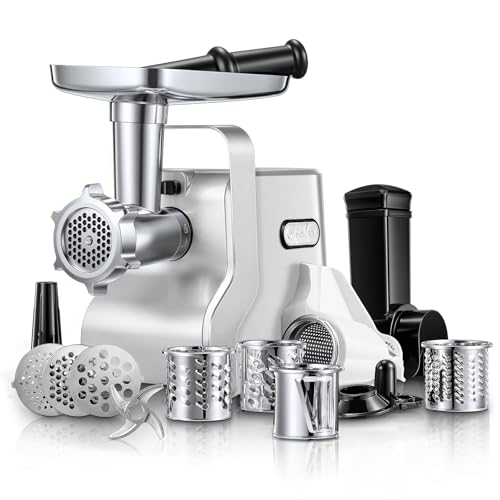
FOHERE Meat Grinder 3000W Max 5-in-1 with Kubbe Kit

RVGMBO 5.0 Upgrade Electric Meat Grinder

ALTRA LIFE 2800W Meat Grinder with Cheese Grater

ARINOO Commercial #12C 0.9HP Meat Grinder
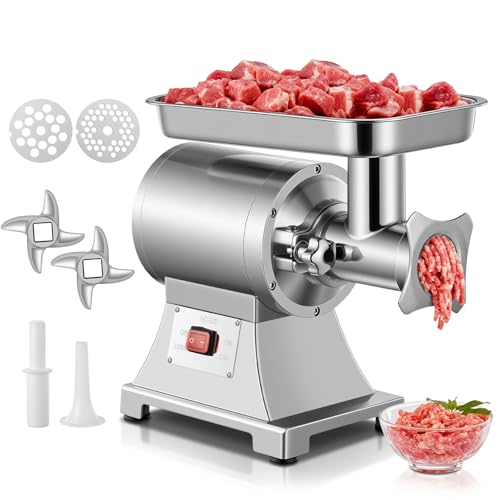
FOHERE Commercial 1100W Electric Meat Grinder
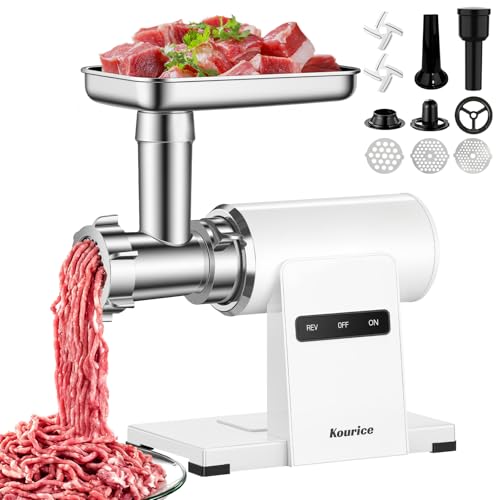
Kourice 2800W Electric Meat Grinder with Auto-Reverse
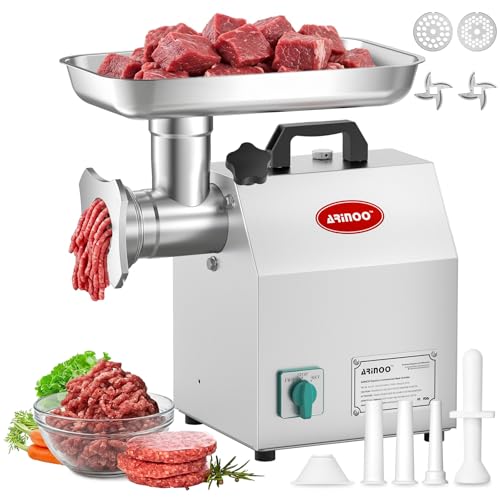
ARINOO #12 Commercial 1.0HP Stainless Steel Grinder
What Each Pick Brings To The Table
Weston has been a familiar name in game processing for a long time, and the #12 electric grinder carries that reputation into the home shop. The size #12 grinding head, where the number refers to the diameter of the auger housing in inches, gives you noticeably more throughput than the #5 and #8 heads you’ll find on most consumer machines, which matters the moment you feed it a trimmed deer shoulder.
A 750W motor drives the cutter at roughly 4 to 5 pounds per minute, which is plenty for a family cookout and enough headroom for serious weekend batches. Two speeds plus a reverse function handle the moment sinew wraps the auger, and the included stuffer tubes let you turn that grind into snack sticks or breakfast sausage without a separate attachment. For most home users grinding venison or beef regularly, the Weston sits in a comfortable middle ground between hobby grinders and full commercial gear.
Real Benefits
- Size #12 head pushes pounds of meat quickly, shaving real time off big batches.
- Two-speed gearbox with reverse clears wraps without disassembly in most cases.
- Built-in stuffer tubes expand the machine into a sausage-making station.
- Weston’s parts availability is widely reported as a strong point for long-term ownership.
- Cooler operation under load means longer continuous runs before the motor needs a breather.
Things To Consider
- The unit is bulky, so plan a dedicated counter or shelf space before unboxing.
- Heavier than compact home grinders, which can matter for smaller kitchens or apartment storage.
Who It Suits Best
Hunters, weekend processors, and dedicated home grinders who need a reliable #12 workhorse for deer, beef, and pork without stepping into full commercial pricing.
Consider Something Else When
Shoppers after a lighter, all-stainless countertop build should look at the ARINOO #12 Commercial 1.0HP Stainless Steel Grinder instead.
Sinyder’s 3000W max grinder lands in that crowded zone where advertised peak wattage tends to outrun real-world output, so it’s worth reading the rated number first: 700W continuous with a 3000W peak surge at startup. That honest split tells you this is a home-duty machine, not a commercial unit, but the stainless steel grinding head and food-grade metal gears lift it above the cheapest plastic-tray models.
Throughput is reported around 5 pounds per minute, which lines up with the Weston above, and the kit includes enough plates and a sausage tube to handle weekend burger grinding without extras. For shoppers who want a stainless head, decent power, and a friendly learning curve, the Sinyder is a sensible first step into heavier grinding without overcommitting on cost.
A Strong Showing
- Stainless steel grinding head and metal gears raise the durability bar at this cost.
- Around 5 pounds per minute output suits family-sized batches comfortably.
- Includes plates and a sausage tube for ready-to-use versatility out of the box.
Worth Noting
- The peak 3000W figure inflates expectations; rated output is 700W, so marathon sessions need cool-down breaks.
- Not built for daily commercial workloads, so small-shop users may find the duty cycle limiting.
- Plastic exterior trim on some components can mark with heavy scrubbing during cleanup.
Made For
Casual home grinders who want a stainless head, decent throughput, and a lower entry price than the #12 commercial picks.
Where Another Pick Suits Better
Regular game processors pushing deer season volumes will get more headroom from the FOHERE Meat Grinder 3000W Max 5-in-1 with Kubbe Kit, which carries a #12 head.
FOHERE pairs a #12 stainless grinding head with a 3000W max / 500W rated motor and an oversized hopper, which positions this model as a serious home option rather than a starter grinder. Compared to the Sinyder above, the bigger head and larger feed tray translate into fewer reloads during a full deer shoulder or a multi-pound beef batch.
The 5-in-1 kit includes three stainless grinding plates, a sausage stuffer, a kubbe attachment, and the standard cutting blade, which covers most of what home cooks and hobbyist sausage makers actually run. A kubbe attachment forms seasoned meat and grain shells into the hollow torpedo shapes used in Middle Eastern cooking, so it’s a niche but useful inclusion if you cook that style. Throughput is reported above 5 pounds per minute, which is a meaningful step up from the smaller #5 and #8 machines on the market.
A Few Strong Suits
- Size #12 head plus large hopper reduce refill stops during long processing days.
- Three stainless plates and a kubbe kit cover most prep styles without buying extras.
- 5+ pounds per minute throughput keeps the pace brisk on deer season or large family batches.
Trade Offs
- Like many 3000W max machines, the rated continuous power is much lower than the headline number.
- The broader accessory kit means more parts to track, wash, and store between uses.
Feature Snapshot
Best Suited To
Deer processors and home cooks who want a #12 head, a broad accessory kit, and one machine that covers grind, stuff, and kubbe prep.
Look Elsewhere When
Shoppers who want an all-stainless commercial housing for shop use should consider the ARINOO #12 Commercial 1.0HP Stainless Steel Grinder instead.
The RVGMBO 5.0 Upgrade leans hard on speed, with a pure copper motor and a magnetic circuit design rated to roughly 5000 RPM. That high spindle speed matters when you feed it cold, cubed meat, because a faster cutter gives a cleaner grind before the friction warms the fat and turns the texture pasty.
The “3 second grind” framing refers to how fast the cutter can process small loads through a coarse plate, which is useful for weeknight cooking but also sets expectations honestly. For larger batches, real-world output still depends on your prep: cubing, partially freezing the meat so it cuts cleanly rather than smearing, and using the pusher consistently. A magnetic circuit design organizes the motor’s magnetic field more efficiently than a standard winding, which can improve torque and reduce heat under load.
The Good Stuff
- 5000 RPM pure copper motor cuts cleanly through cold meat, preserving texture.
- Fast throughput on small loads makes weeknight prep feel effortless.
- Higher torque under load compared to many consumer-grade motors.
Points To Note
- Top RPM is impressive, but meat texture still depends heavily on cold prep and cube size.
- Head size and plate count aren’t published in the source data, so buyers should confirm those on the product page before purchase.
- Runs louder than lower-RPM models, which can be noticeable in open-plan kitchens.
Who Will Love This
Home cooks grinding weekly batches who want a high-RPM copper motor and faster clean cuts without stepping up to commercial pricing.
Swap It Out When
Processors running deer season at scale will get more durable grinding head capacity from the Weston #12 Electric Meat Grinder & Sausage Stuffer.
ALTRA LIFE builds a 2800W max home grinder that leans into versatility, bundling a rotary cheese grater, two blades, three plates, a sausage tube, a kibbe attachment, a burger press, and a meat claw into a single box. The grater attachment is the unusual one, and it actually pulls weight if you shred cheese, breadcrumbs, or vegetables alongside your meat prep.
Compared to the FOHERE above, the head size is smaller, so the throughput per minute won’t match a #12 model, but the kit breadth means fewer single-purpose tools cluttering the drawer. Built-in storage is a small but appreciated touch, keeping the smaller accessories from disappearing into the back of a cabinet between uses.
The Upside
- Rotary cheese grater broadens the machine beyond meat prep into everyday shredding.
- Burger press and meat claw add genuine prep-time value for the home cook.
- Built-in storage keeps smaller attachments organized between sessions.
Honest Caveats
- Smaller grinding head than the #12 picks, so marathon sessions require more reloads.
- More accessories means more parts to wash, dry, and store after each use.
Perfect Match For
Home cooks who want one countertop tool that grinds meat, stuffs sausage, and shreds cheese without dragging out separate gadgets.
A Better Fit Elsewhere
Heavy batch processors should look at the ARINOO Commercial #12C 0.9HP Meat Grinder, which has a larger head for serious volume.
ARINOO’s #12C sits in genuine commercial territory with a 1.0HP, 110V pure copper motor rated at 650W continuous and peaking at 1100W. That continuous rating is the more honest number, and it’s the one that tells you whether the machine can run a deer season afternoon without tripping its thermal limits.
The oversized meat hopper is a quiet but real upgrade over home models, since it holds more prepped meat at the top and lets you keep feeding the auger without constant tray refills. A #12 head and that motor class make the #12C a sensible shop or small-catering option, and the build suggests it’s intended for hunters running multiple animals in a season.
The Case For It
- 650W continuous rating supports longer sessions than peak-wattage consumer models.
- Oversized hopper cuts down on refill stops during big game batches.
- Size #12 head moves serious volume for its footprint.
Some Limits To Know
- Bulkier and heavier than home-only picks, so counter space matters.
- Commercial tuning means louder operation than consumer models in the same range.
Feature Snapshot
Right Fit For
Hunters running multiple animals, small commercial kitchens, and serious home processors who want commercial headroom without the largest footprint.
Not Your Match When
Cooks after an all-stainless housing for cleanability should consider the ARINOO #12 Commercial 1.0HP Stainless Steel Grinder instead.
FOHERE’s commercial 1100W grinder pairs a pure copper motor with a 225 RPM blade speed, which is slower than high-RPM home models. That slower cutter has a real advantage: it generates less friction heat, so the fat stays firmer and the grind holds its texture better for sausage and burger blends.
Output is reported up to roughly 330 pounds per hour, which places this machine firmly in light commercial use. The aluminum body, with food-grade stainless on the hopper plate, T-tube grinding head, and feed screw, balances heat dissipation with the corrosion resistance you want in a wash-down tool. Compared to the ARINOO #12C above, the build leans more toward shop use than home countertop use.
What Pays Off
- Slow 225 RPM cutter reduces heat buildup, keeping fat and texture intact.
- Stainless contact parts improve wash-down durability for repeat use.
- Hourly throughput supports light commercial or catering workloads.
Practical Considerations
- Aluminum body can mark with heavy contact during cleaning; treat the surface gently.
- Larger footprint than consumer models, so dedicated space is helpful.
- Commercial orientation means extra noise during longer sessions.
Built With In Mind
Small-batch processors, farm kitchens, and caterers running steady volume who want a slower cutter and stainless contact parts.
Another Choice May Suit
Home cooks who want commercial headroom in a smaller footprint should look at the ARINOO Commercial #12C 0.9HP Meat Grinder instead.
Kourice’s 2800W peak home grinder adds a feature that beginners tend to appreciate after the first jam: an auto-reverse function. When the auger wraps with sinew, the motor reverses direction briefly to free the cutter, so you can keep grinding instead of stopping to disassemble the head mid-batch.
The metal body and included sausage stuffer plus kibbeh kit (a traditional Middle Eastern preparation where seasoned meat is shaped into hollow shells) cover the basics for new owners who want to try more than plain ground meat. Reported throughput lands around 5.5 pounds per minute, which is competitive with similar peak-wattage home models like the RVGMBO 5.0 Upgrade reviewed above.
Bright Spots
- Auto-reverse clears minor jams without disassembly, lowering the learning curve.
- Reported 5.5 pounds per minute output suits family-sized batches comfortably.
- Metal body adds durability over plastic-tray home grinders in this class.
A Few Limitations
- The 2800W figure is peak; continuous output is lower, so long runs need cool-down breaks.
- Smaller head than the #12 commercial picks, so refill stops add up during big batches.
Quick Facts
Who Should Grab It
First-time heavy users and home cooks who want forgiving auto-reverse operation and a complete starter kit without commercial complexity.
Skip It When
Buyers running deer season in volume will find more headroom in the Weston #12 Electric Meat Grinder & Sausage Stuffer.
ARINOO’s #12 commercial grinder is the all-stainless counterpart to the #12C reviewed earlier, and the upgrade shows up where it matters most in a working kitchen: the housing, tray, and blades are food-grade stainless steel rather than aluminum or plastic. That single material change makes wash-down faster, helps the unit resist corrosion from constant cleaning, and supports the kind of hygiene routine a small shop or processing farm actually needs.
The 750W copper motor is reported to push up to 330 pounds per hour, and the included blades plus three stuffing tubes cover most sausage styles without extras. For users who already know they’ll grind weekly, the stainless build is the kind of detail that pays off over years rather than months.
Why It Works Well
- All-stainless housing, tray, and blades simplify wash-down and resist corrosion.
- Reported 330 lb/hr output supports small-batch farm and shop use.
- Three stuffing tubes included, so sausage prep needs no extra purchases.
Points To Keep In Mind
- Heavier than consumer models, so plan a stable, dedicated spot before setup.
- Premium build means a higher cost than the home-duty picks in this roundup.
Feature Snapshot
Whose Shelf It Belongs On
Small-batch farms, butcher shops, and serious home processors who want an all-stainless commercial build for years of repeat grinding.
Reach For A Different Pick When
Casual home cooks grinding a few pounds weekly will get more value from the RVGMBO 5.0 Upgrade Electric Meat Grinder at lower cost.
Matching The Grinder To The Grind
The first call is the head size, and that single number shapes everything else. A #5 head is fine for weeknight burger batches of a pound or two, but a #8 covers medium family prep, and a #12 is the right answer for deer season, multi-pound beef runs, and anyone who wants to move real volume without babysitting the tray. Within the home-duty tier, the Weston’s #12 and the FOHERE 5-in-1 both give you that headroom; within commercial territory, the ARINOO #12C and the ARINOO all-stainless #12 push the duty cycle up further.
Motor power reads two ways on every spec sheet, and the gap matters. Peak wattage covers the start-up surge, but the rated continuous wattage is what determines how long the machine runs before it needs a cool-down. A 700W or 750W rated figure in this class supports steady use; a 3000W max with 500W rated supports short bursts with breaks. For anyone grinding more than ten pounds in a sitting, treat the rated number as the honest one.
Speed and cutter design change the texture of your output. High-RPM copper motors like the RVGMBO 5.0 cut fast and clean, but a slower blade like the FOHERE Commercial 1100W’s 225 RPM keeps fat firmer because there’s less friction heat, which is a real advantage for sausage blends where you want distinct fat particles rather than a smeared paste.
Finally, look at the kit honestly. A grinder that ships with three plates, a sausage tube, a kubbe attachment, and a blade or two saves you from buying parts separately, but it also means more pieces to wash and store. A commercial model with a stainless body and fewer accessories can actually be quicker to clean, which matters more than the kit count in a working kitchen.
Cross-Cutting Notes On This Category
Pitfalls Shoppers Hit
The most common misstep is buying on peak wattage alone, since a 3000W max number paired with a 500W or 700W rated figure gives a very different ownership experience than the headline suggests. Another trap is choosing a #5 or #8 head for processing deer, where the small bore slows every batch and bogs down on connective tissue. A third mistake is overlooking the cutter speed, since a high-RPM motor without cold prep and a clean plate can smear fat just as easily as a weak one. Pre-freezing meat until firm, cubing to a consistent size, and using the pusher rather than your fingers solves more grind-quality problems than spending more on the machine.
Where The Extra Money Goes
The step up to commercial pricing buys a continuous duty cycle, an all-stainless or larger aluminum body that tolerates daily wash-down, and a #12 head that moves volume without complaint. For home cooks who grind once or twice a month, that upgrade is hard to justify. For hunters, small farms, and caterers, the extra cost is the difference between a tool you store most of the year and a tool that earns its shelf space every week.
Frequently Asked Questions
What size grinding head do most home users need?
A #8 head covers family-sized batches comfortably, while a #12 head is the right call for deer season, multi-pound beef runs, and anyone who grinds more than ten pounds at a time. Smaller #5 heads are fine for occasional weeknight prep but tend to bog down on tougher cuts.
Is a higher peak wattage always better?
Not necessarily, since peak wattage only describes the start-up surge. The rated continuous wattage is the honest number for duty cycle, so two grinders with the same peak can behave very differently under sustained load. Match the rated number to the size of the batches you actually run.
How do I keep my grinder from smearing the fat?
Pre-freeze the meat until firm but not frozen solid, cube it to a consistent size, and feed it steadily using the pusher. A cold grind plus a sharp blade keeps fat particles distinct, which is the difference between a coarse sausage texture and a pasty one.
Do I need a sausage stuffer attachment?
You don’t need a separate stuffer if your grinder ships with stuffing tubes, and most of the picks here do. A dedicated stuffer is faster for large sausage batches, but for weekend snack sticks and breakfast links, the built-in tubes handle the job.
How loud are these machines in practice?
Home-duty grinders with high-RPM motors tend to be the loudest, while slower commercial cutters like the FOHERE 1100W at 225 RPM run quieter and cooler. None of these are silent, so plan a spot away from open living areas if noise matters in your home.
Wrap Up
The right grinder comes down to matching the machine to the volume you actually run and the prep you’re willing to do. Casual cooks will get plenty of mileage from the Sinyder or the RVGMBO 5.0, while serious home processors and hunters will find their stride with the Weston #12 or the FOHERE 5-in-1. For small shops and farm use, the ARINOO all-stainless #12 is the kind of tool that earns its shelf space. Pick the head size first, then the duty cycle, and the rest tends to fall into place.




