


Salt spray, fish slime, and sun-baked grime don’t quit between weekends, and a garden hose rarely has the muscle to lift them. This roundup looks at nine products that handle the specific demands of boat cleaning, from quiet electric units for trailered runabouts to diaphragm pumps that mount dockside. Each pick fits a different ownership profile, so the right match comes down to how and where you keep your boat.
The Shortlist At A Glance

Greenworks 1800 PSI Electric Pressure Washer

WORX Auto & Boat Cleaning Accessory Kit WA4071

Simpson Professional Foam Cannon 80271 1-Liter

LEOTER Cordless Handheld Pressure Washer

Imdot 5000 PSI 4.0 GPM Electric Pressure Washer

FOTING 5000 PSI Touch-Screen Electric Pressure Washer

GEARBONE 12V Marine Washdown Pump Kit 7.5 GPM

Purellent 1100 PSI Handheld Cordless Washer
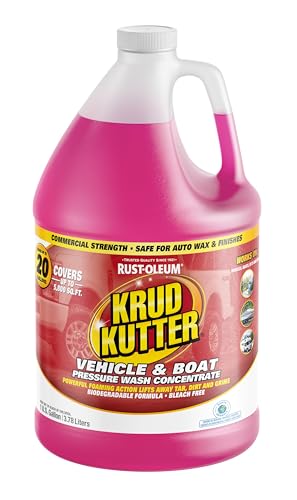
Krud Kutter Vehicle & Boat Cleaner Concentrate 1-Gallon
A Closer Look At Each Pick
Boats that come off the trailer for a driveway wash get along fine with the Greenworks 1800 PSI Electric Pressure Washer. The push-button start removes the cord-pull ritual of gas units, and 1800 PSI paired with 1.1 GPM (gallons per minute) is enough muscle to lift pollen film, waterline streaks, and the light dust that settles on a bow cover between weekends.
Its 35-foot power cord with a built-in GFCI (ground-fault circuit interrupter) plug cuts power the instant a fault appears, which matters when you’re working around a wet driveway. For trailered skiffs and pontoons that aren’t caked in barnacles, this feels like the right level of clean without overpaying for capacity you won’t use.
The Helpful Details
- No gas, oil, spark plugs, or air filters, so seasonal storage is just a dry corner of the garage.
- Push-button start removes the cold-morning frustration of pull cords.
- PWMA certification means the published PSI and GPM figures have been independently verified.
- 35-foot cord with GFCI protection adds a layer of safety near wet pavement.
Worth Noting
- At 1800 PSI, well-bonded barnacles and heavy oxidation will still need a separate scraper pass.
- The corded design limits reach to wherever a standard outlet and 35 feet of slack can land you.
Who It Suits Best
Weekend trailer-boat owners who wash at home and store the unit in a garage between trips.
Skip It When
Heavily soiled hulls call for the higher output of the Imdot 5000 PSI 4.0 GPM Electric Pressure Washer, which has the pressure head to break through grime this Greenworks model can’t.
Owners who already own a compatible washer but want a smarter boat-cleaning setup appreciate the WORX Pressure Washer Accessory Kit for Auto & Boat Cleaning WA4071. The kit groups three attachments together, so you stop buying tools one at a time and start working through a proper wash sequence: soap on, scrub, rinse off.
The included 13.5-oz soap dispenser suds up gelcoat (the glossy painted outer shell of a fiberglass boat) before any scrubbing starts, which keeps the abrasive work shorter. If you already wash cars at home, the same kit bolts onto your routine and turns the boat into just another Saturday-morning job.
Useful Highlights
- Three-tool bundle replaces the piecemeal approach of buying one attachment at a time.
- Pre-soap dispenser extends the working life of any soft brush you pair it with.
- Auto and boat focus means every piece in the box has a marine use case.
Trade Offs
- You still need a pressure washer to make the kit work, so it’s an add-on, not a complete solution.
- Compatibility depends on matching the right adapter to your existing wand.
Made For
Shoppers who already own a basic electric washer and want a single bundle that covers soap, scrub, and rinse.
A Better Fit Elsewhere
For foam-heavy pre-wash chemistry, the Simpson Professional Foam Cannon 80271 attaches to most cold-water washers and produces thicker cling.
Foam cannons turn a hose-side rinse into a contact cleaner, and the Simpson Pressure Washer Foam Cannon 80271 has the bottle and adjustment range to make that step feel like a real part of the wash. The 1-liter reservoir holds enough soap for a 20-foot runabout, and the top-mounted knob dials in foam density from a thin cling to a shaving-cream blanket.
It fits most cold-water electric and gas washers from 1600 PSI up to 4000 PSI through a 1/4-inch quick-connect socket, so it works with units lower in this list like the Greenworks and stays useful if you upgrade later. Owners who wash weekly tend to credit the foam for shorter scrubbing sessions and fewer swirl marks on dark gelcoat.
Strengths Worth Knowing
- 1-liter bottle covers a full side of a midsize boat without refilling.
- Top knob lets you tune foam thickness on the fly for different soaps and surfaces.
- 1/4-inch quick-connect makes it compatible with a wide washer range.
Some Limits To Know
- Capped at 4000 PSI, so it isn’t a fit for the highest-output units on this list.
Best Suited To
Regular washers who want the contact time of foam without moving to a professional setup.
Where A Sibling Pick Shines
For a wash that needs more than 4000 PSI to break up heavy grime, the Imdot 5000 PSI 4.0 GPM Electric Pressure Washer is the better match and pairs with this cannon on its lower settings.
Slip owners and marina tenants without a power outlet appreciate the LEOTER Cordless Pressure Washer for one reason: no cord, no generator, no permission. The 1.8-pound body tucks into a dock bag, and the 21V battery setup ships with two 4.5Ah packs, so you can swap mid-wash instead of waiting on a charge.
At 1250 PSI from a 300W brushless motor (a motor with no carbon brushes to wear out, so it lasts longer and runs quieter), it won’t strip barnacles, but it doesn’t have to. It’s the right tool for the Sunday-evening freshwater rinse after a salt-soaked run, and the 6-in-1 nozzle swaps from jet to fan without crossing the dock in search of a wrench.
Practical Pluses
- Two included batteries extend runtime for a full hull rinse.
- 1.8-pound body reduces arm fatigue on a 22-foot deck walk.
- 6-in-1 nozzle covers most rinse patterns without extra purchases.
Points To Keep In Mind
- 1250 PSI is strong for a quick rinse but not enough for caked-on algae lines.
- Battery life drops in cold weather, which matters for shoulder-season boaters.
Perfect Match For
Dock users without shore power who want a grab-and-go saltwater rinse after each trip.
Look Elsewhere When
Heavier buildup is a job for the GEARBONE 12V Marine Washdown Pump Kit 7.5 GPM, which mounts onboard and pulls from a live water tank.
Boats that sit in brackish water for weeks collect a green waterline that laughs at a 1800 PSI garden cleaner. The Imdot Heavy Duty 5000 PSI 4.0 GPM Electric Pressure Washer brings the muscle. The 5000 PSI ceiling and 4.0 GPM flow rate mean a slow walk down the hull lifts algae and dried salt spray that would otherwise need a brush and a hose.
Four quick-connect nozzles swap between jet and fan patterns, so the same tool handles the deck mat on Saturday and the driveway Sunday morning. The 33-foot hose gives reach around a trailered cruiser without dragging the unit across wet grass.
Features That Help
- 5000 PSI and 4.0 GPM provide the head to break through algae lines.
- Four quick-connect nozzles cover rinse, scrub, soap, and high-impact jobs.
- 33-foot hose reaches around trailered boats without repositioning.
Less-Strong Areas
- High pressure raises the stakes on gelcoat, so you keep the nozzle farther from the surface than with a milder washer.
- Power draw rises with output, so it appreciates a dedicated 15-amp circuit.
Key Product Details
Who Will Love This
Owners of cruisers and saltwater boats who battle caked waterline grime every outing.
Not Your Match When
Quieter electric storage in a condo closet fits the Purellent 1100 PSI Handheld Cordless Washer better than a full-size 5000 PSI unit.
Tech-friendly owners who like dialing settings instead of swapping nozzles will warm to the FOTING 5000 PSI Touch-Screen Electric Pressure Washer. The touchscreen steps through 8 power levels across Soft, Medium, and Strong zones, so the same unit handles a light deck rinse and a serious hull strip with a tap instead of a tool change.
The 1800W motor pairs a 25-foot hose with a 500-ml foam cannon and four quick-connect nozzles, so the bundle ships ready to soap and rinse without a parts run. The 34-inch frame keeps the wand reach comfortable for most adults working over a 25-foot hull.
Notable Gains
- 8-level touch adjustment replaces knob hunting mid-wash.
- 25-foot hose pairs with the 34-inch frame to reach most trailered hulls.
- 500-ml foam cannon and four nozzles ship in the box.
Potential Compromises
- Touch controls can be finicky with wet hands, so a glove helps.
- 5000 PSI on gelcoat still calls for the same caution as the Imdot model.
Right Fit For
Boat owners who want a single washer to handle daily rinses and seasonal deep cleans without manual nozzle swaps.
Consider Something Else When
Marina-docked boats with 12V systems get more value from the GEARBONE 12V Marine Washdown Pump Kit 7.5 GPM, which bolts onboard and pulls from the boat’s own water tank.
Slip owners who already live with a 12V house battery want a washer that lives on the boat, and the GEARBONE 80 PSI 7.5 GPM Marine Washdown Pump Kit answers that. The 5-chamber diaphragm (a flexible membrane that pulses to move water, similar to how a heart pumps blood) is self-priming, which means it can pull from a tank without manual filling, and the 7.5 GPM flow favors volume over pressure. Salt spray, fish scales, and mud rinse off the anchor well in seconds, which is the point.
The 10-pattern spray gun covers anything from a needle jet for chain lockers to a soft mist for vinyl seats. Install goes faster than people expect on a 12V system with a dedicated feed line, and once mounted, the system runs off a standard battery bank without shore power.
Good Reasons To Consider
- Self-priming diaphragm draws from any onboard freshwater tank.
- 7.5 GPM volume rinses faster than pump-style units with higher PSI.
- 10-pattern nozzle covers everything from chain lockers to vinyl.
Where It Is Less Suited
- 80 PSI is light compared with the Imdot 5000 PSI Electric Pressure Washer, so it won’t strip a barnacle.
- 12V draw shortens house-battery runtime on long days without engine recharge.
Product Snapshot
Built With In Mind
Boats with 12V house systems and a freshwater tank who want a permanent rinse setup at the slip.
Swap It Out When
Driveway washes call for the FOTING 5000 PSI Touch-Screen Electric Pressure Washer, which trades onboard convenience for serious PSI.
Storage footprint matters when the only free shelf is a closet shelf above the laundry, and the Purellent Cordless Portable Washer keeps its profile small. The 6-in-1 nozzle and elastic intake hose (a stretchy feed line that draws water from a bucket, jug, or sink) let you grab a 5-gallon bucket and clean a tender or kayak in a parking lot without dragging a garden hose across the lot.
The brushless motor holds output steady as the battery drains, so the last 20% of charge works as hard as the first 80%. It won’t lift algae the way the Imdot will, but for apartment-dwelling boaters and paddle-craft owners, that’s a fair trade for stowability.
The Upside
- Brushless motor maintains pressure as battery drains.
- 6-in-1 nozzle covers mist, fan, jet, and soap patterns in a single attachment.
- Elastic intake hose pulls from any bucket or onboard water jug.
- 1100 PSI handles a quick freshwater rinse on a tender or kayak.
Some Limits To Know
- 1100 PSI is too low for barnacle stripping and heavy waterline work.
Whose Shelf It Belongs On
Paddle-craft and tender owners who live without a hose bib and want a self-contained rinse they can store in a hall closet.
Not Your Match When
You wash a 22-footer at the dock and want foam coverage, where the Simpson Professional Foam Cannon 80271 paired with a mains-powered washer fits better.
Chemistry is half the battle on a boat that lives outdoors, and the Krud Kutter Vehicle & Boat Pressure Washer Concentrate earns its place in the soap drawer. The foaming action lifts tar, road grime, and waterline film off gelcoat without scrubbing, and a 1-gallon jug stretches across multiple hulls depending on dilution ratio.
It’s designed to play well with auto wax and finishes, so a coat of wax you applied last spring doesn’t disappear with the first wash. For people who already use a foam cannon like the Simpson 80271, this concentrate foams evenly and clings long enough to do the work before the rinse.
Practical Advantages
- Foaming action lifts tar and grime with less scrubbing.
- 1-gallon format dilutes to cover several full washes.
- Safe for use on gelcoat and existing wax layers.
Trade-Offs To Consider
- It’s a detergent, not a washer, so you still need a washer or cannon to apply and rinse.
Feature Facts
Who Should Grab It
Boat owners who already have a washer and want a detergent that does the chemistry work between rinses.
Another Choice May Suit
For a self-contained electric kit with soap and washer in one box, the WORX Auto & Boat Cleaning Accessory Kit WA4071 covers the tool side and pairs with this concentrate.
What To Weigh Before Choosing Pressure Washers for Boats
Match PSI To The Worst Grime You Face
Pressure ratings fall into rough bands. The 1100 to 1800 PSI range, where the Purellent and Greenworks sit, suits light dust, pollen, and a freshwater rinse after each outing. The 4000 to 5000 PSI range covers caked salt, waterline algae, and grime that has set in over a month. Erring on the high side feels safer, but high PSI on gelcoat also raises the risk of burning through wax or marking the surface if the wand gets too close.
For boaters who split their time between an easy slip rinse and seasonal deep cleans, a dual-nozzle unit like the FOTING 5000 PSI Touch-Screen Electric Pressure Washer covers both ends with one tool.
Decide Between Corded, Battery, and Onboard
Where the boat lives drives the format. Driveway and trailer storage favors a corded electric unit with a long power cord and hose, since outlets and a tap are nearby. Marina slips with 12V house systems and a freshwater tank favor an onboard pump like the GEARBONE 12V Marine Washdown Pump Kit 7.5 GPM. Kayaks, tenders, and small craft without a hose favor a battery unit such as the LEOTER Cordless Handheld Pressure Washer, which draws from a bucket.
Pick Detergents and Attachments That Match Your Washer
Foam cannons work best within a defined PSI range. The Simpson 80271 tops out at 4000 PSI, while the Imdot and FOTING reach 5000 PSI and pair with the cannon on lower settings. Concentrates such as the Krud Kutter 1-Gallon stay useful across any washer, so the chemistry investment carries over when you upgrade the hardware.
Plan Storage, Reach, and Power
Corded electric units need a 15-amp outlet within reach of the longest hose. Battery units need a charging spot and a dry shelf. Onboard pumps need a 12V feed line and a freshwater pick-up, which is a more involved install. The smaller the storage footprint, the more often the tool actually gets used, which matters more than any spec on the box.
Picking The Right Tool For The Job
Pitfalls Shoppers Hit
The most common mistake is buying PSI for the job you imagine, not the job you have. A 5000 PSI washer in a closet used for a quick freshwater rinse is overkill and a storage headache. The other is ignoring chemistry. A washer without a foam cannon or a quality concentrate works harder than it has to, and the surface takes the abuse.
What The Higher Tier Buys
Stepping from 1800 PSI to 5000 PSI buys you the ability to lift waterline algae in a single pass, which matters for saltwater boats. It also brings longer hoses, more nozzles, and onboard pressure adjustment, which is why models like the FOTING 5000 PSI Touch-Screen Electric Pressure Washer pair digital control with the muscle. The premium is real, but the time saved across a season of monthly washes adds up.
Frequently Asked Questions
What PSI is safe for boat hulls?
Light-duty washes under 2000 PSI stay friendly to wax and gelcoat when you keep the nozzle 12 inches back. Above 3000 PSI, work farther from the surface and use a wider fan pattern.
Can a foam cannon replace scrubbing?
Foam shortens scrubbing and often removes it for light grime, but caked salt or fish slime still benefits from a soft brush pass after a long dwell.
Do I need a dedicated outlet for an electric boat washer?
Most 5000 PSI units want a 15-amp circuit to themselves so the breaker doesn’t trip mid-rinse. Lower-PSI corded units like the Greenworks are easier on shared circuits.
Is a 12V washdown pump enough for full-boat cleaning?
For rinses after each outing, 7.5 GPM at 80 PSI handles the work fast. For barnacles or oxidation, plan on a separate mains-powered washer.
How often should a boat be washed?
Saltwater boats benefit from a freshwater rinse after every trip and a soap wash every two to four weeks. Stored boats stretch that to monthly washes through the off-season.
Closing Remarks
The right washer is the one that matches your storage, your slip, and the worst grime you actually face. Corded electric models cover driveway washes, onboard 12V pumps handle rinse duty at the marina, and handheld battery units cover tenders and quick freshwater rinses. Pair any of them with a foam cannon and a quality concentrate, and boat care stops feeling like a chore.




