


You’re probably here because your current setup feels either too small, too loud, or too slow for the work you actually do. The right compressor, or the right motor for a rebuild, changes that rhythm fast, especially in a garage, a tire bay, or a busy home workshop.
This roundup keeps the focus on capacity, duty cycle, noise, tank size, and electrical fit, so you can match the machine to your space instead of guessing. You’ll also see a few non-5HP options mixed in where they make sense for smaller shops and lighter use.
The Shortlist At A Glance

VEVOR 5HP Air Compressor Electric Motor 230V 56HZ Frame

Stark USA 3.5HP 10 Gallons Air Compressor Tank

Maxair C5160V1-MAP 60-Gallon 170 PSI Max Electric Stationary Compressor

Klutch 20-Gallon Air Compressor 2 HP 120V 175 PSI

VEVOR Air Compressor 20 Gallon Steel Tank 4HP 125PSI

EMAX 80 Gal E350 Stationary Air Compressor 5 HP 19 CFM

VEVOR 5HP SPL Air Compressor Electric Motor 230V 56 Frame

ALL-TOP Air Compressor Kit Dual Cylinder 12V Portable Inflator
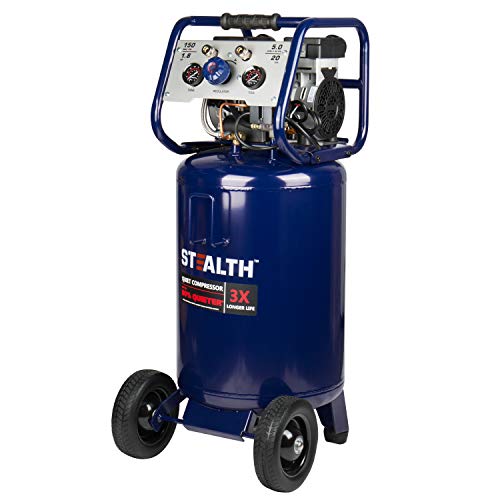
Stealth 20 Gallon Ultra Quiet Air Compressor 1.8 HP Oil-Free
More Details On Our Top Picks
Motor replacements like this are for the shop owner who already has a compatible compressor body and wants to keep the rest of the system alive. The 230V, single-phase setup and 56 frame sizing point toward a fairly specific match, so it’s the kind of part you choose with a tape measure and a wiring plan, not a hunch.
The keyed shaft, 3450 RPM speed, and CCW factory rotation matter because they decide how the motor mates to your pump. Compared with a full compressor like the Maxair or EMAX units, this is a focused repair path, and that makes it useful for cost-conscious rebuilds, though compatibility still needs a careful check.
Strong Points
- 230V single-phase power suits many shop circuits.
- 56 frame sizing helps narrow compatibility searches.
- 3450 RPM gives you a standard motor speed for many pump builds.
- Keyed shaft design supports a secure mechanical connection.
- Useful for restoring a compressor instead of replacing the whole unit.
Small Caveats
- You need to confirm shaft direction, frame fit, and mounting before ordering.
- This is a motor only, so it won’t solve tank or pump issues.
- Replacement work often takes a careful wiring and alignment step.
Core Details
Who It Suits Best
You’ll get the most out of this motor if you’re rebuilding a compatible stationary compressor and already know the frame, shaft, and rotation match.
A Better Fit Elsewhere
Maxair C5160V1-MAP is the better route for you if you want a full compressor rather than a replacement motor for an existing setup.
A 10-gallon tank sits in a useful middle zone for garage jobs, light framing tools, and inflation work without taking over the floor. The horizontal layout makes more sense than the tall tanks in tight corners, though you still need to plan around hose routing and storage space.
The 8.37 CFM rating gives it enough breath for many DIY tasks, and the adjustable pressure helps you tailor output to the tool in hand. Compared with the Klutch vertical unit, this one keeps a lower profile, so it feels easier to tuck alongside a bench or wall.
Highlights
- Horizontal tank shape fits under benches more easily.
- 10-gallon capacity is handy for home and garage chores.
- Adjustable pressure gives you more control over common tasks.
- Quiet operation suits shared spaces better than louder shop units.
Things To Consider
- The smaller tank asks for more frequent refill cycles during sustained work.
- It’s better for light to moderate jobs than constant tool demand.
- Garage storage still needs room for the tank and hose path.
Feature Rundown
Who It Suits Best
You’re a solid match for this one if your projects lean toward home repairs, light garage work, and inflation rather than all-day tool use.
Another Choice May Suit
Klutch 20-Gallon Air Compressor is the better fit for you if you want a taller vertical layout and a larger reservoir for shop-style jobs.
This is the kind of stationary compressor that belongs in a serious workshop, where reserve air matters and floor space is already claimed by tools, carts, and benches. A 60-gallon tank gives you a much larger buffer than the smaller garage units above, so the machine feels better suited to repeated use across the day.
The 170 PSI ceiling pushes it into a more capable class for heavier air demand, though stationary placement means you’re choosing output over mobility. Compared with the VEVOR 20-gallon and Klutch portable units, this one is the fixed-install answer for a shop that stays put.
Upsides
- 60-gallon capacity gives you a strong reserve for longer sessions.
- 170 PSI rating supports more demanding air tool work.
- Stationary format suits a dedicated shop bay.
- Less frequent cycling can feel calmer during busy stretches.
Room For Improvement
- Stationary placement means you give up portability.
- The footprint makes more sense in a dedicated shop than a small garage.
- Installation and placement planning matter more than with portable tanks.
Details At A Glance
Who Will Love This
You fit this model best if you run a dedicated shop and need a compressor that stays in place for frequent, heavy work.
Where A Sibling Pick Shines
Stealth 20 Gallon Ultra Quiet Air Compressor makes more sense for garage users who want something easier to live with day to day.
The vertical tank shape is the first thing you notice here, and it matters in garages where wall space is easier to spare than floor space. That 20-gallon format gives you a step up from the Stark 10-gallon unit, while the 4.2 SCFM at 90 PSI keeps it aimed at light to mid-duty shop work.
The oil-free pump cuts down on routine upkeep, which helps in a home shop where convenience matters as much as output. The honest read is that this is not built for nonstop industrial use, but it fits the way many garage owners actually work.
What We Like
- Vertical design saves valuable floor area.
- Oil-free operation keeps routine upkeep simpler.
- Large wheels help it move around a shop more easily.
- Easy-access tank drain makes moisture management less awkward.
- 75% duty cycle suits regular but not constant use.
Points To Note
- 2 HP output is modest next to the 5 HP stationary options.
- It’s better for intermittent tasks than long, high-demand sessions.
Spec Overview
Right Fit For
You’ll appreciate this one most in a home garage where compact storage, easier maintenance, and moderate tool use matter more than raw output.
Swap It Out When
Maxair C5160V1-MAP is the stronger choice for you if your work keeps pushing past hobby-level demand and needs a stationary setup.
This VEVOR lands in the useful middle ground for home mechanics and spray-paint work, where you want more output than a small portable but not a fixed industrial footprint. The 20-gallon steel tank gives it a sturdier feel on paper than lighter plastic-bodied gear, and the 78 dB noise level helps it suit garages where sound matters.
The 10.6 CFM at 90 PSI is the spec that stands out most, because it tells you the unit can keep up with a wider spread of tools than the smaller 3.5 HP option. It’s not the most compact choice here, but for auto repair and tire inflation, it lines up well with the jobs people actually do in a home bay.
Best Bits
- 10.6 CFM at 90 PSI gives you strong everyday airflow.
- Steel tank construction adds a more substantial feel.
- 78 dB output keeps noise more controlled than louder shop rigs.
- Works well for auto repair, tire inflation, and spray painting.
Worth Noting
- 220V power means you need the right shop setup.
- Oil-free pumps are convenient, but they still benefit from careful storage and drainage habits.
- It’s still a mid-size unit, so floor planning matters.
Feature Card
Built With In Mind
You’re the right fit for this compressor if you split time between garage repair, inflation, and light paint work.
Reach For A Different Pick When
EMAX 80 Gal E350 is the better match for you if you need a stationary system with more reserve for daily, high-output use.
This EMAX model sits squarely in serious-shop territory, where high reserve capacity and consistent output matter more than portability. The 80-gallon tank and 5 HP rating tell you right away that it’s meant for a fixed space with real demand, not a cramped corner of the garage.
The 2-stage setup, meaning air is compressed in two steps for more efficient pressure buildup, gives the machine a more capable feel than the smaller single-stage units in this list. The pressure-lubricated pump also points to a design that favors durability-minded ownership, though it asks for a proper installation space and routine care.
Reasons To Buy
- 80-gallon tank gives you a large reserve for demanding work.
- 19 CFM at 100 PSI supports heavier shop air use.
- 2-stage design suits serious daily workloads.
- Pressure-lubricated pump is aimed at longer service life.
- Stationary format keeps it planted in a dedicated workspace.
Areas To Watch
- This is a fixed-install unit, so placement needs planning.
- The size makes it a poor fit for small garages.
- Maintenance and access are easier in a dedicated shop than a crowded corner.
Core Details
The Right Fit
You’ll like this compressor most if you run a dedicated workshop and want a large, fixed unit for frequent air-tool work.
Where Shoppers Go Wrong
Klutch 20-Gallon Air Compressor makes more sense for you if floor space and easier movement matter more than reserve air.
This VEVOR motor is the more specific sibling to the first item, and the lower amperage figure makes it worth a closer look for the right build. The 5/8-inch keyed shaft and 56 frame point to a different compatibility lane, so it suits replacement work where the compressor body already exists and the motor is the missing piece.
Rotation flexibility is useful, with the factory setting at CCW, which means counterclockwise starting direction. For repair-minded owners, that kind of detail matters just as much as horsepower, because the wrong rotation can turn a promising rebuild into an awkward return to the bench.
Positives
- 230V single-phase design fits many workshop setups.
- 17.6 amps is a useful electrical reference for planning.
- 56 frame size narrows compatibility checks.
- 5/8-inch keyed shaft helps with secure pump coupling.
- Rotation can run clockwise or counterclockwise.
Minor Gripes
- You still need exact fit checks before swapping it into a compressor.
- The motor-only format won’t help with tank or pump wear.
- Factory CCW setting means rotation direction deserves attention during installation.
Technical Sheet
Who Should Grab It
You’re the right match for this motor if you’re rebuilding a compressor and already know the frame, shaft, and rotation requirements.
Hidden Buying Traps
VEVOR 5HP Air Compressor Electric Motor is the more forgiving route for you if you need the larger 7/8-inch shaft version instead of this 5/8-inch setup.
This is the road-trip and trailhead pick in the group, made for truck tires, RVs, and other vehicle-side inflation tasks. The dual-cylinder 12V setup gives it a very different job from the larger shop compressors, and that matters because portability is the whole point here.
The 12.35 cubic feet per minute rating tells you it moves air at a healthy pace for a 12V inflator, while the 150 PSI ceiling gives it enough headroom for common tire work. You may still find that its strength is convenience rather than all-around shop utility, which is exactly why it belongs in a separate lane from the stationary machines.
Best Bits
- 12V power keeps it tied to vehicle-based use.
- Dual-cylinder setup helps with faster inflation sessions.
- 12.35 CFM offers strong output for this category.
- 150 PSI maximum covers common tire and off-road needs.
- Good match for RV, truck, and 4×4 ownership.
Worth Noting
- It is not a shop compressor, so tool support is limited.
- You’re choosing portability over tank reserve.
- Vehicle-side use means cord and hose management matter in the field.
Feature Snapshot
Whose Shelf It Belongs On
You’ll get the most out of this kit if you spend time on trails, take long road trips, or keep an RV and truck ready for tire maintenance.
Look Elsewhere When
Stealth 20 Gallon Ultra Quiet Air Compressor is the better choice for you if your needs stay in a garage and involve tools, not roadside inflation.
For garage work that needs to stay manageable, this Stealth model makes a convincing case. The 20-gallon tank gives you more reserve than the compact Stark unit, and the 68-decibel noise level is the detail that stands out most in a shared home space.
Its 5.5 CFM at 40 PSI and 5 CFM at 90 PSI place it in a steady, mid-use lane rather than a hard-charging shop class. That’s useful for tire work, small tool jobs, and weekend projects, though you should not expect it to feel like the bigger 5 HP stationary systems above.
Positives
- 68-decibel output keeps the sound profile more subdued.
- 20-gallon tank gives you a practical middle ground.
- Oil-free design helps simplify routine upkeep.
- Wheeled format makes it easier to move around a garage.
- Suitable for many home shop tasks without dominating the space.
Honest Caveats
- 1.8 HP is modest compared with the larger compressor class.
- It suits hobby and home use better than demanding production work.
- Noise is lower than many compressors, though it’s still a machine.
Feature Rundown
Who It Suits Best
You’re the best fit for this compressor if you want a quieter garage machine for home repairs, inflation, and light tool use.
What The Higher Tier Buys
EMAX 80 Gal E350 makes more sense for you if your work has outgrown hobby use and now needs a larger stationary system.
How To Choose The Right 5hp Air Compressors
Match Power To The Work You Actually Do
Horsepower is only useful when it lines up with the jobs on your bench. A 5 HP stationary compressor like the EMAX or Maxair makes sense for repeated tool use, paint work, and a shop that stays busy, while smaller units are better for inflation, short bursts, and home repair.
CFM, or cubic feet per minute, matters just as much because it tells you how much air the machine can move. A higher CFM rating helps tools run more steadily, but it also tends to come with larger tanks, more noise, and more demanding installation.
Tank Size Changes The Whole Experience
Tank capacity decides how often the compressor cycles. An 80-gallon unit gives you a broad air reserve for sustained work, while a 20-gallon tank feels easier to place in a garage but will cycle sooner under load.
That trade-off shows up fast during sanding, spraying, or repeated wrench use. Bigger tanks are less portable and need more room, yet they usually feel calmer in day-to-day shop use because the system is not constantly chasing pressure.
Noise, Drive Type, And Maintenance Matter Too
Oil-free compressors reduce one layer of routine care, which helps in home garages where you want less mess and fewer upkeep steps. Oil-lubricated and pressure-lubricated pumps often suit heavier use better, though they ask for more attention over time.
Noise level deserves respect, especially in attached garages or shared spaces. Quiet models can make long work sessions easier on the ears, but the quieter path often costs more and may still come with a heavier frame.
Fit The Electrical Setup Before Anything Else
Power input can make or break the purchase. A 230V motor or a 12V portable inflator serves very different spaces, so you need to match the product to your outlet, circuit, and installation plan before you worry about style.
That’s where the motor-only VEVOR options stand apart from the full compressor units. A replacement motor solves a rebuild problem, while a tanked compressor solves a work-supply problem, and confusing those two leads to a frustrating mismatch.
A Quick Reality Check
Common Shopping Slip Ups
One common mistake is chasing horsepower without checking tank size, CFM, or power source. A shop that needs steady airflow can outgrow a flashy spec sheet very quickly.
Another slip-up is treating a motor-only listing like a complete compressor. The VEVOR motors belong in rebuild projects, not as drop-in replacements for people who still need a tank, pump, and plumbing plan.
What The Higher Tier Buys
More money usually goes toward larger tanks, stronger airflow, quieter operation, and tougher pump designs. That matters most in busy garages, body shops, and workspaces where the machine runs often.
The upgrade pays off when downtime feels expensive. A larger stationary compressor can feel like a steady helper, while a smaller portable unit can start to feel stretched once your tools ask for more air than it can comfortably deliver.
Frequently Asked Questions
What does 5 HP mean in an air compressor?
It refers to the motor power class, which gives you a rough sense of output potential. In real use, tank size, CFM, and pressure matter just as much.
Is a 5 HP compressor too much for home use?
Not always, but it can be more machine than you need for occasional inflation or light tasks. Home garages often do better with a smaller compressor unless you use air tools often.
Do you need 230V for a 5 HP compressor?
Many 5 HP models do use 230V, especially stationary units. You should match the compressor to the circuit you already have or plan to install.
What is a good tank size for garage work?
Twenty gallons works well for many home garages, while 60 to 80 gallons suits heavier workshop use. Bigger tanks give you more reserve and less cycling.
Why would you choose a replacement motor instead of a new compressor?
A replacement motor makes sense when the tank and pump are still in good shape. It’s a practical way to revive a compatible compressor without replacing the whole unit.
Closing Thoughts
You get the best results here by matching the machine to the way you work, not by chasing the biggest label in the list. A quiet 20-gallon garage unit can be the right answer for weekend projects, while a 5 HP stationary system belongs in a shop that runs hard and often. Motor-only options fit rebuilds, not casual first-time setups. Start with your space, your power supply, and the tools you use most, and the right choice becomes much easier to see.




