


Truck drivers, weekend haulers, and off-road folks need air tools that keep pace with bigger tires, longer drives, and less predictable conditions. The right portable compressor trims roadside stress, helps you top off pressure at home, and keeps your setup from feeling like a chore. You’ll also find an onboard suspension option here for trucks already running air bags, which changes the use case quite a bit.
Quick Look At The Shortlist

SuperBars Tire Inflator Portable Air Compressor 160PSI

OlarHike 12000mAh Heavy Duty Tire Inflator Portable Air Compressor 150PSI

VIAIR Digital EVC88P Portable Air Compressor Tire Inflator 120 PSI

AstroAI T4 Heavy Duty Truck Tire Inflator 120PSI
JACO 4X4 TrailPro Heavy Duty Portable Air Compressor 3.5 CFM

VEVOR 10.6 CFM Heavy Duty Air Compressor 150PSI
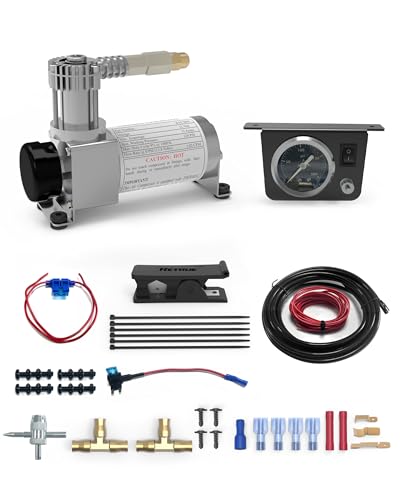
RETRUE Onboard Air Compressor System for Truck Airbag Suspension
More Details On Our Top Picks
The SuperBars pick stands out for trucks and mixed-vehicle garages because it pairs a high ceiling of 160 PSI with a 10,400 mAh battery and 45W charging. That combination matters on school runs, jobsite stops, and roadside top-offs, since you are not pinned to one power source.
The app control adds another layer of convenience, though it also adds a bit of setup compared with plainer inflators like the AstroAI T4. In practice, that trade-off favors you most when you like managed pressure settings and want a modern cordless backup in the glovebox or cargo area.
Strong Points
- 160 PSI gives you room for larger tires and varied inflation jobs.
- The 10,400 mAh battery supports cordless use, which is handy away from the garage.
- 45W charging helps reduce downtime between fills.
- App control can make repeated pressure checks feel less fiddly.
- It fits a truck, SUV, RV, or family car without forcing a separate tool for each.
Things To Consider
- The app layer is useful, but it adds another step for first-time setup.
- Battery-powered gear needs routine recharging, so long storage in a cab calls for a habit.
- Portability helps, yet heavy-duty users may still want a more fixed-duty unit for frequent work.
Feature Snapshot
Who It Suits Best
You’ll get the most from this one in a mixed-home setup where a truck shares space with smaller vehicles and you want one cordless inflator for both.
A Better Fit Elsewhere
VIAIR Digital EVC88P suits you better when preset shutoff matters more than app control, especially for drivers who want a simpler routine.
Compared with the SuperBars model, this OlarHike leans into practical flexibility with dual power, meaning you can use either the built-in battery or a 12V vehicle connection. That makes it a sensible carry-along for road trips, daily commutes, and ranch or work truck use where charging habits vary.
The digital pressure gauge is the part you’ll appreciate most in real use, because it gives you a cleaner readout than guessing by feel. The honest read is that this kind of inflator works best for people who want a straightforward tool that still leaves room for backup power.
What We Like
- Dual power gives you more ways to stay ready on the road.
- 12000mAh battery capacity supports cordless top-offs between trips.
- 150 PSI keeps it relevant for many truck and SUV inflation jobs.
- The digital gauge makes pressure checks more orderly and easier to track.
- It suits households that move between city driving and longer weekend miles.
Worth Noting
- The dual-power idea is handy, but it means a few more parts to keep organized.
- Battery models benefit from periodic charging, especially in seasonal use.
- Truck owners with very large tires may still want a more aggressive compressor style.
Core Details
Who Will Love This
You’ll like this most as a commuter or family-travel tool, especially when your truck shares duty with a car, Jeep, or RV.
Another Choice May Suit
JACO 4X4 TrailPro fits better for trail-focused drivers who want a more duty-minded portable compressor with a stronger overland lean.
This VIAIR model keeps the focus on control, not flash, which is exactly what some truck owners want. The preset automatic shutoff helps you set the target pressure and step away, a useful trait for driveway maintenance or repeated top-offs before a long haul.
Compared with the app-first SuperBars unit, this one feels more immediate and less dependent on extra setup. You may find that simplicity easier to live with in cold weather or while working in a dim garage, where fewer steps usually means less friction.
Highlights
- Preset shutoff reduces the need to watch the gauge constantly.
- 120 PSI is a practical ceiling for many trucks, SUVs, and RVs.
- The digital display keeps pressure checks clear and direct.
- Its style suits routine use rather than one-off novelty storage.
- It pairs well with anyone who prefers a calmer, less app-heavy workflow.
Small Caveats
- It does not chase feature overload, so tech-seekers may want more extras.
- As with most portable inflators, cord management and storage still matter.
- Very large truck tires can take patience, especially compared with higher-output gear.
At A Glance
Right Fit For
You’re a strong match for this pick when you want dependable tire upkeep without extra app steps or a crowded feature list.
Look Elsewhere When
VEVOR 10.6 CFM suits you better if your truck runs larger tires and you care more about fill pace than compact simplicity.
The AstroAI T4 feels built for straightforward truck upkeep, with a digital gauge, auto shutoff, LED light, and alligator clips in the package. That mix makes sense for pickups, SUVs, and RVs because it gives you a clearer working setup without asking you to assemble a pile of extras.
Compared with the VIAIR EVC88P, this one leans a bit more into practical roadside convenience thanks to the LED and clip-based connection. In a dim driveway or alongside a shoulder after sunset, those details matter more than flashy specs on paper.
Bright Spots
- Digital gauge and auto shutoff work together for cleaner pressure control.
- The LED light helps in low-light parking spots or roadside stops.
- Alligator clips support a more secure electrical connection.
- It suits truck, pickup, SUV, and RV use without feeling oversized.
Areas To Watch
- The clip-based setup may feel a bit more hands-on than cordless options.
- Storage matters, because lead, clips, and hose all need a tidy home.
- It is practical rather than luxurious, so feature hunters may want more polish.
Details At A Glance
Built With In Mind
You’ll appreciate this most as a truck or SUV owner who wants a practical, no-drama inflator for routine checks and emergency top-offs.
Where A Sibling Pick Shines
SuperBars Tire Inflator Portable Air Compressor works better for you if cordless freedom matters more than clip-based convenience.
This JACO TrailPro is the clearest overland-style option in the group, and the 3.5 CFM rating tells you it’s built with more work in mind than pocket convenience. CFM means cubic feet per minute, so you are looking at a stronger air-moving pace than the compact inflators above it.
The 12V/33A draw points to a more serious electrical appetite, which makes sense for trail rigs and modified trucks that want a tougher portable unit. The trade-off is size and setup seriousness, so it suits you best when the compressor lives with your expedition gear rather than in a daily commuter cubby.
Reasons To Buy
- 3.5 CFM gives it a more work-focused profile than standard pocket inflators.
- The 12V/33A rating signals a serious trail and off-road intent.
- It fits well with overland kits and organized cargo setups.
- Truck owners who air down and back up will appreciate the stronger stance.
Softer Spots
- The setup leans bulky compared with the smaller cordless options.
- It asks for a more deliberate storage plan in the truck bed or cargo box.
- Casual top-off users may find the build more than they need.
Core Details
Who Should Grab It
You’re the right match here when your truck spends time on dirt roads, campsites, or overland routes and you want a compressor that feels built for that life.
Swap It Out When
AstroAI T4 makes more sense for everyday drivers who want easier carry and a simpler roadside setup.
VEVOR is the brute-force option in this lineup, and the 10.6 CFM plus dual-cylinder design explain why it sits apart from the smaller portable units. Dual-cylinder means two compression chambers working together, which usually points to stronger output for larger tires and more frequent inflation tasks.
The 30-second fast inflation note gives you a sense of its pace, though real-world use always depends on tire size and setup. For truck owners who hate waiting around at the trailhead, that speed advantage can matter more than compact packaging ever will.
Best Bits
- 10.6 CFM gives it a very strong output profile for a portable unit.
- Dual cylinders support faster air movement than basic single-cylinder inflators.
- 150 PSI keeps the ceiling useful for truck, SUV, and RV needs.
- Adapters broaden the way you can use it across vehicle types.
- The faster pace is valuable for bigger tires and repeated topping up.
Points To Note
- Higher output usually comes with more bulk than a compact inflator.
- It makes the most sense when you can store and carry it with intention.
- Powerful gear like this can feel excessive for very light-duty errands.
Feature Rundown
The Right Fit
You’ll want this most for big tires, frequent trail work, or truck life that makes speed more important than compact size.
Reach For A Different Pick When
VIAIR Digital EVC88P is the calmer choice for drivers who care more about simple pressure control than raw air output.
This RETRUE system is different from every portable inflator above because it’s meant for truck airbag suspension, not ordinary tire top-offs. That matters a lot for leveled or towing-focused trucks, where you want consistent onboard pressure control instead of a loose tool you pull out once in a while.
The published inflation timing is the useful detail here, since it shows the system is built to bring air bags up fast enough for regular driving adjustments. You may find it especially useful in a towing setup where small pressure changes affect stance and load balance more than a quick roadside fill ever would.
Upsides
- It serves airbag suspension rather than ordinary tire inflation.
- The onboard format keeps the compressor integrated with the truck.
- Published fill times help set expectations for suspension adjustments.
- Universal fit language gives it broad appeal across common truck platforms.
Honest Caveats
- This is a specialized setup, so it is not a general-purpose tire inflator.
- Installation is more involved than carrying a portable compressor.
- Truck owners with no air bags will not need this style at all.
Spec Overview
Whose Shelf It Belongs On
You’re the right fit for this system only when your truck already runs airbag suspension and you want an onboard solution built for that setup.
Another Choice May Suit
AstroAI T4 makes far more sense for truck owners who need a portable inflator for tires, not a suspension-specific system.
How To Choose The Right Air Compressors For Truck
Match Pressure To Your Tire Size
PSI, or pounds per square inch, tells you the pressure ceiling, and that matters more than people usually expect. A truck with larger tires needs more headroom than a small sedan, especially when you are topping off after a long drive or a change in weather. A 120 PSI unit works for many routine jobs, while 150 PSI or 160 PSI gives you extra room for heavier setups.
The catch is that pressure alone does not tell the whole story. A higher ceiling helps, but fill speed still depends on airflow, battery capacity, and the compressor style. For most truck use, you want enough pressure margin to avoid running the tool near its limit all the time.
Think About Power Source And Portability
Cordless inflators are useful when you park away from an outlet, carry gear in the bed, or want one tool that can move between vehicles. Battery capacity and charging speed matter here because they shape how ready the tool feels during a roadside stop. A 12V plug-in model, on the other hand, stays simple and avoids battery upkeep.
That trade-off shows up in real life fast. Cordless convenience helps on errands and travel days, while plug-in units suit people who want steady, predictable availability. Truck owners who do maintenance in one place often prefer the simpler route, while mobile users tend to appreciate a charged battery more.
Look At Use Case Before Extras
App control, digital gauges, auto shutoff, and LED lights all sound helpful, and most of them are. Still, the right feature set depends on how you use your truck, because a trail rig, a work pickup, and an airbag-suspension build ask for different things. An onboard suspension compressor is a different category entirely from a portable tire inflator, even though both involve air.
You also want to think about storage and setup. A compact inflator needs a clean place for hose, clips, and charging cable, while a heavier unit may live in a cargo box or bed organizer. The best fit feels easy to reach, easy to power, and easy to put away without turning into clutter.
What To Weigh Before You Buy
Mistakes Worth Dodging
Many shoppers focus on PSI and ignore output, which is like judging a hose by the label and not the flow. Airflow, power source, and duty style shape how the compressor behaves once you are actually filling a truck tire.
Another common slip is buying a general-purpose inflator for a suspension job, or the reverse. A portable tire pump works for pressure checks, but airbag suspension needs an onboard system built for that task.
When Paying More Pays Off
Higher-tier units usually cost more because they bring stronger airflow, dual-cylinder layouts, larger batteries, or more controlled suspension hardware. Those parts take more engineering and usually make the tool faster, sturdier, or more specialized.
The upgrade makes sense for big tires, frequent use, or trucks that see real work instead of occasional top-offs. For a weekend cruiser or a light-duty pickup, a simpler inflator often covers the job just fine.
Frequently Asked Questions
What PSI works for most truck tires?
Many truck tires live comfortably in the 120 PSI ceiling range for portable inflators, though your tire’s sidewall and use case still matter. Larger setups benefit from extra headroom, especially when you want room to adjust pressure without pushing the tool hard.
Is cordless better than 12V for truck use?
Cordless gives you more freedom in a driveway, parking lot, or trail stop. 12V gives you steadier power without worrying about battery charge.
What does CFM mean on an air compressor?
CFM means cubic feet per minute, a measure of how much air the compressor moves. Higher CFM usually points to faster inflation, especially on larger tires.
Do I need an onboard system for airbag suspension?
Yes, an onboard system makes sense for airbag suspension because it stays with the truck and serves that specific setup. A portable tire inflator is the wrong tool for that job.
What matters most for roadside tire top-offs?
Pressure ceiling, power source, and a clear gauge matter most in real roadside use. A shutoff feature is handy too, because it reduces the need to stare at the display the whole time.
Closing Thoughts
You have a clear split here: portable inflators cover tires, while the RETRUE system handles airbag suspension. That makes the right choice easier, because your truck’s real job should lead the decision, not the flashiest spec on the page. For daily driving, the simpler digital units make life easier, and for overland or work use, the stronger output models earn their place. Pick the tool that matches how you actually drive, then keep it within easy reach.




