


Getting into espresso usually starts with the grinder, not the machine. A grinder that matches your routine can make dialing in shots feel manageable instead of maddening, whether you’re working with a tiny apartment counter, a busy morning kitchen, or a travel setup that needs to pack small.
Here, you get a mix of electric burr, manual burr, lever espresso, and blade options, so you can match your budget, space, and patience level. Some picks lean toward consistency, others toward portability, and a couple make sense only for very specific home use.
Quick Look At The Shortlist

Wancle Burr Coffee Grinder Flat Burr Grinder
Flair UPDATED Espresso Maker Classic Manual Lever

CEVING 60g Manual Coffee Grinder Black
EZLucky Manual Coffee Grinder Ceramic Conical Burr

KIDISLE Conical Burr Coffee Grinder Black
Aroma Housewares Mini Coffee Grinder 40 g
AMZCHEF Single Dose Coffee Grinder 40mm Burr

KIRAINAFLY Coffee and Spice Grinder Gray
More Details On Our Top Picks
A flat burr grinder like this makes the first step toward espresso feel less slippery. The 28 settings and 2 to 12 cup selector point to a simple home setup, while the compact body helps on counters that already feel crowded.
The trade-off is plain enough, since a small footprint usually means less room for fancy extras. Still, for a new espresso setup or a kitchen that also handles drip coffee, this Wancle fits a calm, practical routine.
Strong Points
- 28 grind steps give you room to move from fine espresso to coarser morning coffee.
- The flat burr design supports more even grinding than a basic blade grinder.
- 2 to 12 cup selection keeps everyday dosing straightforward for solo cups or small households.
- Compact sizing makes it easier to leave on the counter without taking over the space.
Points To Note
- Flat burr grinders usually ask for a little patience while you learn your preferred setting.
- The smaller body is handy, though it also means fewer bells and whistles.
- Cleanup still matters, especially around grind residue that can linger in narrow spaces.
Feature Card
Who It Suits Best
Home espresso starters who want a compact electric burr grinder with straightforward adjustment will get the most from it.
A Better Fit Elsewhere
AMZCHEF Single Dose Coffee Grinder suits you better when you want more settings and a low-retention setup for tighter espresso dialing.
This one steps away from the grinder-first path and puts the shot in your hands. The manual lever setup, pressure gauge, and included portafilters suit someone who enjoys learning the feel of espresso instead of leaning on automation.
You’ll appreciate the lack of cords on a small coffee station, and the 60 ml water plus 18 g dose guidance shows how specific the routine is. The honest read is that it rewards attention, so it fits patient home baristas far better than anyone who wants a fast push-button ritual.
What We Like
- Manual lever control gives you direct influence over the shot process.
- The pressure gauge adds a clear reference point for learning espresso extraction.
- Two portafilters included, which helps you set up without extra add-ons right away.
- No plug or electronics, so placement is easier on a crowded counter.
- The compact, mechanical style feels well suited to a dedicated coffee corner.
Small Caveats
- Manual brewing takes practice, and your routine will be slower than with an automatic machine.
- The learning curve can feel steep during the first few tries.
- You’ll want to keep the lever parts clean and dry after use, which adds a little upkeep.
Core Details
Who Will Love This
Hands-on espresso hobbyists who want a tactile, manual routine will get the most from the Flair Classic.
Where A Sibling Pick Shines
Wancle Burr Coffee Grinder Flat Burr Grinder suits you better when you want a simpler first step into espresso before committing to manual shot pulling.
The big draw here is capacity, because 60 g gives you room to grind more beans in one stretch than many compact hand grinders. That makes it a strong travel companion for camping mornings, group pour-over sessions, or a few espresso drinks without constant refilling.
Forty external settings are also easy to understand, which helps when you want fewer fussed-over adjustments on the road. The trade-off is the usual one with manual grinders, since hand grinding asks for time and a bit of arm effort.
Bright Spots
- 60 g capacity supports larger batches than most pocket-size hand grinders.
- 40 external settings keep adjustment accessible without taking the grinder apart.
- Ceramic conical burrs suit a calm, even grind approach for portable brewing.
- The hand-held format makes it easy to pack for travel or camping.
- Works well for drip, pour-over, and espresso-minded routines.
Room For Improvement
- Manual grinding takes more time, especially with a larger dose.
- The larger capacity helps portability, though it still needs space in your bag.
- Hand grinders need regular cleaning to keep old grounds from building up inside.
Spec Overview
Built With In Mind
Travelers, campers, and home coffee drinkers who want a larger hand grinder with simple external adjustment will fit it well.
Swap It Out When
EZLucky Manual Coffee Grinder Ceramic Conical Burr fits you better when you want a smaller, simpler manual grinder for lighter packing.
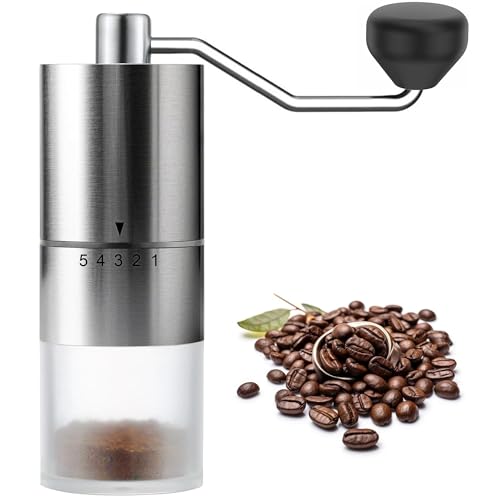
EZLucky keeps the manual grinder idea stripped down in a sensible way. The five external settings and adjustment ring make it easy to change grind size without a long setup, which suits rushed mornings and travel bags that already carry too much.
You won’t get the wider tuning range of CEVING’s 40-setting design, and that’s the point. This model feels aimed at people who want a compact, low-fuss grinder for espresso, pour-over, or a weekend camp kit.
Best Bits
- External adjustment ring keeps changes fast and simple.
- Five settings make the grinder easy to understand at a glance.
- Ceramic conical burrs give you a more even grind than a blade unit.
- Portable size works well in carry-on bags or a small desk drawer.
Softer Spots
- The five-setting range is narrow compared with more adjustable grinders.
- Manual grinding can feel slow for larger doses.
- Like most hand grinders, it benefits from routine brush-out cleaning.
Details At A Glance
Perfect Match For
Travelers, students, and casual espresso tinkerers who want a compact hand grinder with minimal setup will appreciate it.
Reach For A Different Pick When
CEVING 60g Manual Coffee Grinder Black suits you better when you want more capacity and a wider tuning range in a manual format.
KIDISLE reads like the safer electric choice for a home espresso beginner who also makes drip coffee. The 35 settings and 2 to 12 cup selector give you a wider day-to-day range, while the anti-static design should help cut down on mess around the grounds bin.
Compared with Wancle’s 28-step setup, this one gives you a little more room to fine-tune. That extra spread matters most in kitchens where one grinder needs to handle both weekend espresso and weekday drip without feeling cramped.
Upsides
- 35 settings create a wider adjustment span than many starter grinders.
- The 2 to 12 cup selector helps you match batch size to the day’s coffee habit.
- Anti-static design can reduce clingy grounds and make cleanup less annoying.
- Electric burr grinding keeps the routine easier than a hand grinder.
Areas To Watch
- Electric burr grinders need counter space and a nearby outlet.
- More settings can mean more time spent learning your preferred dial-in.
- Regular emptying and brushing still matter to keep the grinder tidy.
Core Details
The Right Fit
Home coffee drinkers who want an electric burr grinder for espresso plus everyday brewing will get the best match here.
A Better Fit Elsewhere
AMZCHEF Single Dose Coffee Grinder suits you better when single-dose workflow and lower retention matter more than a broad general-purpose range.
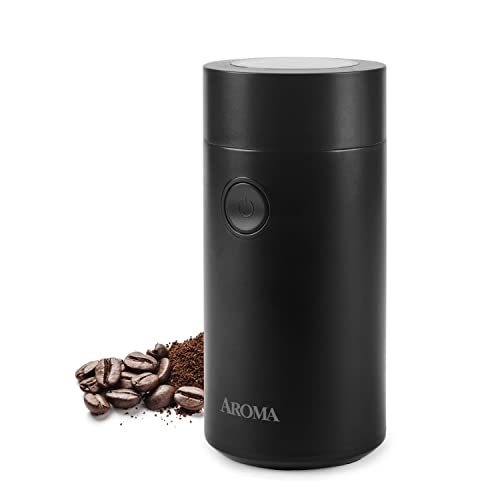
This blade grinder sits in a different lane from the burr models above. The 304 stainless steel blades and 40 g capacity make it a quick, small-batch option for coffee beans or spices, which is handy in a kitchen that likes simple tools.
For espresso, the limitation is clear: blade grinding is less consistent than burr grinding, so you trade precision for convenience and versatility. That’s fine for casual use, though serious espresso dial-in belongs with Wancle, KIDISLE, or AMZCHEF.
Reasons To Buy
- Small 40 g capacity keeps it easy to store and bring out only when needed.
- Stainless steel blades suit quick grinding for coffee or spices.
- The clear lid makes it easier to watch your grind progress.
- Simple operation is friendly for occasional home use.
Honest Caveats
- Blade grinders usually give a less even result than burr grinders.
- Fine espresso grinding is harder to control with this style.
- Spice use means extra cleanup so flavors don’t linger between batches.
Technical Sheet
Whose Shelf It Belongs On
Casual home cooks who want one small appliance for coffee and spices will get the best use from it.
Another Choice May Suit
Wancle Burr Coffee Grinder Flat Burr Grinder suits you better when espresso consistency matters more than multi-purpose convenience.
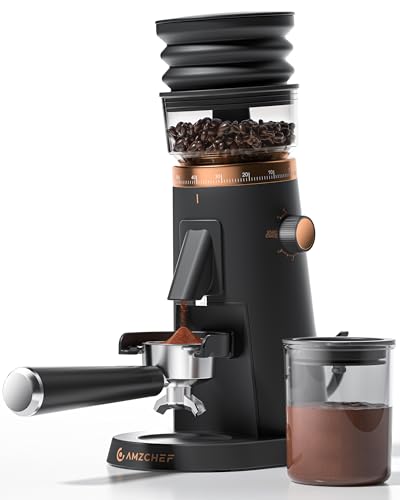
This is the most espresso-focused grinder in the group, and the single-dose layout tells you that right away. The 75 settings, 40 mm conical burr, low-retention design, quiet DC motor, magnetic outlet, and vacuum dosing cup point toward a more exacting home routine.
Compared with KIDISLE and Wancle, this one gives you finer control and a cleaner workflow around each shot. The trade-off is that it asks more from your setup and your habits, so it makes the most sense once espresso has become a regular ritual rather than a passing experiment.
Highlights
- 75 settings give you a very wide adjustment span for espresso dialing.
- Single-dose workflow suits people who grind fresh for each cup.
- Low-retention design helps reduce grounds left behind between uses.
- Quiet DC motor is a welcome detail in early-morning kitchens.
- Magnetic outlet and vacuum dosing cup support a tidier transfer routine.
Worth Noting
- The more exact workflow makes sense for committed espresso routines, not casual use.
- Single dosing asks you to measure and prepare more deliberately.
- Cleaning is still important, especially around the outlet and cup.
Feature Rundown
Who Should Grab It
Home espresso hobbyists who want a more exact grinder and a cleaner single-dose workflow will appreciate it most.
Not Your Match When
KIDISLE Conical Burr Coffee Grinder Black fits you better when you want broader everyday flexibility without leaning so hard into espresso tuning.
KIRAINAFLY stays in the same blade-grinder lane as the Aroma pick, but the removable cup gives it a slightly more practical feel for home kitchens. That setup works well for coffee beans, spices, and other small jobs that don’t need burr-level precision.
You may find it useful as a grab-and-go grinder for simple daily tasks, especially in a kitchen that values easy cleanup more than exact espresso tuning. The trade-off is familiar, since blade grinders are better for convenience than for true shot-level consistency.
Positives
- Removable cup can make emptying and cleaning less awkward.
- Stainless steel blade construction supports quick everyday grinding.
- Handles coffee beans and spices, which adds kitchen flexibility.
Minor Gripes
- Blade-style grinding is less even than burr-based grinding.
- Espresso work is best kept casual with this kind of grinder.
- Multi-use grinding means you’ll want to clean out flavor carryover.
At A Glance
Made For
Home cooks who want a basic, multi-use grinder for small batches will get the best fit here.
Look Elsewhere When
AMZCHEF Single Dose Coffee Grinder suits you better when espresso precision and lower retention matter more than general kitchen versatility.
How To Choose The Right Beginner Espresso Grinders
Start With The Grind Type
Burr grinders are the safer starting point for espresso because they crush beans more evenly, which makes shot dialing less chaotic. Flat burrs and conical burrs both do the job, but conical designs often feel a little friendlier for home use, while flat burrs can suit people who want a more defined grind profile.
Blade grinders sit in a different category altogether, since they chop rather than grind. That makes them fine for casual kitchen use, but espresso usually needs the tighter particle control that burrs provide.
Match The Grinder To Your Routine
Daily espresso at home asks for different features than weekend coffee or travel brewing. A single-dose grinder like the AMZCHEF makes sense for a careful, one-shot-at-a-time routine, while a broader electric model such as KIDISLE fits households that make both espresso and drip coffee.
Manual grinders work well for travel, camping, or a quiet morning setup. They save counter space and skip the cord, though you pay for that with time and effort.
Pay Attention To Adjustment Range
More settings usually help you find the narrow espresso window faster, especially during the first few weeks of learning. That said, a large setting count matters less than a clear adjustment system, because easy-to-read changes are what keep a beginner from getting lost.
External adjustment rings are helpful for that reason. They make changes quicker and easier to repeat, which matters more than a long spec list on days when you just want coffee.
Don’t Ignore Cleanup And Space
Counter space changes the whole experience. A compact grinder such as Wancle or EZLucky suits smaller kitchens, while a manual grinder can tuck into a drawer or travel kit, which helps a lot in apartments and shared homes.
Cleanup matters too, especially with blade grinders and lower-retention burr units. Less mess means less friction, and less friction makes it far more likely that you’ll keep using the grinder instead of leaving it buried at the back of the counter.
Things Worth Knowing First
Common Shopping Slip Ups
Many people start by chasing the wrong feature, usually a long list of settings without thinking about how the grinder actually fits their kitchen. A tidy electric burr grinder often beats a flashy spec sheet for a first setup.
Another common miss is choosing blade grinding for espresso and expecting café-level consistency. That style works for casual batches, but espresso asks for more even particles and a steadier workflow.
Where The Extra Money Goes
Higher-tier espresso grinders usually cost more because they do a few hard things better at once. You’re paying for finer adjustment, better burr geometry, reduced retention, quieter motors, and clearer bean handling.
That upgrade pays off once espresso becomes a regular habit. A more controlled grinder saves time during dial-in and gives you fewer frustrating mornings, which is the real value for a home coffee routine.
Frequently Asked Questions
Do you need a burr grinder for espresso?
A burr grinder is the smarter starting point because it produces a more even grind. That consistency matters a lot once you begin dialing in shots at home.
Are manual grinders good for beginners?
Yes, especially for travel or small kitchens. They ask for more effort, but the adjustment process is usually easy to understand.
Can a blade grinder work for espresso?
It can grind beans, but the result is less even than a burr grinder. For true espresso consistency, burr models are the better fit.
How many grind settings do you really need?
You need enough range to move around the espresso sweet spot without guesswork. A simple adjustment system often matters more than a huge setting count.
What matters more for a first grinder, size or precision?
Precision matters more for espresso, but size still counts in a crowded kitchen. The right balance depends on how much counter space you want to give up.
Closing Thoughts
Your best first espresso grinder is the one that fits your routine without making every cup feel like a chore. For most home setups, that means a burr grinder with clear adjustments, manageable cleanup, and a size that won’t crowd the rest of your kitchen. Manual options make sense for travel or hands-on brewing, while blade grinders stay useful for casual multi-use grinding. Choose the path that matches how you actually make coffee, not the one that looks the busiest on the page.




