


Getting started with soldering feels easier when the kit matches your pace, not the other way around. Some setups are built for practice boards and simple joints, while others make more sense for desk work, small repairs, or a classroom project that needs a little more structure.
Below, you’ll find a mix of training boards, compact irons, and full stations. The right match depends on how much control you want, how much desk space you have, and whether you want to learn basics first or start with a more complete bench setup.
Quick Look At The Shortlist

Gikfun DIY SMD/SMT Practice Board AE1173

Icstation 3D Xmas Tree Soldering Kit

Gikfun DIY SMD SMT Practice Board Ek7028

Crtsweker 100W Digital Display Soldering Station

Aucanla 100W Digital Display Soldering Iron Kit

WEP 926LED V3 Soldering Station

MiOYOOW Line Following Robot Car Kit
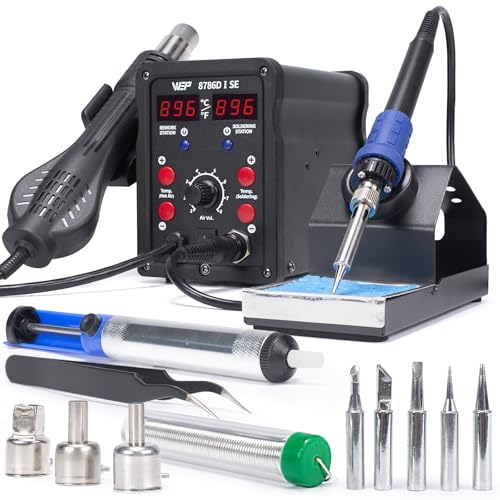
WEP 8786D-I SE 2-in-1 Station Kit
More Details On Our Top Picks
Practice boards like this make sense for anyone learning tiny joints before moving to more delicate work. The SMD and SMT focus matters because those terms refer to surface-mount parts, which sit directly on the board and ask for steadier hands than bigger through-hole parts.
Compared with the more playful Christmas tree kit, this one feels more focused on pure skill building. It suits a desk setup where you want repetition, not decoration, and the honest trade-off is that it stays in training territory rather than feeling like a finished project.
Strong Points
- Gives you a clear path for fine-pitch practice.
- Helps you build hand control before tackling larger boards.
- Stays compact, so it fits easily in a small workspace.
- Works well for repeat sessions without much setup fuss.
Things To Consider
- It is a practice tool, so it won’t feel like a finished gadget.
- Small components can be tiring for very first-time solderers.
- You may want better lighting and magnification nearby.
Feature Snapshot
Who It Suits Best
You fit this pick best when you want a low-pressure way to learn precise hand placement and tiny parts handling.
Swap It Out When
MiOYOOW Line Following Robot Car Kit makes more sense for school projects that need a working build with a visible outcome.
A project that lights up as you work can keep a beginner more engaged than a plain training board. The 3D tree shape and flashing LEDs give you something physical and festive, which makes it a nicer fit for home use or classroom gifting.
Compared with Gikfun AE1173, this leans less toward pure component drill and more toward a finished display piece. The trade-off is that the learning still happens, but the focus shifts toward assembling a themed object rather than mastering the smallest possible solder joints.
What We Like
- The finished shape gives you a clear sense of progress.
- LED flashing effects add visual feedback during assembly.
- It works nicely for STEM-style learning at home or school.
- The themed design keeps the project from feeling dry.
Room For Improvement
- The novelty angle may matter less for pure skills practice.
- Project-style kits can involve more steps than a basic board.
- You may need a tidy workspace to keep small parts organized.
Technical Sheet
Built With In Mind
You will get the most from this kit as a beginner who likes a project with personality and a visible finish.
Where A Sibling Pick Shines
Gikfun DIY SMD SMT Practice Board Ek7028 is the better match for a more stripped-down, desk-first practice session.
This Gikfun board keeps the learning path narrow in a good way, because it sticks to SMD and SMT practice without extra distractions. That makes it a sensible desk companion for someone who wants to repeat the same motion until it feels natural.
Compared with AE1173, the main appeal here is the same kind of skill-building with a different board layout. In a shared desk or dorm room, the compact footprint helps, though the small-part focus still asks for patience and decent lighting.
Upsides
- Good for repeating precise soldering motions.
- Fits easily into a small work area.
- Keeps attention on technique instead of decoration.
- Useful for hobbyists building confidence with tiny components.
Softer Spots
- It is still aimed at practice, not a finished build.
- Fine work can feel demanding for absolute first-timers.
- You may want a holder or lamp close by.
Details At A Glance
Right Fit For
You should gravitate here when you want a compact, no-frills board that supports repeat practice.
Look Elsewhere When
Crtsweker 100W Digital Display Soldering Station suits a shopper who wants a full bench setup with more tools in one box.
For a beginner who wants a more complete bench setup, this station goes far beyond a bare iron. The digital display, helping hands, sleep mode, and included accessories make it feel ready for home repairs, small electronics, and longer work sessions.
Compared with the practice boards above, this is less about learning on a toy-like project and more about building a usable workspace. The trade-off is simple: you gain convenience and control, but you also bring home more pieces to store, clean, and keep track of.
Bright Spots
- The temperature display helps you keep settings visible at a glance.
- Helping hands support steadier work on small components.
- Auto sleep is handy during breaks between joints.
- The accessory bundle suits a first bench setup well.
- C° and F° conversion makes the readout easier to follow.
Areas To Watch
- The larger bundle needs a bit more storage space.
- More included tools can mean more parts to keep organized.
- Beginners may still need a little practice with hand coordination.
Core Details
The Right Fit
You fit this station best when you want one package that covers practice, small repairs, and a more organized desk.
Skip It When
Aucanla 100W High Power Soldering Iron Kit is the leaner choice for someone who wants portability over a fuller station setup.
This one suits a beginner who wants a portable iron instead of a larger station. The digital temperature display and sleep mode point to everyday convenience, especially for quick household fixes or hobby work at a small bench.
Compared with Crtsweker’s fuller station, you give up the extra accessories and bench-side helpers, but you gain a simpler carry-friendly setup. In a shared apartment or a small workshop, that leaner shape can be easier to live with.
Positives
- Portable format makes it easier to store and move.
- Digital temperature control helps you keep settings clear.
- Fast heating supports short repair sessions.
- Sleep mode adds a bit of day-to-day convenience.
Minor Gripes
- You do not get the same bench-side support as a full station.
- Portable irons can feel less settled during longer sessions.
- A separate holder or extras may be useful later.
Feature Card
Whose Shelf It Belongs On
You will appreciate this most as a portable starter iron for quick fixes and light hobby work.
A Better Fit Elsewhere
WEP 926LED V3 Soldering Station suits you better for a more stationary setup with extra tips and bench tools.
The WEP 926LED V3 feels better suited to a growing hobby setup than a bare starter iron. Its 130W maximum, five tips, solder wire, tweezers, solder sucker, tip cleaner, sleep mode, and C to F conversion make it a fuller desk companion for regular soldering sessions.
Compared with the Aucanla iron, you get a more complete station-style bundle and more accessories to support practice. The trade-off is the usual one for fuller kits, a little more space and a little more housekeeping around the bench.
Reasons To Buy
- The accessory mix helps you start with less piecing together.
- Five tips give you more room to match tasks.
- Sleep mode fits short pauses during longer work.
- C to F conversion makes the display easier to follow.
- Good step-up choice for someone outgrowing a bare iron.
Worth Noting
- It asks for more bench space than a simple portable iron.
- Extra accessories also mean more parts to store.
- Some beginners may need a little time to sort the tool layout.
Spec Overview
Who Should Grab It
You should lean toward this station when you want a richer accessory set and plan to solder often enough to use it.
Reach For A Different Pick When
Gikfun DIY SMD/SMT Practice Board AE1173 suits a more stripped-back practice routine centered on small-component repetition.
For school projects and home learning, this robot car brings soldering into a build that does something useful at the end. The line-following setup ties together mechanics, electronics basics, and sensor logic, so the lesson feels bigger than the board itself.
Unlike the pure practice kits above, this one has a clear STEM angle and a more visible end result. The trade-off is that you are learning through a project, so it suits curious beginners who like seeing how the parts work together.
Best Bits
- Combines soldering practice with a working robot project.
- Supports lessons in mechanics, sensors, and control logic.
- Fits well in school labs or home study sessions.
- The moving car format can keep motivation high.
Small Caveats
- Project builds usually need more patience than simple boards.
- You may want a clear table and sorted parts before starting.
- The learning focus shifts toward assembly as well as soldering.
Feature Rundown
Made For
You fit this kit best when you want a soldering project that doubles as a science lesson.
Another Choice May Suit
Gikfun DIY SMD SMT Practice Board Ek7028 is better for pure soldering drills without the extra project assembly.
This WEP station sits at the advanced end of the list because it pairs a soldering iron with hot air for rework. Hot air means heated airflow that helps remove or reposition parts, so the setup makes more sense once you move beyond basic joints and into repair-style work.
Compared with the WEP 926LED V3, the added hot-air side gives you more flexibility for desoldering and board work. The honest trade-off is that this is more station than starter for many people, so it fits best after you already know you want that extra capability.
Highlights
- Two-in-one design covers both iron work and hot air rework.
- Useful for desoldering and more involved board repair tasks.
- Includes five soldering tips and three hot air nozzles.
- Tweezers and a desoldering pump help round out the bench.
Points To Note
- More capability also means a steeper learning curve.
- It suits dedicated bench space more than a quick drawer setup.
- Beginner hobbyists may not need hot air right away.
Core Details
The Right Fit
You should reach for this only when you want to grow into repair work and need both iron and hot air tools.
Where Shoppers Go Wrong
Aucanla 100W High Power Soldering Iron Kit is a better match for someone who wants to keep things simple and portable.
How To Choose The Right Beginner Soldering Kits
Match The Kit To The Kind Of Work You Want
Practice boards make sense for pure hand skill, while project kits keep things lively with a visible result. A station or iron suits repair work better, especially in a home workspace where you want control and repeatability.
The key question is whether you want to learn soldering motion first or build something that behaves like a finished gadget. That choice shapes the rest of the purchase more than brand names do.
Check The Temperature And Control Layout
Temperature control matters because different joints need different heat, and a clear display reduces guesswork. Digital readouts, sleep mode, and C or F conversion help a lot for anyone setting up a desk for the first time.
A simple iron works for quick tasks, but a station gives you steadier habits for longer sessions. You’ll usually feel the difference most when you move from practice pads to actual components.
Do Not Ignore The Accessories
Helping hands, solder sucker tools, tweezers, stands, tips, and tip cleaners shape the daily experience as much as wattage does. A fuller box saves time later, though it also means more parts to store and clean.
Compact kits fit tight spaces and travel better, but they often ask you to add pieces later. Bigger starter bundles suit a dedicated bench and a more gradual learning curve.
Think About Your First Three Projects
Your first project tells you whether the kit feels encouraging or frustrating. A robot car, a light-up tree, or a practice board each teaches something different, so match the kit to the kind of progress you want to see.
For school use, a project with a clear outcome helps motivation. For quiet home practice, a board with repeated pads usually makes more sense.
What To Weigh Before You Click Around
Common Shopping Slip Ups
Many first-time shoppers focus on wattage alone and miss the value of the tool bundle. A 100W iron still feels awkward without a stand, tip care, or a steady holder.
Another common miss is choosing a themed project when the real need is plain practice. That mismatch can slow down learning, especially in a cramped desk setup.
The Upgrade Payoff
Higher-tier kits usually cost more because they bundle more control, more tips, and more bench support. Hot air stations add another layer of function, which matters once you start doing repair work instead of basic assembly.
The upgrade makes sense for regular hobby use, classroom labs, or any setup that stays out on the table. For occasional fixes, a simpler iron often stays the saner choice.
Frequently Asked Questions
What makes a soldering kit beginner-friendly?
A beginner-friendly kit usually gives you clear heat control, a comfortable handle, and enough accessories to avoid extra shopping. Practice boards and simple project kits also help because they reduce the pressure of working on live household repairs right away.
Do you need a station, or is a simple iron enough?
A simple iron can cover light tasks and occasional fixes, especially in a small space. A station helps more when you want steadier control, a display, and a more permanent bench setup.
Are practice boards better than project kits?
Practice boards help you repeat the same motion and build steadier technique. Project kits keep motivation high because you end with something useful or decorative.
What accessories matter most for a first kit?
A stand, tip cleaner, tweezers, solder sucker, and helping hands make the biggest difference in day-to-day use. Those pieces keep the work area organized and reduce small frustrations.
Which type fits a small desk best?
A compact practice board or a portable iron fits easiest on a crowded desk. Full stations work too, but they need more room for parts and storage.
Closing Thoughts
The right beginner soldering kit depends on how you want to learn, not just how much power it lists. Practice boards suit steady skill-building, project kits keep things engaging, and full stations help once you want a real workbench feel. Portable irons stay handy for quick fixes, while the more advanced WEP station opens the door to rework and repair. Choose the setup that matches your space, your patience, and the kind of projects you want on the table first.




