Hands-on car work gets easier when your scan tool can do more than read codes. For driveway repairs, garage tune-ups, and weekend diagnostics, the right pick can save you from guesswork around resets, system checks, and live component commands.
This roundup focuses on tools that make sense for DIY use, from straightforward all-system scan readers to models with coding and broad service menus. You’ll see clear differences in update support, vehicle coverage, and how deep each tool goes before the learning curve starts to feel steep.
Quick Look At Our Shortlist

TOPDON AD800BT 2 OBD2 Scanner

TOPDON ArtiDiag Pro OBD2 Scanner

FOXWELL NT614 Elite OBD2 Scanner
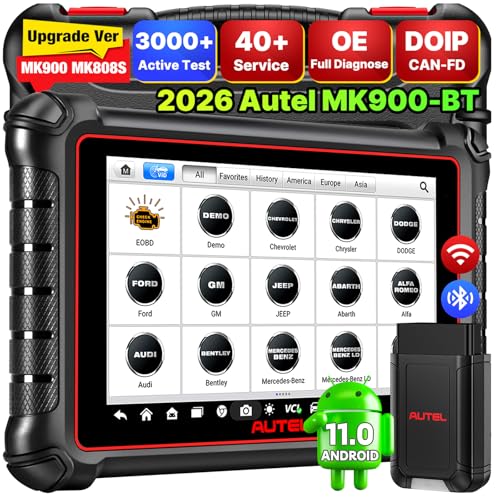
Autel MaxiCOM MK900BT Bidirectional Tool

Autel MaxiCheck MX808S

Innova 5410 All-System OBD2 Scanner

TOPDON AD800BT V2.0 Bidirectional OBD2 Scanner

OTOFIX D1 Lite Bidirectional Scan Tool
More Details On Our Top Picks
This TOPDON unit sits in the sweet spot for garage tinkerers who want bidirectional control without jumping straight into the deepest tier. The all-system layout and 28-plus reset menu give you room to handle common jobs like service resets, relearns, and component checks on a daily driver or a family SUV.
The honest read is that it fits well for someone who wants breadth first, then extra functions second. Compared with the simpler FOXWELL NT614 Elite, this model leans harder into active testing and broader system coverage, which matters once you start chasing stubborn faults instead of just clearing lights.
Strong Points
- Bidirectional control lets you command parts and watch the response, which helps narrow down faults in a driveway repair.
- More than 28 reset functions cover a wide spread of maintenance jobs, so routine ownership tasks stay in one handheld tool.
- All-system diagnosis means you can move beyond engine checks and look across multiple vehicle modules.
- CAN-FD support fits newer vehicle communication needs, which is useful as car networks get more complex.
- The included two-year update period gives you a practical runway for staying current with newer models.
Things To Consider
- The menu depth can feel busy at first, especially for someone new to advanced scan tools.
- Service functions are broad, but not every reset matters on every vehicle, so some features may sit unused.
- Like most handheld diagnostics tools, long-term comfort comes down to keeping the screen clean and the cable tucked safely.
Feature Rundown
Who It Suits Best
DIY repairers who want a broad reset menu and active testing on newer family vehicles will get the most from this pick.
A Better Fit Elsewhere
Autel Scanner MaxiCOM MK900BT Bidirectional Tool suits you better when you want a heavier feature set and more active-test headroom for advanced weekend work.
Once you move past basic code reading, ECU coding starts to matter, and this TOPDON model leans into that territory. ECU coding means you can adjust certain vehicle module settings through the scanner, which is why this pick feels aimed at more involved home mechanics and small-shop style work.
Compared with the AD800BT 2, this one pushes further into deep functions, while the trade-off is a steeper learning curve for casual users. The V.A.G guided path and FCA SGW support make it more appealing for owners working on specific brand families that need a little extra navigation help.
What We Like
- ECU coding adds a layer of control that goes beyond fault-code reading.
- 35-plus service functions give you room for a wider range of repair and maintenance tasks.
- V.A.G guided support helps make some brand-specific paths less confusing.
- Can FD and DoIP support broadens compatibility with newer vehicle communication setups.
- All-system diagnosis helps you trace issues across multiple modules instead of guessing from a single warning light.
Room For Improvement
- The feature depth makes it more tool than toy, so casual code clearing may feel overbuilt here.
- Brand-specific functions matter most on the right vehicles, which limits the value of some advanced menus.
- Keeping the tool organized matters, because a crowded feature set is easier to misuse than a simple reader.
Core Details
Who Will Love This
Experienced DIYers who want coding, guided brand support, and a deeper service menu will appreciate this more than a basic scanner.
Where A Sibling Pick Shines
Innova 5410 All-System OBD2 Scanner suits you better when you want a simpler app-linked setup instead of a heavier coding-focused tool.
This FOXWELL model feels tailored to the kind of home garage work that sits between basic and advanced. The four-system coverage, which includes engine, ABS, SRS, and transmission, gives you a more complete picture than a simple code reader, especially on cars with recurring warning lights.
The five reset functions keep the focus practical rather than sprawling, so you’re not paying for menus you may never open. Compared with the TOPDON ArtiDiag Pro, it gives up coding depth, but it also keeps the day-to-day learning curve gentler.
Highlights
- Four-system coverage is a solid fit for chasing common drivability and safety-light issues.
- ABS bleeding, EPB, oil, SAS, and throttle reset functions handle many routine ownership tasks.
- Read and clear support for major fault categories keeps troubleshooting organized.
- The upgrade path from NT604 makes sense for someone who wants a more capable home tool.
Softer Spots
- It does not try to be the deepest tool in the room, so advanced coding shoppers may want more.
- The reset list is useful, but narrower than the broad-service models above it.
- As with most diagnostic handsets, careful cable storage helps avoid wear over time.
Technical Sheet
Built With In Mind
Home mechanics who want a straightforward step up from a basic reader will get the best fit here.
A Better Fit Elsewhere
Autel Scanner MaxiCheck MX808S suits you better when you want a broader brand and service spread without jumping all the way into coding territory.
This Autel stands out for people who want a more serious handheld diagnostic tool without moving into shop-only territory. The 40-plus service functions and 3000-plus active tests create room for deeper troubleshooting, and active tests let you command a component on purpose instead of just reading its fault history.
Compared with the TOPDON AD800BT 2, it pushes harder on breadth and test count, which makes sense for larger households with multiple vehicles or a hands-on mechanic doing regular weekend work. The trade-off is price of complexity rather than price numbers, because the menu depth asks more from you than a simpler reader ever would.
Reasons To Buy
- 3000-plus active tests give you substantial room for component-level diagnosis.
- 40-plus service functions cover a wide range of maintenance and reset tasks.
- CAN-FD and DoIP support make it a strong fit for newer vehicle networks.
- All-system diagnostics keep the work organized across major modules.
- It feels well suited to someone who wants one tool that can grow with the garage.
Areas To Watch
- The feature set is deep enough that casual users may need time to get comfortable.
- Many functions are most useful only on compatible vehicles, so the menu can feel wider than your actual use.
- Storing a device like this safely matters, since a large diagnostic tool deserves the same care as the car it helps you work on.
Core Details
Whose Shelf It Belongs On
Dedicated DIYers and serious home mechanics who want maximum handheld capability will get the most out of this pick.
Skip It When
FOXWELL NT614 Elite OBD2 Scanner suits you better when your repairs are simpler and you want a shorter learning path.
The MX808S lands in a comfortable middle lane for people who want broad diagnostic coverage without chasing every advanced add-on. Autel positions it with 28-plus services and all-system diagnostics, so you can handle maintenance resets and deeper code checks from one device instead of juggling separate gadgets.
It feels especially sensible for someone maintaining more than one vehicle, since the 200-plus brand support broadens the odds of useful coverage across a mixed driveway. Compared with the MK900BT above it, this one is easier to justify for general use, while the top Autel still suits more demanding diagnostic work.
Positives
- 28-plus service functions cover a broad slice of common maintenance jobs.
- All-system diagnostics help you look past engine-only trouble codes.
- 200-plus brand support makes it easier to keep one tool for multiple vehicles.
- 3000-plus active test support gives the tool room to move beyond basic scanning.
- It strikes a useful balance between depth and day-to-day practicality.
Minor Gripes
- Power users may still want the deeper service spread found in the MK900BT.
- The broader feature count can take a little time to organize in your head.
- Like most scan tools with rich menus, it rewards tidy storage and regular updates.
Quick Facts
Perfect Match For
Home mechanics who want a single scanner for more than one car and a mix of routine service jobs will feel right at home here.
Another Choice May Suit
TOPDON ArtiDiag Pro OBD2 Scanner fits you better when ECU coding and brand-guided support matter more than general breadth.
Innova takes a friendlier route for people who want scan-tool help without living inside a dense menu tree. Bluetooth compatibility with its repair app means you can pair the handheld side with app guidance, which is handy for driveway diagnostics on a laptop-sized learning curve rather than a shop wall of tools.
That app-linked style makes it feel less intimidating than the heavier Autel and TOPDON picks above, especially for someone who mostly wants engine, ABS, SRS, and transmission visibility. The trade-off is that it appeals more to clarity and workflow than to deep feature sprawl.
Best Bits
- Bluetooth pairing with the repair app simplifies the workflow for many home garages.
- Engine, ABS, SRS, and transmission coverage handles the most common warning-light scenarios.
- All-system scanning helps you look at the vehicle as a whole rather than a single fault.
- It feels approachable for someone moving up from a basic code reader.
Small Caveats
- The app-based approach may not suit someone who wants every step handled on one screen.
- It is less focused on advanced coding and large service menus than some rivals here.
- Bluetooth use benefits from keeping your phone or tablet charged and close by in the garage.
Details At A Glance
Right Fit For
DIY owners who want a more guided diagnostic routine and app support will get the cleanest experience here.
Reach For A Different Pick When
Autel MaxiCOM MK900BT Bidirectional Tool suits you better when your repairs lean toward advanced active tests and heavier service access.
This updated TOPDON model makes sense for someone who liked the earlier AD800BT idea but wants a fresher version with a bigger active-test count. The vehicle health check angle adds a more complete starting point for a busy driveway, where you want one scan to set the tone before you split into smaller repairs.
Compared with the original AD800BT 2, the appeal here sits in the 3000-plus active tests and the broader sense of a newer release. You may find it especially useful on cars that need repeated checks after a repair, since the vehicle-wide view keeps the process more orderly.
Bright Spots
- 3000-plus active tests give the tool strong depth for component commands.
- Vehicle health check helps you start with a broad system snapshot.
- 28-plus service functions cover many common home maintenance tasks.
- FCA SGW support helps on vehicles that use that access path.
- Two years of updates add practical staying power for future vehicle coverage.
Worth Noting
- The newer label and expanded feature count still come with a learning curve.
- Some of the deepest functions matter most on the right vehicle families.
- Keeping the device updated and stored carefully helps preserve a smooth ownership routine.
Feature Snapshot
Built With In Mind
DIYers who want a newer TOPDON package with heavy active-test depth and broad reset coverage will get the most from it.
Where Another Pick Suits Better
FOXWELL NT614 Elite OBD2 Scanner suits you better when you want a simpler four-system layout and a smaller menu set.
OTOFIX gives you a compact way into the same style of advanced diagnostics that the larger Autel and TOPDON units pursue. The Auto VIN feature speeds up vehicle identification, which is handy in a busy garage where you’d rather spend time on the car than on menu setup.
Its 38-plus reset services and all-system coverage make it feel more ambitious than a plain code reader, yet still friendlier to store on a crowded shelf. The honest read is that this suits someone who wants plenty of capability without a physically bulky tool taking over the workbench.
Standout Traits
- Auto VIN can shorten the setup step at the start of a scan session.
- 38-plus reset services give you wide maintenance coverage in a smaller package.
- Bidirectional testing helps you command supported parts during diagnosis.
- CAN-FD and DoIP support widen compatibility with newer vehicle systems.
- Two years of updates make it a sensible long-view option for home use.
Points To Note
- The smaller footprint is handy, though the reduced size can also mean a less expansive feel in the hand.
- Broad service menus still depend on vehicle support, so not every function will matter on every car.
- Keeping a compact scanner charged, updated, and stored cleanly helps it stay ready for the next weekend job.
Spec Overview
The Right Fit
Space-conscious DIYers who still want strong scan depth and a large reset menu will appreciate this one most.
Look Elsewhere When
Autel MaxiCOM MK900BT Bidirectional Tool fits you better when you want the heaviest active-test and service load in this roundup.
How To Choose The Right Bidirectional Scan Tools For Diy
Match The Tool To Your Repair Style
Start with the kind of jobs you actually take on. A weekend wrench who mostly handles oil resets, brake work, and warning lights can do very well with a simpler all-system scanner, while someone chasing stubborn module behavior gets more value from bidirectional control and active tests.
That difference matters because extra menus add learning time. A broader tool can feel like a toolbox with every drawer packed, which is great once you know where everything lives.
Check Vehicle Coverage Before You Chase Features
System depth only helps when it fits your car or truck. CAN-FD, DoIP, FCA SGW, and FCA AutoAuth support matter on specific newer platforms, but they do not help much on vehicles that never need them.
Brand coverage and model-year support deserve a close look too. For a household with mixed vehicles, a scanner with wider coverage often beats a flashy list of functions you’ll rarely open.
Balance Service Functions Against Usability
Reset functions are useful, but only up to the point that the menu stays usable. A tool with 40-plus services can be excellent for a hands-on driveway, yet a newer DIYer may prefer the cleaner path offered by a four-system, five-reset unit like the FOXWELL NT614 Elite.
Screen layout, Auto VIN, and guided paths matter because they reduce setup friction. You want the scanner to feel like a steady helper, not another puzzle on the bench.
Think About Long-Term Ownership
Update support changes the life of a scan tool more than people expect. Two years of updates can help keep newer vehicle coverage relevant, especially for families who hold onto cars for a while.
Storage and cable care matter too. A handheld diagnostic tool that lives in a clean case and stays updated is easier to trust on the next repair night.
Things Worth Knowing First
Wrong Turns To Avoid
Many people shop by service count alone and miss the compatibility details. That can leave you with a feature-rich tool that skips the exact vehicle functions you actually need.
It also helps to avoid overbuying for casual use. A deep coding scanner is useful, but it can feel like using a torque wrench for a quick tire-pressure check.
What The Higher Tier Buys
Higher-tier models usually spend the extra money on deeper active tests, broader communication support, and more complex vehicle access features. That’s why the MK900BT and ArtiDiag Pro sit above simpler readers, they’re built for users who want to move beyond code clearing.
The upgrade pays off once your garage routine includes repeated diagnostics, module commands, or newer vehicles with stricter communication requirements. For light maintenance only, a smaller tool often makes more sense.
Frequently Asked Questions
What makes a bidirectional scan tool different from a basic code reader?
A basic reader can show fault codes and clear some warnings. A bidirectional tool can also send commands to certain vehicle parts and modules.
Do you need ECU coding for DIY work?
Not usually. ECU coding helps more with advanced repairs and module-level adjustments than with simple home maintenance.
Which features matter most for newer cars?
CAN-FD and DoIP support matter on many newer platforms. FCA SGW or FCA AutoAuth can matter on certain protected vehicles.
Is a huge service list always better?
Not always. A long menu helps only when the tool supports the jobs you plan to do.
Can one scanner work across multiple vehicles in the driveway?
Yes, wide brand coverage can make that possible. You still need to check the model families you own most often.
Closing Thoughts
For DIY work, the best choice is the scan tool that matches your actual repair rhythm, not the one with the busiest spec sheet. A simpler unit can handle routine resets with less friction, while a deeper scanner pays off once you start digging into active tests, coding, and newer vehicle networks. TOPDON, Autel, FOXWELL, Innova, and OTOFIX each serve a different slice of that job. Pick the one that fits the cars in your garage and the repairs you really plan to take on.