


Dust control gets a lot easier once you match the tool to the space. A nail station needs a very different setup from a garage saw bay, and the wrong match can leave you cleaning twice: once at the tool and again across the floor.
This roundup focuses on budget-minded dust collectors, separators, shrouds, and bags that fit common home and small-workshop routines. You’ll see compact nail-table options, table saw helpers, and fuller woodworking units, so you can choose the setup that fits your bench, your tools, and your cleanup habits.
Quick Look At The Shortlist

OmySalon Nail Desk with Electric Dust Collector
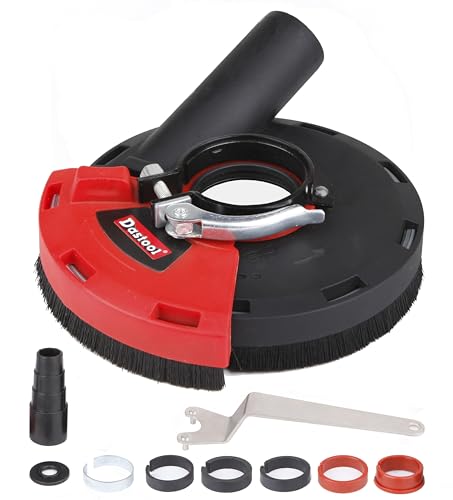
Expert Surface Grinding Dust Shroud 5-Inch DT1701-125

Table Saw Dust Collector Bag for 10-Inch Saws

WEN Woodworking Dust Collector DC3401

DEWALT 6 Gallon Dust Separator DXVCS002

SAVILAND 60W Nail Dust Collector

MelodySusie Cordless Nail Dust Collector SProR

Shop Fox W1685 1-1/2 HP Dust Collector
More Details On Our Top Picks
For a nail tech working in a busy room, this setup pulls double duty as furniture and cleanup support. The electric dust collector sits inside a manicure table, so you’re not trying to squeeze a separate unit onto an already crowded station.
The lockable wheels, wrist cushion, four drawers, and cabinet make it feel like a proper workstation rather than a bare table. That’s handy for mobile rooms, salon corners, or a home setup where acetone-resistant surfaces matter and storage space is tight.
Reasons To Buy
- Built-in dust collection keeps the work surface tidier during filing and shaping.
- Four drawers and a cabinet give you room for gels, files, and small tools.
- Lockable wheels make repositioning easier in a changing salon layout.
- The wrist cushion adds comfort during longer appointments.
Points To Note
- The larger footprint suits a dedicated station more than a tiny spare room.
- Storage and wheels add convenience, but they also make setup less minimal.
- Regular wipe-downs help keep the acetone-resistant finish looking neat.
Feature Snapshot
Who It Suits Best
Nail professionals or home nail setup owners who want a tidy, all-in-one station will get the most from it.
A Better Fit Elsewhere
The SAVILAND Nail Dust Collector is the cleaner match for someone who already has a table and only needs a compact vacuum unit.
This one is for grinder work where the mess starts fast and the cleanup can turn into a chore. A dust shroud sits around the grinding area and helps route debris away while you work on concrete or similar surfaces.
Compared with the salon-focused OmySalon table, this is much more task-specific and far less about comfort or storage. The honest read is that it makes the most sense on a 5-inch angle grinder setup where you want a tighter, more controlled surface-grinding workflow.
What We Like
- Fits a focused grinding setup without adding much bulk.
- Helps keep debris more contained around the tool.
- Useful for surface prep jobs that throw dust quickly.
Small Caveats
- It only makes sense for users already running the right grinder size.
- Brush and seal parts usually need occasional cleaning to stay effective.
- It’s a narrow-purpose accessory, not a workshop-wide solution.
Core Details
Built With In Mind
DIYers and tradespeople who grind floors, patch spots, or smooth hard surfaces will get the clearest payoff here.
Another Choice May Suit
The DEWALT DXVCS002 makes more sense for a shop vac setup that handles mixed debris across a wider work area.
Table saw owners often want one simple thing, less sawdust at the base and less sweeping after a cut session. This bag is aimed at 10-inch saws with a 2.5-inch dust port, so it suits a very common garage-shop setup without asking for a full collector.
Unlike the DT1701-125, which lives on a grinder, this one is about catching what a saw throws off during ripping and crosscutting. You may still see fine dust escape, but for small shops that want a lighter, lower-commitment add-on, it’s a practical middle ground.
Bright Spots
- Fits a range of widely used table saw brands.
- Simple bag format keeps the setup easy to understand.
- Useful for reducing pileup around the saw base.
- Works as a modest upgrade over open dust discharge.
Areas To Watch
- It helps with cleanup, but it’s not a full dust-management system.
- Bag loading and emptying add a small maintenance step.
- Compatibility depends on the saw’s port and size match.
Details At A Glance
Who Will Love This
Home woodworkers with a compatible saw and a modest cleanup goal will get the most value from it.
Look Elsewhere When
WEN’s DC3401 is the smarter step up for a shop that needs a larger collector instead of a bag-only setup.
Once your shop grows beyond a single saw or sander, a dedicated collector starts to make more sense than a bag or shroud. The DC3401 brings a 5.7-amp motor, a 12-gallon bag, a mobile base, and an optional wall-mount setup, so it fits a small workshop that needs some flexibility.
Compared with the table-saw bag above, this is a more serious move toward whole-shop dust handling. It’s a stronger match for woodworkers who want the collector to stay with the workspace instead of hanging off one tool at a time.
Upsides
- Mobile base makes it easier to move around the shop.
- 12-gallon bag offers room before emptying becomes necessary.
- Optional wall-mount setup gives you placement flexibility.
- Suited to recurring woodworking cleanup rather than one-off jobs.
Room For Improvement
- It asks for more floor space than the smaller accessory picks.
- Bag emptying is part of routine ownership here.
- Wall mounting only helps in shops with the right layout.
Spec Overview
Whose Shelf It Belongs On
Woodworkers with a fixed bench area and a few machines to keep cleaner will appreciate the balance here.
Swap It Out When
Shop Fox’s W1685 is the better match for a more dedicated collector setup with a stronger workshop-first focus.
This separator is a smart middle layer for shop vac owners who want the vacuum doing less of the dirty work. It catches chips and debris before they reach the vacuum, which can help cut down on filter clogging and make emptying less annoying over time.
The four-caster base and 1-7/8-inch or 2-1/2-inch port setup give it broader compatibility than the more tool-specific picks above. In most garages, that flexibility matters more than flashy extras, especially when you’re moving between wood chips, drywall dust, and mixed cleanup.
Best Bits
- Intercepts larger debris before it reaches the vacuum.
- May reduce how often filters load up.
- Four casters make movement easier around a workshop.
- Fits common port sizes for many vacuums.
- Useful for mixed cleanup, not just woodworking.
Softer Spots
- It still needs a vacuum to do the actual suction work.
- Emptying the barrel is part of the routine.
- Best results depend on a compatible vacuum setup.
Feature Rundown
Perfect Match For
Shop vac users who need better separation for mixed debris in a garage or basement shop will find the fit strongest here.
Where A Sibling Pick Shines
The WEN DC3401 makes more sense for someone who wants a dedicated woodworking collector instead of a separator attached to a vacuum.
For a manicure desk that needs cleanup support without taking over the whole surface, this compact unit keeps the focus on nail work. The 60W motor, brush, and reusable filter make it a straightforward fit for acrylic, gel, and polishing sessions in a home room or salon nook.
Compared with the OmySalon table, this is the lighter, standalone route, so it suits you better when your workstation already exists. The trade-off shows up in the simpler form factor, because you get less furniture value and more single-purpose dust capture.
Highlights
- Compact size fits smaller manicure setups neatly.
- Reusable filter helps avoid constant replacement cycles.
- The included brush supports day-to-day cleaning.
- Useful for acrylic and gel service routines.
Worth Noting
- It’s best viewed as a tabletop helper, not a station upgrade.
- Filter care is part of normal ownership.
- Space planning still matters on narrow desks.
Core Details
Made For
Home nail artists and salon techs with a small to medium tabletop setup will get the cleanest fit here.
Skip It When
MelodySusie’s cordless SProR makes more sense for mobile work where outlet access is awkward.
Mobile nail work changes the whole dust-collection conversation, because cord placement can be as annoying as the dust itself. The SProR leans into that reality with cordless operation, 3 suction modes, a reusable filter, and a stated 5-hour runtime, so it’s aimed squarely at techs who move between appointments.
Compared with SAVILAND’s compact tabletop unit, this one trades fixed-station simplicity for portability and a more flexible workflow. The 3500RPM speed and 360-degree capture design make sense for gel removal sessions where you want the intake area to stay centered around the work, not just under one narrow point.
Standout Traits
- Cordless design makes travel and room changes easier.
- Three suction modes help you match the task.
- 360-degree capture supports a wider working area.
- Reusable filter keeps maintenance more manageable.
- The stated runtime suits mobile appointment blocks.
Minor Gripes
- Battery-based use means charging becomes part of the routine.
- Portable gear can be less suited to a permanent salon station.
- Its strengths matter most for nail services, not general cleanup.
Technical Sheet
Right Fit For
Traveling nail techs and mobile salon setups will appreciate the cordless design most.
Where Shoppers Go Wrong
The OmySalon desk is a better match for a fixed station where storage and furniture matter more than portability.
This is the pick for a shop that needs a dedicated machine rather than a small accessory. The 1-1/2 HP rating puts it in a different conversation from the separators, bags, and nail-table units above, since it’s built for woodworking dust collection as a core task.
It’s not as portable as DEWALT’s separator or as compact as the nail tools, and that’s exactly the point. For a fixed workshop where space is already claimed by saws and benches, the W1685 gives you a more serious collection setup without pretending to be small.
Positives
- Dedicated collector format suits woodworking spaces well.
- 1-1/2 HP output signals a stronger workshop role.
- Better aligned with fixed installations than portable add-ons.
- Works as a full-time dust collection anchor.
Points To Watch
- It asks for real shop space.
- More machine means more planning around placement and airflow.
- Not the right fit for light, mobile, or tabletop-only work.
At A Glance
The Right Fit
Woodworkers who want a dedicated collector for a stationary shop layout will be the best match here.
Reach For A Different Pick When
The DEWALT DXVCS002 is the smarter choice for vacuum users who want separation before collection rather than a standalone machine.
How To Choose The Right Budget Dust Collectors
Match The Tool To The Mess
Start with the kind of debris your setup creates. Nail dust, sawdust, grinding residue, and mixed shop debris behave differently, so a table-mounted nail vacuum, a saw bag, a separator, and a dedicated collector solve different problems.
For compact desks and mobile beauty work, size and placement matter more than raw power. In a garage or small woodworking shop, airflow path and container capacity matter more because cleanup builds up quickly.
Check The Connection First
Port size and tool fit are the details that save you from a mismatch. A 2.5-inch table-saw port, a 5-inch grinder shroud, or a cordless nail unit all serve specific setups, and each one has a tighter use case than a broad-label accessory.
The practical move is simple: confirm the tool you already own, then match the collector to it. That keeps you from paying for a feature set you can’t use comfortably.
Think About Maintenance And Storage
Dust bags, reusable filters, and separator barrels all need some degree of emptying or cleaning. The lighter options reduce clutter, but they often ask you to stay on top of upkeep more often.
Larger collectors bring more capacity and a more dedicated workflow, yet they also take floor space and planning. For a home shop, that trade-off is often the real decision point, not the motor label.
Choose Mobility Or Permanence
Cordless nail units and caster-based separators suit work that shifts from room to room. Fixed collectors make more sense for a permanent bench, a dedicated garage bay, or a station that stays set up all day.
That choice affects more than convenience. It changes where the dust lands, how often you move the machine, and how settled your workspace feels at the end of the day.
A Quick Reality Check Before You Decide
Wrong Turns To Avoid
A common mistake is overbuying capacity for a small workspace. Another is choosing a collector that sounds powerful but does not match your tool port, bag style, or mobility needs.
It also helps to think beyond the first use. Reusable filters, emptying routines, and storage space become part of ownership fast, so the neatest-looking option is not always the smoothest one.
The Upgrade Payoff
Higher-tier options usually cost more because they add stronger motors, larger collection capacity, better mobility hardware, or more complete workstation design. You’re paying for less interruption and a cleaner workflow, not just a fancier label.
That upgrade makes the most sense for frequent use, bigger messes, or setups that stay in service every day. For occasional cleanup, a separator, bag, or compact nail vacuum usually covers the need without extra bulk.
Frequently Asked Questions
What makes a dust collector “budget” in this category?
Budget usually means the unit solves one clear dust problem without the cost or size of a full industrial setup. It might be a shroud, bag, separator, or compact collector instead of a large workshop system.
Can a separator replace a dust collector?
A separator helps protect your vacuum by catching debris before it reaches the filter. It does not create suction on its own, so it works best as part of a vacuum-based setup.
Which option fits a small nail table best?
A compact nail vacuum like the SAVILAND unit suits a small tabletop well. A full manicure desk like the OmySalon makes more sense only when you also want built-in storage and a larger station.
Is a dust bag enough for a table saw?
A dust bag can be a useful cleanup aid for a compatible saw. It is a lighter solution than a full collector, so it works best for modest dust control goals in a small shop.
What should you look at first before choosing?
Start with tool compatibility, port size, and where the unit will sit. After that, focus on how much dust you create and how often you want to empty or clean the system.
Bottom Line
The right budget dust collector is the one that fits your tool, your space, and your cleanup routine without adding more hassle than it removes. A nail tech, a woodworker, and a home DIYer all need different things, and the best match usually comes down to size, portability, and how much dust you want to trap before it spreads. Choose the setup that fits your day-to-day work, and the cleanup gets a lot easier.




