


Childrens Tool Benches can turn a noisy living room or a corner of the playroom into a focused pretend-work zone. You get better role play, fewer loose “tools” scattered across the floor, and a setup that matches the way many kids like to copy the adults around them. Some of these picks lean wooden and classic, while others add sounds, drills, or a real tool bag for older kids. The right choice depends on age, space, and how much realism you want to bring into play.
Quick Look At The Shortlist

ROBUD Mini Wooden Play Tool Workbench Set for Kids Toddlers

TONZE Kids Tool Set with Apron, 39 PCS Wooden Toddler Tool Bench Box

Lehoo Castle Kids Tool Bench with Electric Drill, Realistic Tools, Trucks

Step2 Handyman Kids Workbench, Indoor/Outdoor Tool Bench

Kids Tool Bench, Wooden Play Tools Set with Kids Tool Belt
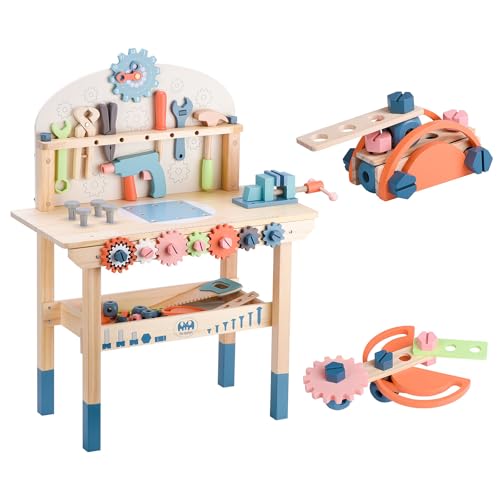
Tool Bench for Kids Toy Play Workbench Wooden Tool Bench Workshop

Baby Toys for 1 Year Old Boy Girl, Musical Toddler Toys Age 1-2

WORKPRO 9-Piece Kids Real Hand Tool Set, Blue
More Details On Our Top Picks
ROBUD keeps things simple, and that works well in a small playroom or a quiet corner of the house. The solid wood build, rounded edges, and smooth surface give it a calmer, more furniture-like feel than the plastic-heavy options later in the list.
You also get the kind of setup that suits kids who like sorting, stacking, and repeating the same pretend repair again and again. The bottom shelf helps with loose pieces, and the detachable parts make it easier to adapt the setup as play changes.
Strong Points
- Solid wood construction brings a sturdier feel for daily play.
- Rounded corners and a smooth finish suit younger hands.
- Bottom shelf gives you a simple storage spot for loose pieces.
- Bright colors and classic wooden tools support longer pretend sessions.
Areas To Watch
- The smaller format may feel modest beside larger bench-style sets.
- Wooden parts usually need a little more care during cleanup.
Feature Snapshot
Whose Shelf It Belongs On
Young kids ages 3 to 5 who like tidy pretend play fit this set well.
A Better Fit Elsewhere
Step2 Handyman Kids Workbench suits you better for a larger, louder play station with more interactive features.
The apron changes the feel here, because it makes the whole setup feel more like a little workshop than a simple toy box. That extra role-play layer tends to work well for kids who want a costume-like cue before they start building and fixing.
Compared with ROBUD’s cleaner wooden bench, this one leans harder into accessories and themed play. For a birthday gift or a playroom where dress-up matters, that can be the difference between casual interest and a longer session.
What We Like
- Apron and tool pieces create a fuller role-play scene.
- Thirty-nine pieces give kids plenty of ways to mix and match play.
- Wooden construction keeps the look warm and familiar.
- Good for shared pretend play with siblings or friends.
Points To Note
- More pieces also means more to sort and put away.
- The theme may feel busy in very minimal play spaces.
- Support during use may depend on the seller-side service path.
Core Details
Made For
Kids around ages 2 to 4 who enjoy dressing up and copying grown-up tool use fit this set best.
Another Choice May Suit
ROBUD Mini Wooden Play Tool Workbench Set for Kids Toddlers is the cleaner fit for you if you want a simpler bench with less accessory clutter.
Lehoo Castle pushes farther into busy, layered pretend play than the first two picks. The two-in-one format gives you a construction workbench and tool box feel, so it suits kids who like shifting from setup mode to carry-it-around mode without changing toys.
The electric drill and take-apart trucks add motion and variety, which can keep a play session from feeling repetitive too quickly. That said, the extra parts also make this a better fit for families who don’t mind a more involved cleanup after playtime.
Highlights
- Two-in-one layout adds flexibility for different play styles.
- Electric drill feature brings more motion to pretend repair.
- Take-apart trucks extend play beyond the bench itself.
- Good match for kids who like switching between tasks.
- Tool box style makes storage and transport more manageable.
Softer Spots
- More moving parts can mean more pieces to keep track of.
- The busier theme may not suit a very simple playroom setup.
- Drill-style play usually lands better with kids who like active mimic play.
Feature Rundown
The Right Fit
Kids ages 3 to 5 who like tools, trucks, and active pretend repairs will get the most from this set.
Look Elsewhere When
Step2 Handyman Kids Workbench works better for you if you want a larger fixed play station with a more grounded setup.
Step2 is the station-style pick in this group, and that matters in a house where play space gets shared with other things. The durable plastic body, wider footprint, and indoor-outdoor flexibility make it easier to picture on a porch, in a family room, or near a play mat.
The sound feature and 35-piece accessory set give it more of the lively, busy feel that younger kids usually enjoy. Compared with ROBUD or medoga, this one feels less like a display piece and more like a sturdy play hub.
Best Bits
- Durable plastic is easy to wipe down after busy play.
- Sound feature adds a lively touch for pretend repairs.
- Thirty-five accessories give the set a fuller workshop feel.
- Works indoors or outdoors, which helps in changing play spaces.
- Compact enough to fit smaller corners despite the upright design.
Room For Improvement
- Batteries are not included, so the sound feature needs a separate step.
- The plastic build feels less warm than the wooden options.
- Its taller footprint still takes planning in a tight room.
At A Glance
Who Will Love This
Families who want a larger, easier-to-clean play station for toddlers 3 and up fit this set well.
Where A Sibling Pick Shines
ROBUD Mini Wooden Play Tool Workbench Set for Kids Toddlers suits you better if you prefer a quieter wooden look with a smaller footprint.
medoga leans into the workshop look with a tool belt, a toy drill, and a fairly broad mix of wooden accessories. That combination makes it feel more active than ROBUD, especially for kids who like wearing gear while they play instead of just placing tools on a bench.
The included parts support make-believe builds such as cars, rockets, or animals, so the same set can stretch across different themes. The trade-off is that the broader accessory mix asks for a bit more organization once the play session wraps up.
Reasons To Buy
- Tool belt adds a wearable role-play element.
- Toy drill gives the set a more active workshop feel.
- Wooden parts support a classic, hands-on play style.
- Broad accessory mix opens up more build ideas.
Points To Note
- More parts mean more sorting after play.
- Themed builds work best for kids who like open-ended pretend play.
Details At A Glance
Best Suited To
Kids ages 3 to 5 who like wearing a belt and pretending to build bigger projects fit this set well.
Swap It Out When
TONZE Kids Tool Set with Apron, 39 PCS Wooden Toddler Tool Bench Box is the better fit for a child who prefers apron-style dress-up over a tool belt.
Compared with the more themed medoga set, this one keeps its focus on classic wooden play pieces and a broader tool mix. That usually appeals to kids who want a bench that feels steady and familiar rather than decorated around one extra accessory.
Hammer, saw, screwdriver, vise, screws, nuts, bolts, gears, and links give you plenty of small motions to talk through during play. For a child who likes building with both hands instead of just pressing buttons, it lands in a nice middle ground.
Upsides
- High piece variety supports longer pretend-building sessions.
- Beech wood gives the set a grounded, traditional feel.
- Water-based paint suits a toy that will get handled often.
- Parts like gears and links add more ways to explore motion.
Minor Gripes
- Wooden pieces may need a little more careful storage.
- The set leans classic, so it lacks flashy extras.
- Smaller hands may need help with the finer parts at first.
Spec Overview
Who Should Grab It
Kids who enjoy open-ended construction play and like sorting many small parts will get the most from this bench.
Where Shoppers Go Wrong
Step2 Handyman Kids Workbench is the easier fit for you if you want sounds and a larger molded station instead of a wooden toolkit.
This pick sits at the youngest end of the range, so it makes more sense as an early sound-and-shape toy than as a full pretend workshop. The lights and musical angle can hold attention for toddlers who are just starting to connect pressing, matching, and listening.
Compared with the wooden benches above, it looks built for shorter play bursts and simpler interaction. That’s useful in a nursery or family space where you want something compact and more age-appropriate than a full tool station.
Bright Spots
- Works well for very young toddlers just getting started.
- Sound and light features add quick sensory feedback.
- Shape-based play supports simple early learning moments.
Worth Noting
- It serves a much younger age band than the other picks.
- The toy leans educational, not workshop realistic.
- Best suited to shorter sessions rather than complex role play.
Feature Card
Built With In Mind
Families with toddlers around 12 to 18 months who want a compact, sensory toy fit this one best.
Another Choice May Suit
TONZE Kids Tool Set with Apron, 39 PCS Wooden Toddler Tool Bench Box makes more sense for a child who is already ready for dress-up construction play.
WORKPRO moves away from pretend bench play and toward real hand tools, so it fits an older child who’s ready for supervised practical work. The storage bag helps keep the set together, which matters a lot once tools start moving between a garage, shed, or project table.
Relative to the toy-heavy benches earlier in the roundup, this is the more serious choice for DIY-style learning. The honest read is that it makes more sense for age 8 and up, where grip, patience, and handling habits are more developed.
Positives
- Real tools make this feel closer to practical home projects.
- Storage bag makes transport and cleanup easier.
- Good fit for older kids learning basic hands-on tasks.
Small Caveats
- It belongs in an older age group than the rest of the list.
- Real tools need more supervision and a clearer workspace.
- The set is narrower in scope than a full toy bench.
Technical Sheet
Who It Suits Best
Older kids who are ready for supervised, practical tool use will get the most value from this kit.
Not Your Match When
Step2 Handyman Kids Workbench is the better fit for you if you want a toy-focused play station for younger children.
How To Choose The Right Childrens Tool Benches
Age Match Comes First
The fastest way to narrow the field is to match the set to the child’s stage of play. A toddler who likes big motions and bright cues does better with lights, sounds, and simple pieces, while an older child can handle more parts, smaller fasteners, or even real tools under supervision.
The age label matters, but it’s not the whole story. You also want to think about hand size, patience, and whether the child prefers copying grown-up work or exploring shapes and sounds.
Material Changes The Whole Feel
Wooden benches tend to feel calmer, sturdier, and more room-friendly, which is why picks like ROBUD and medoga fit play areas that double as living space. Plastic stations like Step2 are easier to wipe down and often better for heavier daily use.
The trade-off is simple: wood often looks warmer, while plastic usually handles mess and quick cleanup with less fuss. That choice matters most in busy households where the toy lives in plain sight.
Look At Storage And Cleanup, Not Just Extras
Accessory count can be a blessing or a headache. A 39-piece set or a bench with trucks, drills, and gears gives kids more to do, but it also asks more of you once playtime ends.
Storage shelves, bags, tool belts, and box-style layouts make a real difference here. They help keep the floor clear and make the set easier to pull back out the next day.
Choose Realism Based On The Kind Of Play You Want
Some children want a pretend workshop with hammers, vises, and screwdrivers. Others respond better to sound effects, drill motion, or shape-matching play that feels more playful than practical.
The right call depends on the kind of story the child likes to act out. For a house full of little helpers, a lifelike tool set usually lands well, while a sensory toddler toy suits the earliest stage better.
Things Worth Knowing First
Where Shoppers Go Wrong
One common miss is choosing a set with too many small pieces for the child’s age. Another is ignoring the footprint, then discovering the bench takes more floor space than planned.
It also helps to think beyond the first day. A bench with no clear storage plan can become a pile of parts, and that turns a fun toy into clutter faster than you’d expect.
The Case For Spending Up
Higher-tier sets usually pay for extra piece variety, stronger materials, or a more involved play system. That can mean a wooden frame, a tool bag, a drill-style feature, or a larger station that feels more complete.
Paying more makes sense when the set will get frequent use, shared play, or a place in the main living area. It’s less important for a short-term gift or a first toy bench that only needs to hold interest for a season.
Frequently Asked Questions
What age works best for a toy workbench?
Most of the toy benches here suit ages 2 to 5, depending on the parts and style. The real tool kit at the end of the list is for older kids, age 8 and up.
Are wooden tool benches harder to clean?
Wood usually needs a gentler wipe and a little more care around seams and edges. Plastic tends to be simpler for quick cleanup after messy play.
Do sound features make a big difference?
They can, especially for toddlers who like immediate feedback from buttons and motion. Older kids often care more about the number of tools and the realism of the setup.
Is a tool belt actually useful?
Yes, for role play, because it makes the child feel dressed for the job. It also gives a place to keep a few pieces close at hand during play.
Should you choose a bench or a tool kit?
A bench works better for a fixed play area and longer pretend sessions. A tool kit makes more sense for older kids who want a compact set they can carry to a project space.
Closing Thoughts
The best Childrens Tool Benches match the child’s age, your space, and the kind of play you want to encourage. Wooden sets bring a quieter, classic feel, while plastic or sound-based options suit more active sessions. For older kids, real tools shift the experience from pretend to practical. Choose the one that fits the room and the routine, and it’ll get used more often.




