Metal-cutting work asks for the right tool, not just a strong motor. You want a saw that matches the stock you cut most, the space you have, and how often you move it from one job to another.
This roundup keeps the focus on real shop use, from garage fabrication to jobsite trim work and occasional home projects. You’ll see which picks suit long bar stock, which are easier to carry, and which feel more at home on a fixed bench.
The Shortlist At A Glance
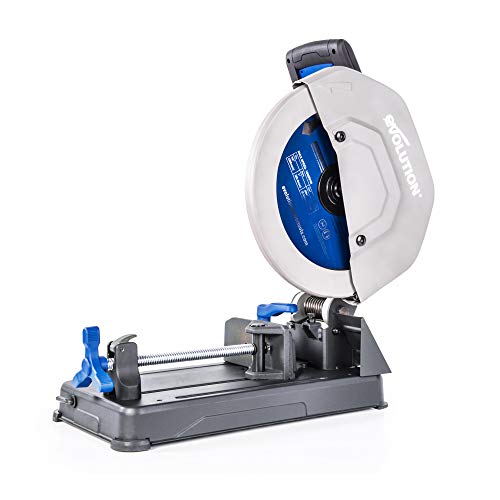
Evolution S355CPSL 14 Inch Metal Cutting Chop Saw

DOVAMAN Updated 10-Inch Sliding Miter Saw

DEWALT Chop Saw Quick-Change 14-Inch D28715

VEVOR Portable Band Saw 110V Removable Alloy Steel Base

PowerSmart Portable Band Saw with Removable Alloy Steel Base

Metabo HPT 10-Inch Single Bevel Compound Miter Saw C10FCG2
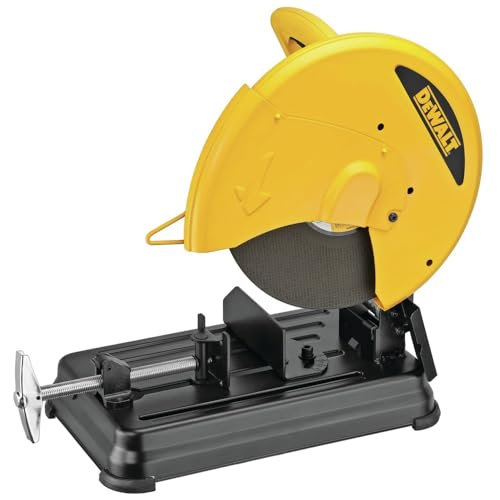
DEWALT Chop Saw 14-Inch D28730

Makita LC1230 12 Metal Cutting Saw
More Details On Our Top Picks
The S355CPSL leans into serious metal work with a 14-inch carbide-tipped blade and a dry-cut setup, which keeps it in a different lane from the lighter miter saws in this list. That larger format makes sense for steel tube, bar, and other stock that feels cramped on smaller saws, especially in a fabrication bay or a garage setup that handles repeat cuts.
Its 45° miter capability gives you more flexibility for angled joints, though the trade-off is the usual one with bigger chop saws, more bench space and more weight to manage. For shop owners, metal fabricators, and hands-on homeowners who want a dedicated cutoff machine, it’s a practical, no-nonsense fit.
Strong Points
- 14-inch blade size helps with larger stock and longer cut lines.
- Dry-cut design keeps the workflow cleaner than wet-cut setups.
- Carbide-tipped blade suits repeated metal work without constant swapping.
- 45° miter range expands joint options for angle cuts.
- Feels well matched to a fixed bench or fabrication station.
Things To Consider
- It takes up more room than the portable saws later in the roundup.
- Dedicated metal cutting means it’s less flexible for mixed-material jobs.
- Cleaning metal chips and keeping the cutting area clear still matters.
Feature Snapshot
Who It Suits Best
You’ll get the most out of this saw in a garage shop, light fabrication space, or metalwork corner where bench space is already dedicated to cutting.
A Better Fit Elsewhere
The VEVOR Portable Band Saw suits you better for on-site work and awkward stock that needs to be handled away from a fixed bench.
This DOVAMAN pick stands apart because it isn’t a pure metal chop saw, it’s a sliding miter saw that handles multiple materials, so your workbench can cover more than one kind of project. The laser guide, ambidextrous operation, and 9 positive stops make it feel organized for home renovation, trim work, and mixed material cutting where setup speed matters.
Its max cut figure of 3.5 x 13.4 inches tells you it has a broad reach for a 10-inch class saw, though the trade-off is that it’s not the dedicated metal specialist that the Evolution or DEWALT metal saws are. The honest read is that it suits you best as a flexible all-rounder, not a purpose-built cutoff machine.
What We Like
- Sliding action expands the crosscut reach for wider workpieces.
- Three TCT blades give you more setup flexibility across materials.
- Laser guide helps you line up cuts faster in everyday use.
- Ambidextrous operation feels friendlier in shared workspaces.
- Positive stops make repeat angles easier to return to.
- 0 to 45° bevel range covers common angled cuts for trim work.
Room For Improvement
- It’s broader than a simple chop saw, so it asks for more bench depth.
- Metal-only shoppers may prefer a dedicated cutoff saw instead.
- Blade and fence alignment still need occasional attention over time.
Core Details
Right Fit For
You’re looking at a strong match for DIYers and home improvers who cut wood, trim, and the occasional harder material from one saw.
Where A Sibling Pick Shines
The Evolution S355CPSL is the better call for people whose main job is cutting metal all day.
Compared with the larger Evolution saw, this DEWALT keeps the format familiar and the focus narrow, which many shops appreciate more than extra bells and whistles. The quick-change design is the point here, especially for workrooms that swap blades for different metals and want that step to stay painless.
Its plastic and metal construction suggests a mix of durability and lighter handling, and that usually makes sense for general shop use rather than rough, daily field abuse. You may find it especially comfortable in a home shop where a dependable 14-inch chop saw needs to earn its keep without feeling complicated.
Best Bits
- Quick-change setup helps reduce downtime between blade swaps.
- 14-inch format gives you room for larger cutoff tasks.
- Simple design is easier to live with in a busy garage.
- Brand familiarity can matter for long-term service planning.
Softer Spots
- The older model status may matter to shoppers who want the latest revision.
- Plastic and metal construction feels more mixed than an all-metal build.
- More basic than the feature-heavy Evolution or DOVAMAN picks.
Details At A Glance
Best Suited To
You’ll appreciate this most in a home shop or maintenance bay where straight, repeat metal cuts matter more than fancy adjustability.
Look Elsewhere When
The Makita LC1230 suits you better for controlled finish-focused metal cutting with a more specialized feel.
This VEVOR model shifts the conversation away from fixed chop saws and toward portability, which matters the moment your cutting work moves between jobsites, garages, and equipment bays. The removable alloy steel base helps it adapt better to supported cutting, while variable speed and a 5-inch capacity keep it suited to everyday metal trimming rather than oversized stock.
In most field setups, a portable band saw like this earns its place by reaching awkward areas and handling material that would be awkward to haul to a bench saw. The trade-off is that it won’t feel as squarely planted or as fast for repetitive straight cuts as the larger chop saws in this roundup.
Upsides
- Portable form helps with on-site fabrication and repair work.
- Removable base adds flexibility for supported cuts.
- Variable speed helps you match the cut pace to the job.
- Deep-cut capacity suits many common metal profiles.
- Good fit for tight work zones where a bench saw won’t reach.
Points To Note
- It’s not as rigid as a fixed chop saw for long, repeat cuts.
- Band saw blades need routine care and sensible storage.
- Field use often means more cleanup than bench-only cutting.
Technical Sheet
Whose Shelf It Belongs On
You’re the best match for this saw when your work moves around and a fixed chop saw would stay in the wrong place.
Swap It Out When
The DEWALT D28730 fits better for a stationary setup that spends more time cutting the same kind of stock.
PowerSmart keeps the same portable band-saw idea as the VEVOR, but the 10-amp, 1100W motor gives you a very direct clue about the kind of cutting task it’s built around. For metal fabrication on a budget-conscious bench or in a mobile toolkit, that mix of power and portability can make a lot of sense.
The 5-inch deep-cut format means it’s aimed at common pipe, tubing, and profile work rather than large structural stock, and that’s exactly where many home shops live. You may find the removable base handy for stability, though the bigger DEWALT chop saws still feel more natural for straight, repetitive cuts.
Reasons To Buy
- Portable layout suits mobile repair and workshop carry-out use.
- 10-amp, 1100W motor points to solid cutting drive.
- 5-inch deep cut matches a lot of practical metal jobs.
- Removable alloy steel base adds setup flexibility.
Small Caveats
- Portable band saws usually ask for more blade care than bench chop saws.
- It’s less rigid than a dedicated stationary cutoff saw.
- Cleanup and storage take a little more attention after field work.
Feature Card
The Right Fit
This belongs with you if you want portable metal cutting that still feels serious enough for regular fabrication chores.
Reach For A Different Pick When
The Evolution S355CPSL is the smarter choice for a fixed workstation that lives on heavier steel cutting.
Metabo HPT takes a more traditional woodworking route than the metal-first saws earlier in the list, yet the single bevel layout and Xact Cut shadow line make it useful for precise angle work in a compact footprint. That shadow line, a visible cut guide projected by the saw, matters because it helps you line up the blade path without guessing where the kerf will land.
At 10 inches and with a lightweight design, it fits bench tops, small garages, and shared spaces where a big chop saw would simply feel oversized. The trade-off is that it’s better for controlled angle cuts than heavy metal duty, so your use case needs to match that narrower role.
Highlights
- Xact Cut shadow line helps you place cuts more confidently.
- Single bevel from 0 to 45° handles common angled work.
- Lightweight build makes repositioning easier around the shop.
- 10-inch blade size keeps the saw manageable for smaller spaces.
Areas To Watch
- Single bevel means it is less flexible than dual-bevel saws.
- It’s not aimed at dedicated metal cutting jobs.
- The lighter frame can be less reassuring for larger stock.
Core Details
Built With In Mind
You’ll get the most from this saw in a compact workshop where precise angles matter more than metal-specific cutting.
Another Choice May Suit
The Makita LC1230 is the better fit for dedicated metal work with a more specialized cutting feel.
The D28730 sits in the sweet spot for shops that want a straight metal cutoff saw without stepping into specialty territory. Its 14-inch size lines up well with the Evolution and the older D28715, but the mood here is simpler, which many maintenance crews and garage fabricators will appreciate.
Because the feature list is spare, you can expect a straightforward tool that focuses on routine cutoffs and repeat bench work rather than novelty. The trade-off is obvious enough, fewer visible extras, though that’s also what makes it easier to live with in a busy work area.
Plus Points
- 14-inch format supports common metal cutoff tasks with room to spare.
- Simple layout tends to suit routine, repeatable shop work.
- Less fussy than multi-material saws for metal-only jobs.
- Good match for established benches and fixed stations.
Honest Caveats
- There are fewer listed extras than on some competing saws.
- Dedicated metal cutting means it won’t replace a general miter saw.
- Routine chip cleanup still matters around the base and guard area.
At A Glance
Who Should Grab It
You fit this saw well if you want a steady shop tool for frequent metal cutoffs without extra complexity.
Where Shoppers Go Wrong
The DOVAMAN model makes more sense for mixed-material work, so it’s the better call for a household that cuts wood and trim too.
Makita’s LC1230 lands as the more focused, finish-minded metal saw in this roundup, and that narrower purpose is part of the appeal. A 12-inch class cutter often feels easier to place in a smaller shop than a 14-inch unit, while still giving you enough reach for common tube and stock work.
Compared with the DEWALT D28730, it feels like the pick for people who care about a controlled cutting experience more than sheer size. The trade-off is simple, you give up some scale, but you gain a tool that suits careful metal work in a space-conscious setup.
Best Bits
- 12-inch size is easier to place in tighter work areas.
- Focused metal-cutting role keeps the use case clear.
- Good middle ground for smaller shops and careful cutoffs.
Worth Noting
- Smaller size means less reach than the 14-inch saws here.
- It’s more specialized than the mixed-material DOVAMAN option.
- Blade care and dust cleanup still matter after regular use.
Feature Rundown
Made For
You’re the right fit for this saw if your workspace is compact and your cutting work stays focused on metal.
Where A Sibling Pick Shines
The Evolution S355CPSL gives you more reach for larger stock when your cutting jobs move beyond the smaller 12-inch class.
How To Choose The Right Chop Saws For Metal
Blade Size, Cut Style, And The Work You Actually Do
Blade diameter shapes the kind of stock you can handle without fighting the tool. A 14-inch metal chop saw, like the Evolution or the DEWALT D28730, suits larger tubing and longer cutoff work, while a 12-inch option such as the Makita LC1230 fits tighter spaces more easily.
Cut style matters too. Dry-cut saws are built for cleaner, bench-friendly work, while portable band saws lean toward mobility and awkward access.
Match the saw to the shape of your material, not the other way around. Straight repeat cuts on steel feel different from trimming pipe on a ladder, and that difference should steer your choice.
Mobility, Bench Space, And How Often You Move It
Fixed chop saws belong in dedicated corners where the saw can stay set up. That suits the Evolution S355CPSL and the DEWALT D28730, especially in a garage or small fab shop.
Portable band saws change the equation for service work, jobsite repairs, and tight access. The VEVOR and PowerSmart picks earn their place because they travel better and reach spaces a bench saw won’t.
Your available room matters as much as the cut capacity. A compact tool that fits your bench gets used more often than a larger machine that lives under a cover.
Features That Pay Off In Daily Use
Helpful extras should solve a real problem, not just fill a bullet list. A laser guide, like the one on the DOVAMAN, helps with alignment, while the Metabo HPT shadow line gives a visible cut path before the blade drops.
Positive angle stops, quick-change blade systems, and variable speed controls matter because they trim setup time. In a busy shop, that saved time adds up fast, especially on repeat cuts or shared equipment.
Think about maintenance too. Metal chips, blade wear, and base cleanup are normal ownership chores, so a simpler design can be easier to live with than a crowded one.
A Quick Reality Check Before You Commit
Mistakes Worth Dodging
Shoppers sometimes chase blade size without thinking about the space around the saw. A 14-inch machine sounds appealing, but it can crowd a small bench and make cleanup awkward.
Another common miss is buying a multi-material saw for metal-only work. That flexibility helps in some garages, though a dedicated cutoff saw usually feels more direct for repeated steel jobs.
The Case For Spending Up
Higher-tier saws usually ask more because of stronger motors, larger blade formats, or more specialized guides and adjustability. That extra cost often shows up in smoother setup, better stability, and less frustration during repeat work.
The upgrade makes sense when you cut often, work with heavier stock, or want a saw that feels more planted on the bench. For occasional use, a simpler model may be the calmer choice.
Frequently Asked Questions
Are Chop Saws For Metal The Same As Regular Miter Saws?
No, metal chop saws are built around cutoff work on metal stock. Regular miter saws are more at home with wood and trim unless they’re specifically set up for other materials.
Do You Need A Dry-Cut Saw For Metal?
No, but dry-cut designs are common for cleaner shop use and easier setup. Portable band saws can make sense too, especially for work away from the bench.
What Blade Size Works Best For Home Metal Projects?
A 12-inch saw often fits smaller spaces and lighter shop work well. A 14-inch model gives you more room for larger stock and longer cuts.
Why Would You Pick A Portable Band Saw Instead Of A Chop Saw?
Portability is the big reason. A band saw suits jobsite work, awkward access, and situations where the material is easier to carry than the saw.
Do More Features Always Mean A Better Saw?
No, the right extras depend on your use case. A laser guide or shadow line helps with alignment, but a simple, solid design can be easier to live with for routine cutting.
Final Thoughts
Your best choice comes down to one simple question, where does the saw spend most of its life? A fixed metal chop saw belongs in a shop that cuts steel often, while a portable band saw makes more sense for moving work and awkward spaces. The DOVAMAN and Metabo HPT serve mixed tasks better, and the Makita fits a smaller, more controlled metal setup. Match the tool to your space and your material, and the rest gets much easier.