


Commercial espresso grinding is all about consistency, speed, and a setup that fits the way you actually serve coffee. You need a grinder that keeps pace during the morning rush, handles repeated use without fuss, and matches the espresso style you’re chasing, from tight shots to more forgiving daily cups. This roundup keeps the focus on practical fit, not glossy promises.
You’ll find burr grinders for dialing in espresso, combo machines for compact counters, and a blade option where versatility matters more than espresso-only precision. The notes below focus on build, grind control, cleaning, and where each pick makes sense in a real shop, office kitchen, or serious home bar setup.
Quick Look At The Shortlist
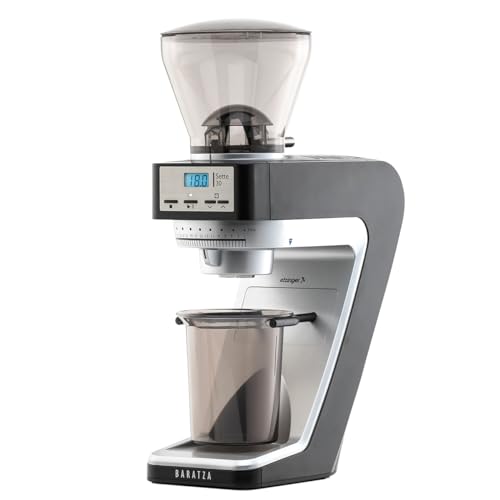
Baratza Sette 30 Conical Burr Grinder

De’Longhi La Specialista Arte Evo Espresso Machine with Coffee Grinder

SHARDOR Conical Burr Espresso Coffee Grinder Electric with Precision Timer 2.0
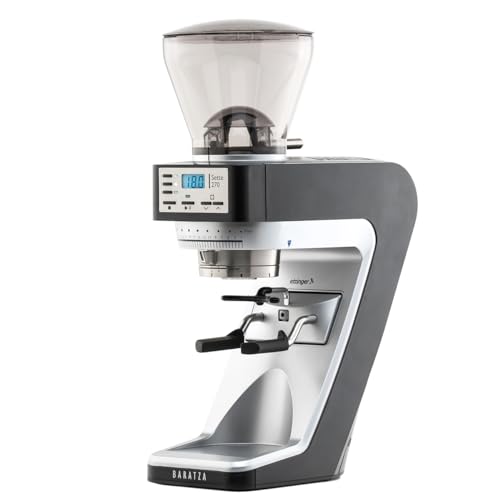
Baratza Sette 270 Conical Burr Coffee Grinder

(2026 Upgrade) 15 Bar Espresso Machine with Built-in Anti-Clog Coffee Grinder

SHARDOR Electric Coffee Grinder, 70g Large Capacity Spice Grinder

Tuni G1 Conical Burr Coffee Grinder with 48 Grind Settings, Silver
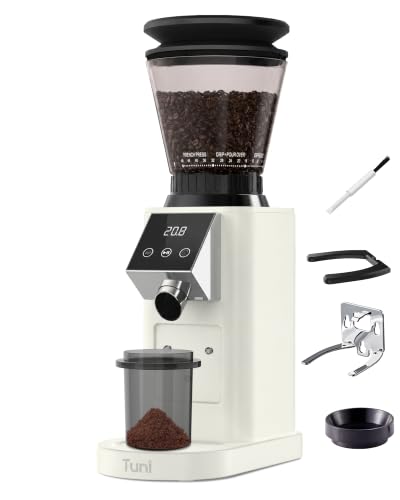
Tuni G1 Conical Burr Coffee Grinder, 48 Grind Settings, Ivory
More Details On Our Top Picks
The Sette 30 leans into a narrow footprint, which matters in a cramped espresso corner where counter space disappears fast. Its conical burr setup is built for espresso-focused grinding, so you get a more serious path than a basic blade grinder without adding bulk you don’t want.
That makes it a sensible match for a small café bar, an office espresso station, or a home setup that lives under wall cabinets. The trade-off is simple: the 30-series format keeps the control more basic than Baratza’s higher-rung sibling below, so precision chasers will feel that gap.
Strong Points
- Compact body fits tight prep spaces.
- Conical burrs support steadier espresso grinding than a blade design.
- Simple layout is easy to live with during a rush.
- Its size helps keep the counter from feeling crowded.
Points To Note
- It gives you less grind flexibility than the 270 model.
- Smaller controls can feel basic for dialing in finicky shots.
- Daily cleaning still matters, especially around burr residue.
Feature Rundown
Who It Suits Best
Espresso setups with limited counter room benefit most from this grinder’s compact shape and focused role.
A Better Fit Elsewhere
Baratza Sette 270 Conical Burr Coffee Grinder suits you better when you want finer control for repeated espresso dialing.
A built-in grinder changes the rhythm of your espresso station, and this De’Longhi setup keeps the process in one footprint. The four preset recipes give you a more guided path than a pure grinder-only machine, which helps when the counter has to serve more than one skill level.
The milk frother and included barista toolkit also matter in day-to-day use, because they reduce the number of separate accessories you need to gather before pulling a drink. You may still prefer a separate grinder for tighter tuning, but as a compact all-in-one, this one fits a busier home bar nicely.
Highlights
- Built-in grinder keeps the setup compact.
- Four preset recipes add convenience for repeat drinks.
- Milk frother expands latte and cappuccino use.
- Included toolkit helps you start with fewer extras.
- Useful for homes where space is at a premium.
Small Caveats
- All-in-one layouts can limit the isolation you get from a separate grinder.
- Preset-heavy machines leave less room for ultra-fine tuning.
- More parts mean more cleaning after milk-based drinks.
Core Details
Made For
Home espresso routines that need a compact, guided machine benefit most from this all-in-one layout.
Reach For A Different Pick When
Baratza Sette 270 Conical Burr Coffee Grinder suits you better when your priority is a dedicated grinder with finer control.
This SHARDOR model gives you a lot of grind range for a home espresso station, starting with a 40 mm stainless steel conical burr that’s meant to keep heat down while grinding. The touchscreen and precision timer make the workflow feel more modern, which helps when you want repeatable dosing without a lot of guesswork.
The 51 settings are the real draw here, because espresso needs a much finer touch than drip or French press. Compared with the Baratza Sette 30, it offers a broader adjustment story, though the overall fit still leans more toward a value-conscious setup than a premium café workflow.
What We Like
- 51 grind steps give you useful room to adjust.
- 40 mm stainless steel conical burr supports more even output.
- Precision timer helps keep doses more consistent from shot to shot.
- Touchscreen control feels straightforward for daily home use.
Room For Improvement
- It is geared more to home use than a heavy commercial pace.
- Touch controls can take a little getting used to.
- Fine grounds still call for routine cleaning around the burr chamber.
Feature Snapshot
Right Fit For
Home espresso users who want broad adjustment and a simple digital control layout will get the most out of this pick.
Another Choice May Suit
Baratza Sette 270 Conical Burr Coffee Grinder suits you better when tighter espresso dialing matters more than a broad setting count.
Compared with the Sette 30, the 270 gives you a more refined path for dialing espresso, and that’s the key reason it lands higher on this list. In a café corner or serious home station, that extra control matters when you’re matching a shot to a specific bean or roast style.
The design still keeps the grinder compact, so you’re not paying with a huge footprint for the extra tuning. The honest read is that this makes more sense for people who already know they want finer adjustment, not for casual drip-only use.
Bright Spots
- More precise adjustment than the Sette 30.
- Compact shape still works on crowded counters.
- Conical burr format keeps the grinding approach espresso-friendly.
- Good fit for repeated dialing across different beans.
Worth Noting
- Its extra control is most useful for espresso-focused routines.
- The compact frame still asks for regular burr maintenance.
- Not as flexible for broad brew-method experimentation as the Tuni G1 models.
Details At A Glance
Who Will Love This
Espresso-focused setups that need tighter tuning and a small footprint are the best match here.
Where A Sibling Pick Shines
Baratza Sette 30 Conical Burr Grinder suits you better when you want the same compact family feel with a simpler price of entry.
This Electactic machine folds the grinder into the espresso maker, so the workflow stays tight and countertop-friendly. The built-in anti-clog design is the part that should matter most in a busy kitchen, because grind buildup is one of those annoyances you notice right when you’re short on time.
The steam wand, frother, and tamping tools push it toward a full drink-making station rather than just a brewer. That convenience comes with a trade-off, though, since all-in-one machines usually ask for more cleanup and give you less separation between grinding and extraction than a dedicated grinder setup.
Reasons To Buy
- Built-in grinder keeps the workflow compact.
- Anti-clog design should help reduce frustrating buildup.
- Steam wand and frother support milk drinks.
- Tamping tools add convenience for a first-time espresso station.
Softer Spots
- Integrated machines usually need more cleaning than a separate grinder and brewer.
- Less modular if you like swapping parts later.
- Best fit stays centered on home or light-duty use rather than a high-volume bar.
Quick Facts
Built With In Mind
Compact home espresso routines that benefit from one machine doing several jobs will suit this pick well.
Skip It When
Baratza Sette 270 Conical Burr Coffee Grinder fits you better when a separate grinder and more exact shot control matter most.
This SHARDOR unit takes a different path from the burr grinders above, because it uses a blade-style design rather than burrs. That makes it more versatile for coffee, herbs, and grains, and the 70 g bowl size gives you enough room for household batch grinding without feeling tiny.
The visual timing knob is the useful part in real kitchens, since blade grinders rely more on timing than on grind-step precision. You may find it less exact for espresso than the burr options here, but it works well when flexibility and capacity matter more than shot-by-shot dialing.
Best Bits
- 70 g capacity supports larger batches.
- Useful for coffee, herbs, and grains.
- Visual timing knob helps guide repeat grinding.
- Blade format suits mixed kitchen jobs.
Areas To Watch
- Blade grinding is less precise for espresso than burr grinding.
- Quiet operation is relative, not silent.
- Small bits can cling inside the bowl, so regular cleaning helps.
Feature Card
Whose Shelf It Belongs On
Mixed-use kitchens that grind more than just espresso beans will get the most value from this setup.
Look Elsewhere When
SHARDOR Conical Burr Espresso Coffee Grinder Electric with Precision Timer 2.0 suits you better when espresso consistency matters more than batch versatility.
The silver Tuni G1 sits in a useful middle ground, especially for households that move between espresso, drip, cold brew, and French press. Forty-eight grind settings give you enough room to move without making the control panel feel overbuilt, and the anti-static burr design should help keep grounds from clinging all over the counter.
The electronic timer and LED touchscreen make it feel a bit more polished than the simpler grinders on this list. Compared with the SHARDOR value pick, it looks better suited to someone who wants a cleaner presentation and broader brewing range, though it still lands below the Baratza pair for pure espresso focus.
Positives
- 48 settings cover several brew methods.
- Anti-static burr design should help keep mess down.
- Electronic timer supports repeat dosing.
- LED touchscreen adds a cleaner, more modern feel.
- Useful for homes that switch between brew styles.
Minor Gripes
- Very espresso-focused users may want even finer control.
- Touch surfaces need occasional wiping to stay clean.
- Its broader remit is handy, but not as specialized as the Baratza Sette 270.
Spec Overview
The Right Fit
You get the best match here when your kitchen handles espresso plus a few other brew styles.
Swap It Out When
Baratza Sette 30 Conical Burr Grinder suits you better when you want a simpler espresso-first footprint.
The ivory Tuni G1 keeps the same grinder logic as the silver version, but the softer finish gives it a cleaner visual presence on the counter. That matters more than people admit, because a grinder you see every day should fit the room as well as the brew routine.
The stainless steel anti-static burr mill, precision electric timer, and LED touchscreen carry over the same practical benefits, so you’re choosing this one mainly for look and placement. For most kitchens, that’s enough, especially when you want a machine that feels less industrial next to lighter cabinets or compact espresso gear.
Upsides
- Ivory finish suits softer, lighter kitchen designs.
- 48 settings keep the grind range flexible.
- Anti-static burr build helps reduce loose grounds.
- Timer and touchscreen support repeatable workflow.
Honest Caveats
- Its strength is design plus function, not a unique feature set.
- Wiping the exterior helps keep the lighter finish looking tidy.
- Espresso-first users may still prefer the Baratza Sette 270.
At A Glance
Who Should Grab It
Style-conscious kitchens that still need real grind control will suit this version best.
Not Your Match When
Baratza Sette 30 Conical Burr Grinder is the better call when you want a more compact, espresso-centered profile.
How To Choose The Right Commercial Espresso Grinders
Burr Style And Grind Control
Conical burr grinders make the most sense for espresso work because they crush beans between two surfaces instead of chopping them unevenly. That matters in service, since more consistent grounds usually make shot timing easier to repeat across a shift. Blade grinders are better treated as flexible kitchen tools, not espresso specialists.
Control range matters just as much as burr type. A grinder with 48 or 51 settings gives you more room to adjust for different beans, while a simpler model like the Sette 30 keeps the workflow straightforward. The trade-off is obvious, more adjustment usually means more decision-making.
Space, Workflow, And Cleaning
Counter space changes the equation fast. A compact grinder such as the Baratza Sette line fits tighter stations, while an all-in-one machine like the De’Longhi or Electactic setup reduces the number of separate devices you need to manage. That can be a relief in a small café corner or a busy home kitchen.
Cleaning is part of ownership, not an afterthought. Burr grinders gather residue around the chamber, and integrated machines add milk-system cleanup on top of that. You’ll want a design that matches your tolerance for routine maintenance, because the neatest-looking setup can become the most annoying one to keep tidy.
Matching The Grinder To The Drink Menu
Espresso-only routines benefit from narrower, more exact control. That’s where the Baratza Sette 270 stands apart from broader multi-method choices like the Tuni G1 models, which are built to handle drip, cold brew, and French press too. A wider range is useful, but it can feel less focused during espresso dialing.
Milk drinks push you toward a different decision. A machine with a frother and steaming wand, like the De’Longhi or Electactic option, makes sense for a latte-heavy menu, while a separate grinder gives you more freedom to change brewing gear later. The right setup is the one that matches your daily menu, not the one with the longest feature list.
What To Weigh Before You Decide
Hidden Buying Traps
A common miss is treating grind count like the only thing that matters. Numbers such as 48 or 51 settings help, but burr quality, ease of cleaning, and how the machine fits your counter matter just as much. Another trap is buying a blade grinder for espresso and expecting café-style consistency.
Size is another easy place to go wrong. A grinder that looks manageable online can feel crowded next to a steam wand, tamper mat, and knock box. Shortlist the setup around the counter you actually have, not the one you wish you had.
The Upgrade Payoff
Higher-tier grinders usually spend more on finer adjustment, steadier burr assemblies, and controls that make repeat dosing easier. That extra cost shows up most clearly in busy routines, where less guesswork means faster dialing and fewer wasted shots. You’re paying for smoother workflow, not just a shinier shell.
The upgrade makes sense for espresso-heavy kitchens, especially when several people use the same machine or when one bean change can throw off the whole morning. More casual drink makers can stay with a simpler pick like the SHARDOR value option or the compact Baratza Sette 30. Precision starts to matter more as your routine becomes more demanding.
Frequently Asked Questions
Are commercial espresso grinders different from home grinders?
They’re usually judged by how well they hold consistency through repeated use and how smoothly they fit into a faster workflow. In practice, that means burr control, speed, and cleaning matter a lot.
Do you need a conical burr grinder for espresso?
Conical burr grinders are a strong fit for espresso because they support more even grinding than a blade design. That said, the right adjustment range matters just as much as the burr shape.
Is a built-in grinder better than a separate grinder?
A built-in grinder saves space and simplifies the counter layout. A separate grinder usually gives you more flexibility and easier replacement later.
Why do some grinders have so many settings?
More settings let you fine-tune the grind for different beans and brew methods. The trade-off is a slightly more involved setup, which not everyone wants.
Which pick works best for a small espresso bar?
The Baratza Sette 30 Conical Burr Grinder is the most space-conscious choice here. The Baratza Sette 270 is the better move when you want extra dialing control.
Closing Thoughts
The right commercial espresso grinder should make your day smoother, not harder. For tight counters, the Baratza Sette 30 keeps things lean, while the Sette 270 gives you the more serious espresso tuning many setups need. All-in-one machines like the De’Longhi and Electactic picks suit spaces that value convenience over modularity. Choose the model that matches your drink routine, your space, and how much control you want each morning.




