


Stainless steel can punish the wrong bit fast, especially on a jobsite, in a garage, or during a kitchen upgrade where you need neat holes without chewing up the metal. You need a drill bit or hole cutter that matches the job, the thickness, and the tool you already own. This roundup keeps the focus on cobalt bits, step bits, and hole saws that make more sense for real work than generic all-purpose kits.
The Shortlist At A Glance

RCINDUS 1/8″ Cobalt Drill Bit 20PCS
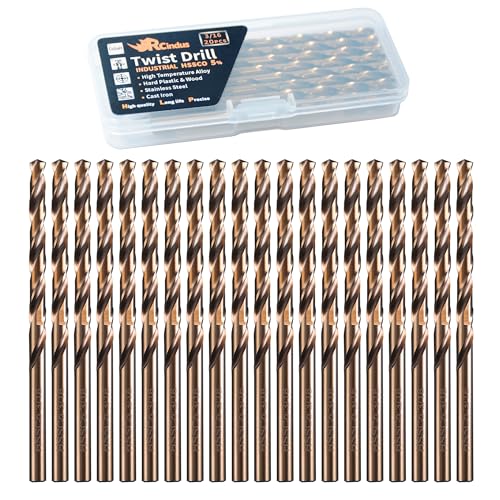
RCINDUS 3/16″ Cobalt Drill Bit 20PCS

Drill America 1/8″ Cobalt Drill Bit DWDCO Series

BECOLLO 3/4″ Cobalt Drill Bit 1/2″ Reduced Shank
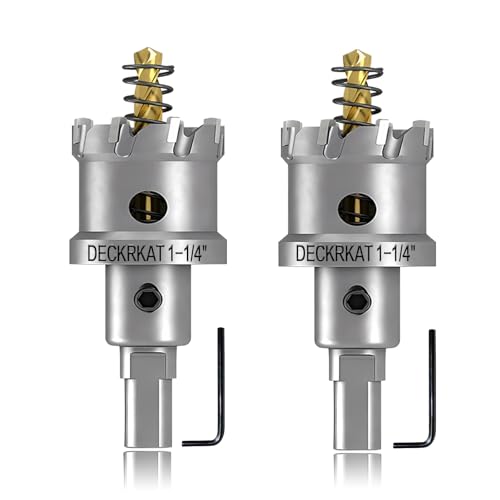
DECKRKAT 1-1/4″ TCT Hole Saws 2-Pack

Jerax tools 1/8″-1/2″ Quick Change M2 Step Drill Bit

KENDO 29PC Drill Bit Set 1/16″-1/2″

Jerax tools 1/4″-1-3/8″ M2 Step Drill Bit
More Details On Our Top Picks
A 1/8-inch bit makes sense for pilot holes, mounting work, and lighter stainless jobs where control matters more than brute force. The M35 cobalt blend is the part to notice, because cobalt alloy bits are built for harder material than basic high-speed steel, though they still reward slow feed pressure and proper cutting fluid. In a home shop, that makes this set a practical starting point rather than a one-bit answer for every task.
The 20-piece count helps with backups, which matters once a small bit starts wearing from repeated stainless work. Compared with the KENDO set later in this list, this one is more focused and less about size range, so you get depth in one common size instead of breadth across many diameters.
What We Like
- 20 bits give you spares for repeated drilling or a busy bench.
- 1/8-inch sizing suits pilot holes, light hardware work, and compact fittings.
- M35 cobalt construction fits harder metal better than basic general-purpose bits.
- Also useful on hard plastic and wood, so the set has spillover value.
Points To Note
- The small diameter calls for careful alignment, especially on smooth stainless faces.
- A single-size set will not replace a broader kit for mixed-diameter projects.
Feature Snapshot
Who It Suits Best
You get the most out of this set for light stainless tasks, pilot holes, and small repairs around the house or shop.
A Better Fit Elsewhere
Drill America 1/8″ Cobalt Drill Bit DWDCO Series fits better for you if you want a tighter, more professional-style pack around the same size.
The 3/16-inch size lands in a sweet spot for common fastening and bracket work, especially where a 1/8-inch hole would feel too tight. Like the smaller RCINDUS set, this one uses M35 cobalt, so the pitch is durability on harder material rather than a flashy feature list. For garage projects or light fabrication, that makes the size more useful than the name suggests.
It also carries the same 20-piece count, which gives you breathing room once one bit dulls from stainless use. Compared with the 1/8-inch RCINDUS set, this version is easier to live with for mid-small holes, while the Drill America pack feels more specialized and less broad in use case.
Highlights
- 3/16-inch sizing fits many common mounting and fixture tasks.
- Twenty bits give you repeat use before the set feels exhausted.
- M35 cobalt construction suits harder metal work better than basic bits.
- Hard plastic and wood compatibility adds a little extra flexibility.
Small Caveats
- The set stays focused on one size, so it is not a full drill-bit assortment.
- Stainless steel still rewards steady feed pressure and a restrained drilling pace.
Core Details
Built With In Mind
You get the most from this set for small fabrication work, shelf hardware, and steady home-shop drilling.
Swap It Out When
RCINDUS 1/8″ Cobalt Drill Bit 20PCS makes more sense if your project needs smaller pilot holes more often than mid-size openings.
Drill America takes a more straightforward route here, with a single 1/8-inch size and a 12-pack that suits repeated small-hole work. That narrower scope can be a plus in a stocked shop, because you know exactly what the bin is for and you are not sorting through extra sizes you may never use. On stainless, that kind of focused backup supply is often more useful than a wide but shallow assortment.
Compared with the RCINDUS 1/8-inch set, this pack is smaller in count and feels more purpose-built for people who already know they burn through this size. The trade-off is obvious, you get less breadth, but you also get a cleaner, more direct setup for frequent small-diameter drilling.
Best Bits
- Pack of 12 works well for repeat use and shop spares.
- 1/8-inch sizing fits pilot holes and careful start points.
- Cobalt construction is a sensible match for harder metal work.
- Simple format makes storage and sorting easy in a tool drawer.
Worth Noting
- The pack focuses on one size, so it will not cover mixed-hole projects.
- Small-diameter drilling still benefits from patient pressure and clean alignment.
- A shorter count than the RCINDUS 20-piece option may feel tight for heavy use.
Details At A Glance
Who Should Grab It
You fit this pack best when you drill the same small size often and want a tidy reserve on hand.
Consider Something Else When
RCINDUS 1/8″ Cobalt Drill Bit 20PCS suits you better if you want the same diameter with a larger backup count.
This is the big-hole option in the group, and the 1/2-inch reduced shank matters because it lets a 3/4-inch bit fit tools that accept a smaller chuck. A reduced shank is the narrower section that sits in the drill, so you do not need a full-size chuck just to handle the cutting end. In a workshop that does tubing, panels, or thicker stainless stock, that compatibility can save you a lot of tool swapping.
Compared with the smaller RCINDUS and Drill America bits, this one is built for fewer but larger openings. The honest read is that it suits heavier jobs better than delicate ones, and the included pair makes sense once you are dealing with repeated large-diameter cuts.
Reasons To Buy
- 3/4-inch cutting size handles much larger openings than the small-bit picks.
- 1/2-inch reduced shank broadens compatibility with many drills.
- Three-flat shank design helps limit slipping in the chuck.
- Two-piece pack gives you a spare for larger metal jobs.
Areas To Watch
- The large diameter is overkill for light fastening holes.
- Heavy drilling usually asks for steady control and enough tool torque.
- Storage takes a little more care because large bits are easier to bump around.
Quick Facts
Made For
You get the best fit here for larger stainless holes, fabrication work, and heavier shop setups with enough torque.
Look Elsewhere When
DECKRKAT 1-1/4″ TCT Hole Saws 2-Pack is a better fit for you when you need a cleaner circular cut in a larger opening.
Hole saws serve a different job than twist bits, because they cut a ring-shaped opening instead of clearing the whole circle as one solid chip path. That matters for panels, enclosures, and fixture holes where a clean, larger opening is the goal, not a pilot hole. The spring-loaded pilot bit also helps center the cut, which is useful when stainless wants to wander.
Compared with the BECOLLO large twist bit, this set is better suited to neat large openings rather than heavy-diameter boring. The pair format gives you redundancy, though hole saws usually ask for more cleanup and more careful pressure than smaller twist bits.
Standout Traits
- 1-1/4-inch size works for larger panel openings and fittings.
- Tungsten carbide tipped edges are built for harder surfaces.
- Spring-loaded pilot bit helps steady the start of the cut.
- Two-pack format keeps a backup ready for repeated jobs.
Softer Spots
- Hole saws need more cleanup than a clean pilot bit hole.
- They are less suited to tiny precision drilling.
- Stainless work can still leave heat buildup, so a measured pace helps.
Feature Card
The Right Fit
You fit this set best for larger stainless openings in enclosures, panels, and fixture installs.
Where A Sibling Pick Shines
BECOLLO 3/4″ Cobalt Drill Bit 1/2″ Reduced Shank suits you better when the job calls for a large twist-style hole instead of a hole saw cut.
Step bits earn their keep in sheet metal because one tool handles multiple hole sizes in a gradual sequence. Instead of swapping bits constantly, you move through stepped diameters, which is handy for electrical boxes, thin stainless panels, and general fabrication. The quick-change format also makes this pick easier to live with on jobs where tool swaps eat time.
Compared with the RCINDUS and Drill America twist bits, this one is more about controlled enlargement than a single fixed diameter. The trade-off is that step bits are less suited to deep holes, so they feel best in thinner material and cleaner panel work.
Upsides
- One bit covers several hole sizes, which reduces tool changes.
- Quick-change setup suits busy workstations and cordless drivers.
- M2 steel is a sensible baseline for general metal drilling.
- Works well for thin stainless sheets and similar panel jobs.
Trade Offs
- Step bits are not the right tool for deep-hole drilling.
- Thin-material use is where this style usually makes the most sense.
- You may want separate twist bits for pilot holes and thicker stock.
Technical Sheet
Best Suited To
You get the most from this bit on thin stainless panels, tidy enlarging tasks, and jobs with several hole sizes.
A Better Fit Elsewhere
Jerax tools 1/4″-1-3/8″ M2 Step Drill Bit fits you better when the openings need to run larger than the 1/2-inch top end here.
KENDO covers the widest spread in this list, and that matters because stainless jobs rarely stay at one size for long. The 135-degree tip is worth noticing, since a steeper tip angle starts with less wandering on harder material than a flatter point. The black and gold finish and storage case also make it easier to keep the set organized between jobs, which helps in a busy garage or service truck.
Compared with the single-size RCINDUS and Drill America picks, this set is the more flexible all-around option. The honest trade-off is that broad coverage can mean you are not getting the same depth of duplicates at one size, but most mixed projects will prefer range over repetition.
Bright Spots
- 29 pieces cover a useful span from 1/16 inch to 1/2 inch.
- 135-degree tip helps the bit start more cleanly on harder surfaces.
- Jobber length suits common hand drills and general shop use.
- Storage case makes it easier to keep sizes sorted.
- Works across cast iron, hardened metal, stainless steel, plastic, and wood.
Minor Gripes
- The set spreads attention across many sizes, so it is less focused than a single-size pack.
- Mixed-material use is handy, but stainless still needs slow, steady pressure.
Spec Overview
Whose Shelf It Belongs On
You fit this set best when your projects shift between small pilot holes, mid-size openings, and occasional harder-metal work.
Another Choice May Suit
RCINDUS 3/16″ Cobalt Drill Bit 20PCS is a better fit for you when you keep returning to one specific hole size.
This step bit targets larger openings than the smaller Jerax option, so it makes more sense for panel work, light fabrication, and bigger pass-through holes. The five-size progression keeps the tool count low while still giving you room to enlarge a cut in stages. For stainless sheet and similar materials, that staged approach is often easier to keep centered than switching between separate bits.
Compared with the 1/8-inch to 1/2-inch Jerax bit, this model leans toward larger final diameters and a more obvious upgrade path. The trade-off is straightforward, a larger-range step bit still works best in thinner stock and still asks for a careful hand.
Best Bits
- 1/4-inch to 1-3/8-inch range covers larger hole work.
- Five sizes keep the cutting sequence simple.
- M2 steel gives it a practical role in general metal drilling.
- Well suited to cleaner openings in thin sheet metal.
Room For Improvement
- It is still a step bit, so deep holes are not its strong point.
- Larger openings can leave more burrs, so post-cut cleanup matters.
Feature Rundown
Right Fit For
You fit this bit best for larger sheet openings, fixture work, and tidy enlargement jobs in stainless panels.
Where Shoppers Go Wrong
Jerax tools 1/8″-1/2″ Quick Change M2 Step Drill Bit suits you better when the work stays in smaller hole sizes.
What To Weigh Before You Choose
Mistakes Worth Dodging
Stainless steel punishes a vague match between bit style and task. A twist bit makes sense for pilot holes, a step bit belongs on thin sheet, and a hole saw suits larger round openings.
Size matters just as much. A 1/8-inch bit feels precise, while a 3/4-inch twist bit or 1-1/4-inch hole saw changes the entire job, including tool load and cleanup.
Where The Extra Money Goes
Higher-tier options usually pay for cobalt alloy, tighter tip geometry, better packaging, or a more specialized cutting style. Those details help most when you drill stainless often, because hard material wears cheap edges fast.
That upgrade makes sense for shop work, repeated installs, and anyone who wants fewer frustrating restarts. For occasional household use, a simpler set can still make good sense.
Frequently Asked Questions
What kind of bit works best on stainless steel?
Cobalt twist bits are a strong match for many stainless jobs because they hold up well on harder metal. Step bits and hole saws make more sense for sheet work and larger openings.
Do you need a special drill speed for stainless steel?
A slower, controlled pace usually makes more sense than rushing. Stainless rewards steady pressure and a bit that stays cool enough to keep cutting cleanly.
Are step bits good for stainless panels?
Yes, step bits fit thin stainless sheet very well. They are less suitable for deep holes or thick stock.
Why choose a reduced shank bit?
A reduced shank lets a larger bit fit drills with a smaller chuck opening. That helps when you want a big hole without moving to a different machine.
Is a hole saw better than a twist bit for large holes?
For a large round opening, a hole saw usually makes more sense than a twist bit. A twist bit is better for pilot holes and smaller diameters.
Closing Thoughts
Stainless work gets easier once you stop treating every hole the same. A small cobalt bit, a broad kit, a step bit, or a hole saw each solves a different problem, and the right one depends on hole size, material thickness, and how often you do the job. The good news is that you do not need a huge pile of tooling to get clean results, just the right style for the metal in front of you. Pick the match that fits your projects, and the rest starts to feel far less stubborn.




