


You want the right amount of air without wrestling a noisy, oversized machine. That usually means balancing tank size, psi, recovery speed, and how much sound your space can tolerate, whether you’re topping off tires, running nailers, or keeping a garage workflow moving.
This roundup stays focused on practical fit, not brochure language. You’ll find larger shop units for heavier tool use, compact tanks for trim and inflation, and a handheld duster for electronics and tight spaces.
Quick Look At Our Shortlist

Klutch 20-Gallon Air Compressor 2 HP

VEVOR 2.1 Gallon Air Compressor 1.2HP

ECOMAX Air Compressor 6 Gallon 150 PSI

Quiet Oil-Free Air Compressor 68 dB
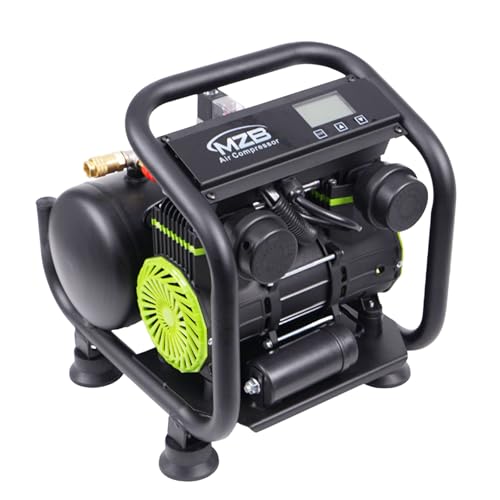
MZB Ultra Quiet Air Compressor 1.6 Gallon
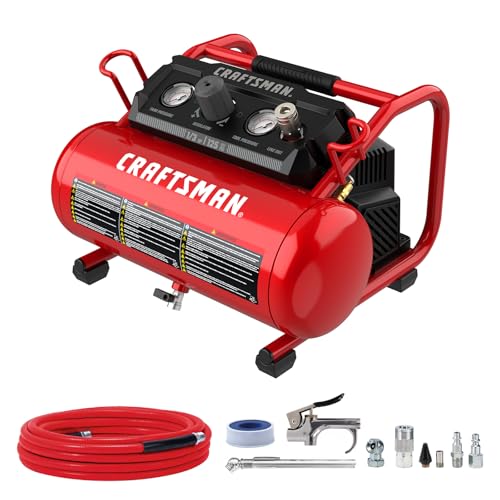
CRAFTSMAN Air Compressor 2 Gallon Portable

ECOMAX Air Compressor 3 Gallon 110 PSI

AHNR Compressed Air Duster 160,000RPM
More Details On Our Top Picks
A taller 20-gallon tank shifts this Klutch toward garage work instead of quick touch-ups. The 175 PSI ceiling and 4.2 SCFM at 90 PSI, which is the air flow rating many tool owners watch closely, point to steadier use with nailers and other air tools.
The oil-free, vertical build matters in a crowded shop because it takes less floor space than a wide horizontal tank. Large wheels help with repositioning, though the size still suits a fixed work area better than a carry-around task.
What We Like
- High tank capacity supports longer tool sessions before the motor has to cycle again.
- Vertical layout saves room beside a bench or wall.
- Oil-free design cuts routine upkeep and keeps ownership simpler.
- Large wheels make it easier to roll across a garage floor.
- Quick air recovery fits repeated fastening jobs better than tiny portable tanks.
Things To Consider
- Size and weight make it a poor match for frequent carrying between locations.
- It may feel like more machine than you need for simple tire inflation.
- Tank draining still matters, so you’ll want a clear spot and a regular habit for maintenance.
Feature Snapshot
Who It Suits Best
Garage hobbyists and home mechanics who want a tank that can keep pace with regular air-tool use will get the most from this layout.
Where A Sibling Pick Shines
ECOMAX Air Compressor 6 Gallon 150 PSI fits better for smaller spaces and lighter fastening work that doesn’t need the Klutch 20-Gallon Air Compressor 2 HP footprint.
The VEVOR keeps the footprint tight, which helps in a small garage or apartment workshop. Its 2.1-gallon tank and 2.2 CFM at 90 PSI make it better suited to short bursts of air rather than long, continuous tool runs.
That trade-off is useful for tire inflation, light spray work, and wood nailing where portability matters more than endurance. Compared with the Klutch, you give up a lot of reserve air, but you gain something far easier to tuck away.
Positives
- Small tank size makes storage easier on crowded shelves.
- Oil-free construction keeps routine upkeep light.
- 116 PSI maximum gives you enough headroom for common household tasks.
- Good fit for short, intermittent jobs around the home.
Room For Improvement
- Its compact tank fills the need for quick jobs, not extended use.
- Air delivery is modest beside larger pancake or shop models.
- You’ll want to keep expectations realistic for spray painting and tool bursts.
Core Details
Whose Shelf It Belongs On
Space-conscious homeowners and casual DIY users will appreciate the compact format more than the output ceiling.
Skip It When
Limodot Quiet Oil-Free Air Compressor 68 dB suits you better for a quieter shared workspace with a larger tank and steadier air supply.
This ECOMAX lands in the useful middle ground, with a 6-gallon pancake tank that stays portable without feeling tiny. For trim work, brad nailing, and tire inflation, that size usually gives you a calmer rhythm than the very small 2-gallon class.
The included 10-piece accessory set adds convenience right away, which helps a first setup feel less pieced together. The oil-free tank keeps maintenance lighter, though the pancake shape still takes more shelf space than a compact upright unit.
Highlights
- 6-gallon capacity gives you a practical mix of portability and reserve air.
- 150 PSI ceiling supports common home-shop tasks with room to spare.
- Pancake shape sits low and stable during use.
- Accessory kit lowers the amount of separate gear you need to gather.
- Oil-free setup keeps care simple for regular home use.
Softer Spots
- Pancake form is still bulkier than a compact duster or mini tank.
- It’s geared more to light and medium jobs than long continuous runs.
- Accessories help a lot, but storage still takes a little planning.
Details At A Glance
Right Fit For
Homeowners who want one compressor for several light tasks will find this a comfortable middle option.
Look Elsewhere When
Klutch 20-Gallon Air Compressor 2 HP suits a garage setup better when your work leans into repeated tool use and longer air demand.
The standout here is the 68 dB noise rating, which makes a real difference in a garage shared with family or neighbors close by. Add the 5-gallon steel tank and 2.8 CFM at 90 PSI, and you get a compressor that feels more considerate than many louder shop units.
Steel tanks tend to feel sturdier in day-to-day ownership, though they do add weight compared with lighter compact bodies. The included air hose kit is a useful touch for woodworking, nailing, and car inflation, especially when you want fewer separate parts to gather.
Bright Spots
- Lower noise makes it easier to work indoors without dominating the room.
- 5-gallon capacity handles a broad range of small shop tasks.
- Steel tank construction usually feels more solid in everyday handling.
- Included hose kit helps you get started with less extra shopping.
- 2.8 CFM at 90 PSI supports common pneumatic tool use better than tiny inflators.
Small Caveats
- Steel construction brings more weight than a lighter mini compressor.
- Noise is lower, but it’s still a working compressor rather than a silent device.
- You’ll want to keep the tank drained on a regular routine for basic care.
Technical Sheet
Built With In Mind
Woodworkers and garage users who care about noise as much as output will appreciate this one most.
Where A Sibling Pick Shines
VEVOR 2.1 Gallon Air Compressor 1.2HP suits tighter spaces better when you care more about compact storage than a fuller tank.
The MZB is clearly built for small tasks that need a calmer sound profile, with a 70 dB rating and a 1.6-gallon tank. That combination suits spray touch-ups, light carpentry work, and auto-detailing corners where a larger compressor would feel out of place.
Steel tanks give it a firmer feel than some ultra-compact plastic-bodied tools, though the small capacity keeps it in light-duty territory. The 115 PSI ceiling is useful, but the real appeal is how little room it asks for on a bench or shelf.
Best Bits
- Small size makes it easy to store in a tight workshop.
- 70 dB output keeps the working environment more comfortable.
- Steel tanks usually lend a more substantial feel.
- Useful for finishing, light repair, and decorative work around the house.
Areas To Watch
- Tank size is small, so it’s best for brief tasks.
- Not the right fit for extended air-tool sessions.
- Its compact format can make it less forgiving for larger jobs.
Feature Rundown
Best Suited To
Detail-oriented DIYers who want a quiet, compact compressor for short work sessions will get the most from it.
A Better Fit Elsewhere
Quiet Oil-Free Air Compressor 68 dB is the stronger choice for you when a larger 5-gallon tank matters more than ultra-compact size.
This CRAFTSMAN keeps things simple: a 2-gallon portable tank, 1/3 HP motor, and 125 PSI maximum. That set of numbers points to a light, easy-to-carry machine for inflating, brad nailing, and other quick jobs around the house.
The included 10-piece accessory kit makes it easier to start using the compressor without piecing together basic attachments on your own. Compared with the ECOMAX 3-gallon unit, you give up some reserve air, but you gain a tighter carry-friendly size.
Upsides
- Portable form is handy for moving between rooms or work areas.
- Oil-free design lowers day-to-day upkeep.
- Accessory kit adds useful starter pieces.
- 125 PSI rating covers many common home chores.
Worth Noting
- Two gallons is enough for short tasks, not broad air demand.
- Lightweight build helps carry it, but also signals a modest-duty role.
- Basic storage discipline matters so the small kit stays together.
At A Glance
Made For
Homeowners who want a portable compressor for occasional chores will find the size and output easy to live with.
Another Choice May Suit
ECOMAX Air Compressor 3 Gallon 110 PSI gives you a touch more reserve air for a similar portable role.
The 3-gallon size makes this ECOMAX a sensible middle step between tiny 2-gallon units and fuller pancake tanks. It’s the kind of compressor that feels easy to store yet still gives you a little more breathing room for inflation, small nailers, and quick household fixes.
The 11-piece accessory set is a nice practical touch, especially for a first setup in a garage or utility room. It doesn’t promise the endurance of the larger Klutch, but for ordinary home tasks, the lighter footprint is part of the appeal.
Reasons To Buy
- 3-gallon tank is a friendly middle ground for casual use.
- Portable pancake shape sits low and is easy to store.
- Oil-free tank keeps routine care uncomplicated.
- 11-piece kit makes the package feel more complete.
Points To Note
- It’s still a compact compressor, so heavy tool use is outside its comfort zone.
- Accessory storage needs a little organization to avoid clutter.
- Air reserve stays modest compared with 5-gallon and 20-gallon units.
Core Details
Who Should Grab It
Casual DIY users who want a neat portable compressor for everyday home tasks will find this a comfortable fit.
Reach For A Different Pick When
VEVOR 2.1 Gallon Air Compressor 1.2HP makes more sense for the smallest spaces, while the ECOMAX 3 Gallon 110 PSI gives you slightly more working room.
The AHNR isn’t a tank compressor at all, and that’s the point. It’s a rechargeable electric air duster with a brushless motor and three airflow levels, built for keyboards, PC cases, car interiors, and the kind of dust that hides in vents and seams.
The 160,000RPM figure tells you this is aimed at concentrated bursts rather than broad workshop tasks. For electronics owners and detail-focused cleaning, that beats carrying canned air or dragging out a bigger compressor for delicate spaces.
Reasons To Buy
- Rechargeable format keeps it convenient for repeated cleaning jobs.
- Three speed settings give you more control than a single-output blower.
- Brushless motor design usually points to smoother operation and less maintenance fuss.
- Useful for desks, car interiors, and tight equipment spaces.
Minor Gripes
- It serves a very different job than a tank compressor, so category expectations matter.
- Best suited to dust removal, not general air-tool use.
- You’ll want to keep the battery charged for regular cleanup sessions.
Core Details
Who Will Love This
Desk users, PC owners, and car-detailing hobbyists who want a cordless cleaning tool will appreciate this format most.
Swap It Out When
CRAFTSMAN Air Compressor 2 Gallon Portable is the more fitting choice when you need actual compressed air for small home chores instead of dusting.
How To Choose The Right Electric Air Compressors
Start With The Job You’ll Do Most
Tank size and airflow matter more than the marketing copy. A 20-gallon unit like the Klutch fits repeated tool use, while a 2 to 3-gallon model works better for tire inflation, light brad nailing, and quick cleanup.
Airflow, usually shown as CFM, tells you how much air the unit can deliver at a specific pressure. Higher CFM usually helps air tools keep pace, while low-CFM compact units are better for short bursts and casual home jobs.
Match Noise To Your Space
Noise is a real ownership issue in a garage, basement, or shared workshop. A quieter unit like the Limodot or MZB can make longer sessions easier to live with, especially in homes where people are nearby.
That lower sound level often comes with a trade-off in size, airflow, or weight. You’re choosing the better balance for your space, not chasing silence at any cost.
Think About Portability And Storage
Vertical tanks save floor space, while pancake tanks sit lower and feel steadier during use. Compact units are easier to tuck into a shelf or closet, but they usually need more frequent cycling for longer jobs.
Large wheels, lighter tanks, and smaller footprints help when the compressor moves between a garage, basement, and driveway. Handheld dusters sit in a different lane altogether, since they solve electronics cleaning rather than shop air.
Don’t Ignore Maintenance Habits
Oil-free designs reduce routine care, which is useful for most home users. Tank drainage still matters, though, because moisture management affects long-term reliability and storage cleanliness.
A simple machine often stays the easiest to live with. For many households, that means picking the compressor you’ll actually maintain, not just the one with the biggest numbers.
What To Weigh Before You Commit
Common Shopping Slip Ups
Plenty of shoppers focus on tank size alone and miss airflow, which is the part that decides whether a nailer or spray tool keeps up. Another common mistake is treating a compact 2-gallon unit like a substitute for a garage compressor.
Storage matters too. A larger steel tank can be a better long-term fit, but only when your space can handle the footprint and the extra weight.
The Case For Spending Up
Higher-tier compressors usually cost more because they carry larger tanks, stronger motors, sturdier materials, or lower noise. Those extras matter most in garages, woodworking spaces, and semi-regular tool use where short cycling gets old fast.
Spending more makes sense when you need steadier pressure, less waiting, or a quieter work environment. For light inflation and occasional cleanup, a smaller unit usually keeps things simpler.
Frequently Asked Questions
What size compressor works for home use?
Two to 6 gallons covers many household jobs without taking over the room. A larger tank helps more when your tools need sustained air.
Is oil-free better for everyday use?
Oil-free compressors usually need less routine care, which suits most casual setups. That convenience often makes them easier to keep in regular rotation.
What does PSI tell you?
PSI shows pressure, or how forcefully the air is delivered. Higher PSI helps with certain tools and inflation tasks, but airflow still matters just as much.
Why does CFM matter so much?
CFM measures air volume at a set pressure, so it gives you a better sense of tool compatibility. A compressor with low CFM may struggle with demanding air tools.
Do quiet compressors give up anything?
Quiet models often trade some power, size, or storage efficiency for lower sound. That trade makes sense in shared spaces where noise is the bigger problem.
Closing Thoughts
Your best match depends on how you work, not just how much air a unit can hold. The Klutch suits busier garage routines, the ECOMAX and CRAFTSMAN options fit lighter home use, and the AHNR serves a completely different cleaning need. For most homes, the right choice feels easy to store, reasonable to hear, and ready for the jobs you actually do. That’s the balance worth aiming for.




