


Electric palm sanders earn their keep in small repair jobs, trim touch-ups, and cabinet refreshes where hand sanding gets old fast. You’re looking for something that fits your grip, handles dust well enough for a cleaner workspace, and matches the size of the task instead of overpowering it. The eight picks below lean into those real jobs, from detail work around chair legs to broader finishing passes on flat panels.
Some are compact sheet sanders built for corners and edges, while others use random-orbit motion for a smoother, more forgiving finish. The differences matter more than the wattage lines suggest. A little shape, speed control, and dust handling can make the work feel orderly instead of fussy.
The Shortlist At A Glance

BOSCH GSS20-40 Orbital Finishing Sander 1/4-Sheet
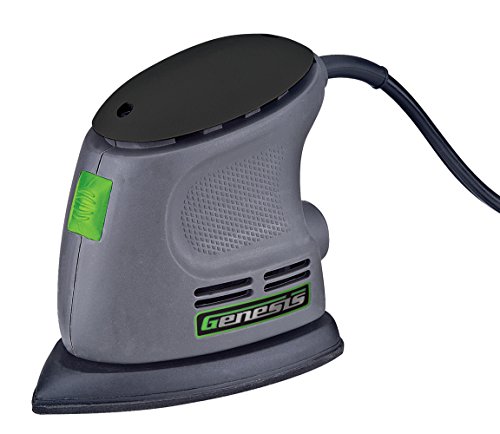
Genesis Detail Palm Sander GPS080
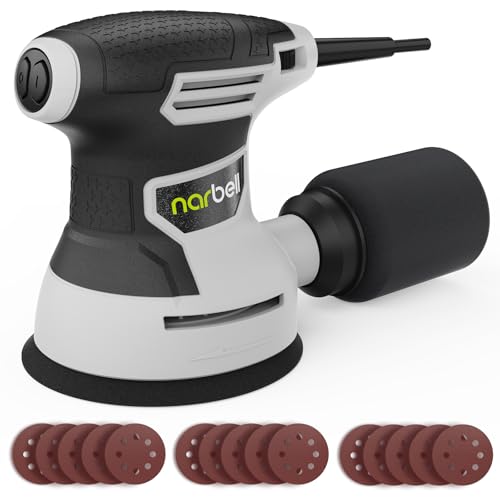
NARBELL Orbital Sander 3.0AMP 5-Inch Kit

Metabo HPT 5-Inch Random Orbit Finishing Sander SV13YST
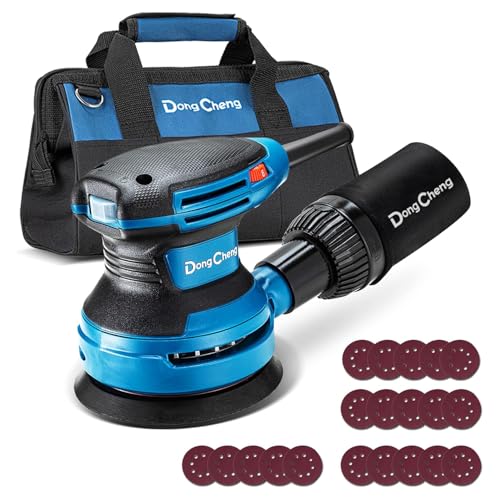
Dong Cheng 5-Inch Random Orbital Sander 3.2A

AVID POWER 5-Inch Random Orbital Sander 3.0 Amp

Hammerhead 2.0-Amp 1/4 Sheet Palm Sander HAPS020

MAXXT Electric 5mm Random Orbital Sander 350W
More Details On Our Top Picks
Small flat surfaces are where this BOSCH feels most at home. The 1/4-sheet format keeps it compact for trim, doors, and cabinet edges, while the 12,000 OPM rating gives it a brisk finishing rhythm for prep work that needs to stay even.
The dust collector is the kind of detail you notice in a garage or basement shop, because less airborne mess usually means less cleanup afterward. Compared with the larger 5-inch random-orbit picks later in this list, this one leans harder toward controlled sheet sanding than broad surface removal.
What We Like
- 1/4-sheet format suits tighter surfaces and edge work.
- 12,000 OPM gives you quick finish sanding for repaint prep.
- Dust collection helps keep a bench cleaner during longer sessions.
- Compact size makes storage easy in a crowded tool cabinet.
Points To Note
- The sheet style is less forgiving on curved panels than random-orbit designs.
- Dust collection helps, though you still need regular cleanup around the pad area.
Feature Rundown
Who It Suits Best
You benefit most from this pick when your work centers on trim, tabletops, cabinet doors, and other flat pieces that need controlled finishing rather than aggressive stock removal.
Where A Sibling Pick Shines
MAXXT Electric 5mm Random Orbital Sander 350W suits you better for broader surface work and more demanding sanding sessions on larger panels.
The Genesis GPS080 looks built for the kind of work that happens around chair legs, table stands, and narrow spots where a full-size pad feels clumsy. Its palm grip and hooked backing system keep sheet changes simple, which helps when your project keeps shifting from one tight corner to the next.
The vacuum port and dust-proof switch give it a more thoughtful finish than many basic detail sanders. You may still find the small footprint best suited to light, targeted sanding instead of long runs on wide panels, which is exactly where a tool like the Metabo HPT starts to look more comfortable.
Highlights
- Compact body works well in cramped project areas.
- Vacuum port helps pair it with a shop vacuum for less mess.
- Hook-and-loop sheet changes save time between grits.
- Palm grip supports better control on detailed edges.
Room For Improvement
- The detail-focused shape is not built for large tabletop sanding.
- Small pads can wear faster on rough, heavy prep jobs.
- Dust management still depends on how well the port setup fits your workspace.
At A Glance
Made For
You fit this sander best when your projects stay small, detailed, and shaped by corners, curves, or narrow rails that need careful handling.
Skip It When
BOSCH GSS20-40 Orbital Finishing Sander 1/4-Sheet suits you better for more regular flat-surface finishing, especially around furniture and trim.
This NARBELL kit leans into flexibility, with six speed settings and a 5-inch random-orbit layout that suits a wide range of home sanding tasks. The 3.0 amp, 360W motor gives it a more assertive feel than the detail-first Genesis, while the included dust bag and 15 sandpapers make it easier to start a project without piecing together extras.
For woodworking, light refinishing, or sanding before paint, that combination can be convenient. The trade-off is simple, though, a larger random-orbit body takes a steadier hand than the compact sheet sanders, so tight edge work still belongs more naturally to the Bosch or Hammerhead styles.
Bright Spots
- Six speeds let you match sanding pace to the surface.
- 5-inch pad covers more area than the detail sanders here.
- Dust bag and included abrasives help you get started quickly.
- Random-orbit motion suits more forgiving finishing on wood.
- 3.0 amp power gives useful support for general shop tasks.
Softer Spots
- The larger head is less nimble in tight corners.
- Dust bag setups usually need occasional emptying during longer jobs.
Core Details
Who Will Love This
You get the most from this kit when you want one sander for general woodworking, paint prep, and mixed household jobs without stepping up to a heavier shop machine.
Another Choice May Suit
AVID POWER 5-Inch Random Orbital Sander 3.0 Amp is a better fit for someone who wants a similar format with a wider speed span for refinishing work.
Comfort shows up quickly with the Metabo HPT SV13YST. The palm-style grip and compact body make it a natural fit for longer finishing sessions, especially on doors, shelving, and furniture pieces where control matters as much as speed.
The 9,000 to 13,000 RPM range gives you some room to work more gently on finishing passes or a little faster on rougher prep. Compared with the NARBELL, it feels more focused on steady handling than accessory count, and that often suits you better in a real workshop than a kit packed for the box photo.
Standout Traits
- Palm-style grip helps reduce hand strain during longer use.
- Variable speed gives you better control over finish quality.
- Compact, lightweight build is easier to guide on vertical surfaces.
- Dust hose connector supports cleaner work with a compatible setup.
Worth Noting
- The hose connector depends on your dust collection setup.
- It is more of a finisher than a heavy stock remover.
Feature Snapshot
Right Fit For
You should look here for regular home finishing work, especially when hand comfort and control matter more than a long accessory list.
Look Elsewhere When
MAXXT Electric 5mm Random Orbital Sander 350W suits you better for a more powerful upgrade with a brushless motor and a larger 6-inch pad.
Dong Cheng takes the familiar 5-inch random-orbit format and makes it feel ready for first-time setup, with 20 sandpapers and a detachable dust bag in the box. The six speeds and 12,800 OPM range give you flexibility for sanding, smoothing, and polishing tasks around the house.
That bundle makes sense for a garage project or a small woodworking bench where you want to start working without adding much to your cart later. The honest read is that the included abrasives and dust bag are convenient, but the real advantage shows up most for casual finish work rather than all-day stripping.
Reasons To Buy
- 20 included sandpapers cover several grit changes early on.
- Detachable dust bag keeps cleanup simpler between sessions.
- Six speeds help you adapt to sanding or polishing.
- 3.2A motor gives a solid middle ground for household projects.
Minor Gripes
- The accessory bundle helps most at the start, then matters less over time.
- Like most bag-based setups, dust collection will not stay spotless on its own.
Details At A Glance
Built With In Mind
You fit this sander well when you want a useful all-around starter kit for furniture refreshes, basic woodworking, and paint prep.
Swap It Out When
Metabo HPT 5-Inch Random Orbit Finishing Sander SV13YST is a better match for steadier comfort during longer sanding sessions.
AVID POWER gives you a broad 7,000 to 14,000 RPM range, which is handy for paint removal, smoothing, and general wood prep across different materials. That span makes it feel adaptable, especially in a home shop where you want one corded tool to cover several stages of the job.
The dust collection bag and 12 included sandpapers add convenience, though the real benefit is the speed range more than the bundle. Compared with the Dong Cheng, this one looks a touch more flexible on paper for finish control, while still staying friendly to everyday workshop use.
Upsides
- Wide RPM range helps match the tool to lighter or heavier sanding.
- 5-inch pad works well for common panel-sized projects.
- Dust bag and sandpapers give you a useful starting kit.
- Suitable for paint prep and general woodworking cleanup.
Areas To Watch
- Bag-style dust handling still calls for regular emptying.
- It is best suited to general-purpose work, not very aggressive stripping.
- Grip comfort can matter more on longer sessions, so hand fit is worth considering.
Quick Facts
The Right Fit
You should look here for a versatile corded sander that can move between prep stages without feeling locked into one speed or one material.
Reach For A Different Pick
Genesis Detail Palm Sander GPS080 suits tighter spaces more naturally, especially around chair legs and detailed trim.
Hammerhead keeps things straightforward, and that simplicity helps on basic home projects where you want a corded sheet sander that just gets out of the way. The 2.0 amp motor and 14,000 OPM rating point to a brisk little tool for sanding cabinets, wood pieces, or painted surfaces that need freshening up.
The hook-and-loop sheet changes, dust box, and vacuum adaptor are useful in a small shop or even a crowded workbench corner. Compared with the BOSCH, this one looks more stripped down, but that can suit you well when you want a simple tool without extra complexity.
Best Bits
- 1/4-sheet format is easy to manage for basic finishing.
- 14,000 OPM supports quick sanding on routine jobs.
- Dust box and vacuum adaptor help contain debris.
- Soft grip improves comfort during shorter and medium-length sessions.
Small Caveats
- The smaller format is not meant for broad panel coverage.
- Dust boxes need emptying, so cleanup is still part of the routine.
Core Details
Whose Shelf It Belongs On
You fit this pick best when you want a plain, dependable sheet sander for routine home sanding and light prep work.
Another Choice May Suit
BOSCH GSS20-40 Orbital Finishing Sander 1/4-Sheet is the stronger match for a more polished finishing feel and a cleaner overall setup.
The MAXXT stands out because it combines a brushless 350W motor with a 5mm random orbit and a larger 6-inch sanding pad. Brushless motors usually mean fewer internal parts wearing in the same way as brushed designs, so that setup often appeals to people who expect heavier, more frequent use.
It also comes with 10 sanding papers, which keeps the start simple. Compared with the Metabo HPT, this one aims more at stronger sanding capacity and broader coverage, so it makes sense for larger project days rather than occasional touch-ups.
Plus Points
- Brushless motor design suits repeated sanding sessions.
- 5mm orbit offers a solid balance for smoothing and finishing.
- 6-inch pad covers more area than the 5-inch models here.
- Variable speed helps you adapt to different surface conditions.
- Ten included papers make first use easier.
Honest Caveats
- The larger pad can feel less nimble in tight spaces.
- More capable hardware usually means a slightly more serious setup to manage and store.
Feature Card
The Right Fit
You benefit most from this sander when you handle larger woodworking projects, repeated refinishing jobs, or broader panels that reward more coverage per pass.
Where Another Pick Suits Better
Hammerhead 2.0-Amp 1/4 Sheet Palm Sander HAPS020 is a simpler match for small, straightforward sanding jobs that do not need a bigger 6-inch pad.
How To Choose The Right Electric Palm Sanders
Match The Pad To The Project
Pad size changes the whole feel of the tool. A 1/4-sheet sander makes sense for trim, edges, and smaller furniture pieces, while a 5-inch random-orbit model covers more area with less fuss.
The bigger 6-inch MAXXT option pushes further into larger panels and repeated sanding sessions. That extra reach helps on doors or tabletops, but it can feel bulky in tight corners.
Look Closely At Speed And Orbit
Speed matters because sanding is not only about power, it’s about control. A fixed high-speed sheet sander can move quickly through prep, while variable-speed orbit sanders let you slow down for finer passes.
Orbit size changes the scratch pattern and the finish feel. Smaller, steadier orbits usually suit smoother results, while more aggressive motion helps when you need to clear old finish or flatten rougher wood.
Do Not Ignore Dust Handling
Dust bags, collectors, hose connectors, and vacuum ports are not side notes. They shape how clean your workspace stays and how often you stop to clear debris from the tool.
For garage work or basement projects, that matters a lot. A better dust path also makes it easier to keep your sanding lines visible, which helps you avoid overworking one spot.
Comfort Beats Spec Sheets On Long Jobs
Palm grip shape, weight, and balance matter more after ten minutes than a motor label does. A comfortable body reduces hand fatigue, especially on doors, shelving, or anything that needs repeated passes.
That’s why the Metabo HPT stands out for longer finishing sessions. The honest read is simple: a tool you can hold well tends to get used more often, and that usually leads to better results.
A Quick Reality Check
Common Shopping Slip Ups
Many people focus on motor numbers and overlook sheet style or pad size. That can leave you with a tool that sounds strong but feels awkward on your actual project.
Dust handling gets skipped too often. A vacuum port, dust box, or bag does not solve cleanup on its own, but it does make everyday sanding less messy.
What The Higher Tier Buys
More expensive models usually bring better motor design, broader speed control, or a more refined grip. Brushless motors, like the MAXXT’s, often appeal to people who sand more often and want a more durable-feeling setup.
You also tend to pay for better ergonomics and smoother control. That spending makes the most sense for repeated furniture work, larger panels, or any shop task that would punish a lighter-duty tool.
Frequently Asked Questions
What’s the difference between a sheet sander and a random-orbit sander?
A sheet sander moves in a more fixed pattern and suits edges, trim, and flatter finishing jobs. A random-orbit sander moves in a mixed pattern that helps reduce swirl marks on broader surfaces.
Which grit range should you start with?
For rougher prep, people often begin with a coarser grit and move finer as the surface improves. For finish work, starting too coarse can leave more cleanup than you need.
Does dust collection really matter?
Yes, because it keeps the work area clearer and helps you see the surface as you sand. It also cuts down on how often you need to stop and wipe the piece.
Is a 5-inch sander enough for furniture projects?
For most furniture work, a 5-inch orbit sander is a practical size. It gives you decent coverage without feeling oversized on cabinet doors, shelves, or tabletops.
What matters more, amp rating or speed range?
Both matter, but speed range usually tells you more about control. Amp rating helps hint at motor strength, while variable speed gives you more flexibility across different materials.
Final Verdict
Your best choice depends on the kind of sanding you do most, not on a single spec line. BOSCH and Hammerhead make sense for sheet-style control, while Metabo HPT, AVID POWER, and MAXXT lean into smoother random-orbit work with more range. For small detail jobs, Genesis stays easy to place, and Dong Cheng gives you a handy starter bundle. Pick the tool that matches your space, your grip, and the surfaces you touch most often, and the work feels a lot less tedious.




