


Flat-pack furniture, a wobbly laptop hinge, a bike that needs a tune-up: these jobs all stall on the same problem, the wrong driver in your hand. A good electric screwdriver set turns a twenty-minute wrist workout into a two-minute task. The five options below cover everything from heavy-duty household fastening to watch-band-level precision work, so you can match the tool to what actually lives on your weekend to-do list.
Your Options, Compared
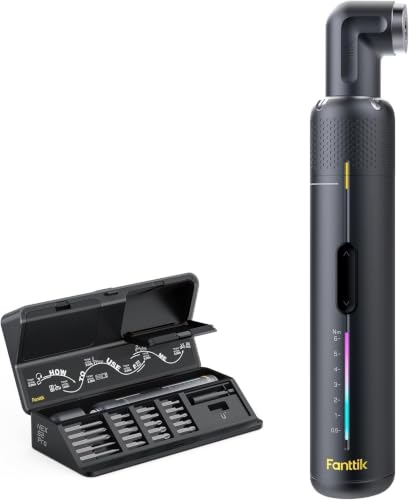
Fanttik S2 Pro Electric Screwdriver Set (Space Grey)

AFNZTME Rechargeable Cordless Screwdriver Kit, 46 Bits (Red)
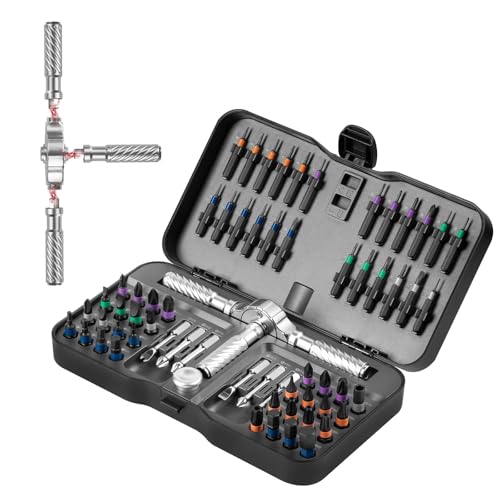
VMAN Ratchet Magnetic Screwdriver Set, S2 Steel Bits

DuroFort 8V Cordless Electric Screwdriver Set, 28 Pcs (Red)

JOREST 155-in-1 Mini Electric Precision Screwdriver
The Picks, Examined More Closely
Torque is where cheap drivers fall apart, and this is where the Fanttik S2 Pro starts earning attention. Its MagnaStorm motor spins at up to 250 RPM and pushes out as much as 6 N·m, enough muscle for furniture assembly, appliance fixes, and even light PC case work without stalling mid-screw.
The detail that separates it from budget kits like the AFNZTME below is torque control. A mechanical-electronic hybrid system gives you seven selectable settings, so you can dial output down for delicate electronics or up for lag bolts in pine. In our view, that adjustability is the difference between a tool you trust and one you baby.
Everyday Wins
- Six N·m of peak torque handles dense hardwood joints without bogging down
- Seven torque stages mean fewer stripped screws in soft materials like MDF
- Cordless design keeps it ready in a kitchen drawer for surprise repairs
- 250 RPM top speed shortens long runs of identical fasteners during flat-pack builds
Things To Consider
- Rechargeable batteries of this size benefit from occasional top-ups between projects; leaving them dead for months can shorten cell life
- Owners commonly report the compact body trades grip length for portability, which some larger hands notice
Key Specs
Who It Suits Best
Apt for intermediate DIYers who split time between furniture builds, small appliance repairs, and computer upgrades and want one driver that adapts to all three.
Where A Sibling Pick Shines
Gadget repair specialists will get more value from the JOREST 155-in-1, whose bit library targets phones, tablets, and laptops specifically.
Not every job needs six newton-meters of force. The AFNZTME runs a 3.6V lithium battery delivering around 3.5 N·m, which covers the everyday reality of cabinet hinges, outlet plates, toy batteries, and curtain rods. For most households, that’s genuinely enough.
The pivoting handle is the feature worth pausing on. It folds into an inline shape for tight spots behind a desk or inside a closet rod bracket, then straightens into a pistol grip for better leverage. Built-in LED lights help when you’re working under a sink where overhead lighting never reaches.
What Earns Its Place
- 46 included bits cover Phillips, flathead, and common hex sizes right out of the box
- Dual-position handle reaches cramped corners a straight driver can’t access
- LED illumination makes dark enclosures like drawer undersides workable
- Lithium rechargeable cells hold charge between occasional-use weekends
Small Caveats
- At roughly half the torque of the Fanttik S2 Pro, dense hardwood or large lag screws will push its limits
- Bit storage organization matters here; with 46 pieces, a misplaced bit is easy to lose track of between uses
Made For
First-time tool owners and renters who want a capable starter kit for light household maintenance without committing to pro-grade gear.
Swap It Out When
Anyone planning to drill pilot holes in wood should step up to the DuroFort 8V set, whose higher voltage supports light drilling duty.
Here’s the honest outlier: the VMAN isn’t electric at all. It’s a ratcheting manual set, meaning a mechanism inside the handle lets the bit spin freely on the return stroke, cutting effort dramatically compared to lifting and re-seating a plain screwdriver every turn. No battery, no charger, no dead tool two years from now.
The kit stacks up well on paper too: six long-shank bits, thirty-two short-shank bits, and twenty-four precision bits spanning Phillips, flathead, hex, and Torx heads. S2 steel construction matters because it resists cam-out and tip rounding far better than soft chrome-vanadium budget bits. A flexible shaft extends reach into recessed spots, and magnetic connections hold bits securely while letting you adjust effective length.
Key Advantages
- Ratchet action reportedly cuts turning effort by a wide margin versus standard drivers
- S2 steel tips hold their shape through years of repeated use
- 62 total bits span everything from bicycle hardware to appliance panels
- Flexible shaft reaches fasteners hidden behind brackets or inside frames
- Nothing to charge, so it’s always functional when grabbed from the toolbox
Worth Noting
- Manual operation means long runs of screws still take more time than the powered options above
- With dozens of loose bits, keeping the case organized after each project takes discipline
Feature Snapshot
Right Fit For
Bicycle maintainers and appliance tinkerers who value reliability over speed and dislike managing battery-powered tools.
Another Choice May Suit
Shoppers wanting powered convenience alongside a big bit selection will prefer the JOREST 155-in-1 instead.
Voltage tells you how much work a cordless driver can sustain, and at 8V the DuroFort sits a clear tier above the 3.6V AFNZTME kit. It spins up to 320 RPM and delivers 5.5 N·m of tightening torque in powered mode, climbing to 10 N·m when you finish a screw by hand using the same chuck.
Ten-plus-one torque settings give you granular control, and the dual-position handle converts between inline and pistol configurations depending on the angle of attack. An integrated LED plus flexible shaft round out a package aimed at people who occasionally need to drill pilot holes, not just drive screws.
The Practical Payoff
- 10 N·m manual-mode torque finishes stubborn fasteners the motor can’t quite seat
- 11 torque stages protect trim screws and plastic housings from cracking
- 320 RPM clears repetitive deck-screw or shelving jobs quickly
- Two-position handle adapts between overhead work and benchtop assembly
Points To Keep In Mind
- Higher power draws faster on the battery; expect shorter runtime per charge than smaller 3.6V units
- The 28-piece accessory count trails the VMAN’s 62 bits, so specialty head types may need separate purchases
Best Suited To
Weekend DIYers tackling shed builds, deck repairs, and furniture projects who want near-drill capability in a screwdriver footprint.
Look Elsewhere When
Pure electronics repair calls for the JOREST’s fine-tip precision bits rather than this set’s general-purpose lineup.
Opening a phone is a different sport from building a bookshelf, and the JOREST is built for the former. Its 155-piece bit library maps directly onto real devices: tri-point and Y-type heads for iPhones, Torx sizes for MacBooks and tablets, and fine Phillips tips sized for Samsung and Huawei hardware. You may find yourself reaching for bits here that no other kit in this roundup even includes.
The mini electric format suits repair benches, where controlled low torque beats raw power every time. Compare that to the DuroFort’s 8V muscle: entirely wrong for a logic board, exactly right for a fence post. This is the specialist of the group.
What Stands Out
- 155 bits cover phone, tablet, laptop, and console disassembly comprehensively
- Device-specific head types like Y0.6 and tri-point unlock repairs generic kits can’t attempt
- Compact mini body fits a desk drawer or repair bag easily
- Powered driving reduces finger fatigue during multi-screw teardowns
A Few Limitations
- Precision-class torque won’t drive furniture screws or structural fasteners; pair it with a general kit for whole-home coverage
- Storing 155 tiny bits demands a consistent return-to-case habit or pieces go missing fast
Quick Facts
Whose Shelf It Belongs On
Tinkerers who open phones, laptops, game consoles, or camera gear regularly and need brand-specific bit profiles on demand.
Not Your Match When
Household furniture assembly and outdoor projects belong to the DuroFort 8V, whose higher torque handles those loads properly.
What Matters Most Before Choosing Electric Screwdriver Sets
Torque And Speed Fit The Job
Torque, measured in newton-meters (N·m), is rotational force: higher numbers drive bigger screws into harder material. Light household tasks live comfortably under 4 N·m, while furniture hardwoods and outdoor projects want 6 N·m or more. Speed in RPM matters less than matching torque to your typical material.
Overshooting causes damage too. Stripped screw heads and cracked plastic housings usually trace back to excess torque, not weak motors.
Adjustability Separates Good From Great
Multiple torque settings let one tool serve both a MacBook hinge and a deck joist. The Fanttik offers seven stages, the DuroFort eleven, and that range is why both adapt across task types. Single-speed drivers force you to feather the trigger by feel, which takes practice.
Bits Determine Real Versatility
A driver is only as useful as its bit selection. Count the head types you actually encounter: Phillips and flathead for household items, Torx and hex for bikes and appliances, Y-type and tri-point for Apple devices. The VMAN and JOREST win on breadth; the DuroFort wins on power per bit.
Battery Reality Check
Cordless convenience comes with charging habits. Lithium cells prefer partial top-ups over deep drains, and infrequent users should charge every couple of months. Anyone allergic to that routine should look hard at the ratcheting manual option.
Key Considerations Across These Picks
Traps First Timers Fall Into
The classic error is buying on bit count alone, ending up with 150 tips and a motor too weak for actual furniture work. The reverse mistake happens too: buying maximum torque for a drawer full of electronics. Match the spec sheet to your last three projects, not hypothetical ones.
Where The Extra Money Goes
Higher-tier models spend their cost on torque control circuitry, better motors, and steel quality in the bits. Paying up makes sense once you’re doing weekly projects; casual monthly users rarely feel the difference.
Frequently Asked Questions
Can an electric screwdriver replace a drill?
For driving screws, yes, especially models like the DuroFort with drilling capability. Structural drilling into masonry still requires a dedicated hammer drill.
What does N·m mean in practical terms?
Newton-meters measure twisting force applied to the screw. Around 3.5 N·m handles household tasks, while 6 N·m or more manages hardwood and outdoor projects.
How many bits do I actually need?
Most homes use fewer than ten head types regularly. Larger libraries matter mainly for electronics repair, where proprietary heads are common.
Are ratchet screwdrivers worth it without a motor?
For occasional use, absolutely. They never run out of charge, weigh almost nothing, and the ratchet mechanism cuts effort substantially.
Do I need multiple torque settings?
One setting works until you strip your first plastic housing. Adjustable stages pay off the moment your projects mix materials.
Bottom Line
Your projects should pick the tool, not the other way around. Furniture builders and PC modders get the best all-around value from the Fanttik S2 Pro, gadget repair fans belong with the JOREST, and anyone who dreads charging cables will appreciate the VMAN’s simplicity. Start with the jobs on your list this month, choose accordingly, and the right driver will quietly earn its place in your drawer.




